Can Dogs Eat Lamb? (Cuts, Cooking and Safety)
Dogs can eat lamb when it is plain, fully cooked, boneless and free of salt, seasoning and sauce. The meat itself is a useful source of protein, iron and zinc. The risks come from cooked bones, heavy fat trim and the garlic or onion used to season them.
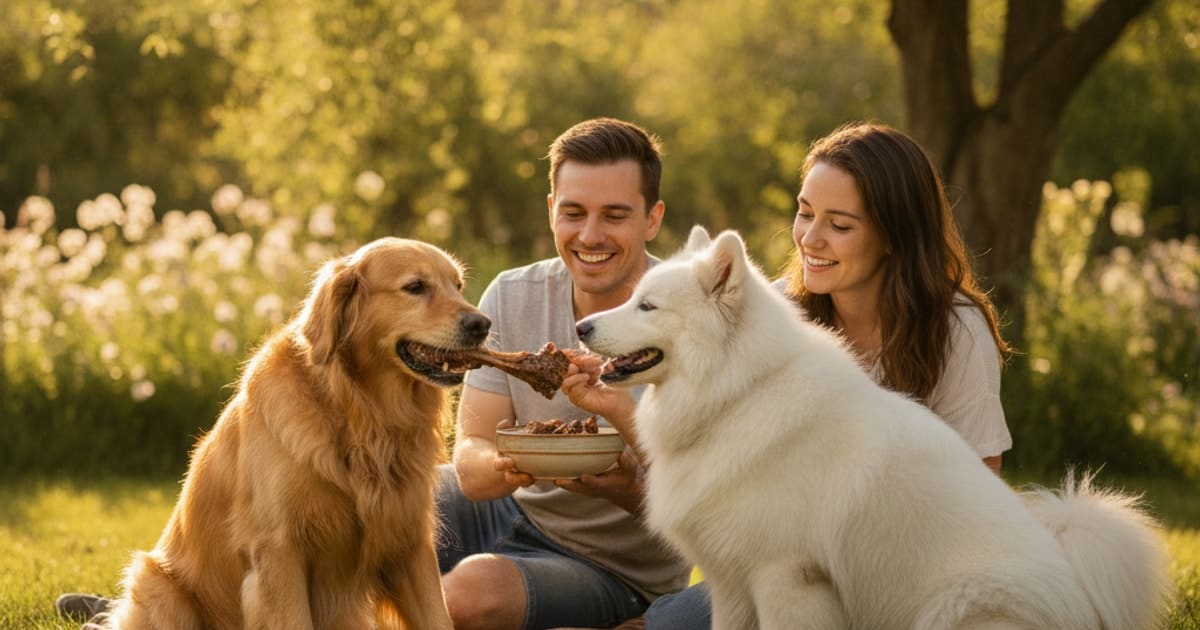
Yes, dogs can eat lamb, as long as it is plain, fully cooked, boneless and free of salt, seasoning, marinade and sauce. Call your veterinarian straight away if your dog has swallowed a lamb bone or a large piece of fat or gristle, is vomiting and will not settle, is drooling and retching without producing anything, or has a belly that looks swollen or feels painful when touched.
Lamb is not toxic to dogs. It is a red meat that supplies complete protein, iron, zinc, selenium and B vitamins, along with a fair amount of fat depending on the cut. Plenty of commercial dog foods are built around it, which tells you the protein itself sits comfortably in a canine diet. The trouble owners run into with lamb almost never comes from the muscle meat. It comes from the bone, the fat cap, and the garlic, onion, herb rub, mint sauce or gravy that a roast dinner arrives wearing.
Plain, fully cooked, boneless lamb with the heavy fat trimmed away is the only form of lamb that belongs in a dog's bowl. Everything below is about how each cut and each cooking method moves closer to or further from that line.
What lamb brings to a dog's diet
As a protein source, lamb is nutritionally dense. It carries all the essential amino acids a dog needs to maintain muscle, skin, coat and the connective tissue that holds a joint together. It is a strong source of heme iron, the form of iron that is absorbed efficiently, along with zinc, which supports skin and immune function, and vitamin B12, which plays a role in nerve function and red blood cell formation.
Lamb is also highly palatable. Owners of fussy eaters, or of dogs recovering from an illness that has blunted their appetite, often find that a spoonful of plain cooked lamb stirred through a meal gets the bowl emptied when nothing else will. That palatability is partly down to the fat, which is exactly the thing that needs managing.
Lamb once had a reputation as a novel protein, meaning a meat most dogs had never eaten and therefore were unlikely to react to. That reputation has faded simply because lamb became a mainstream ingredient in dog food. A dog can develop a food allergy or intolerance to lamb just as it can to chicken or beef. If your dog has itchy skin, recurrent ear trouble or loose stools and you suspect a food ingredient, that is a conversation to have with your veterinarian rather than a problem to solve by swapping proteins at home.
Cooked lamb, raw lamb and getting the doneness right
Cooked lamb meat is the straightforward answer. Heat reduces bacteria such as salmonella, campylobacter and E. coli, and it deactivates parasites that raw meat can carry. For a dog eating lamb as an addition to a balanced diet, cooking removes the largest share of the risk without removing any of the nutritional value that matters.
Cook it through. The pink centre that a person might want in a chop is not what you want for your dog. Plain water, a dry pan, the oven or a grill all work. What should not be involved is oil, butter, salt, stock, rubs or marinade. If the lamb renders a pool of fat as it cooks, drain it off rather than pouring it over the food. Let the meat cool fully before it goes anywhere near your dog, because hot fat holds heat far longer than it looks like it does.
Raw lamb is a different conversation. Some owners feed raw and do it carefully, but it carries bacterial risk both to the dog and to the people handling the bowl, the counter and the dog afterwards, and that risk matters more in a household with infants, elderly members or anyone with a weakened immune system. If raw feeding is something you are considering, plan it with your veterinarian rather than piecing it together from forums.
Lamb cuts, one by one
The cut determines how much fat comes with the meat and whether a bone is attached. Here is how the common ones compare.
| Cut | What it is | What to watch |
|---|---|---|
| Lamb chops | Meat on a bone, from loin, rib or shoulder | The meat is fine plain and cooked. The bone is the hazard and must be removed before serving |
| Lamb loin chops | Leaner chop with a T-shaped bone | Reasonable meat, but the bone splinters once cooked |
| Lamb cutlets | Rib chops, often with a long thin bone | Small, brittle bone that breaks easily. Serve the trimmed meat only |
| Lamb forequarter chops | Shoulder chop, heavily marbled | Among the fattier chops. Trim hard, and skip it for dogs sensitive to fat |
| Lamb steak | Boneless slice, usually from the leg | One of the better options. Leaner, no bone, easy to trim and slice down |
| Diced lamb | Pre-cut boneless cubes, often shoulder or leg | Convenient and bone free. Check for gristle and cut down so your dog chews rather than gulps |
| Lamb mince or ground lamb | Minced boneless meat, fat level varies | Easy to cook plain and drain. Choose the leanest grade you can find |
| Leg or shoulder roast | Large joint, usually seasoned | The plain inner meat is fine. The seasoned crust, string and netting are not |
| Lamb ribs and breast | Very fatty, bone in | Best avoided altogether |
| Fat trimmings and drippings | Pure rendered fat | Never a dog food. This is the part that causes digestive trouble |
So, to answer the common versions of the question directly. Lamb chops: the meat yes, the bone no. Cooked lamb chop meat, cutlets, loin chops and forequarter chops all work once they are off the bone and the fat has been trimmed, with forequarter being the fattiest of the group. Lamb steak is a good choice because it is boneless and easier to trim. Diced lamb is fine when plain and cooked through. Lamb mince and ground lamb are fine cooked plain and drained, and raw mince carries the same bacterial considerations as any other raw meat.
Fat and bone: the two things that actually cause trouble
Fat is the first risk. A sudden intake of rich, fatty food can inflame the pancreas, and lamb trimmings, drippings and fatty chops are a classic trigger around holidays and barbecues. Dogs who are overweight, dogs who have had pancreatitis before, and some individual dogs for no obvious reason are more sensitive to it than others. Signs that warrant a call to your veterinarian include repeated vomiting, diarrhoea, loss of appetite, lethargy, a hunched posture, or a dog who stretches its front end down with its rear in the air as though trying to relieve abdominal pain. At a milder level, too much fat simply causes a day or two of loose stools and a miserable dog.
Bone is the second risk, and it is the one owners underestimate because dogs and bones go together in the cultural imagination. Cooking changes bone structure, making it dry and brittle so that it splinters into sharp fragments rather than crushing. A splintered lamb chop bone or rib can fracture a tooth, lacerate the gums, lodge in the throat, block the intestine or perforate the gut wall. Lamb shank bones are large and hard enough to break teeth outright.
If your dog has already swallowed a cooked bone, do not try to make it vomit and do not wait to see what happens. Call your veterinarian and describe the size of what was eaten and the size of your dog. For a wider picture of what warrants an urgent visit, see the guide to dog emergency signs.
Seasoning, sauces and the leftover roast
The lamb on a dinner plate is rarely just lamb. Onion, garlic, shallots and leeks all belong to the allium family and can damage canine red blood cells, and they turn up in rubs, gravies, stuffings and marinades. Salt, in the quantities used to season a roast, adds up quickly in a small dog. Mint sauce and mint jelly are heavily sugared and vinegared, and some sugar free condiments contain xylitol, which is dangerous to dogs. Skewers, cooking string, netting and foil can all be swallowed along with the meat.
The practical rule is to set aside a portion of plain unseasoned lamb before anything is added to the pan. Scraping sauce off cooked meat does not remove what has already soaked in. Fat trimmed from the carving board and tipped into the dog bowl is the single habit most worth breaking.
When to check before you feed it
Some dogs should not get lamb added to their meals without a green light first. That includes dogs with a history of pancreatitis, dogs on a prescribed therapeutic diet for a kidney, liver or urinary condition, dogs being managed for weight, and dogs in the middle of an elimination diet for suspected food allergy, where a single stray ingredient can undo weeks of work. Puppies, pregnant dogs and nursing dogs have specific nutritional needs, and any change to what they eat should be planned with your veterinarian rather than improvised.
For a healthy dog, introduce lamb the way you would introduce any new food: on its own, with no other dietary change happening at the same time, and watch over the following day or two for vomiting, loose stools, gas, itching or ear scratching. Treats and extras should stay a minor part of what a dog eats across a day so the balanced diet underneath still does its job, and your vet can tell you what that looks like for your particular dog. Results vary from dog to dog, and a cut that suits one dog perfectly can leave another with an upset stomach.
Key takeaways
- Plain, fully cooked, boneless, unseasoned lamb is safe for most healthy dogs.
- Cooked lamb bones splinter. Remove every bone from chops, cutlets, ribs and shanks before serving.
- Trim the fat. Fat cap, drippings and trimmings are the part that causes digestive upset and can inflame the pancreas.
- Lamb steak, diced lamb, lean mince and trimmed chop meat are the easiest forms to serve safely.
- Forequarter chops, ribs and breast are the fattiest cuts and the least suitable.
- Onion, garlic, salt, gravy, mint sauce, marinades, skewers and cooking string make a lamb dish unsafe even when the meat itself is fine.
- Lamb can trigger food allergy in some dogs, so talk to your vet before using it as part of an allergy plan.
- Vomiting that will not settle, a swollen or painful belly, or a swallowed bone or large piece of gristle means calling your veterinarian now.
The vet sets the plan
Food questions look small until they are not. Your veterinarian is the one who knows your dog's weight, history, medications and any condition that changes what should be in the bowl, and that is the person who owns both the diagnosis and the dietary plan. A plain protein like lamb sits inside the space that proper veterinary care creates: useful as an addition to a complete, balanced diet, never a substitute for one, and never a reason to delay a visit when something looks wrong.
Related reading: Dog Emergency Signs, Can Dogs Eat Apples?, Can Dogs Eat Carrots?, Can Dogs Eat Green Beans?, Can Dogs Eat Blueberries? and Can Dogs Eat Rice?.
Frequently asked questions
- Can dogs eat lamb?
- Yes. Lamb is not toxic to dogs and is a solid source of protein, iron, zinc and B vitamins. It needs to be plain, fully cooked, boneless and free of salt, seasoning and sauce, with heavy fat trimmed away. If your dog has a health condition or a sensitive stomach, talk to your vet first.
- Can dogs eat lamb meat?
- Yes, lamb muscle meat is safe for most healthy dogs when it is served plain and boneless. The meat itself is rarely the problem. Cooked bone, the fat cap and seasonings such as onion, garlic, salt and gravy are what make a lamb dish risky, so set plain meat aside before cooking.
- Can dogs eat lamb meat cooked?
- Yes, and cooked is the safer choice. Cooking reduces bacteria such as salmonella and campylobacter and deactivates parasites. Cook the lamb all the way through with no pink centre, use no oil, butter, salt or marinade, drain off rendered fat, remove all bone, and let it cool completely before serving.
- Can dogs eat lamb mince?
- Yes, lamb mince is one of the easier forms to serve because it contains no bone. Choose the leanest grade available, cook it through in a dry pan and drain the fat before it goes in the bowl. Raw mince carries the same bacterial handling risks as any other raw meat.
- Can dogs eat lamb mince cooked?
- Yes. Cooked plain lamb mince, with the fat drained off and nothing added, suits most healthy dogs. Skip onion, garlic, stock cubes, salt and oil entirely, since allium vegetables can damage canine red blood cells. Let it cool before serving and watch for loose stools when it is new to your dog.
- Can dogs eat lamb ground?
- Yes, ground lamb and lamb mince are the same thing and both work when cooked plain. Ground meat has no bone, which removes the biggest hazard, but it can be fatty depending on the grade. Drain the pan well, because rendered fat is what tends to upset a dog's digestive system.
- Can dogs eat lamb chops?
- The meat yes, the bone no. Cooked chop bones, including loin, cutlet and forequarter bones, become brittle and splinter into sharp fragments that can break teeth or injure the throat and gut. Cut the meat off, trim the fat, serve it plain, and throw the bone where your dog cannot reach it.
- Can dogs eat diced lamb?
- Yes. Diced lamb is boneless and convenient, which makes it one of the more practical cuts. Cook it through with no oil or seasoning, check for tough gristle, and cut it down small enough that your dog chews rather than swallows whole. Diced shoulder tends to be fattier than diced leg.
- Can dogs eat lamb steak?
- Yes, lamb steak is a good option because it is boneless and generally leaner than chops. Cook it fully, with no salt, butter, garlic or marinade, trim visible fat and let it cool before slicing it down for your dog. Keep it as an addition to a balanced diet rather than a meal replacement.
Educational content, not veterinary advice. Ask your vet about your dog.