Can Dogs Eat Lasagna? Ingredients, Varieties and Safety
No, lasagna is not a dish to share with a dog. Standard recipes are built on onion and garlic, which are toxic to dogs, and the cheese and meat layers are rich and salty. If your dog has eaten lasagna, call your vet or an animal poison control service.
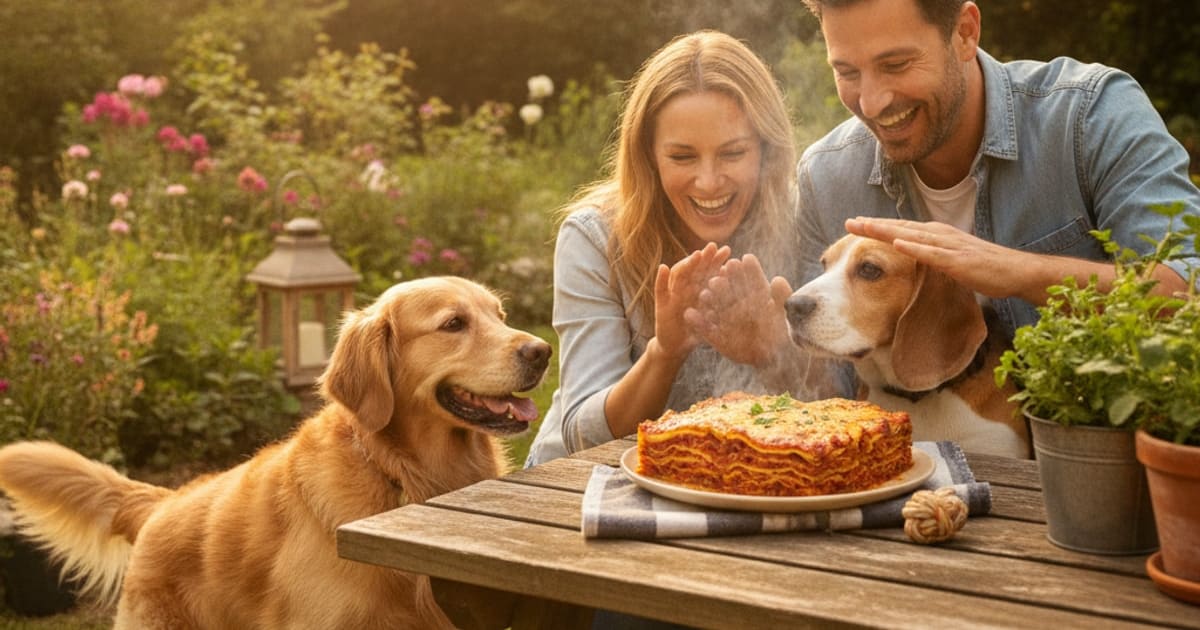
If your dog has eaten lasagna, call your veterinarian or an animal poison control service such as the ASPCA Animal Poison Control Center or the Pet Poison Helpline, because the onion and garlic that sit in almost every lasagna sauce are toxic to dogs. Your vet can tell you whether what your dog swallowed needs to be seen in person, and that call is the right first move rather than waiting to see what happens. The plain answer to the question is no: lasagna is not a dish to share with a dog, and there is no nutritional reason a dog needs it.
That answer deserves more than a one-word warning, because owners rarely ask about lasagna in the abstract. They ask because a tray was cooling on the counter, or a hand went under the table, or the leftovers came out of the fridge and the dog got there first. What matters next is not the word lasagna. It is which layers went down, what was in them, and what your dog is doing right now.
Why a baked dish has to be judged ingredient by ingredient
Dogs will absolutely eat lasagna given the chance. It is warm, it smells of fat and cooked meat, and it sits at nose height on a counter or a lap tray. Counter surfing is not a sign of a badly behaved dog, it is a dog doing exactly what a scavenging animal is built to do.
The trouble is that lasagna is not one food. It is five or six foods stacked together, and each layer carries a different concern. Some layers are simply rich. One layer is genuinely toxic. Nearly every lasagna recipe, homemade or from a freezer aisle, is built on a sauce that starts with onion and garlic, and that is why the finished dish is not something to share with a dog. Pulling the layers apart is the only honest way to answer the question.
| Lasagna layer | Typical ingredients | Why it matters for a dog |
|---|---|---|
| Tomato sauce | Onion, garlic, tomato, salt, sugar, herbs, sometimes wine | Alliums are toxic to dogs and the salt load is high |
| Cheese layers | Ricotta, mozzarella, parmesan | Lactose and fat, and parmesan is heavily salted |
| White sauce | Butter, flour, milk, nutmeg | Fat rich, and nutmeg is not a seasoning for dogs |
| Meat layer | Ground beef, pork, chicken or sausage with seasoning | Plain cooked meat is not toxic, but it is browned with onion and garlic |
| Pasta sheets | Wheat flour, egg, water | Not toxic when plain, but of no real benefit to a dog |
| Vegetable fillings | Spinach, zucchini, mushroom, eggplant | Cooked through the same seasoned sauce |
The sauce is the layer that makes lasagna a toxin question
Onions, garlic, shallots, leeks and chives all belong to the allium family, and all of them are toxic to dogs. They contain organosulfur compounds that dogs metabolise poorly. Those compounds damage the membranes of red blood cells, causing oxidative injury that shows up on a blood smear as Heinz bodies and can lead to anaemia as the damaged cells are cleared from circulation.
Two details make lasagna sauce worse than people expect. First, cooking does nothing to neutralise alliums. Simmering a sauce for hours, baking it under cheese, freezing it and reheating it: none of that removes the problem. Second, dried onion powder and garlic powder, which appear in jarred sauces, bouillon, seasoning blends and nearly all commercial trays, are far more concentrated by weight than the fresh bulb. A sauce that tastes only mildly garlicky can still carry a meaningful allium load.
Signs linked to allium ingestion do not always appear straight away. Stomach upset can come first, while changes in the red blood cells can take longer to show. That delay is exactly why the advice is to call rather than to watch. Call your vet if vomiting continues, or if you notice pale or yellow-tinged gums, weakness, reluctance to move, faster breathing, or urine that looks red, orange or brown.
The sauce also carries salt, added sugar, and sometimes red wine. So no, lasagna sauce on its own is not something to offer, and licking the pan is not harmless.
Cheese, white sauce and the fat load
Ricotta is not toxic to dogs. Neither is mozzarella. On their own, plain and unseasoned, they are dairy rather than danger. But two things still matter.
The first is lactose. Many adult dogs produce little lactase, the enzyme that breaks milk sugar down, so dairy can sit badly and cause gas, loose stools or vomiting. The second is fat. Lasagna layers ricotta, melted mozzarella, butter-based white sauce and rendered meat fat into one dense dish. A sudden load of rich food can irritate the pancreas, and pancreatitis is a real concern after a raid on a fatty meal. Watch for repeated vomiting, a hunched or prayer-like posture, a tense belly, refusing food, or a dog that just will not settle. Those warrant a vet visit, not a wait.
Parmesan deserves its own mention because it is one of the saltiest things in the dish. Classic bechamel often carries grated nutmeg too, and nutmeg contains myristicin, which is not a seasoning that belongs anywhere near a dog's bowl.
So ricotta lasagna is not a safer version. The cheese sits directly against sauce that contains garlic and onion, and the two cannot be separated once the dish is baked.
Meat layers, pasta sheets and vegetable fillings
Plain cooked ground beef with nothing added is not toxic to a dog. Plain cooked chicken is not toxic either. This is why beef lasagna and chicken lasagna questions have the same answer: the meat is not the problem, the seasoning is. Lasagna meat is browned with onion and garlic before the sauce goes in, so by the time it reaches the baking dish it carries the same allium load as everything else. Italian sausage adds fat, heavy salt, fennel and chilli, and casings add a chewy material that some dogs bolt without chewing.
Cooked pasta sheets are wheat flour, water and often egg. Plain, drained and unsauced, pasta is not toxic, though it offers a dog very little and dogs with wheat sensitivities can react to it. In a baked lasagna the sheets are saturated with sauce, so they are not a neutral part of the dish.
Vegetable and cheese lasagna is not a safe swap. The vegetables are cooked in the same seasoned base. Spinach is worth flagging separately because it is high in oxalates, which is a conversation to have with your vet if your dog has a history of bladder stones or kidney disease. Zucchini, eggplant and cultivated mushrooms are not toxic in themselves, but they do not arrive on the plate in themselves.
Leftovers, frozen trays and lasagna soup
Leftover lasagna brings risks the fresh dish does not. Foil, cling film, parchment and plastic tray corners get swallowed along with the food, and swallowed packaging can cause a blockage. A dog that raids a bin may also reach food that has grown mould, and mould can produce tremorgenic mycotoxins associated with muscle tremors, incoordination and seizures. That is an immediate emergency visit, not a wait-and-see.
Commercial frozen lasagna and ready meals carry concentrated onion and garlic powder along with a high sodium load. Lasagna soup is the same recipe in liquid form, usually built on a stock or bouillon base, which means the allium and salt content is still there and is easier for a dog to lap up quickly.
Speed is its own hazard. A dog that gulps a large chunk of baked pasta can choke, and a big volume of food taken fast can leave the stomach distended. A swollen, drum-tight or painful belly, retching without bringing anything up, pacing and drooling need emergency care straight away.
What to do if your dog has already eaten lasagna
Call your veterinarian or an animal poison control service and describe what you know: what was in the recipe, whether it contained onion, garlic, sausage or mould, roughly when it happened, and your dog's weight and health history. Do not give anything at home and do not try to make your dog vomit unless a veterinary professional tells you to. Keep the packaging or the recipe to hand, because it answers the questions you will be asked.
Then watch your dog closely. Vomiting, diarrhoea, drooling, lethargy, loss of appetite, abdominal pain, pale or yellowish gums, weakness, fast breathing or discoloured urine all mean a call. Call your vet if vomiting will not settle, if the belly becomes swollen or painful, or if you think a large chunk went down whole.
Puppies deserve extra caution. They are smaller, they lose fluid quickly with vomiting and diarrhoea, and their digestive systems handle rich food poorly. If a puppy has eaten lasagna, talk to your vet rather than waiting. The same applies to dogs with pancreatitis in their past, kidney or heart disease, anaemia, or any dog on prescribed medication. Results vary from dog to dog, and the only person who can weigh your dog's particular situation is the veterinarian who knows the case.
Key Takeaways
- Lasagna is not a food to share with a dog, because the sauce in nearly every recipe contains onion and garlic, which are toxic to dogs.
- Cooking, baking and freezing do not reduce allium toxicity, and powdered onion and garlic are more concentrated than fresh.
- Ricotta, mozzarella and plain cooked beef or chicken are not toxic on their own, but they cannot be separated from the seasoned layers once the dish is baked.
- Signs linked to alliums can be delayed, so phoning your vet beats watching and waiting.
- Leftovers add foil, plastic and mould risk, and lasagna soup and frozen trays carry the same alliums plus a high salt load.
- Repeated vomiting, a swollen or painful belly, pale gums, weakness or discoloured urine mean veterinary care now.
For a broader list of signs that mean a same-day or emergency visit rather than a phone call, see Dog Emergency Signs.
Your veterinarian owns the diagnosis and the plan here. They can weigh what your dog ate against your dog's size, age and health history, decide whether bloodwork or an examination is needed, and tell you what to monitor at home. Food questions like this one are worth raising at your next appointment too, so you know in advance which kitchen ingredients to keep off the floor.
Frequently asked questions
- Can dogs eat lasagna?
- No. Lasagna is not a dish to share with a dog. Standard recipes are built on onion and garlic, which are toxic to dogs, and the cheese and meat layers are fatty and salty. If your dog has eaten lasagna, call your vet or an animal poison control service.
- Can my dog have lasagna?
- No, it is not a food to hand over deliberately. The sauce carries onion and garlic, both toxic to dogs, and the dairy and meat layers are rich. If your dog has already taken some, call your vet and describe the recipe and when it happened.
- Is lasagna bad for dogs?
- Yes. The sauce contains alliums such as onion and garlic that damage canine red blood cells, and the cheese and white sauce add a heavy fat and salt load that can irritate the pancreas. Call your vet if your dog shows vomiting, weakness, pale gums or belly pain.
- Can dogs eat lasagna with ricotta cheese?
- Ricotta is not toxic on its own, but lasagna made with it still contains garlic and onion in the sauce, and the two cannot be separated once baked. Many adult dogs also digest lactose poorly. Talk to your vet if your dog eats a cheesy, fatty meal.
- Can dogs eat lasagna meat?
- Plain cooked ground beef or chicken is not toxic, but lasagna meat is browned with onion and garlic before the sauce goes in, so it carries the same toxic load. Italian sausage adds fat, salt and spice. Call your vet if your dog eats seasoned meat from the dish.
- Can dogs eat lasagna sauce?
- No. The sauce is the layer that makes lasagna a toxin question. It is built on onion and garlic, both toxic to dogs, and cooking does not neutralise them. It also carries salt, added sugar and sometimes wine. Licking the pan is not harmless, so call your vet.
- Can dogs eat lasagna soup?
- No. Lasagna soup is the same recipe in liquid form, usually built on a stock or bouillon base that contains concentrated onion and garlic along with heavy sodium. Liquid is also easier for a dog to lap up quickly, so contact your vet if your dog drinks any.
- Can dogs eat leftover lasagna?
- No, and leftovers add risks the fresh dish does not. Foil, cling film and tray corners can be swallowed and cause a blockage, and bin-raided food may carry mould linked to tremors and seizures. Contact your veterinarian straight away if either of those is possible.
- Can puppies eat lasagna?
- No. Puppies are smaller, lose fluid quickly with vomiting and diarrhoea, and cope poorly with rich, salty food, and the onion and garlic in the sauce remain toxic to them. If a puppy has eaten lasagna, call your veterinarian rather than waiting for signs to appear.
- Can dogs eat cheese lasagna without meat?
- No, a meatless version is not a safer swap. The cheese and vegetable layers still sit against a sauce containing onion and garlic, and parmesan is heavily salted while bechamel often includes nutmeg. Results vary from dog to dog, so phone your vet if your dog eats some.
Educational content, not veterinary advice. Ask your vet about your dog.