Can Dogs Eat Leeks? (Why This Allium Is Off Limits)
No, dogs should not eat leeks. Leeks belong to the allium family alongside onions, garlic and chives, and every part is considered toxic to dogs whether raw, cooked, dried or stirred into a dish. If your dog ate leek, call your vet or a pet poison line.
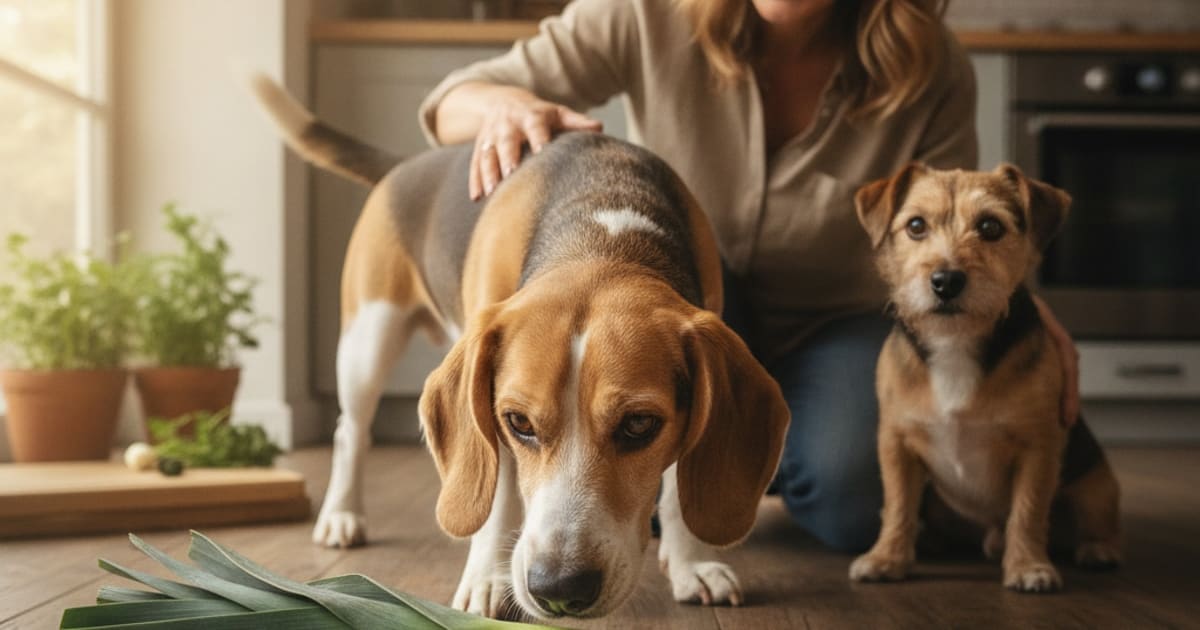
If your dog ate leeks in any form, raw, cooked or in soup or a dish, call your vet or a pet poison line now. No, dogs should not eat leeks, and this is one of those kitchen questions where the answer does not change with preparation: leeks are an allium vegetable, the same botanical family as onions, garlic, shallots, chives and spring onions, and the whole plant is treated as toxic to dogs. The pale base, the dark green tops, the stringy roots and the water the leeks were simmered in all carry the same compounds.
Owners ask because leeks seem like such a gentle vegetable. They are mild on the tongue, they are a backbone of soups and casseroles, and they do not come with the folklore that surrounds onions and garlic. That mildness is misleading. The chemistry that makes alliums harmful to dogs is not the same chemistry that makes them taste sharp, so a vegetable that tastes soft and sweet to you is still an allium to your dog's red blood cells.
Do not wait to see whether your dog seems unwell before you make the call. Services such as the ASPCA Animal Poison Control Center and the Pet Poison Helpline exist for exactly this moment, and your own veterinary practice or the nearest emergency clinic can advise on what happens next. A vet can act far more usefully on a known exposure than on a sick dog whose history is guesswork.
What makes leeks a problem for dogs
Alliums contain organosulfur compounds, a group that includes n-propyl disulfide. Dogs process these compounds differently from people, and the trouble shows up in the red blood cells. The compounds oxidise haemoglobin, the protein that carries oxygen around the body. Damaged haemoglobin clumps into small deposits inside the cell, and the spleen reads those altered cells as faulty and pulls them out of circulation. When enough cells are removed, the dog becomes anaemic, which is why a vegetable can end up causing weakness and pale gums rather than a simple upset stomach.
There is a second, more immediate layer. Alliums irritate the stomach and intestines directly, so vomiting, drooling, loose stools and abdominal discomfort can appear before anything else does.
Leeks are not safe for dogs in any form, and cooking, roasting, drying or blending them into a dish does not make them safe. Heat does not neutralise the compounds involved. That is why leek and potato soup, a stock made with leek trimmings, a quiche filling, a stuffing, a dehydrated vegetable seasoning or a jar of savoury baby food all count as exposures rather than near misses. Dried and powdered allium is concentrated by weight, so a seasoning blend can matter even though it looks like nothing much on a plate.
Size and individual sensitivity both play a part, and results vary from dog to dog. A small dog and a large dog who eat the same thing are not in the same situation, and two dogs of identical size can respond differently. This is precisely why the useful answer to how much leek is a problem is not a number you find online, it is a conversation with the person who can weigh your dog and look at bloodwork.
How leeks compare with the other alliums in your kitchen
If you are checking leeks, it is worth checking the whole shelf at once. All of these belong to the same genus and all of them are treated the same way for dogs.
| Allium vegetable | Where it turns up at home | Safe for dogs? |
|---|---|---|
| Leek | Soups, stocks, quiches, roasted sides, raw trimmings in the bin | No |
| Onion | Raw in salads, fried, in gravies, burgers, onion powder | No |
| Garlic | Cloves, paste, powder, garlic bread, marinades | No |
| Shallot | Dressings, pan sauces, roasted dishes | No |
| Chives | Fresh garnish, herb cream cheese, potato toppings | No |
| Spring onion | Salads, stir fries, noodle dishes | No |
| Wild garlic | Foraged leaves on woodland walks, homemade pesto | No |
The practical takeaway is that there is no allium on this list that becomes the safe one. If a recipe starts with any of them softening in a pan, that dish is not a dish to share.
Signs to watch for after a dog eats leek
Two separate sets of signs can appear, and they do not arrive on the same timetable.
The stomach signs come first. Vomiting, drooling, loose or dark stools, a tender or tense belly, a dog going off food, and a general flatness that you notice before you can name it. These can show up on the same day.
The red blood cell signs are the delayed ones, and they are the reason this is not a wait-and-see situation. They can develop days after the meal, long after the dog seems to have shaken off any tummy upset. What to look for:
- Pale, white or yellow-tinged gums
- Weakness, wobbliness or reluctance to get up
- Tiring quickly on a short walk
- Fast breathing or fast heart rate at rest
- Dark, orange, red or brown urine
- Yellowing of the whites of the eyes
- Collapse
Any of these warrants emergency veterinary attention on its own, whether or not you know about a leek. If you do know about a leek, say so straight away, because it changes what the vet looks for.
What veterinary care for an allium exposure looks like
The first thing a vet wants is history: what was eaten, which form it was in, roughly when, and how big your dog is. Bring the packet, the recipe or a photo of the dish if you have one. Guesswork is fine, honest guesswork is better than silence.
From there the vet decides whether decontamination is appropriate. That decision belongs to them and depends on timing and on your dog's health, which is why instructions you find online about making a dog sick at home are not instructions to follow. Doing the wrong thing at the wrong moment can make an already difficult situation worse.
Bloodwork is the centre of the picture. A vet can check red blood cell numbers, look at the cells themselves under a microscope for the characteristic damage, and check how the liver and kidneys are coping. Because the red cell changes develop over time, one normal blood test on day one does not close the case, and your vet may ask you back for repeat samples across the following days. Supportive care can include intravenous fluids, anti-nausea medication, stomach protection and monitoring, with more intensive support reserved for dogs whose red cell counts fall significantly.
None of that is something to arrange yourself. Talk to your vet, follow the plan they set, and keep the recheck appointments even if your dog looks bright again.
Puppies, small dogs, cats and dogs who are already unwell
Puppies are a particular concern. They are small, they are indiscriminate about what goes in their mouths, and they have less margin than an adult dog of the same breed will have later. The same is true of toy and small breeds generally: the smaller the dog, the less it takes to matter. There is no safe amount to work out at home for a puppy, and no feeding plan that includes leek.
Cats are also sensitive to alliums, and in some respects their red blood cells are more vulnerable than a dog's. So the answer to whether dogs and cats can eat leeks is the same for both species, and a household that cooks with leeks should think about the cat on the worktop as well as the dog under the table.
Some dogs carry an inherited red blood cell trait that makes them more susceptible to this kind of oxidative damage, which has been described in Japanese breeds such as the Akita and the Shiba Inu. Dogs who are already anaemic, dogs with kidney or liver disease, pregnant dogs and older dogs with other conditions all have less reserve to draw on. If your dog falls into any of these groups, mention it when you call.
Keeping leeks out of reach, and what to offer instead
Prevention here is mostly about the bits of leek that are not on the plate. Trimmed root ends and tough green tops go in a bin that a dog can open, or sit on a chopping board at nose height while you answer the door. Compost caddies are a classic weak point. So are leftovers scraped into a dish on the floor, stock cooling in a pan, and a well-meaning visitor handing over a corner of quiche.
A few habits that take the risk out of a kitchen: keep allium trimmings in a sealed bin, clear boards and worktops before you step away, store stock and soup where a counter surfer cannot reach, and tell guests the house rule about scraps rather than hoping they guess it.
There are plenty of vegetables that are not alliums and that many dogs enjoy, including carrot, green beans, cucumber, courgette, broccoli florets and plain cooked pumpkin. Introduce anything new slowly, plain, with nothing added, and skip anything cooked in butter, oil, salt or stock. If your dog has a medical condition or a prescription diet, clear new foods with your veterinary team before you offer them, because a food that suits most dogs may not suit yours.
Key Takeaways
- Dogs should not eat leeks in any form: raw, cooked, roasted, dried, powdered or stirred through a soup or sauce.
- Leeks are alliums, the same family as onions, garlic, shallots, chives and spring onions, and all of them are off limits.
- Allium compounds can damage red blood cells, which is why signs can be delayed rather than immediate.
- Stomach upset may come first. Pale gums, weakness, fast breathing and dark urine can follow later and are emergencies.
- Puppies, small dogs, cats and dogs with existing illness have less margin, and results vary from dog to dog.
- Do not try to treat an exposure at home. Call your vet or a pet poison line and let them decide what is needed.
A leek is not a reason to panic, but it is a reason to pick up the phone. Your veterinarian owns the diagnosis and the plan: they are the one who can weigh your dog, read the bloodwork, repeat it at the right interval and tell you when the window of concern has closed. Everything you do at home, from bin lids to house rules about scraps, works best as support for that plan rather than a substitute for it.
For a wider look at the signs that mean a situation needs same-day veterinary attention, read Dog Emergency Signs.
Frequently asked questions
- Can dogs eat leeks?
- No. Leeks are an allium vegetable, like onions and garlic, and they are treated as toxic to dogs in every form. Raw, cooked, roasted, dried or blended into soup makes no difference. If your dog has eaten leek, call your vet or a pet poison line straight away.
- Are leeks ok for dogs?
- No, leeks are not ok for dogs. Every part of the plant, from the white base to the green tops and the cooking water, carries the compounds that can damage canine red blood cells. There is no preparation method that makes leek suitable, so keep it off the menu entirely.
- Are leeks bad for dogs?
- Yes. Leeks can irritate the stomach and intestines, and the allium compounds they contain can oxidise haemoglobin and damage red blood cells, which may lead to anaemia. Because the blood changes can appear days later, a dog who seems fine at first still needs veterinary advice.
- Why can't dogs eat leeks?
- Because leeks contain organosulfur compounds, including n-propyl disulfide, that dogs process differently from people. These compounds damage haemoglobin inside red blood cells, and the spleen then removes the affected cells from circulation. Cooking does not break the compounds down, so soups and roasted leek count too.
- Should dogs eat leeks?
- No. There is no nutritional reason to feed leek to a dog and a clear reason not to. Plenty of non-allium vegetables, such as carrot, green beans, cucumber and plain cooked pumpkin, suit many dogs instead. Check any new food with your veterinary team first, especially on a prescription diet.
- Can my dog eat leek?
- No, your dog should not eat leek in any form, and that includes trimmings, soup, stock and dishes seasoned with dried allium. If it has already happened, do not wait for symptoms. Call your vet or a pet poison line and tell them what was eaten and when.
- Can puppies eat leeks?
- No. Puppies should never be given leek. They are small, they explore with their mouths, and they have less margin than an adult dog of the same breed will have. There is no safe amount to calculate at home, so any suspected exposure in a puppy means calling your vet.
- Can dogs and cats eat leeks?
- Neither species should eat leeks. Cats are also sensitive to allium compounds, and in some respects their red blood cells are more vulnerable than a dog's. In a household that cooks with leeks, secure trimmings, bins and cooling pans with the cat on the worktop in mind too.
- Can dogs eat a small amount of leeks?
- There is no amount of leek that can be called safe for a dog at home. Body size, individual sensitivity and existing health problems all change the picture, and results vary from dog to dog. Talk to your vet about what your dog ate rather than judging it by eye.
Educational content, not veterinary advice. Ask your vet about your dog.