Can Dogs Eat Macarons? (What's Inside and When to Call)
Macarons are not toxic to dogs on their own, but the sugar, butter and almond flour make them a poor fit, and chocolate ganache or a xylitol-sweetened filling turns one into a vet call. If your dog ate a macaron, contact your veterinarian or an animal poison control service.
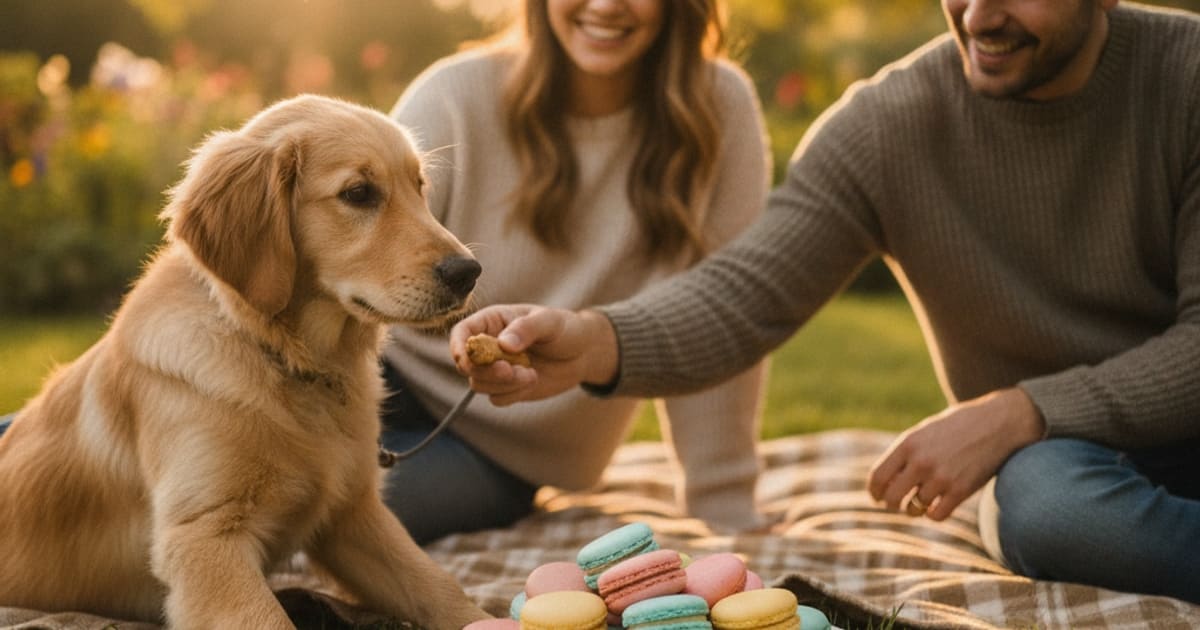
A French macaron is not toxic to dogs the way grapes, onions or raisins are, but it is not a food made for them either, and the filling decides how worried you should be. If the macaron your dog got hold of was chocolate, mocha, coffee, rum or liqueur flavoured, or if it came from a sugar-free range that may contain xylitol (also labelled birch sugar), call your veterinarian or an animal poison control service such as the ASPCA Animal Poison Control Center or the Pet Poison Helpline now. For a plain shell with vanilla, strawberry, raspberry or lemon buttercream, the issue is not poison, it is richness: sugar, butter, cream and finely ground almond arriving in a digestive system that is not built for pastry. That can bring vomiting, loose stool, gas, drooling or a sore belly, and results vary from dog to dog. Call your vet if your dog is vomiting and will not settle, if the belly looks swollen or feels painful, if you see tremors, weakness or unsteadiness, or if a large piece went down whole.
A macaron and a macaroon are not the same cookie
The two words get mixed up constantly, and the difference matters when you are reading an ingredient list.
A French macaron is a sandwich cookie. Two smooth meringue shells made from ground almond, egg white and fine sugar are piped, rested until a skin forms, baked, then joined with buttercream, ganache, fruit jam or curd. Colour comes from food dye.
A coconut macaroon is a craggy mound of shredded coconut bound with sweetened condensed milk or egg white, and it is frequently dipped or drizzled with chocolate. Coconut itself is not toxic to dogs, though the oil content can loosen the gut, and the chocolate coating is the part that puts a dog in front of a vet.
So when someone asks whether dogs can eat macaron cookies, the honest answer depends on which cookie they are holding and what is sandwiched inside it.
What goes into the shell and what goes into the filling
The shell is almond flour, egg white, caster sugar and often a little cream of tartar and colouring. Almonds are not toxic to dogs, but they are dense and fatty, and a dog's gut does not break them down comfortably. Ground almond in a baked shell is not a choking hazard the way a whole nut is, but it still arrives alongside a heavy sugar load that offers a dog nothing nutritionally and can complicate life for a dog with diabetes or a weight problem.
The filling is where the fat sits. Buttercream is butter whipped with icing sugar. Ganache is chocolate melted into cream. Curd is egg yolk, butter, sugar and citrus. Fruit fillings are jam, which is fruit plus more sugar, and reduced-sugar jams sometimes lean on sugar substitutes.
That fat load is the quiet risk in a plain macaron. A sudden rich mouthful can irritate the pancreas in a dog that is prone to it, and pancreatitis is a vet visit, not a wait-and-see. The signs to watch for are repeated vomiting, a hunched or praying posture, a tense belly, refusing food and unusual flatness. If you see those, call your vet.
The fillings that turn a sweet into an emergency
Chocolate ganache and xylitol are the two fillings that change a macaron from a rich pastry into an emergency, and both need a call to your veterinarian or an animal poison control service straight away, before any sign appears.
These are the ingredients that move a macaron out of the upset-stomach category:
- Chocolate ganache, cocoa shells, mocha fillings. Chocolate contains theobromine and caffeine, which dogs clear slowly. Darker chocolate is more concentrated. Restlessness, panting, vomiting, a racing heart, tremors or seizures can follow.
- Xylitol, sometimes printed as birch sugar. It appears in sugar-free and reduced-sugar jams, curds and frostings. In dogs it can cause a sharp drop in blood sugar and liver injury. Weakness, wobbling, collapse or seizures are emergency signs.
- Coffee and espresso fillings. Caffeine acts on a dog much as chocolate does.
- Macadamia, which shows up in some praline and nut-paste fillings. It can cause hind-leg weakness, tremors, vomiting and a raised temperature.
- Alcohol. Rum, kirsch and liqueurs are used in ganache and in soaked fruit.
- Raisins or currants in a rum-raisin style filling. Grapes and raisins can injure the kidneys in some dogs, and no amount is treated as a non-issue.
- Nuts that have been stored badly. Mould on nuts can produce toxins that trigger tremors.
- Packaging. Foil, ribbon, cellophane, cardboard and the small desiccant sachet tucked into a gift box can all cause a blockage if swallowed.
If your dog ate any of the above, call your veterinarian or an animal poison control service now, and keep the box or the bakery label so you can read the ingredients out loud.
Flavour by flavour: what actually changes
Most flavour questions come down to the same two things, the filling and the sugar-and-fat load. Here is how the common ones compare.
| Flavour | What goes into it | Why it matters |
|---|---|---|
| Vanilla | Almond shell, vanilla buttercream | Not toxic. Vanilla extract carries alcohol, and the filling is largely fat and sugar |
| Strawberry | Shell, strawberry jam or buttercream | Strawberries are not toxic to dogs. The sugar and butter around them are the problem, and reduced-sugar jams can hide xylitol |
| Raspberry | Shell, raspberry jam or cream | Raspberries are not toxic. Read the jam label for xylitol or birch sugar |
| Lemon | Shell, lemon curd | Citrus oils and acidity can irritate the stomach, and curd adds butter and egg yolk |
| Pistachio | Shell, pistachio paste buttercream | Pistachios are not toxic but are fatty and salted, and poorly stored nuts can carry mould toxins |
| Chocolate or mocha | Shell, ganache, coffee | Theobromine and caffeine. Call your vet or an animal poison control service now |
| Salted caramel | Shell, caramel, salt | Concentrated sugar and fat with added salt |
| Hazelnut praline | Shell, nut paste | Rich fat, and some praline blends include macadamia |
| Rum raisin or liqueur | Shell, alcohol, dried fruit | Alcohol and raisins both warrant immediate veterinary contact |
| Any sugar-free version | Shell, sugar substitute | Xylitol is an emergency regardless of the flavour on the box |
So pistachio, raspberry, lemon, strawberry and vanilla macarons are not poisonous in the way a chocolate one is. None of them are a food a dog needs, and each one still delivers butter, sugar and ground almond in a form a dog's gut did not evolve to handle.
Your dog already got one: what to do now
Start with the flavour. If chocolate, coffee, alcohol, macadamia, raisin or anything labelled sugar-free was involved, call your veterinarian or an animal poison control service immediately and do not wait for a sign to appear. Have the packaging in your hand so you can describe what was in it and roughly when it was eaten, and say how much your dog weighs when they ask.
If the macaron was a plain or fruit flavour, the next thing to check is whether anything non-food went down with it: foil, a paper case, ribbon, a desiccant sachet. A swallowed wrapper or a large piece bolted whole by a small dog is a reason to call your vet now rather than watch.
Then watch your dog. Call your vet if you see vomiting that will not settle, retching with nothing coming up, a belly that looks swollen or feels painful, pale gums, straining without producing stool, shaking, wobbliness, weakness or unusual lethargy. Call your vet if it continues past the first few hours, and call sooner if your dog is small, is a puppy, or already has a health condition.
Dogs with less room for a rich pastry
Some dogs have less margin than others, and this is worth raising before the next birthday cake or gift box lands on the counter. Puppies, small-breed dogs, seniors, dogs carrying extra weight, and dogs with diabetes, pancreatitis history, liver or kidney conditions, or a known sensitivity to dairy, egg or nuts all sit in a tighter spot. So do pregnant and nursing dogs, where anything added to the diet is a conversation to have with your veterinarian first.
If your dog has an existing condition and you are trying to work out how human foods fit into their diet at all, your vet can tell you what suits that particular dog. That is a planning conversation, not an emergency one, and it is worth having in advance rather than in the middle of a party.
The practical move is prevention. Macarons are gift-box food, which means they sit at nose height on coffee tables and kitchen counters, in thin boxes a determined dog can open. Put them where the dog is not, and tell visiting family the same.
Key Takeaways
- Macarons are not toxic to dogs in themselves, but they are sugar, butter and ground almond, which can bring vomiting, loose stool or a painful belly.
- Chocolate ganache, coffee or mocha fillings, alcohol, macadamia, raisins and xylitol move a macaron into emergency territory. Call your veterinarian or an animal poison control service immediately.
- Macaron shells are almond flour, egg white and sugar, so they are not poisonous, though a whole shell swallowed fast by a small dog is a choking and obstruction concern.
- Pistachio, raspberry, lemon, strawberry and vanilla differ mainly in fat, acidity and whether the jam was sweetened with a sugar substitute.
- Coconut macaroons are a different cookie, and the chocolate coating is the part that matters.
- Vomiting that will not settle, a swollen or painful belly, tremors, weakness or a swallowed large piece all mean a call to your vet.
- Results vary from dog to dog, so talk to your vet about your own dog rather than about dogs in general.
Your veterinarian owns the diagnosis and the plan. They know your dog's weight, history and medications, they can judge what a particular ingredient means for that dog, and they are the right call the moment something is eaten that should not have been. Nothing you read here replaces that phone call, and on anything involving chocolate, a sugar-free label or a swallowed wrapper, the call comes first and the reading comes later.
For a plain-language rundown of the signs that mean a same-day or overnight visit, see Dog Emergency Signs.
Frequently asked questions
- Can dogs eat macarons?
- Macarons are not toxic to dogs, but they are built from sugar, butter and ground almond, which can upset a dog's stomach. Chocolate ganache, coffee fillings and sugar-free jams containing xylitol change that picture completely and need a call to your veterinarian or an animal poison control service right away.
- Can dogs eat a macaron?
- A single macaron is not a poison, but it is still a rich pastry that can bring vomiting, loose stool or a sore belly, and results vary from dog to dog. If it was chocolate, coffee or a sugar-free version, call your veterinarian or an animal poison control service now.
- Are macarons safe for dogs?
- Macarons are not a food made for dogs. The shell is sugar and ground almond, the filling is fat and more sugar, and some versions carry chocolate, coffee, alcohol or xylitol. Talk to your vet before adding any human sweet to your dog's diet.
- Can dogs eat macaron cookies?
- Macaron cookies are not toxic in themselves, but they give a dog nothing nutritionally and a great deal of sugar and butter. Watch for vomiting that will not settle, a swollen or painful belly, drooling or lethargy, and call your vet if any of those appear.
- Can dogs eat macaron shells?
- Macaron shells are almond flour, egg white and sugar, so they are not toxic, though the sugar and fine almond can still unsettle a dog's gut. A whole shell swallowed quickly by a small dog is a choking and obstruction concern, so call your vet if that happens.
- Can dogs eat French macarons?
- French macarons are not poisonous to dogs unless the filling is chocolate ganache, coffee, a liqueur or a sugar-free jam containing xylitol, any of which needs an immediate call to your veterinarian or an animal poison control service. Plain versions are still butter and sugar a dog does not need.
- Can dogs eat pistachio macarons?
- Pistachio macarons are not toxic, but pistachios are fatty and salted, and nuts stored badly can carry mould toxins that trigger tremors. Combined with buttercream, the fat load can irritate the pancreas. Call your vet if you see repeated vomiting, a hunched posture or refusal to eat.
- Can dogs eat raspberry macarons?
- Raspberry macarons are not toxic, since raspberries themselves are not poisonous to dogs. The concern is the filling: sugar, butter and sometimes a reduced-sugar jam sweetened with xylitol. Check the label, and if xylitol or birch sugar appears, call your veterinarian or an animal poison control service now.
- Can dogs eat lemon macarons?
- Lemon macarons are not toxic, though citrus oils and the acidity of lemon curd can irritate a dog's stomach, and the curd adds butter, egg yolk and sugar. Drooling, vomiting or loose stool can follow. Call your vet if the vomiting will not settle or the belly feels tender.
- Can dogs eat vanilla macarons?
- Vanilla macarons are not toxic, but vanilla extract contains alcohol and the buttercream is largely fat and sugar. A plain vanilla macaron is a rich pastry rather than a poison. Call your vet if you notice vomiting, a painful belly, wobbliness or unusual lethargy afterwards.
Educational content, not veterinary advice. Ask your vet about your dog.