Can Dogs Eat Maple Syrup? (Safety and Sugar Risks)
Plain, pure maple syrup is not toxic to dogs, but it is almost entirely sugar and gives a dog nothing it needs. Sugar-free syrups are a different matter, because some contain xylitol, which is dangerous to dogs. Call your vet if your dog swallowed a sugar-free product or seems unwell.
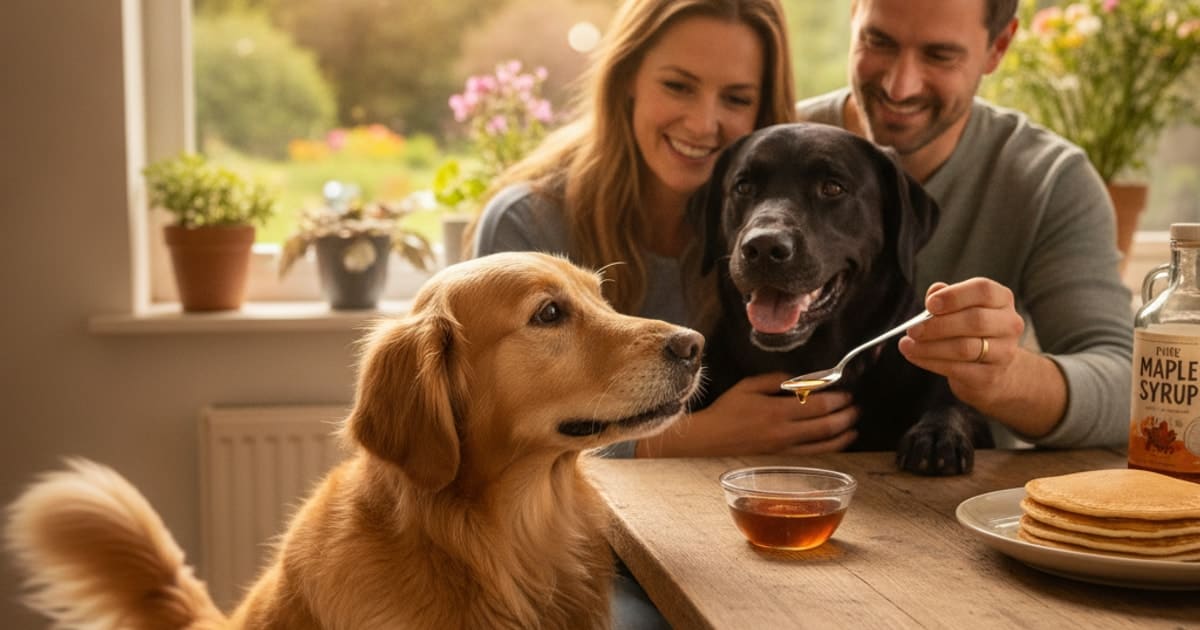
If your dog has swallowed a sugar-free, lite or no-sugar-added syrup, call your veterinarian or an animal poison control service now, because sugar-free syrups can contain xylitol and that is handled as an emergency in dogs. Make the same call if your dog got into a bottle of any syrup and is vomiting, acting unwell, or looks painful through the belly. Plain, pure maple syrup, the kind that is nothing but boiled tree sap, is not toxic to dogs, so a dog that licked a drip off the kitchen floor has not been poisoned. It is also almost entirely sugar, with nothing in it that a dog actually needs. The honest answer is that maple syrup is not a poison, but it is not food for a dog either.
Almost all of the real worry around syrup comes from what else is in the bottle, or from the pancake, pastry or glazed dish the syrup arrived on. That is the part worth understanding properly.
What maple syrup actually is, and what the label words mean
Maple syrup is tree sap boiled until most of the water has evaporated. What is left behind is concentrated sugar, mainly sucrose, along with water and small amounts of minerals and plant compounds carried over from the sap.
When a label says pure maple syrup, it means the contents are syrup and nothing else: no added corn syrup, no flavouring, no colouring. Grade names such as golden, amber, dark and very dark describe colour and strength of flavour, not a different nutritional profile. Syrup bought straight from a small producer, syrup sold as fresh or new-season, syrup in a decorative tin, and imported syrup from anywhere in the world are all the same thing to a dog's body. It is sugar.
You will sometimes read that maple syrup contains manganese, zinc and antioxidant compounds. It does, in trace quantities. A complete, balanced dog food already supplies those minerals in the amounts a dog needs, so there is no nutritional gap that syrup fills. Nothing in the bottle is a reason to give it.
Maple-flavoured pancake syrup, sometimes called table syrup, is a different product entirely. It is generally corn syrup or high fructose corn syrup with water, colour and flavouring, and sometimes preservatives. It is not dramatically more hazardous than the real thing, but it is still concentrated sugar, and the ingredient list always deserves a read before anything gets near a dog.
Sugar is the real issue here, not the maple
Dogs digest carbohydrate perfectly well, but concentrated sugar is something their gut has no particular use for.
A sudden hit of sugar can irritate the digestive tract and bring on vomiting, loose stool, gas or belly discomfort. Some dogs show nothing at all, others get noticeably still developing, and results vary from dog to dog. If vomiting or diarrhoea continues, or your dog goes quiet and lethargic, call your vet rather than waiting to see what happens.
Sugar also feeds the bacteria behind plaque and dental disease. Sticky sweet residue clinging to teeth is exactly the environment those bacteria like, and dental problems in dogs build quietly over a long time before anyone notices the smell or the sore mouth.
Then there is body condition. Syrup is calorie dense and carries no protein and no fat, so the calories arrive without anything the dog can build from. Extra body weight loads joints, hips and spine, and in a dog already slowing down, that is not a small thing.
Dogs with a history of pancreatitis, dogs being managed for diabetes, and dogs on any prescribed diet sit in a separate category. Sugary human foods are a question for the veterinary team, not a decision to make at the breakfast table. Never add sweet foods to the bowl of a dog on a prescribed diet or medication without asking first, and never stop or change anything your vet has prescribed in order to make room for a food. Your vet can tell you what, if anything, fits the plan your dog is already on.
There is also the practical mess. Syrup on fur invites persistent licking, and a dog that walks through a spill tracks it everywhere. That is minor compared with the rest, but it is a reason the bottle belongs on a shelf rather than a low table.
The syrups and syrup-covered foods that are genuinely dangerous
This is where the distinction matters more than anything else on the page.
| Type of syrup or food | What is typically in it | Why it matters for a dog |
|---|---|---|
| Pure maple syrup | Boiled maple sap only | Not toxic, but concentrated sugar with no nutritional purpose |
| Pancake or table syrup | Corn syrup, water, colour, flavouring | Same sugar load, plus additives worth checking on the label |
| Sugar-free, lite or keto syrup | Xylitol, sometimes labelled birch sugar, or other sugar alcohols | Xylitol is dangerous to dogs and needs an immediate veterinary call |
| Maple-flavoured baked goods | Syrup plus chocolate, raisins, nuts, raw dough | The add-ins can be far more hazardous than the syrup |
| Maple glazes on meat | Syrup with salt, onion or garlic powder, spices | Onion, garlic and other alliums are harmful to dogs |
If a label says sugar-free, no sugar added, keto-friendly or birch sugar, assume it could be a xylitol exposure and call your veterinarian or an animal poison control service straight away rather than watching and waiting. Xylitol turns up in syrups, pancake toppings, peanut butter, baked goods, mints and gum, and it affects dogs very differently from the way it affects people. Other sugar alcohols such as erythritol and sorbitol are not in the same category, but they can still upset a dog's stomach.
The food under the syrup deserves the same scrutiny. Chocolate chip pancakes, raisin or fruit bread, macadamia or walnut toppings, grapes on the side of the plate, and raw or rising dough are all problems in their own right, and a dog who cleared a dropped plate may have had more than syrup. Syrup that has been stored badly can also grow mould on the surface, and mouldy food should never go to a dog.
If your dog got into the bottle, here is what to watch for
First, work out which product it was. Find the bottle, keep it, and read the ingredient list. Whether the syrup was sweetened with sugar or with a sugar substitute is the single most useful thing you can tell your veterinary team.
Signs that can follow a large sugary mouthful include vomiting, diarrhoea, drooling, restlessness, and a dog who seems uncomfortable or will not settle. Call your vet if any of that continues, and do not try to manage it at home.
Get veterinary help promptly if you see vomiting that will not settle, a belly that looks swollen or feels painful or hard, weakness or wobbliness, tremors, disorientation or collapse. Those signs are not something to monitor overnight. The same applies if your dog chewed the container and may have swallowed a large piece of plastic, a cap, or glass, because the packaging can cause more trouble than the contents.
When you call, the clinic will want to know your dog's size, roughly when it happened, what the product was, and whether anything else was on the plate. Do not attempt any home remedy or try to make your dog sick. That decision belongs to a veterinarian who knows what was swallowed.
Puppies, small dogs, cats and dogs with existing health problems
Puppies have a lower tolerance for dietary surprises than adult dogs, and their digestive systems are still settling. Growing dogs need complete, balanced nutrition, and sugar displaces exactly that. There is no version of this where a puppy benefits from syrup, so keep it away from them and talk to your vet about anything beyond their normal food.
Small dogs sit in a similar position for a different reason. The same spilled amount represents a far bigger load relative to a small body than it does for a large dog, which is why a kitchen accident that means little for one dog can mean a sick night for another.
Cats also come up in this question. Cats cannot taste sweetness in the way dogs and people do, and as obligate carnivores they have even less use for sugar. The xylitol caution applies to a curious cat around sugar-free products too, so the same call to a veterinarian applies.
And for any dog with a diagnosed condition, on a prescription diet, or on medication, the question is not whether syrup is toxic. It is whether a sugary human food has any place in a carefully managed plan, and that is a conversation to have with the person managing it.
Key takeaways
- Plain, pure maple syrup is not toxic to dogs, but it is concentrated sugar with no nutritional purpose for them.
- Sugar-free, lite and keto syrups may contain xylitol, which is dangerous to dogs and warrants an immediate call to a veterinarian or an animal poison control service.
- Grade, origin, price and freshness do not change what syrup is: golden, amber, dark, artisan and imported are all the same sugar to a dog.
- The food under the syrup is frequently the bigger hazard, especially chocolate, raisins, nuts, raw dough, and glazes containing onion or garlic.
- Vomiting that will not settle, a swollen or painful belly, weakness, tremors, or a swallowed piece of the bottle all mean veterinary care now.
- Puppies, small dogs, and dogs with diabetes or a history of pancreatitis need veterinary input before any sweet human food is considered.
Where this leaves you
Your veterinarian owns the diagnosis and the plan. If your dog got into something and you are unsure how serious it is, that is a phone call, not a search. If your dog is managing a long-term condition, the diet sits inside the plan your vet has already built, and food choices work around it rather than against it. Everything on this page is general information about an ingredient, and your dog's history, size and health are what actually decide the answer, so talk to your vet before adding any human food to the bowl.
Related reading: Dog Emergency Signs for the signs that mean a dog needs urgent care, and the dog health conditions library for background on the issues behind diet questions like this one.
Frequently asked questions
- Can dogs eat maple.syrup?
- Plain, pure maple syrup is not toxic to dogs, so a small accidental taste is not a poisoning. It is still concentrated sugar with no nutritional purpose for a dog. Sugar-free syrups are a different matter because some contain xylitol, which needs an immediate veterinary call.
- Can dogs have maple.syrup?
- They can have it without being poisoned, provided it is genuine maple syrup rather than a sugar-free version. That is not the same as it being good for them. Syrup adds sugar and calories while contributing nothing a balanced dog food does not already provide, so talk to your vet first.
- Is maple syrup bad for dogs?
- It is not toxic, but it is not good for them. Concentrated sugar can irritate the gut, feeds the bacteria behind dental disease, and adds calories without protein or fat. For dogs managing diabetes or a history of pancreatitis, sweet human foods are a veterinary decision.
- Is maple syrup safe for dogs?
- Pure maple syrup is not considered a toxic food for dogs, but safe is the wrong word for something with no benefit and real downsides. Sugar-free and lite syrups may contain xylitol, which is dangerous to dogs, so always read the label before assuming anything.
- Can dogs eat maple syrup?
- Yes in the narrow sense that plain maple syrup will not poison a healthy dog, and no in the practical sense that it offers nothing useful. The food it is poured over is frequently the bigger hazard, especially chocolate, raisins, nuts or raw dough.
- Can puppies eat maple syrup?
- Keep syrup away from puppies. Growing dogs need complete, balanced nutrition, and sugar displaces it while their digestive systems are still settling. A small body also feels a dietary upset more sharply than a large one. Ask your veterinarian before giving a puppy any human food.
- What happens if a dog eats maple syrup?
- A dog that got into real syrup may show vomiting, loose stool, drooling or restlessness, though some show nothing at all. Find the bottle and check whether it was sugar-free. Call your vet if vomiting will not settle, the belly looks swollen or painful, or your dog seems weak.
- Can dogs have real maple syrup?
- Real maple syrup, meaning boiled maple sap with nothing added, is not toxic to dogs. Grade and origin make no difference to a dog's body, because golden, amber and dark syrup are all concentrated sugar. It remains a food with no nutritional purpose for a dog.
- Can dogs eat food with maple syrup?
- It depends entirely on what else is in the food. Maple-flavoured baked goods can contain chocolate, raisins, nuts or raw dough, and maple glazes on meat may include onion or garlic powder. Those ingredients are the real hazard, so check before letting your dog near the plate.
- Can cats and dogs eat maple syrup?
- Neither species has any use for it. Cats cannot taste sweetness the way dogs and people do, and as obligate carnivores they have even less need for sugar. The xylitol warning around sugar-free syrups applies to both, so call your vet if either one gets into one.
Educational content, not veterinary advice. Ask your vet about your dog.