Can Dogs Eat Mulberries? Tree Berries by Variety
Ripe mulberries from a true mulberry tree are not considered toxic to dogs, so a dog grazing on ripe windfall is usually facing stomach upset at worst. Unripe fruit, the milky sap in leaves and stems, fermenting or mouldy windfall, and lookalike trees such as paper mulberry all deserve a call to your vet.
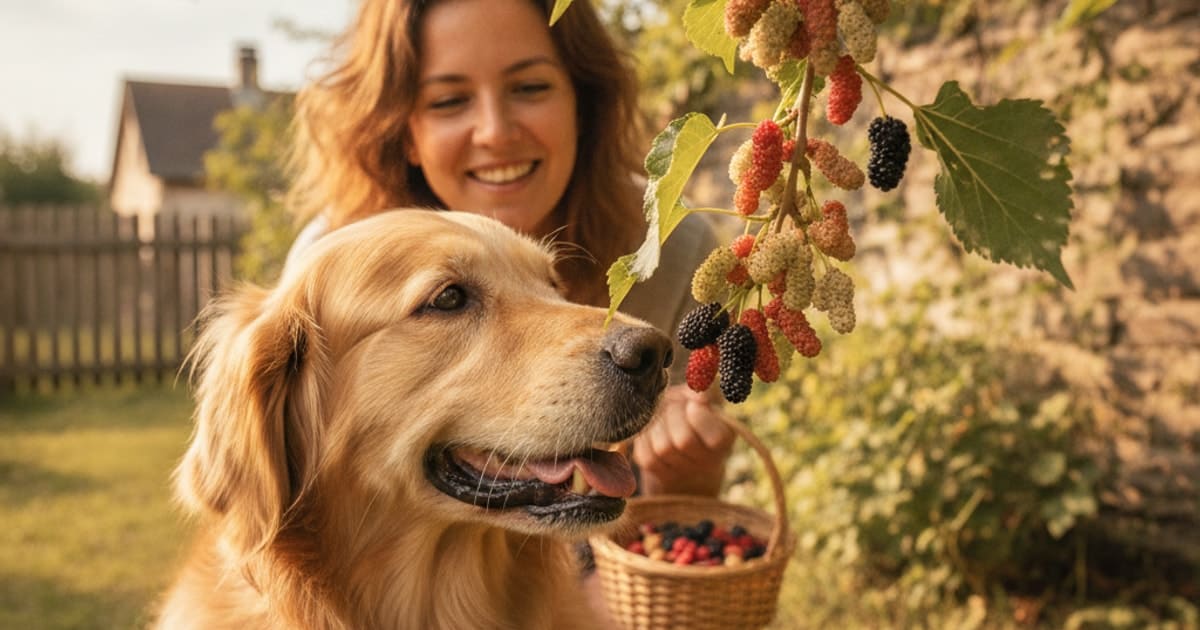
Ripe mulberries from a true mulberry tree, meaning a tree in the genus Morus, are not considered toxic to dogs, so a dog who grazes on ripe fallen fruit is usually dealing with stomach upset at worst. If your dog has eaten unripe fruit, fruit from a tree you cannot identify, or is vomiting repeatedly, drooling, shaking, wobbly, straining, or has a swollen or painful belly, call your veterinarian or an animal poison control service such as the ASPCA Animal Poison Control Center or Pet Poison Helpline straight away rather than waiting to see what happens.
That is the short version. The longer version matters, because the question owners type is almost never about the fruit alone. It is about a specific tree in a specific yard, dropping a specific colour of berry, and a dog who has already helped himself. Ripe mulberry fruit is fruit, not a toxin. The risk sits in the details around it: ripeness, the milky sap in green stems and leaves, decaying windfall on the ground, chemicals applied to the tree or the lawn, and trees that carry the word mulberry in their name without being mulberries at all.
Ripeness changes the picture more than colour does
A mulberry is an aggregate fruit, built from many tiny drupelets fused along a short stem. That is why it mashes so easily underfoot and why it stains everything it touches, including a pale muzzle and a light carpet.
Ripe fruit is soft, heavy with juice and drops with the lightest touch. Unripe fruit is firm, still tinged green or pale, and clings to the branch. The unripe fruit, along with green stems and leaves, carries more of the tree's milky white latex. In dogs, contact with that sap is an irritant story rather than a poisoning story: lip smacking, drooling, pawing at the mouth, retching, vomiting or loose, dark, purple-tinged stool.
Colour is a poor guide to ripeness across species, which is where a lot of confusion starts. White mulberry fruit can ripen white, pink, lavender or nearly black depending on the cultivar. Red mulberry ripens dark red to purple black. Black mulberry ripens a deep, almost ink-coloured purple. Judge ripeness by softness and by how readily the fruit releases from the twig, never by colour alone. If your dog cleared a patch of hard, clinging fruit off a low branch, mention it to your vet.
Mulberry varieties side by side
| Tree | Botanical name | Fruit | What to watch for |
|---|---|---|---|
| White mulberry | Morus alba | White, pink, lavender or near black when ripe; often mild and very sweet | Heavy fruit drop onto paths and lawns; unripe fruit clings and stays firm |
| Black mulberry | Morus nigra | Deep purple black, juicy, tart | Stains, sugar load and sticky windfall that ferments quickly in warm weather |
| Red mulberry | Morus rubra | Red deepening to purple black when fully ripe | Red fruit is often not ripe yet, so dogs grazing low branches get the firmer, latex-heavier fruit |
| Wild or volunteer mulberry | Usually Morus alba or a Morus hybrid | Variable colour and size, often small | Unknown spray history, roadside runoff, and uncertain identification |
| Paper mulberry | Broussonetia papyrifera | Round, fuzzy, orange red, with protruding stalks | Not a true mulberry; heavy milky sap, mushy fruit that rots fast on the ground |
So, variety by variety: dogs can eat ripe black mulberries and ripe red mulberries without the fruit itself being treated as toxic, and the same applies to ripe white mulberries. Red mulberry deserves one extra note, because red is the colour the fruit passes through on the way to ripe. Fruit that looks red and still feels firm is underripe, and underripe fruit is the version that upsets stomachs.
Wild mulberries are the same fruit growing on a tree nobody is managing. The fruit is not the problem. The unknowns are: whether the verge or hedgerow has been sprayed, whether the tree sits beside a road or a drainage line, and whether anyone has correctly identified it. Treat a wild tree with more caution than the one you planted, and if you are not certain what the tree is, treat the fruit as unidentified plant material and talk to your vet.
Paper mulberry is a different tree with a confusing name
Paper mulberry, Broussonetia papyrifera, sits in the same plant family as true mulberries but in a different genus. The common name causes real trouble, because people search for mulberry safety and land on a tree that does not behave like one.
Tell them apart by the fruit. True mulberry fruit is elongated, like a stubby blackberry. Paper mulberry fruit is a round, fuzzy, orange red ball with little protruding stalks poking out all over it, almost like a tiny sea urchin. The leaves are rough and variably lobed, and broken stems weep a thick milky sap.
Paper mulberry fruit is not a fruit to offer a dog. It turns to mush quickly, it falls heavily, and it rots where it lands. If your dog has eaten paper mulberry fruit, chewed the stems or mouthed the sap, phone your veterinarian or an animal poison control service and describe the tree as precisely as you can. A clear photograph of the leaf, the fruit and the bark is worth more to the person on the other end of that call than any description you can give from memory.
Windfall, fermenting fruit and the parts that are not fruit
More trouble comes off the ground than off the branch. A heavily cropping mulberry carpets the area beneath it, and that carpet changes character fast in warm weather.
Fermenting fruit produces alcohol, and dogs are small enough that scavenging fermented windfall can leave them unsteady, sleepy or disoriented. Decaying fruit also grows mould, and some moulds that colonise rotting food and fruit produce tremorgenic compounds. A dog who is trembling, twitching, unsteady, hypersensitive to sound or seizing after scavenging under a fruit tree is an emergency. Go to an emergency vet now and tell them exactly what was on the ground.
While you are thinking about what is underfoot, look at what else is in reach. Grapes and raisins are a separate and serious concern for dogs, and a grapevine growing through a hedge near a mulberry is not a rare arrangement. If there is any chance your dog ate grapes or raisins rather than mulberries, call your vet or an animal poison control service immediately, without waiting for signs.
The tree itself is not a chew toy either. Twigs, bark and larger fragments of branch can splinter or lodge, and a swallowed chunk of wood can cause an obstruction. Repeated unproductive vomiting, a hunched posture, a tense or distended abdomen, refusing food, or straining without passing anything are signs to be seen the same day. Do not try to resolve a suspected obstruction at home.
Spray history matters too. Insecticides, herbicides, lawn treatments and whatever has drifted from a neighbouring property all land on low fruit and low branches. If the tree or the ground beneath it has been treated, that is worth a call even if the fruit was ripe.
Which dogs should be cleared by a vet first
Mulberries are sugary and they are fibrous, and both of those things matter more for some dogs than others.
Dogs living with diabetes, dogs with a history of pancreatitis, dogs on a prescribed diet for urinary, kidney or gastrointestinal reasons, dogs with known food sensitivities, and dogs who are already unwell should not be given new fruit without their vet's input. The same applies to puppies and to pregnant or nursing dogs, where the right answer always comes from the vet who knows the dog, not from a web page.
Results vary from dog to dog. One dog clears a patch of windfall and shows nothing at all. Another gets loose stools from far less. If your dog has a sensitive gut, assume the second scenario and plan the yard accordingly.
Signs that mean a phone call, and signs that mean go now
Call your veterinarian promptly if you see vomiting that will not settle, repeated diarrhoea, blood in stool or vomit, drooling with pawing at the mouth, refusal of food, or lethargy that is out of character.
Go to emergency care without waiting if your dog has a swollen, hard or painful belly, is retching without bringing anything up, is trembling, twitching, wobbly or collapsing, is struggling to breathe, or has swallowed a large chunk of branch. The same applies if you believe the tree was paper mulberry, was sprayed, or was something you cannot identify.
Purple stool after a mulberry binge is usually just pigment. Purple stool alongside a sore belly, repeated vomiting or a flat, withdrawn dog is a different conversation, and it belongs with your vet rather than with an internet search.
Key Takeaways
- Ripe fruit from a true mulberry tree, Morus alba, Morus nigra or Morus rubra, is not considered toxic to dogs.
- Unripe fruit, green stems and leaves carry more of the tree's milky latex and are more likely to irritate the mouth and gut.
- White, black and red mulberries behave much the same way; red fruit is often still underripe, so judge by softness, not colour.
- Wild mulberries are the same fruit on an unmanaged tree, so spray history, roadside contamination and uncertain identification are the real variables.
- Paper mulberry is a different genus with round, fuzzy, stalked fruit; treat it as an unidentified plant and call your vet or an animal poison control service.
- Fermenting and mouldy windfall under any fruit tree can cause wobbliness, tremors or twitching, which is emergency territory.
- Twigs, bark and swallowed wood carry an obstruction risk that no home measure resolves.
For a clearer sense of where watch and wait ends and emergency care begins, read Dog Emergency Signs.
Where your veterinarian fits in
Your vet owns the diagnosis and the plan. They know your dog's history, what else is going on in the background, and how seriously to take a given set of signs after a given exposure. A web page can tell you what a mulberry is and which trees get confused with it. It cannot examine an abdomen or weigh up what your dog ate against what your dog can tolerate.
So keep the tree identified, keep the windfall cleared, and talk to your vet before fruit of any kind becomes part of what your dog eats. If something is already wrong, make the call early. Nobody has ever regretted phoning too soon.
Frequently asked questions
- Can dogs eat mulberries tree?
- Dogs can eat ripe fruit from a true mulberry tree, which is not considered toxic to them. The tree itself is not food: leaves, green stems and bark carry irritating milky sap, and swallowed wood can cause an obstruction. Unripe fruit is more likely to upset the stomach. Talk to your vet.
- Can dogs eat mulberries from a mulberry tree?
- Yes, ripe mulberries from a true mulberry tree are not considered toxic to dogs. The concerns are unripe fruit, which carries more of the tree's milky latex, fermenting or mouldy windfall on the ground, and any spray applied to the tree or lawn. Call your vet if your dog becomes unwell.
- Can dogs eat mulberry tree berries?
- Ripe mulberry tree berries are not considered toxic to dogs, though they are sugary and can loosen stools. Firm, clinging, underripe berries are the ones more likely to cause drooling, vomiting or diarrhoea. Dogs with diabetes, pancreatitis history or a prescribed diet need their vet's input first.
- Can dogs eat black mulberries?
- Ripe black mulberries, from Morus nigra, are not considered toxic to dogs. They ripen to a deep purple black and are very juicy, so expect dark, stained stool afterwards. The practical risks are stomach upset and fermenting windfall under the tree rather than the ripe fruit itself.
- Can dogs eat red mulberries?
- Ripe red mulberries, from Morus rubra, are not considered toxic to dogs. The catch is that red is a stage this fruit passes through before it is ripe, deepening to purple black. Firm red fruit is underripe and more likely to irritate the gut, so judge ripeness by softness.
- Can dogs eat white mulberries?
- Ripe white mulberries, from Morus alba, are not considered toxic to dogs. Depending on the cultivar, ripe fruit can look white, pink, lavender or nearly black, so colour is not a reliable ripeness cue. Soft fruit that drops at a touch is ripe; firm fruit clinging to the twig is not.
- Can dogs eat wild mulberries?
- Wild mulberries are usually the same species growing untended, and the ripe fruit is not considered toxic. The unknowns are what matters: herbicide or pesticide spraying, roadside runoff, and whether the tree has been correctly identified. If you are not certain what the tree is, ask your vet before letting your dog graze.
- Can dogs eat paper mulberry?
- No. Paper mulberry, Broussonetia papyrifera, is a different genus with round, fuzzy, orange red fruit on protruding stalks and heavy milky sap. It is not a fruit to offer a dog. If your dog has eaten it or chewed the stems, call your veterinarian or an animal poison control service.
Educational content, not veterinary advice. Ask your vet about your dog.