Can Dogs Eat Peas From the Garden? (Yard Safety)
Peas from the garden are not toxic to dogs, and a dog that grazes the pea patch has usually not been poisoned. The bigger risks are choking and blockage from fibrous vines and pods, garden chemicals, and swallowed pea gravel. Any gagging, repeated vomiting or painful belly means a vet visit now.
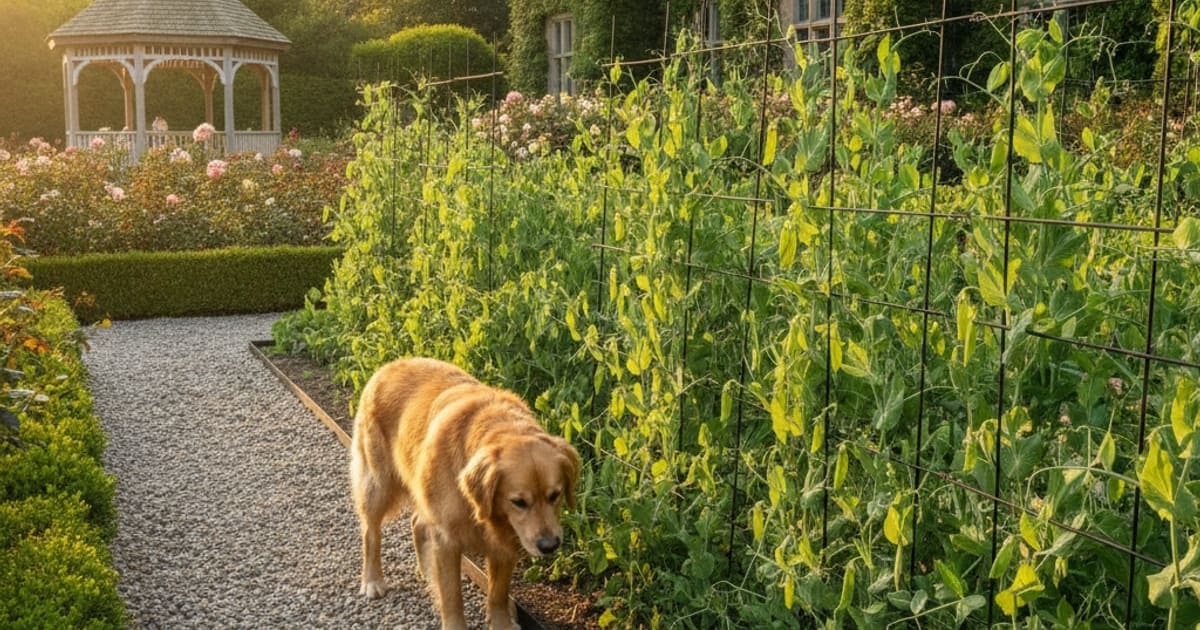
Peas themselves are not toxic to dogs, so a dog that helps itself to the pea patch has usually not been poisoned. Call your vet, or an animal poison control service such as the ASPCA Animal Poison Control Center or the Pet Poison Helpline, if your dog has swallowed a mass of vine or pods, has eaten pea gravel from the path, or may have reached anything that was sprayed, fertilised or baited nearby.
The garden version of this question is a different question from the kitchen version. A bowl of plain peas is a simple food. A pea bed is peas plus stringy vines, tough pods, tendrils, soil, mulch, compost, whatever the plants were treated with, and very often a gravel path running right alongside it. The plant is the easy part. Everything around it is where the real risk sits.
Start with the risk, not the vegetable
A dog grazing a pea bed is almost never eating peas the way you would hand them over. It pulls, and a length of vine comes along with the pod. Vines and pods are fibrous and stringy, and dogs swallow that kind of material with very little chewing. That matters in two places: the throat, where a wad of plant matter can lodge, and the gut, where it can clump and slow or block the normal passage of food.
Gulpers, small dogs and puppies carry more of this risk than a slow, careful eater. Snow pea and sugar snap pods have a tough string along the seam that can tangle with other plant material. Dried, hardened pods left on the vine at the end of the season are tougher again, and far less likely to break down on the way through.
Even without a blockage, a stomach full of raw plant roughage often produces gas, cramping, loose stools or vomiting within a day. That alone is worth a call if it keeps going, because a dog that keeps vomiting stops holding water down.
Gagging, repeated retching, vomiting that will not stop, a tense or painful belly, refusing food, unusual lethargy, or no stools passing at all can all point to an obstruction, and every one of them means contacting your vet now rather than waiting to see how the night goes.
Blockages do not always announce themselves on the first day. A dog can look bright for a stretch and then deteriorate. If you saw what was eaten, tell your vet exactly what it was and roughly when, because that history shapes whether they want imaging. Do not try home remedies first.
The green parts: plants, leaves, vines, tendrils and flowers
The foliage of the edible garden pea, including snow pea and sugar snap varieties, is not treated as a poisonous plant for dogs. Pea plants, pea leaves, pea vines, pea tendrils, pea tips, snow pea leaves and the flowers of an edible pea all come from the same plant, and a dog nibbling them is not a poisoning event. People eat several of those parts themselves.
There are two caveats, and they matter.
First, not every pea in a garden is an edible pea. Ornamental sweet pea, a climbing vine in the Lathyrus group grown for its scented flowers, is a different plant altogether, and animal poison control resources list it as toxic to dogs, with repeated ingestion of the seeds and pods linked to weakness, tremors and other neurological signs. The two vines look similar enough to confuse a worried owner at six in the morning. If you cannot say with certainty which plant your dog chewed, call your vet or a poison control service and describe it rather than guessing.
Second, bulk and residue. Foliage that is harmless in principle can still cause a problem when a dog strips half a row of it, and anything growing in a treated bed may carry fertiliser, insecticide or fungicide on the surface. If the cooked greens find their way to a human plate, they also tend to arrive with garlic, onion, oil or salt, and onion and garlic in any form are a genuine concern for dogs.
Shoots, sprouts, microgreens and tips
Pea shoots, pea sprouts, pea microgreens and pea tips are all young growth from the same edible plant, and none of them are toxic to dogs. Owners report dogs picking at a tray of microgreens with no trouble at all, and results vary from dog to dog in how well that sits.
The concerns here are different from the toxicity question. Raw sprouts are grown in warm, humid conditions that suit bacteria such as Salmonella and E. coli, which is exactly why sprouts come with careful handling advice for people. A dog with a weakened immune system, a very young puppy or a dog already unwell has less margin for that.
Home sprouting adds another issue. Seed sold for planting is often coated or treated with fungicide, and a packet of garden pea seed is not food. Keep seed packets, soaked seed and treated bulbs well out of reach. Growing mats, hydroponic medium and the potting soil under a microgreen tray also get eaten along with the greens, and soil and matting are not things a stomach handles gracefully.
Peas off the vine, and the rest of what is in the bed
Can dogs eat peas off the vine? The pea itself is fine. Plain green peas appear in plenty of commercial dog foods, and a shelled raw pea is not dangerous. Whether peas suit your individual dog is a separate matter: dogs with certain urinary stone histories, kidney disease or other dietary restrictions may need them limited, and if legumes make up a large share of your dog's daily food, that formulation question belongs with your veterinarian rather than with a search engine.
What concerns vets more is what shares the space with the peas. Slug and snail bait is one of the most serious things a dog can find in a vegetable garden, and some formulations cause rapid, severe signs. Treat any suspected contact as an emergency and call before symptoms start. Bone meal and blood meal fertilisers are appealing to dogs and can cause significant digestive illness. Compost heaps can grow moulds that trigger tremors. Mushrooms sprouting in damp beds are difficult to identify and should be assumed risky. Cocoa mulch, rhubarb leaves, green tomato foliage and any onion, garlic or chive planting nearby all add to the list.
| Garden item | Generally regarded as | What actually concerns a vet |
|---|---|---|
| Shelled green peas | Non-toxic food for dogs | Gorging, gas and loose stools |
| Pods: snow, sugar snap, shelling | Not toxic | Choking, stringy seams, blockage in gulpers |
| Leaves, vines, tendrils, tips, flowers of edible pea | Not toxic | Fibrous wads, spray residue, bulk eating |
| Pea shoots, sprouts, microgreens | Not toxic | Bacteria on raw sprouts, growing medium, treated seed |
| Ornamental sweet pea (Lathyrus) | Listed as toxic to dogs | Call a vet or poison control after any ingestion |
| Treated seed, fertiliser, slug bait | Hazardous | Emergency, call before signs appear |
| Pea gravel | Not food at all | Cracked teeth, obstruction, repeat pica |
Pea gravel: why dogs eat it and what it does
Dogs should not eat pea gravel. It has no nutritional value, it does not break down, and it is hard enough to crack a tooth on the way in. Swallowed stones can irritate the stomach lining, and a mouthful can collect into something the gut cannot move. Gravel also shows up clearly on an x-ray, which is one reason a vet will often want imaging when an owner says their dog has been eating the path.
So why do dogs eat pea gravel? Several reasons overlap. Puppies explore with their mouths and gravel is the right size to carry around. Bored, under-exercised or anxious dogs chew whatever the yard offers. Gravel near a barbecue, a bird feeder or a compost bin picks up food smells and stops being gravel in the dog's mind. And repeated non-food eating, called pica, can sit on top of an underlying medical issue: digestive disease, intestinal parasites, anaemia, a nutritional imbalance, or a change in appetite driven by medication.
That last point is why a gravel habit is a veterinary conversation rather than purely a training one. A dog that does it once, under the picnic table, is a supervision problem. A dog that does it repeatedly deserves a physical exam, and your vet may suggest bloodwork or a faecal test before anyone starts rearranging the landscaping. In the meantime, supervision in the yard, better enrichment indoors and out, and keeping food smells away from the gravel all reduce the opportunity.
Key Takeaways
- Peas, pea pods, pea plants, leaves, vines, tendrils, tips, shoots, sprouts, microgreens and the flowers of an edible pea are not toxic to dogs.
- Ornamental sweet pea in the Lathyrus group is a different plant and is listed as toxic to dogs. If you cannot identify the vine, call for advice.
- The real garden hazards are choking and blockage from fibrous vines and pods, plus slug bait, fertilisers, treated seed, compost moulds and sprayed residue.
- Raw sprouts and microgreen trays bring bacteria and growing medium along with the greens.
- Pea gravel is not food. Repeated gravel eating warrants a vet exam, not just a correction.
- Gagging, repeated vomiting, retching, a painful belly, refusing food or no stools passing means a vet now.
Working with your vet
Your vet owns the diagnosis here. They are the one who can tell the difference between a dog with a sore stomach after raiding the vegetable bed and a dog with something lodged where it should not be, and that distinction is not one an owner can make by watching. If your dog grazes the garden regularly, mention it at the next appointment, and talk to your vet about whether anything in your planting, mulching or pest control deserves a rethink. Keep a short note of what grows in the yard and what you treat it with, because that list answers a lot of questions quickly on a phone call. When something has already been swallowed, early contact is always worth more than waiting.
For a plain list of the signs that mean same-day or overnight care, see Dog Emergency Signs.
Frequently asked questions
- Can dogs eat peas from the garden?
- Yes, plain peas from the garden are not toxic to dogs. The risk is not poisoning but what comes with them: stringy pods, lengths of vine, soil and any spray or fertiliser used on the bed. Gulping a wad of plant material can cause choking or a blockage, so supervise garden grazing.
- Can dogs eat pea plants?
- Edible garden pea plants, including snow pea and sugar snap varieties, are not considered toxic to dogs. Ornamental sweet pea in the Lathyrus group is a different vine and is listed as toxic. If you cannot identify which plant your dog chewed, call your vet or an animal poison control service.
- Can dogs eat pea leaves?
- Pea leaves from an edible pea plant are not toxic to dogs. The concerns are bulk and residue: a lot of fibrous leaf material can upset the stomach or clump in the gut, and leaves from a treated bed may carry insecticide or fungicide. Cooked pea leaves with garlic or onion are not safe.
- Can dogs eat peas shoots?
- Pea shoots are not toxic to dogs and are simply the young growth of the edible pea plant. Watch the context rather than the plant: raw sprouted shoots can carry bacteria, trays bring growing medium and soil, and seed sold for planting is often chemically treated and should never be eaten.
- Can dogs eat pea sprouts?
- Pea sprouts are not toxic to dogs, but raw sprouts of any kind are grown in warm, humid conditions that suit bacteria such as Salmonella and E. coli. Puppies, elderly dogs and dogs with weakened immune systems have the least margin for that. Talk to your vet before adding them.
- Can dogs eat pea microgreens?
- Pea microgreens are not toxic to dogs, since they are young edible pea plants. The practical issues are the soil or growing mat underneath, any fertiliser used on the tray, and bacteria on raw sprouted greens. Keep trays out of reach so your dog is not eating the medium along with them.
- Can dogs eat pea vines and tendrils?
- Vines and tendrils from an edible pea are not toxic, but they are the part most likely to cause trouble mechanically. They are fibrous, stringy and usually swallowed with almost no chewing, which is how a wad lodges in the throat or the gut. Gulpers and small dogs are at higher risk.
- Can dogs eat pea flowers?
- Flowers from an edible garden pea are not toxic to dogs. Flowers from an ornamental sweet pea are a different matter, as that plant is listed as toxic to dogs by animal poison control resources. Identify the vine before you decide, and call for advice if you genuinely are not sure.
- Can dogs eat pea gravel?
- No. Pea gravel is not food, does not break down, and is hard enough to crack a tooth. Swallowed stones can irritate the stomach or collect into an obstruction. If your dog has eaten gravel, contact your vet, because stones show clearly on an x-ray and early assessment matters.
- Why do dogs eat pea gravel?
- Reasons overlap: puppies explore with their mouths, bored or anxious dogs chew what the yard offers, and gravel near a grill or feeder smells like food. Repeated non-food eating, called pica, can also sit on top of digestive disease, parasites, anaemia or a nutritional issue, so book a vet exam.
Educational content, not veterinary advice. Ask your vet about your dog.