Can Dogs Eat Pheasant? (Raw, Cooked and Whole Birds)
Yes, dogs can eat plain pheasant that has been cooked through and taken off the bone, with no seasoning, butter or stuffing. Raw pheasant, cooked bones, whole carcasses and embedded lead shot are where the real risks sit, so call your vet if your dog swallows any of those.
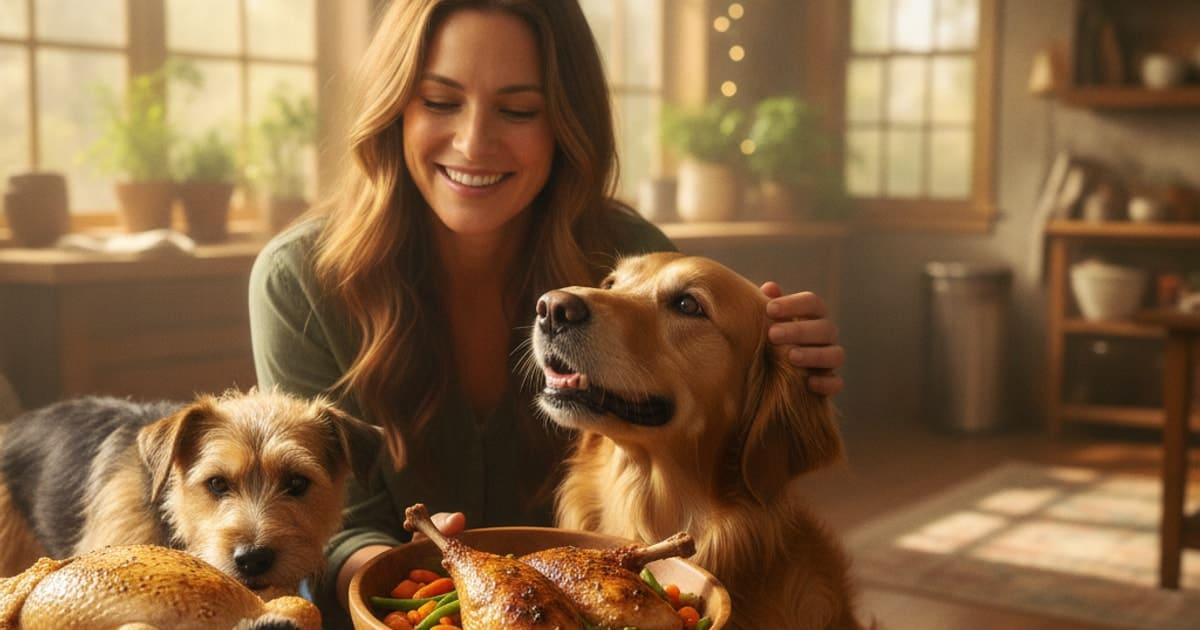
Yes, dogs can eat pheasant, provided it is plain meat, cooked through, and taken completely off the bone. If your dog has already swallowed a cooked pheasant bone, raided a whole carcass, or eaten any part of a bird that was shot, call your veterinarian or an animal poison control service such as the ASPCA Animal Poison Control Center or the Pet Poison Helpline straight away rather than watching and waiting at home.
Pheasant itself is a lean, dark game meat that sits in the same broad family as chicken, turkey and duck. The muscle meat is rarely the problem. What makes this bird different from anything you would buy shrink-wrapped at a counter is everything that travels with it: fine splintery bones, feathers, organs, a gut cavity, and very often a scattering of shot pellets still buried in the flesh.
Why a game bird is not the same as supermarket poultry
A farmed chicken arrives plucked, drawn, inspected and free of foreign objects. A pheasant frequently does not. Birds taken in the field are killed with shotgun pellets, and those pellets do not all pass through. Some remain embedded along the wound channel, surrounded by bruised tissue. Shot may be steel, bismuth or lead depending on where and how the bird was taken, and lead is the one that matters most. Swallowed lead can be absorbed from the stomach and cause lead toxicity, which can show up as vomiting, loss of appetite, dullness, abdominal pain, diarrhoea, weakness, tremors or seizures. A dog that has eaten shot-filled meat needs a veterinary conversation, not home observation, because a pellet sitting in the stomach is a different situation from one that has already moved on.
Game birds also handle differently before they reach the kitchen. They are commonly hung in feather for a period to develop flavour, which means the carcass has been sitting at ambient temperature with its gut contents in place. That ageing process is a culinary tradition rather than a food-safety one, and it affects the bacterial picture of the raw bird considerably.
Finally, pheasant bones are small, thin and brittle. Wing tips, ribs, neck bones and the fine bones around the breast plate are far more fragile than the beef or lamb bones people usually picture when they think about bones for dogs.
Cooked pheasant, plain and boneless
Can dogs have cooked pheasant? Yes, and cooked plain pheasant breast is the simplest, lowest-risk form of this bird for a dog. Cooking through to the centre handles Salmonella, Campylobacter and other bacteria that wild birds can carry, and the breast gives you a solid block of muscle meat with no bone running through it.
Plain pheasant meat, cooked through and completely free of bones and shot, is the only form of this bird that is straightforwardly suitable for a dog.
Plain means plain. No salt rub, no garlic or onion, no butter or bacon wrap, no gravy, no stuffing, no red wine braise, no stock cubes. Onion and garlic are toxic to dogs in any form, and both turn up constantly in game recipes. Rich fats and heavy seasoning can also upset a dog's digestion, and dogs with a history of pancreatitis or fat sensitivity are better off without the skin and the fatty trimmings altogether.
Before any cooked pheasant goes near your dog, run your fingers through the meat and look for shot. Pellets are small, hard and easy to miss, and the bruised, darkened tissue along a wound channel is worth cutting out and discarding entirely. Do the same check with cooked pheasant breast specifically, since breast meat takes a lot of the shot in a typical bird.
Cooked bones are a firm no. Heat dries bone out and changes how it fractures, so cooked pheasant bones tend to shatter into sharp shards rather than crush. Those shards can lodge in the mouth or throat, scrape the oesophagus, or perforate the stomach or intestine. A cooked pheasant carcass left within reach of a counter-surfing dog is one of the genuinely risky moments in a kitchen.
If pheasant is new to your dog, introduce it as a plain single protein and watch for itching, ear trouble, loose stools or vomiting over the following days. Game meats are sometimes used as novel proteins for dogs who react to common ones, but that is a plan to build with your veterinarian rather than improvise.
Raw pheasant, raw breast and raw carcass
Can dogs eat raw pheasant meat? Some raw feeders do include wild game, but raw pheasant carries a set of risks that cooked pheasant simply does not, and the wild-shot bird is the hardest version of the question.
The first issue is bacteria. Raw poultry and raw game can carry Salmonella, Campylobacter, Listeria and E. coli. A healthy dog may shed these organisms without looking obviously ill, which creates a household hygiene problem as well as a canine one, particularly where there are infants, elderly people, pregnant women or anyone immunosuppressed in the home. Bowls, surfaces, hands and the dog's own mouth all become part of the chain.
The second issue is parasites. Wild birds can carry parasites that domestic poultry production largely controls for. Deep freezing reduces some parasite risk but does not sterilise meat and does not eliminate bacteria.
The third issue is avian influenza, which circulates in wild bird populations and is a live consideration for anyone handling game that has been found dead or taken in an area with known outbreaks. If your dog has eaten a wild bird found dead, that is a call to your veterinarian.
Raw pheasant breast, off the bone and free of shot, is the cleanest raw option and still carries the bacterial load described above. A raw pheasant carcass is a different proposition again, because it brings bones, gut remnants, feathers and shot into the same mouthful. Raw bones are more pliable than cooked ones, but game bird bones are small and sharp enough that choking, dental fractures, obstruction and perforation remain real possibilities. Results vary from dog to dog, and a dog who bolts food whole is in a different risk category from one who chews deliberately.
If you are weighing raw feeding of wild game, talk to your vet about your specific dog, your household, and how the birds you have access to were handled. That conversation is worth having before the first bird goes in the bowl, not after.
Whole birds, retrieved birds and scavenged carcasses
Can dogs eat whole pheasant? A whole bird is the highest-risk version of this food, because it bundles every hazard together. Feathers are indigestible and can irritate the gut or mat into stool. The head and feet add hard, awkward structures. The crop and gut hold whatever the bird was eating and whatever has started to grow in it. Organ meat such as liver is nutritionally rich and concentrated in vitamin A, which is another reason whole-bird feeding is a decision for a veterinarian rather than an impulse.
Working dogs and country dogs meet this question in the field rather than the kitchen. A retrieving dog is trained to carry a bird to hand without crushing it, but training is not a guarantee, and an unsupervised dog with a downed bird may eat rather than deliver. Scavenged carcasses are worse again. A bird that has been dead for some time can carry the toxins produced by bacteria in decomposing tissue, which is the route to botulism in dogs, and it may be crawling with maggots. If your dog has eaten a carcass found in the field, ring your veterinarian and describe what you saw, including how long the bird looked like it had been there.
For a dog that has swallowed something it should not have, the useful instinct is to trade rather than chase. Chasing turns a carcass into a prize worth bolting whole, and a swallowed large piece of bird is exactly the scenario that leads to an obstruction.
How the different forms of pheasant compare
| Form of pheasant | Main concerns | Bottom line |
|---|---|---|
| Plain cooked breast, boneless | Shot pellets missed in the flesh | Suitable once checked and unseasoned |
| Cooked meat with skin, butter, gravy or stuffing | Onion, garlic, salt, rich fat | Not suitable |
| Cooked bones or cooked carcass | Splintering, choking, perforation | Never, call a vet if swallowed |
| Raw boneless breast | Salmonella, Campylobacter, parasites, household spread | Only as part of a plan made with a vet |
| Raw carcass with bones | All of the above plus bone injury and obstruction | High risk, vet conversation first |
| Whole bird with feathers and organs | Feathers, gut contents, vitamin A load, bones | Not a casual food |
| Any shot-in meat, raw or cooked | Lead and metal pellets | Remove shot or do not feed |
Signs that mean a veterinary visit, not a wait-and-see
After any pheasant incident, the warning signs are worth knowing cold. Vomiting that will not settle, a swollen, tense or painful belly, repeated unproductive retching, or a dog that will not lie down comfortably all warrant an urgent call. So does a swallowed large piece of bone or carcass, even if your dog seems fine at first, because obstruction can take time to declare itself.
Also worth an immediate call: black, tarry or bloody stool, straining without producing anything, gagging or pawing at the mouth, drooling, pale gums, sudden lethargy, tremors, wobbliness or any seizure activity. Neurological signs after a dog has eaten shot-filled game should always be reported, since lead toxicity can present that way.
Key Takeaways
- Plain pheasant meat, cooked through and off the bone, is fine for a healthy dog.
- Cooked pheasant bones splinter and should never be given, including the carcass after a meal.
- Check every cut for shotgun pellets and discard bruised tissue along the wound channel.
- No salt, onion, garlic, butter, gravy or stuffing, and skip the skin for fat-sensitive dogs.
- Raw pheasant adds bacterial, parasite and household hygiene risks that cooking removes.
- Whole birds and scavenged carcasses are the highest-risk form and warrant a vet conversation.
- Vomiting that will not settle, a painful or swollen belly, or a swallowed large piece means call now.
Your veterinarian owns the diagnosis and the plan here. They know your dog's weight, gut history, dental condition and any ongoing conditions that change how a game bird should be handled, and they are the right person to decide whether an X-ray, an induced vomit or simple monitoring is appropriate after an incident. Anything you feed sits alongside proper veterinary care, never in place of it.
Related reading: Dog Emergency Signs, Can Dogs Eat Raw Pork Meat?, Can Dogs Eat Eggs?, Can Dogs Eat Salmon? and Can Dogs Eat Rice?.
Frequently asked questions
- can dogs eat pheasant
- Yes, dogs can eat pheasant when it is plain meat, cooked through and completely off the bone. Check carefully for shotgun pellets and remove bruised tissue around any wound channel. Avoid seasoning, onion, garlic, butter and gravy. If your dog swallowed bone or shot, call your vet.
- can dogs eat pheasant meat
- Yes, plain pheasant meat is suitable for healthy dogs once it has been cooked through and stripped of bone. It is a lean game meat sometimes used as a novel protein. The risks come from embedded shot, rich seasoning and brittle bones rather than the muscle meat itself.
- can dogs eat cooked pheasant
- Yes, cooked pheasant is fine for dogs provided it is plain and boneless. Cooking handles Salmonella and Campylobacter, but it also makes the bones brittle and prone to splintering, so every bone must be removed. Skip stuffing, gravy, butter, salt and anything containing onion or garlic.
- can dogs eat pheasant raw or cooked
- Cooked is the safer of the two. Cooking through kills bacteria that wild birds commonly carry, while raw pheasant brings Salmonella, Campylobacter and parasite risks into your dog and your household. Either way, remove all bone and shot. Discuss raw game feeding with your vet before starting.
- can dogs eat pheasant raw
- Some raw feeders include wild game, but raw pheasant carries bacterial and parasite risks that cooking removes, plus a hygiene risk for people in the home. Wild-shot birds may also contain lead pellets. Talk to your vet about your specific dog and household before feeding raw pheasant.
- can dogs eat raw pheasant meat
- Raw pheasant meat can be fed by experienced raw feeders, but it is not risk-free. Expect possible Salmonella, Campylobacter, Listeria and parasites, and handle surfaces and bowls accordingly. Boneless raw breast is cleaner than a raw carcass. Results vary from dog to dog, so get veterinary input first.
- can dogs eat pheasant breast
- Pheasant breast is the simplest cut for a dog because it is a solid block of muscle with no bone running through it. Cook it through, leave it unseasoned, and feel through the meat for shotgun pellets, since breast meat often takes a good share of the shot.
- can dogs eat cooked pheasant breast
- Yes, plain cooked pheasant breast is the lowest-risk form of this bird for dogs. Cook it fully, skip butter, oil, salt, onion and garlic, and remove any shot you find. Introduce it as a single plain protein and watch for digestive upset or itching in the days afterwards.
- can dogs eat whole pheasant
- A whole pheasant is the highest-risk form, because it combines brittle bones, feathers, gut contents, organ meat and shot in one package. Feathers are indigestible and bones can cause choking or obstruction. If your dog has swallowed a whole bird or a large section of one, contact your vet.
- can dogs eat raw pheasant carcass
- A raw pheasant carcass combines every risk at once: small sharp bones, bacteria, parasites, feathers, gut remnants and possible lead shot. Scavenged carcasses add decomposition toxins and maggots. If your dog has eaten one, especially a bird that was already dead in the field, ring your veterinarian.
Educational content, not veterinary advice. Ask your vet about your dog.