Can Dogs Eat Pork? (Plain, Cooked and Boneless Only)
Yes, dogs can eat pork as long as it is plain, fully cooked, unseasoned and boneless. Bacon, ham, sausage, seasoned roasts, raw pig meat and cooked pork bones are the risky forms, and a dog who swallows a bone or becomes unwell afterwards needs a vet.
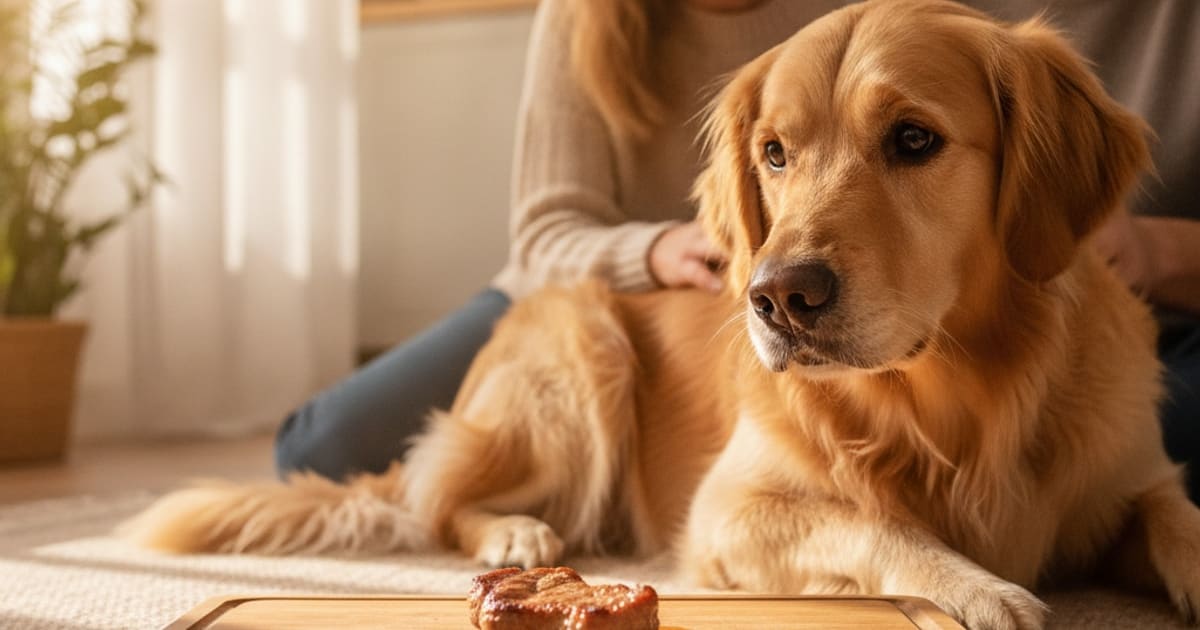
Yes, dogs can eat pork, but only when it is plain, fully cooked, unseasoned and completely free of bone. If your dog has already helped itself to raw pork, a cured product such as bacon or ham, or any kind of pork bone, call your vet and tell them what was eaten and roughly when, because that version of the question needs a professional looking at your actual dog.
Pork itself is not toxic to dogs the way grapes, onions, chocolate or xylitol are. The problem is almost never the meat. It is what we do to the meat: the salt, the smoke, the cure, the garlic and onion powder in the rub, the fat we leave on, and the bone we hand over afterwards. Strip all of that away and what remains is an ordinary animal protein that plenty of dogs digest without any fuss at all.
Is plain cooked pork actually good for dogs?
Pork is a complete animal protein, which means it supplies the full range of amino acids a dog uses to maintain muscle, skin, coat and connective tissue. Among common meats, pork is a particularly strong source of thiamine, and it also contributes B vitamins such as B6 and B12 along with minerals including zinc, selenium and phosphorus. Nutritionally, there is nothing second-rate about it compared with chicken, beef or turkey.
The real variable is the cut. Loin and tenderloin are lean. Belly, shoulder, ribs and crackling are not. Fat is the part of pork that causes trouble, because a sudden load of rich fatty food is a well-recognised trigger for digestive upset and for pancreatitis in dogs that are prone to it. A lean, trimmed piece of cooked loin is a very different proposition from a chunk of fatty roast skin, even though both are technically pork.
People also ask whether dogs can eat pig meat, as if it were something separate. It is not. Pork, pig meat, hog and swine all describe the same animal, and the same rules apply to all of them: cooked through, nothing added, no bone.
One more point worth saying plainly, because owner forums go back and forth on it endlessly. Dogs do eat pork, and have done for as long as humans have kept both. The reason it has a slightly shady reputation is that the pork most households have in the fridge is bacon, ham, sausage or a seasoned joint, and those are genuinely poor choices. The plain cooked meat underneath is not the villain.
Which pork products belong in the bowl and which do not
Plain, fully cooked, unseasoned, boneless pork is the only form of pork that belongs in a dog's bowl. Everything else on this list is on it for a reason.
| Pork form | Suitable for dogs? | Why |
|---|---|---|
| Plain cooked loin, chop or tenderloin, boneless and unseasoned | Generally suitable | Lean animal protein with nothing added |
| Bacon | Avoid | Heavily salted, cured and very fatty |
| Ham and gammon | Avoid | Cured and salty, often glazed with sugar or honey |
| Sausages, salami, chorizo, hot dogs | Avoid | Salt, fat, spices and frequently onion or garlic powder |
| Seasoned roast pork, gravy, marinades | Avoid | Garlic, onion, salt and oil are the problem, not the meat |
| Pork crackling, rinds and scratchings | Avoid | Hard, extremely fatty and salty |
| Pork fat trimmings | Avoid | Rich fat load that can upset the gut and the pancreas |
| Cooked pork bones, including rib and chop bones | Avoid | Splinter into sharp fragments |
| Raw pork or raw pork mince | Avoid unless your vet has guided you through it | Parasite and bacterial risk |
If you take one thing from that table, make it this: the more a pork product has been processed, the further it should stay from your dog.
Raw pork, pork bones and the hazards that lead to emergency visits
Raw pork sits in a different category from raw chicken or raw beef in many people's minds, and there is a sensible reason for that. Pork can carry Trichinella, the parasite responsible for trichinellosis, and undercooking is what allows it to survive. Raw pig meat can also carry Salmonella, Listeria, Yersinia and E. coli, and a dog shedding those organisms is a household issue as well as a canine one, particularly where young children or immune-compromised adults share the home. Thorough cooking is what removes that risk. Freezing is not a reliable substitute.
Bones are the other hazard, and they cause the kind of problem that cannot be managed at home. Cooked bone is brittle. Rib and chop bones crack lengthwise into sharp shards that can lodge in the mouth, wedge across the roof of the mouth, stick in the oesophagus, or cause a tear or blockage further down. Raw bones are not automatically safe either, since dense weight-bearing bone fractures teeth and large fragments can still obstruct.
A dog that has swallowed a bone, a large piece of meat, string from a joint, or netting from a roast needs veterinary advice the same day, even if the dog seems entirely fine at the time. Retching without bringing anything up, a tense or swollen belly, a hunched posture, repeated vomiting, or a dog that has gone quiet and flat are all reasons to stop reading and pick up the phone. It is worth knowing the broader signs of a dog emergency before you ever need them.
Preparing pork at home, and how it fits into the week
If you want to share pork with your dog, the preparation is simple and non-negotiable. Choose a lean cut. Trim the visible fat. Remove every piece of bone. Cook it all the way through with no oil, no butter, no salt, no stock, no garlic, no onion and no spice rub. Let it cool properly, then cut it to a size your dog can chew comfortably rather than swallow whole.
Introduce it on its own, not alongside three other new foods, so that if your dog's digestion objects you know exactly what caused it. Some dogs handle pork beautifully and some do not, and results vary from dog to dog in a way no article can predict for you.
As for how often pork should appear, that is genuinely a conversation to have with the person who knows your dog's weight, body condition and health history. Pork is a topper or a treat, not a diet. A complete commercial food is balanced to supply everything a dog needs, and adding meat on top shifts that balance, so the right amount and the right frequency depend on your individual dog. Talk to your vet about where extras fit for a dog of your dog's size and condition, especially if weight management is already on the agenda.
Also worth saying: pork is not a necessity. Many dogs do perfectly well never eating it, and there are plenty of simpler fresh additions if you just want something to share.
Dogs that should skip pork altogether
Some dogs should not be offered pork at all, and this is where the blanket answer stops being useful.
Dogs with a history of pancreatitis sit at the top of the list, because fatty food is a recognised trigger and pork is often richer than owners assume. Overweight dogs and dogs on a weight-reduction plan have little room in their day for extra calories. Dogs on a prescription or therapeutic diet for kidney, liver, heart or urinary reasons should not have that diet diluted with table food without their vet's agreement, since the whole point of those diets is tight control of protein, fat or sodium.
Food allergy is another reason. Pork protein can be an allergen in its own right, and dogs on an elimination trial must not receive stray proteins of any kind. If your dog has ongoing health conditions, assume extras need clearing first rather than assuming they are harmless.
Puppies, very senior dogs and dogs with historically delicate stomachs are not forbidden pork, but they are the group most likely to react to a sudden rich addition, so they deserve more caution and a word with your vet first.
What to watch for after a dog eats pork
Most reactions to an unsuitable pork product show up within a day or so. Mild, brief digestive upset in an otherwise well dog is one thing. The following are not, and they warrant contacting your vet rather than waiting it out:
- Vomiting that keeps going, or vomiting with no food left to bring up
- Diarrhoea that does not settle, or any blood in vomit or stool
- A belly that looks swollen or feels painful or tense
- A hunched back, praying position, restlessness or obvious abdominal discomfort
- Lethargy, collapse, pale gums or laboured breathing
- Gagging, drooling, pawing at the mouth or difficulty swallowing after a bone
- Any dog that has swallowed a large piece, a bone, string or netting
- Excessive thirst or urination after a salty cured product
You do not need to be certain something is wrong to make the call. Describing what was eaten and when gives your vet the information they need to decide whether this is a wait-and-watch situation or a come-in-now one.
Key Takeaways
- Dogs can eat pork when it is plain, fully cooked, unseasoned, trimmed and boneless.
- Bacon, ham, sausage, crackling, seasoned roasts and gravies are not suitable, because of salt, fat and seasonings such as onion and garlic.
- Raw and undercooked pig meat carries parasite and bacterial risk, which proper cooking removes.
- Cooked pork bones splinter, and a swallowed bone is a veterinary matter the same day, even in a dog that seems fine.
- Pork is an extra, not a diet, and how much and how often depend on your dog, so agree it with your vet.
- Dogs with pancreatitis history, weight issues, food allergies or prescription diets should usually skip pork entirely.
Your vet owns the diagnosis and the plan. They know your dog's weight, history and current medications, and they are the right person to tell you whether pork belongs anywhere in your dog's week, which cut makes sense, and what to do on the day something goes down that should not have. Food choices sit inside the care your vet sets, never in place of it.
Related reading: Can Dogs Eat Apples?, Can Dogs Eat Carrots?, Can Dogs Eat Green Beans?, Can Dogs Eat Pineapple? and Can Dogs Eat Rice?.
Frequently asked questions
- can dogs eat pork
- Yes, dogs can eat pork when it is plain, fully cooked, unseasoned, trimmed of fat and completely boneless. Pork is not toxic to dogs. The risk comes from salt, cured products, seasonings such as onion and garlic, rich fat and bones, so prepare it simply or skip it.
- what can dogs eat pork
- Dogs can eat plain cooked pork cuts such as loin, tenderloin or a boneless chop, with the fat trimmed and no salt, oil, marinade or seasoning. They should not have bacon, ham, sausage, crackling, seasoned roast pork, gravy, pork fat trimmings or any pork bone, cooked or raw.
- is dog can eat pork
- A dog can eat pork, provided it is cooked all the way through, served plain and given without bone. Pork itself is not poisonous to dogs. Processed pork such as bacon and ham is the problem, because of its salt and fat load, not the meat underneath it.
- can can dogs eat pork
- Yes. Dogs can eat pork that has been fully cooked, left unseasoned and stripped of bone and visible fat. Introduce it on its own so you can tell how your dog handles it, keep it as an occasional extra rather than part of the daily diet, and ask your vet first.
- can can dogs have pork
- Dogs can have pork in its plain cooked, boneless form. They should not have cured or processed versions such as ham, gammon, bacon, salami or sausages, and they should not have raw pig meat. Dogs with pancreatitis history, food allergies or prescription diets are better off avoiding pork altogether.
- can dogs eat pork meat
- Pork meat is fine for dogs when it is cooked through, plain and boneless. Lean cuts suit dogs better than fatty ones, since rich fat can upset digestion and is a recognised pancreatitis trigger. Cool it, cut it to a chewable size, and serve it without salt or seasoning.
- can dogs eat pork meat cooked
- Cooked is exactly how pork should be served to dogs. Thorough cooking removes the parasite and bacterial risks that come with raw or undercooked pig meat. Cook it without oil, butter, salt, stock or spice rubs, remove all bone before serving, and let it cool fully first.
- can dogs eat pig meat
- Pig meat and pork are the same thing, so the answer is the same: yes, when plain, fully cooked and boneless. Avoid raw pig meat, cured products, fatty cuts such as belly and crackling, and anything seasoned. Call your vet if your dog eats raw pork or a pork bone.
- how often can dogs eat pork
- Pork should be an occasional extra rather than a routine part of the diet, because complete dog food is already balanced and additions shift that balance. How often, and how much, depends on your dog's weight, body condition and health history, so agree it with your vet rather than guessing.
- can dogs eat pork bones
- No. Cooked pork bones, including rib and chop bones, splinter into sharp fragments that can lodge in the mouth or throat, or cause a tear or blockage in the gut. Raw bones can fracture teeth and obstruct too. If your dog swallows a bone, contact your vet the same day.
Educational content, not veterinary advice. Ask your vet about your dog.