Can Dogs Eat Pumpkin? Forms, Portions and Prep
Yes — dogs can eat plain pumpkin, either cooked fresh or canned as 100% purée with no added sugar, salt or spices. Pumpkin pie filling is the one form to avoid. Serve it cooked, seedless and skinless, introduce it slowly, and ask your veterinarian how much suits your dog's diet.
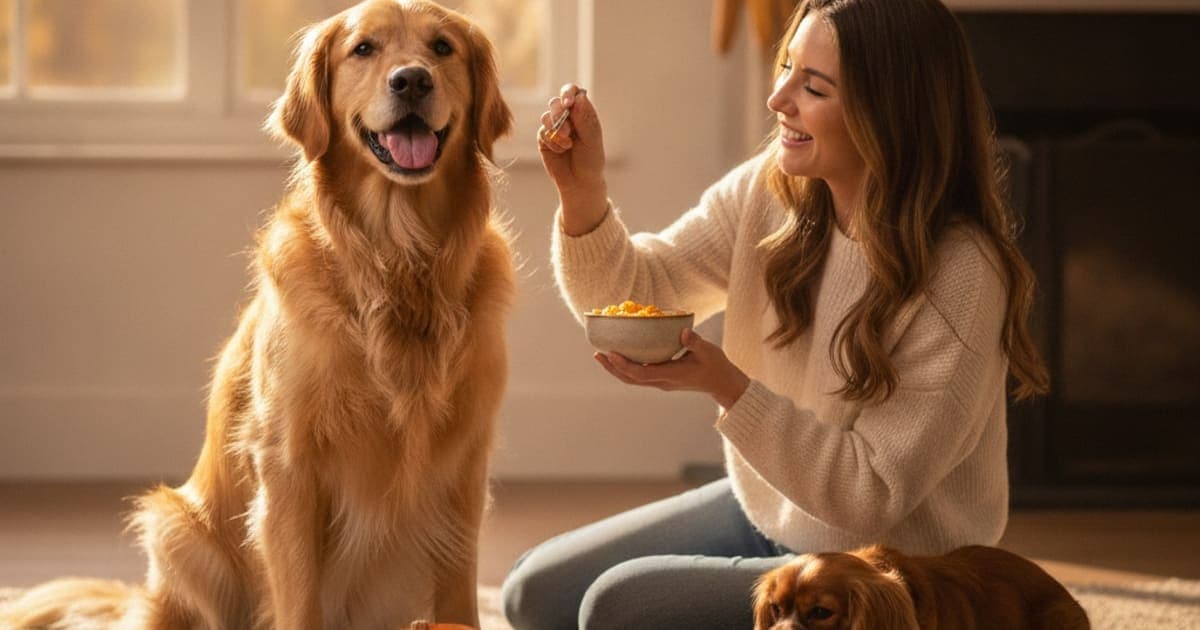
Yes. Plain pumpkin is safe for most healthy dogs, and it is one of the few human foods that sits comfortably in a dog's bowl without much fuss. The version that matters is plain: fresh pumpkin flesh, cooked and unseasoned, or canned purée whose ingredient list reads "pumpkin" and nothing else. Pumpkin pie filling — sweetened, spiced and sometimes thickened — is the form to leave on the shelf.
That is the short answer. The longer answer is about form, preparation and portion, because those three things are where owners actually go wrong, and because a dog's gut is less forgiving of sudden volume than most people expect.
If you remember one thing, make it this: the can has to say nothing but pumpkin.
What pumpkin actually brings to the bowl
Pumpkin is mostly water. That alone changes how it behaves compared with a dry biscuit — it adds moisture and bulk without adding much energy density, which is part of why it has become such a common kitchen staple for dog owners.
Beyond water, pumpkin contributes fibre, and the fibre is the interesting part. Pumpkin carries both soluble fibre, which holds water and forms a gel as it moves through the digestive tract, and fermentable fibre, which gut bacteria break down into short-chain fatty acids that colon cells use as fuel. That is a description of how dietary fibre behaves, not a promise about any particular dog's digestion. Research on fibre in canine nutrition suggests it influences transit time and stool consistency; what it does in your specific dog depends on your specific dog.
Pumpkin also supplies beta-carotene — the orange pigment the body can convert toward vitamin A — along with potassium and vitamin C. Those are nutrients, not medicine. A complete, balanced dog food is already formulated to cover them, so pumpkin is best understood as a topper that adds moisture, texture and palatability rather than as something filling a nutritional gap. Because vitamin A is fat-soluble and accumulates, pumpkin is also not a food to pile on indefinitely in large volume.
Plain purée, pie filling and everything in between
The word "pumpkin" covers a lot of products, and only some of them belong anywhere near a dog.
| Form | What it is | Suitable for dogs? | What to watch |
|---|---|---|---|
| Canned 100% pumpkin purée | Cooked, strained pumpkin, nothing added | Yes — the most convenient option | Check the label reads only pumpkin; some brands add salt |
| Canned pumpkin pie filling or pie mix | Pumpkin plus sugar, syrup and spice blends | No | Added sugars, nutmeg and clove blends; sugar-free versions may contain sweeteners that are dangerous to dogs |
| Fresh pumpkin, cooked and plain | Roasted, steamed or boiled flesh, no oil, butter, salt or seasoning | Yes | Cool fully before serving; skip anything cooked in fat or aromatics |
| Raw pumpkin flesh | Hard, dense, uncooked | Not ideal | Tough to chew and harder to digest; cooking softens the cell walls |
| Pumpkin seeds | Raw or plain-roasted, unsalted, shelled | In moderation | Whole shells can be a choking or obstruction risk in small dogs; never salted or seasoned |
| Skin, stem, leaves and vine | Fibrous outer structures | No | Difficult to digest; stems are hard and sharp-edged |
| Frozen plain purée cubes | Purée frozen in an ice tray | Yes | Useful for slow feeding; let soften slightly for small or senior dogs |
| Dried or powdered pumpkin | Dehydrated pumpkin, sometimes within a supplement | Depends | Read the full ingredient panel; powders are concentrated, so volume is not comparable to purée |
| Carved jack-o'-lantern | Pumpkin left out at room temperature, often for days | No | Mould and bacterial growth; candle soot and wax residue |
The pie filling issue deserves a sentence of its own. It is not simply sweeter — the spice blends used in it commonly include nutmeg, and sweetened products marketed as sugar-free may be formulated with sweeteners that are genuinely dangerous to dogs. If a dog gets into pie filling, that is a call-your-veterinarian moment, not a wait-and-see one.
Preparing fresh pumpkin so it's actually digestible
Fresh pumpkin is fine, and in autumn it is often cheaper than canned. The preparation is straightforward.
Start with a cooking pumpkin — the smaller, denser sugar varieties — rather than a large carving pumpkin, which tends to be stringy and watery. Halve it, scoop out the stringy interior and seeds, and roast, steam or boil the flesh until it yields easily to a fork. No oil, no butter, no salt, no garlic, no onion. Nothing from the spice rack.
Scoop the cooked flesh away from the skin and discard the skin and stem. Mash or blend it smooth, let it cool completely, and store what you are not using within a day or two in the fridge, or portion it into a freezer tray.
If you want to use the seeds, rinse them, dry them and roast them plain and unsalted, then shell them before serving — and only for dogs large enough that a seed is a crumb rather than a mouthful. For small breeds, skipping the seeds entirely is the simpler decision.
How much pumpkin, and how to introduce it
Portion is where the real caution lives, and it is also where generic internet numbers do the most damage, because they ignore body size, baseline diet and what else a dog is already eating.
The durable principle: pumpkin is a topper, not a meal component. Extras of any kind should stay a small minority of a dog's daily calories, with the balanced diet doing the actual nutritional work. Scaled to the dog, that means a token amount for a toy breed and a modest spoonful for a large one — and the specific amount that fits your dog's diet is a question for your veterinarian, who knows the dog's weight, body condition and whether anything else is already being added to the bowl.
Introduce it the way you would introduce any new food: a very small amount first, then watch for a day. Sudden fibre increases can swing stool in either direction, and a gut that was settled yesterday can be still developing today purely from the change itself. Gradual beats enthusiastic.
A few situations call for a conversation before you start rather than after: puppies, pregnant or nursing dogs, dogs on a prescription or therapeutic diet, diabetic dogs, and dogs with a diagnosed gastrointestinal condition. In all of those cases the right amount — if any — is something your vet should set, not a blog.
What owners report about stool, and when to call the vet instead
The most common reason people search for this topic is stool consistency, so let's be honest about what can and cannot be said.
Owners widely report adding plain pumpkin when a dog's stool is looser or firmer than usual, and fibre research gives a plausible mechanism for why a moisture-holding, fermentable fibre would influence that. What nobody can responsibly tell you is that pumpkin treats, prevents or resolves a digestive problem in your dog. It is food. It modifies the fibre and moisture content of a meal, and that is the whole of the claim.
The more important point is knowing when pumpkin is the wrong tool entirely. Diarrhoea that persists beyond a day or two, blood or mucus in stool, vomiting alongside it, straining without production, lethargy, a tense or painful abdomen, loss of appetite, or any of this in a puppy or a senior dog — those are veterinary presentations. Dehydration moves fast in small dogs, and obstruction does not improve with fibre. Reaching for a kitchen remedy in those situations costs time that matters. Call your veterinarian.
Where food ends and recovery support begins
Pumpkin is a good example of something genuinely useful that is also genuinely limited. It changes the texture and moisture of a meal. It does not do anything for a torn cruciate ligament, a strained tendon, a stiff hip or a dog whose back end is slowing down.
That is a different category of problem, and it is the one pawgen was built around. K9-REPAIR is a BPC-157 and TB-500 peptide formulation for dogs, dosed by body weight and third-party tested, with certificates of analysis published rather than described. BPC-157 is a peptide studied for its role in tissue repair signalling and blood vessel formation at injury sites; TB-500 relates to thymosin beta-4, a protein involved in cell migration and the organisation of the structural scaffolding inside cells as tissue remodels. Research into both is active and promising, and it is why a growing number of owners have adopted peptides as part of what they run through a recovery window. These are not FDA-approved veterinary drugs, and nothing here is a claim about what will happen in your dog.
It also sits in deliberate contrast to the crowded shelf of joint chews built on long ingredient lists at amounts too small to mean anything — where the label is doing the persuading and the formulation is doing very little. Transparency about what is in the bottle, and verification that it is actually there, is the part worth demanding from any brand.
None of it replaces veterinary care. If your dog is limping, post-operative or on a prescribed medication, the plan belongs to your vet, and anything you add should be discussed with them first.
Key Takeaways
- Plain pumpkin — cooked fresh or 100% canned purée — is safe for most healthy dogs in small amounts.
- Pumpkin pie filling is not. Added sugars, spice blends and sugar-free sweeteners make it a food to avoid outright.
- Cook fresh pumpkin plain and unseasoned, discard skin and stem, and cool it fully before serving.
- Seeds are acceptable plain, unsalted and shelled for larger dogs; simplest to skip for small ones.
- Introduce slowly and keep it a topper, with the specific amount set by your veterinarian.
- Persistent diarrhoea, vomiting, blood in stool, straining or lethargy are veterinary problems, not pumpkin problems.
- Food supports a diet. Joint, tendon and mobility recovery is a separate conversation with your vet.
Your veterinarian owns the diagnosis and the treatment plan — the imaging, the medication, the surgical decision, the rehab schedule. Food like pumpkin, and supportive formulations like K9-REPAIR, operate only in the space that proper veterinary care creates. Bring both into that conversation rather than around it.
More about pawgen's approach is available through the K9-REPAIR formulation page, the published certificates of analysis for each batch, and shipping and availability details, which also covers the 60-day money-back guarantee.
Owners exploring peptide support for their dog can review K9-REPAIR — BPC-157 + TB-500 formulated for dogs — at https://pawgen.com/. BPC-157 and TB-500 are not FDA-approved veterinary drugs. Nothing in this article treats, cures or prevents any condition; every decision about your dog's care belongs with your veterinarian.
Frequently asked questions
- Can dogs eat pumpkin?
- Yes. Plain pumpkin is safe for most healthy dogs — either cooked fresh pumpkin flesh with no seasoning, or canned purée whose only ingredient is pumpkin. Pumpkin pie filling is the exception and should be avoided. Keep portions small, introduce it gradually, and ask your veterinarian what suits your dog.
- Can dogs eat raw pumpkin?
- Raw pumpkin is not toxic, but it is a poor choice. The flesh is dense and fibrous, which makes it hard to chew and harder to digest, and larger chunks pose a choking risk. Cooking softens the structure considerably. Steam, boil or roast it plain, then cool it before serving.
- Can dogs eat pumpkin pie filling?
- No. Pie filling is sweetened and spiced, commonly with blends containing nutmeg, and sugar-free versions may be formulated with sweeteners that are dangerous to dogs. It is a different product from plain purée despite sitting on the same shelf. If your dog eats pie filling, contact your veterinarian promptly.
- Can dogs eat pumpkin seeds?
- Plain, unsalted, shelled pumpkin seeds are generally acceptable for larger dogs in small amounts. Never serve them salted, seasoned or sugar-coated. Whole shells can present a choking or obstruction risk, particularly in small breeds, so removing the shells — or skipping seeds entirely for little dogs — is the safer approach.
- How much pumpkin can I give my dog?
- That depends on your dog's weight, body condition and current diet, so it is a question for your veterinarian rather than a fixed number. The durable principle is that pumpkin is a topper: extras should stay a small minority of daily calories, with balanced food doing the nutritional work.
- Can puppies eat pumpkin?
- Puppies have developing digestive systems and precise growth nutrition requirements, so adding anything to their bowl should be discussed with your veterinarian first. The same applies to pregnant or nursing dogs. Do not follow a general portion guideline for these groups — ask your vet what is appropriate for that specific dog.
- Can dogs eat pumpkin skin and stem?
- No. The skin is tough and poorly digestible, and the stem is hard with sharp edges that can cause injury or obstruction. Leaves and vine should also be avoided. Scoop the cooked flesh away from the skin, discard everything else, and serve only the soft interior portion.
- Does pumpkin help with diarrhoea or constipation in dogs?
- Owners commonly report using plain pumpkin when stool consistency changes, and fibre research suggests moisture-holding and fermentable fibres influence transit time and stool form. Pumpkin is food, not treatment. Persistent diarrhoea, blood, vomiting or straining needs veterinary assessment rather than a kitchen remedy — call your vet.
- Can dogs eat pumpkin every day?
- Many owners include a small amount of plain pumpkin regularly without issue, but daily feeding should fit within an already balanced diet. Pumpkin supplies fat-soluble vitamin A precursors, which accumulate, so volume matters over time. Confirm with your veterinarian that routine use suits your dog's overall nutrition.
- Is a carved jack-o'-lantern safe for dogs to eat?
- No. A carved pumpkin sits at room temperature for days, often collecting mould and bacterial growth, and may carry candle soot or wax residue inside. Even if it looks fine, it is not worth the risk. Use fresh cooking pumpkin or plain canned purée instead.
Educational content, not veterinary advice. Ask your vet about your dog.