Can Dogs Eat Rambutan? (Flesh, Skin and Seed Explained)
Dogs can eat plain ripe rambutan flesh once the fruit is peeled and the seed is removed. The flesh is not classed as toxic for dogs. The hairy outer skin and the hard central seed are the parts to keep away, because both bring choking and blockage risks.
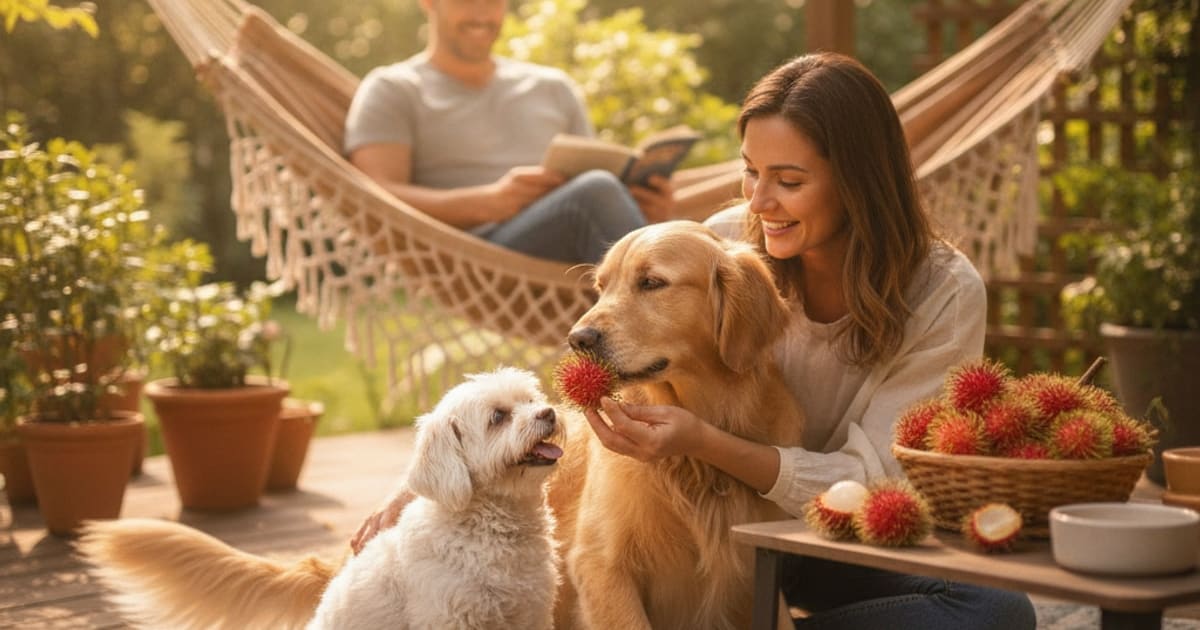
Yes, dogs can eat rambutan, but only the plain peeled flesh with the seed taken out. If your dog has already crunched into a whole rambutan, skin and seed included, call your veterinarian or an animal poison control service such as the ASPCA Animal Poison Control Center or the Pet Poison Helpline before you do anything else, because a swallowed seed or a wad of shell is the kind of problem that is far easier to deal with early than late.
The ripe white flesh inside a rambutan is not classed as toxic for dogs. The two parts that cause trouble are the leathery outer shell, which is fibrous and poorly digested, and the single hard seed in the center, which is a choking and obstruction hazard. That is the short version: flesh yes, skin no, seed no.
What a rambutan actually is, and why owners ask about it
Rambutan is a tropical fruit about the size of a golf ball, wrapped in a red or yellow leathery shell covered in soft, hair-like spines. The name comes from the word for hair, which is exactly what the outside looks like. Split that shell open and you get a translucent, pearly white ball of flesh with a smooth oval seed sitting in the middle of it. It belongs to the same plant family as lychee and longan, and it tastes mildly sweet and slightly floral.
So, do dogs eat rambutan? Not by choice in any natural sense. No dog goes looking for tropical fruit. But dogs are opportunists, and a sweet, soft, fragrant fruit left on a counter or dropped on the kitchen floor is exactly the sort of thing a dog will grab and swallow before anyone can reach it. That is why the question comes up at all: usually not because an owner is planning to add rambutan to the menu, but because a dog has just helped itself to one.
It is also worth saying plainly that fruit is optional for dogs. A complete, balanced dog food already covers what a dog needs. Rambutan is not filling a gap in the diet, so the only reason to offer it is that your dog enjoys it, and that means there is no reason to accept any risk from the parts that are not safe.
The flesh: mostly water, sugar and a little fiber
The edible part, the part people mean when they ask whether dogs can eat rambutan meat or rambutan flesh, is mostly water. The rest is natural fruit sugar, a small amount of fiber, some vitamin C and traces of minerals. Dogs make their own vitamin C, so that part is not doing much work for them, and the flesh is not a meaningful source of protein or fat.
What matters more is the sugar. Rambutan is a sweet fruit, and sugar is sugar whether it arrives in a sweet or in a piece of tropical produce. For a dog carrying extra weight, or a dog whose blood sugar is being managed by a vet, sweet fruit is not a neutral addition, and that conversation belongs with your veterinarian rather than with a web page.
The fiber matters too. A digestive system that has never met rambutan before can respond with soft stool, gas or a gurgly stomach. That is not poisoning, it is simply an unfamiliar food, and it tends to pass. It is still a good argument for introducing anything new on its own, with nothing else unusual in the bowl that day, so that if something does not agree with your dog you know exactly what caused it. Results vary from dog to dog, and a fruit one dog handles without a flicker can leave another one still developing.
The skin and the seed: the two parts to keep away
The hairy skin and the hard central seed are the two parts of a rambutan that matter most, because both are choking and intestinal blockage risks rather than anything a dog's gut is built to break down.
Can dogs eat rambutan skin? No. The shell is tough, leathery and fibrous. It does not soften much in the stomach, and the spiny outer surface can scrape and irritate on the way down. A swallowed section can lodge in the throat or work its way into the gut and sit there. The outside of the fruit also sees a lot of handling between the tree and your kitchen and may carry residue, which is one more reason the shell belongs in the trash rather than anywhere near a dog.
Can dogs eat rambutan seed? Also no, and this is the part owners most often underestimate. The seed is hard, smooth and slippery, which is a bad combination in a dog's mouth: it is easy to swallow whole and difficult to bring back up. In a small dog it can block an airway. Further down, a whole seed can obstruct the intestine, which is a surgical problem, not a wait-and-see problem. Rambutan seeds also contain bitter plant compounds that are not intended to be eaten raw by people or by animals, which is reason enough to keep them off the menu entirely.
So when people search for whether dogs can eat rambutan without the seed, they have already landed on the right answer. Seedless and peeled is the only version worth considering at all.
If you do offer it, the preparation is simple and non-negotiable. Wash the fruit, peel the shell away completely, lift the flesh off the seed, and check what is left for shell fragments or splinters of the stone. Throw the skin and the seed away somewhere your dog cannot get to them, which includes compost heaps and open kitchen trash, because a dog that has just tasted something sweet will go looking for more of it.
| Part of the rambutan | Give it to a dog? | Why |
|---|---|---|
| Ripe flesh, peeled, seed removed | Generally fine for healthy adult dogs | Mostly water and natural sugar, not classed as toxic |
| Hairy outer skin | No | Tough and fibrous, poorly digested, choking and blockage risk, may carry residue |
| Seed | No | Hard and slippery, choking and obstruction risk, holds bitter compounds not meant to be eaten raw |
| Flesh still clinging to the seed | No | The stone cannot be removed cleanly once the dog has it |
| Canned in syrup | No | Heavy added sugar and other additives |
| Dried rambutan | Best avoided | Sugar is concentrated and the chewy texture is easy to bolt whole |
Canned, dried and other prepared forms
Fresh rambutan is one thing. The versions that come in a tin or a packet are a different conversation. Canned rambutan is usually packed in sugar syrup, and some canned versions are stuffed with pineapple, which adds nothing a dog needs and plenty of sugar it does not. Dried rambutan concentrates the sugar as the water leaves, and the leathery texture makes it the sort of thing a dog swallows without chewing.
Rambutan-flavored drinks, jellies, candies and desserts are further off again. Processed sweet products can contain sweeteners, flavorings and additives that are not suitable for dogs, and some sweeteners used in human food are genuinely dangerous to them. If a product has an ingredients list rather than a peel, treat it as off limits and ask your veterinarian before you let your dog near it.
Puppies, seniors and dogs with existing health conditions
Can puppies eat rambutan? This is one to put to your vet before anything else. A puppy's digestive system is still settling, its airway is smaller, and puppies are far more likely than adult dogs to swallow something whole rather than chew it. A puppy is also on a growth diet that is balanced carefully, and adding sweet fruit on top of that is a decision worth making with professional input rather than on your own. Talk to your vet before offering a puppy any fruit, including this one.
The same caution applies to older dogs with reduced appetite or sensitive digestion, dogs recovering from illness, and any dog living with an ongoing health condition that involves diet, weight or blood sugar. Pregnant and nursing dogs are another group where the answer is simply to ask your veterinarian rather than assume. In every one of these cases the right move is the same: raise it at the next appointment instead of experimenting at home.
When rambutan turns into a vet visit
Most rambutan incidents end with a dog that is perfectly fine and an owner who is briefly alarmed. Some do not, and the warning signs are worth knowing before you need them.
Call your veterinarian without delay if your dog is coughing, gagging, retching without producing anything, drooling heavily, pawing at the mouth or struggling to breathe, as these can point to something stuck. Call if vomiting starts and will not settle, if the belly looks swollen or feels painful or tense, if your dog goes quiet and flat, refuses food, or strains without passing stool. If you know or suspect a whole seed or a large piece of shell went down, call even if your dog seems completely normal, because a blockage can take time to declare itself.
Do not try to make your dog vomit at home. With a hard, smooth object, that can cause more harm on the way back up than it solves, and the decision belongs to a veterinarian who can see your dog or hear the details over the phone.
Key Takeaways
- Plain, ripe, peeled rambutan flesh with the seed removed is not classed as toxic for dogs.
- The hairy skin is tough and poorly digested and should never be offered.
- The seed is a choking and intestinal obstruction hazard and contains bitter compounds not meant to be eaten raw.
- Canned, dried and rambutan-flavored products bring added sugar and additives and are best avoided.
- Fruit is optional for dogs, so there is no nutritional reason to accept any risk from the skin or the stone.
- Puppies, pregnant or nursing dogs, seniors and dogs with existing health conditions should only be offered new foods after a conversation with a veterinarian.
- A swallowed seed, a swollen or painful belly, or vomiting that will not settle means calling your vet straight away.
Food questions like this one are easy to get right, because the safe version and the risky version are separated by two seconds of preparation. What does not change is who makes the call when something goes wrong. Your veterinarian owns the diagnosis and the plan, whether that means a physical exam, imaging to find a lodged seed or simply reassurance that your dog can be watched at home. If you are ever unsure what your dog swallowed or how much of it, ring them and describe it honestly. That phone call costs nothing and is the fastest route to the right answer.
For a wider list of warning signs that mean a dog needs to be seen straight away, see Dog Emergency Signs.
Frequently asked questions
- Can dogs eat rambutan?
- Yes, dogs can eat plain ripe rambutan flesh once the fruit has been peeled and the seed removed. The flesh is not classed as toxic for dogs. The hairy skin and the hard seed are the parts to keep away, and any new food is worth clearing with your veterinarian first.
- Are rambutan poisonous to dogs?
- No, ripe rambutan flesh is not classed as poisonous to dogs. The risk sits in the parts around it. The leathery hairy skin is fibrous and poorly digested, and the seed is a choking and blockage hazard that also holds bitter plant compounds. Call your vet if either one is swallowed.
- Can dogs eat rambutan without seed?
- Yes, rambutan without the seed is the only form worth considering at all. Peel the fruit completely, lift the flesh away from the stone, and check that no shell fragments or splinters of seed remain. Anything hard or fibrous should never reach the bowl. Talk to your vet before introducing it.
- Can dogs eat rambutan meat?
- Yes, the meat of a rambutan, meaning the translucent white flesh inside the shell, is the edible part for dogs. It is mostly water with natural fruit sugar, a little fiber and some vitamin C. It is not a required part of a dog's diet, so it stays strictly optional.
- Can dogs eat rambutan skin?
- No, dogs should not eat rambutan skin. The leathery shell and its soft spines are fibrous and poorly digested, and a swallowed section can lodge in the throat or the gut. The outside may also carry residue from handling and spraying. Throw the skin away where your dog cannot reach it.
- Can dogs eat rambutan flesh?
- Yes, plain ripe rambutan flesh is generally fine for healthy adult dogs once the skin and seed are gone. Offer it on its own so you can see how your dog responds, since results vary from dog to dog. Stop and call your vet if the stomach becomes upset.
- Can dogs eat rambutan seed?
- No. The rambutan seed is hard, smooth and slippery, which makes it easy for a dog to swallow whole and difficult to bring back up. It can block an airway or obstruct the intestine, and it holds bitter compounds not meant to be eaten raw. Always remove and discard it.
- Can puppies eat rambutan?
- Ask your veterinarian before offering a puppy rambutan or any other fruit. Puppies have smaller airways, more sensitive digestion and are likelier to swallow something whole rather than chew it. They are also on a carefully balanced growth diet, so additions should be discussed with your vet rather than improvised.
- Do dogs eat rambutan?
- Dogs do not seek rambutan out naturally, but many will happily eat it if it is offered or dropped. That is usually how the question arises. Because dogs tend to bolt sweet, soft food without chewing, the shell and the seed must be removed and disposed of out of reach.
- Is rambutan poisonous?
- Ripe rambutan flesh is not considered poisonous and is eaten widely by people. The seed is a different matter, as it is not eaten raw and contains bitter plant compounds. For dogs, the practical hazards are choking and intestinal blockage from the shell or the stone rather than poisoning.
Educational content, not veterinary advice. Ask your vet about your dog.