Can Dogs Eat Raw Elk? Raw, Cooked and Ground Compared
Dogs can eat elk, but plain cooked elk with no seasoning and no bones is the safer preparation. Raw wild game can carry parasites, bacteria and bullet fragments, and freezing does not remove every risk. Ground elk needs extra care because grinding spreads surface bacteria through the meat.
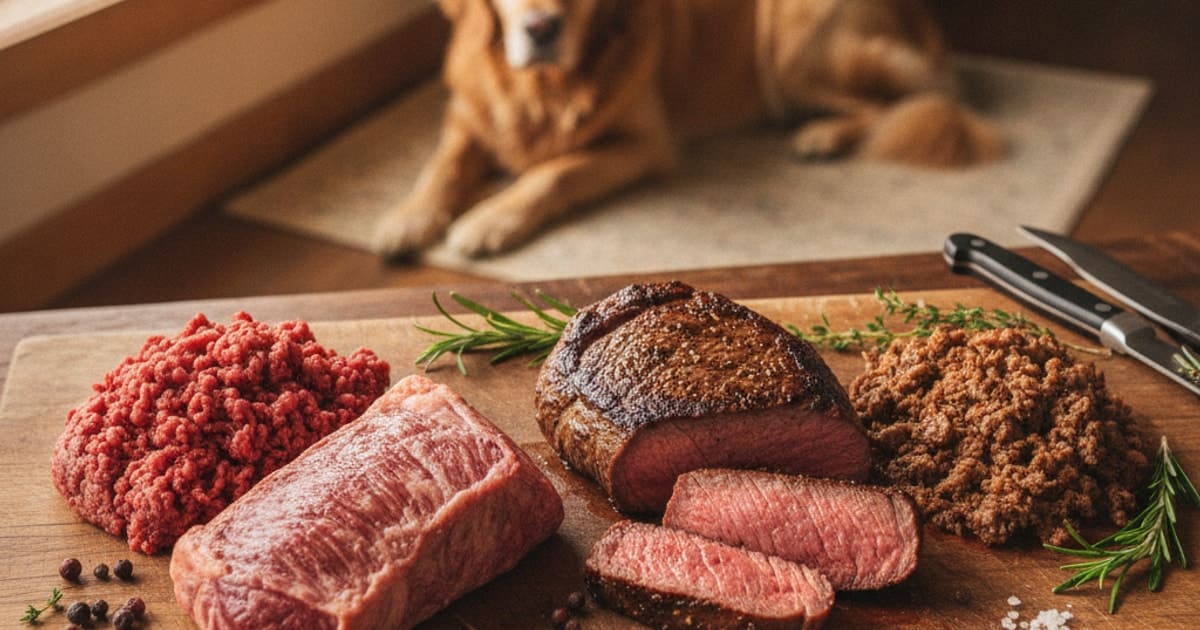
Dogs can eat elk, and the preparation matters far more than the animal does: plain, fully cooked elk with no seasoning, no sauce and no bone is the version that carries the least risk. If your dog has already eaten raw elk, heavily seasoned elk, a bone or a large piece of anything and is vomiting and will not settle, has a swollen or painful belly, or has gone quiet, weak or unwilling to drink, call your veterinarian now, or an animal poison control service such as the ASPCA Animal Poison Control Center or the Pet Poison Helpline if seasonings or a sauce were involved. Elk is a lean red meat and most dogs digest it comfortably. What actually decides whether it is safe is whether it was raw or cooked, whether it was whole muscle or ground, how it was handled in the field, and what else went into the pan with it.
Raw, cooked and ground: what each preparation changes
All the variations on this question, raw elk meat, cooked elk meat, ground elk, cooked ground elk, raw ground elk and elk burger, come down to two variables: heat and surface area.
Heat is what addresses bacteria and parasite stages sitting in and on the muscle. Grinding multiplies surface area, which means anything living on the outside of a cut gets folded evenly through the entire batch. Those two facts explain almost every difference in the table below.
| Preparation | What it changes | What to watch |
|---|---|---|
| Raw whole-muscle elk | No heat step, so organisms present in and on the muscle remain | Field handling, bacteria, parasite stages, bullet fragments |
| Raw ground elk or raw elk burger | Surface bacteria are mixed all the way through the batch | The riskiest of the raw options, plus metal fragments spread by the grinder |
| Cooked whole-muscle elk | Heat addresses bacteria and parasite stages once the centre is fully cooked | Seasoning, marinade, heavy fat trim, bone left in the cut |
| Cooked ground elk | Same heat benefit, and mince cooks through more evenly than a thick cut | Whatever was mixed in: salt, onion, garlic, breadcrumbs, cheese, gravy |
| Elk burger from a grill or plate | Usually seasoned, often cooked pink in the middle | Onion and garlic powder, salt, buns and sauces, an undercooked centre |
So, can dogs eat raw elk, and can dogs have raw elk meat? Physically, yes, and plenty of households feed raw diets. But raw wild game sits at the riskier end of raw feeding, for reasons that have nothing to do with the species and everything to do with how a wild animal is killed, field dressed, cooled and transported. Can dogs eat cooked elk, cooked elk meat and cooked ground elk? Yes, when it is cooked through and genuinely plain. Plain, fully cooked elk with nothing added to it is the preparation that carries the least risk for a dog.
What wild elk can carry that farmed meat usually does not
A supermarket cut has moved through an inspected plant with temperature control at every step. A wild elk is opened in the field, often far from a cooler, and the gut contents, hide and ground contact all get a chance to touch the meat before it chills.
Bacteria. Raw meat can carry Salmonella, E. coli, Campylobacter and Listeria. These matter for your dog and for the people in the house, because a dog can shed bacteria in stool and on its coat and muzzle after eating raw meat. The FDA has advised against feeding raw pet food diets for exactly this reason, and households with infants, older adults or anyone immunocompromised have more at stake.
Parasites. Trichinella is the organism usually raised in connection with wild game, though it is associated more with bear and wild boar than with elk. More relevant to elk specifically is the hydatid tapeworm, Echinococcus. Deer and elk act as intermediate hosts, carrying cysts in organs such as lung and liver, and dogs that eat raw infected offal can become the adult-stage host and shed eggs around the home. Those eggs are a human health concern, which is why wildlife and public health authorities in elk country advise against feeding raw cervid organs to dogs. Protozoal cysts in cervid muscle are another reason raw game is treated differently from raw beef.
Chronic wasting disease. CWD is a prion disease of deer, elk and related species. Wildlife agencies in affected areas run testing programmes and advise that meat from an animal that tests positive should not be eaten by people or fed to animals. Freezing, ageing and cooking do not change a prion. If you hunt or are given wild game, check your local wildlife agency's current guidance before anything goes in the bowl.
Lead and metal fragments. Bullets fragment, and the fragments travel further through the carcass than the wound channel suggests. They are easy to miss in trim and very easy to miss once meat has gone through a grinder. Scraps, trim and burger from the margins of the wound are the parts where fragments concentrate.
Freezing wild game: useful, but not a reset button
Freezing is often suggested as the fix for raw-feeding wild game, and it does reduce certain parasite risks. It is not the clean slate it is treated as.
Some wild-game organisms tolerate freezing far better than the versions found in farmed pork. Home freezers also rarely behave like commercial ones: they sit warmer, they are opened constantly, and the temperature swings every time the door moves. The centre of a dense, foil-wrapped roast takes a long time to reach the temperature of the air around it, so a short stint in the freezer does much less than the number on a dial suggests.
Freezing also does nothing useful about three of the four problems above. It pauses bacterial growth rather than ending it, and everything that was alive when the meat went in wakes up as it thaws. It has no effect on lead fragments. It has no effect on prions. Treat freezing as one layer of care, not as permission to skip cooking.
Cooking elk plainly, and what should never go in the pan
Cooking is the single step that changes the most. Keep it boring.
Cook the elk through rather than to a pink centre, and use a thermometer rather than colour to judge it. USDA guidance for wild game sets a higher internal temperature for ground meat than for whole cuts, which is worth knowing if you are cooking for a dog and a person from the same packet. Let the meat cool fully before it goes anywhere near a bowl.
Cook it dry or in water. No oil, no butter, no stock cube, no rub, no marinade and no salt. Onion and garlic, including onion powder and garlic powder, damage red blood cells in dogs, and powdered forms are concentrated, so a spice-rubbed steak or a seasoned burger is not simply a plainer food with flavour on top. Chives and leeks belong in the same group. If a dog has eaten something heavily seasoned with any allium, call your veterinarian or an animal poison control service rather than waiting to see how the night goes.
Leave bones out of it. Cooked bone, including elk rib and leg bone, becomes brittle and can splinter, and large weight-bearing game bones are hard enough to fracture teeth even raw. Trim heavy fat and fatty offcuts as well: a sudden load of rich fat can trigger pancreatitis, and dogs with a history of pancreatitis, kidney disease, liver disease or food sensitivities should not be given new protein without a conversation with their vet first.
Ground elk, elk burger and why mince needs more care
Ground elk deserves its own rules. Grinding takes whatever was on the surface of several cuts and distributes it through the whole batch, so raw ground elk and raw elk burger carry more pathogen spread than a raw whole-muscle cut from the same animal. The same process pulls in trim from the edges of the wound channel, which is where metal fragments tend to be.
There is good news in the other direction. Cooked ground elk is one of the easier preparations to get right, because mince cooks through quickly and evenly with no thick centre hiding an undercooked core. Browned plain in a dry pan, broken up, drained of rendered fat and cooled, it is straightforward food.
An elk burger off a grill is a different object. It is usually salted and seasoned, often bound with egg, breadcrumb or cheese, frequently cooked pink in the middle, and it arrives with a bun, sauces and sometimes raw onion. Dogs can eat elk burger only if it is a plain patty of elk and nothing else, cooked through. If you want burger in the rotation, cook a separate plain patty before the seasoning goes on the rest.
Handle raw elk the way you would handle raw chicken. Separate board, separate knife, hot soapy water on everything the meat touched, hands washed before you touch the dog or the bowl, and the bowl itself washed after.
Signs that mean stop and call your veterinarian
Most dogs that eat a bit of plain elk are fine. Some are not, and results vary from dog to dog depending on size, age and what else is going on with their health.
Contact your veterinarian promptly if you see vomiting that will not settle, a swollen, tense or painful belly, repeated retching without anything coming up, blood in vomit or stool, sudden weakness or collapse, pale gums, laboured breathing, or if your dog swallowed a large piece of bone or meat whole. Gagging, drooling and pawing at the mouth after a bone can mean something is lodged. A hunched posture with a tucked belly after a fatty meal deserves same-day attention.
A dog that has eaten raw game and then develops loose stool, mucus or persistent gas also needs a vet visit, with a stool sample, rather than a wait-and-see approach, because parasite exposure is part of the picture with wild game.
Key Takeaways
- Dogs can eat elk, and plain cooked elk with no seasoning, no sauce and no bone is the preparation that carries the least risk.
- Raw elk, raw ground elk and raw elk burger sit at the riskier end of raw feeding because of field handling, bacteria, parasites such as the hydatid tapeworm, and bullet fragments.
- Grinding spreads surface bacteria and metal fragments through the whole batch, so raw mince carries more risk than a raw whole cut.
- Freezing reduces some parasite risk but does not deal with bacteria, lead fragments or prions, and home freezers are less reliable than commercial ones.
- Never add onion, garlic, salt, oil or marinade, and never serve cooked elk bone.
- Check your local wildlife agency's chronic wasting disease guidance before feeding any wild cervid meat.
- Vomiting that will not settle, a painful or swollen belly, or a swallowed large piece means a call to the vet.
Your veterinarian owns the decisions here. They know your dog's weight, history, teeth, gut and any condition that changes what a new protein does, and they are the right person to ask before wild game becomes part of the diet at all. Talk to your vet before switching to or adding any raw food, especially if your dog is young, pregnant, nursing, older or managing a health condition, and bring any leftover meat, packaging or testing paperwork with you if something goes wrong.
For a fuller picture of the symptoms that mean an urgent trip to the clinic rather than a phone call, read Dog Emergency Signs.
Frequently asked questions
- Can dogs eat raw elk?
- Dogs can eat raw elk, but it sits at the riskier end of raw feeding. Wild game is field dressed without temperature control, so raw elk can carry bacteria, parasite stages and bullet fragments. Plain cooked elk is the safer preparation. Talk to your vet before feeding any raw wild game.
- Can dogs eat raw elk meat?
- Raw elk meat is not off limits, but it carries more risk than farmed raw meat. The main concerns are Salmonella and E. coli, parasites including the hydatid tapeworm found in cervid organs, and lead fragments from the bullet. Handle it like raw chicken and discuss raw feeding with your veterinarian.
- Can dogs have raw elk meat?
- Yes, dogs can physically have raw elk meat, though it is the preparation with the least protection built in. Freezing reduces some parasite risk but does not remove bacteria, metal fragments or prions. Raw organs such as lung and liver are the highest-risk part for tapeworm exposure and are best avoided.
- Can dogs eat cooked elk meat?
- Yes. Cooked elk meat is the safer option, provided it is cooked all the way through and served completely plain. No salt, oil, butter, marinade, onion or garlic, and no bone. Cook it dry or in water, drain the fat, let it cool fully, and keep seasoned versions for the humans.
- Can dogs have cooked elk meat?
- Dogs can have cooked elk meat when it is plain and fully cooked. Heat addresses the bacteria and parasite stages that make raw wild game riskier. Trim heavy fat before cooking, since a sudden rich meal can trigger pancreatitis, and skip it entirely if your dog has a history of that.
- Can dogs eat cooked elk?
- Yes, cooked elk is suitable for most dogs when it is unseasoned and cooked through rather than left pink in the middle. Use a thermometer instead of judging by colour. Avoid cooked elk bone, which becomes brittle and can splinter, and avoid anything cooked in gravy, stock or spice rubs.
- Can dogs eat ground elk?
- Cooked ground elk is one of the easier preparations to get right, because mince browns through evenly with no undercooked centre. Brown it plain in a dry pan, drain the rendered fat and cool it. Raw ground elk is riskier than a raw whole cut, since grinding spreads surface bacteria throughout.
- Can dogs eat raw elk burger?
- Raw elk burger is the riskiest elk preparation. Grinding folds surface bacteria through the whole batch and draws in trim from around the wound channel, where bullet fragments concentrate. If you want to feed burger, cook a plain patty through with no salt, seasoning, binder or sauce added.
- Can dogs eat elk bones?
- Cooked elk bones should never be given, as heat makes them brittle and prone to splintering. Large raw weight-bearing game bones are hard enough to fracture teeth. If your dog has swallowed bone and is gagging, drooling, retching or has a tense painful belly, contact your veterinarian straight away.
Educational content, not veterinary advice. Ask your vet about your dog.