Can Dogs Eat Seaweed on the Beach? Why It's Risky
No, dogs should not eat seaweed on the beach. Dried seaweed washed up on the sand can absorb fluid and swell inside the stomach or intestine, and it often carries salt, sand and debris. Vomiting, a painful belly or refusing food after a beach walk means call your vet.
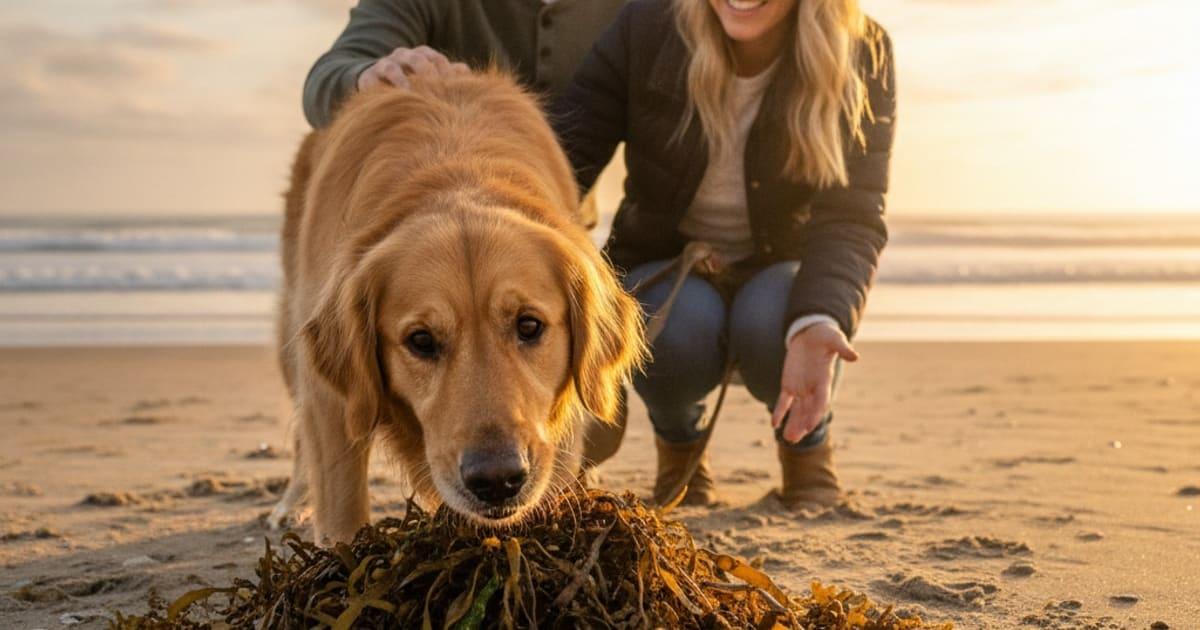
No, dogs should not eat seaweed on the beach, and if yours has already swallowed a mouthful, call your veterinarian now rather than waiting to see what happens. Dried seaweed in particular can absorb fluid and expand inside the stomach or intestine, and the signs of a blockage can take hours to appear, so a dog who seems fine on the drive home is not in the clear.
Beach seaweed is a different thing from the prepared seaweed sold for people or the seaweed meal that some manufacturers include in commercial dog food. What sits along the tide line has been soaking in seawater, baking in the sun, collecting sand and grit, and tangling itself around whatever else the water brought in. It is not a snack, and it is not worth the risk of a trip to the emergency clinic.
Why the dried stuff at the tide line is the real problem
Seaweed that has been out of the water for a while loses its moisture and shrinks into brittle, crunchy ribbons, knots and rubbery ropes. To a dog quartering the sand with its nose down, that is a salty, fishy, interesting object, and plenty of dogs will swallow a piece before an owner has finished saying leave it.
The trouble starts once it is inside. Dried seaweed meets stomach fluid, rehydrates, and swells back toward the size and weight it had in the sea, and that expanding mass can lodge in the stomach or intestine and create an obstruction.
A swelling mass does not behave like ordinary food. It can sit in the stomach and refuse to move on, or it can pass into the small intestine and wedge where the gut narrows. When the intestine is blocked, food and fluid stop moving through, the gut wall above the blockage stretches, and the dog becomes unwell quickly. Vomiting sets in, dehydration follows, and the situation can escalate into a surgical emergency. This is not a wait and see problem.
Size and swallowing style matter. A large dog may pass a small fragment that would obstruct a small one, and a gulper who inhales things whole is at more risk than a dog who chews. Results vary from dog to dog, which is exactly why there is no safe amount of beach seaweed to let a dog eat and no reliable way to predict which mouthful will cause trouble.
Salt, sand and whatever else washed in with it
Expansion is the headline risk, but it is not the only one.
Salt. Seaweed pulled straight from the surf is saturated with seawater, and the dried wrack at the high tide line is crusted with salt. Dogs who eat salty material and gulp seawater on top of it can take in far more sodium than their body is set up to handle. Early signs can include heavy thirst, vomiting and diarrhoea, and more serious signs can include wobbliness, weakness, tremors or disorientation. Any of that after a beach trip is a reason to get straight to a veterinarian.
Sand and grit. Seaweed on the sand comes coated in sand. Swallowed sand can accumulate in the gut and cause its own painful impaction, and dogs who dig, dive at the surf or chase balls along the waterline tend to take in more of it than their owners realise.
Hidden debris. The wrack line is where the sea deposits everything else: fishing line, hooks, plastic film, netting, bottle caps and polystyrene. These tangle into seaweed and get swallowed with it. Fishing line and hooks are a particularly nasty combination, because line can saw into the intestinal wall rather than simply blocking it.
Bacteria and decomposing matter. Rotting seaweed is a warm, wet bed for bacteria, and it often shelters dead fish, crabs and other decaying marine animals. Stomach upset is the mild end of that spectrum.
Stinging creatures and algae. Jellyfish fragments, including the stinging parts, can be caught in seaweed mats long after the animal has died. Harmful algal blooms can also wash ashore and coat weed and debris. If you see mats of blue green scum at the water's edge or official warnings posted about algae or red tide, keep your dog out of the water entirely and do not let it near the strandline.
Beach seaweed, kelp and the seaweed in dog food are not the same thing
Owners often ask whether kelp counts as different, because kelp appears on ingredient lists in the pet aisle. The seaweed in a bag of food has been harvested from controlled sources, washed, dried under controlled conditions and processed by the manufacturer. The kelp stipe lying on the sand has done none of those things.
| Form | What it actually is | Why it matters at the beach |
|---|---|---|
| Dried seaweed on the tide line | Dehydrated, brittle weed crusted with salt and sand | The highest expansion risk; rehydrates and swells after swallowing and can obstruct the gut |
| Wet seaweed in the surf or at the waterline | Weed soaked in seawater, often slimy and warm | Heavy salt load plus bacteria; long fronds can still clump and tangle in the stomach |
| Kelp washed ashore | Large, tough blades, ropey stipes and root-like holdfasts | Tough and fibrous, slow to break down, and holdfasts trap shells, grit, hooks and line |
| Seaweed as an ingredient in commercial dog food | Harvested, cleaned and processed by a manufacturer | A formulated ingredient rather than beach debris; questions about whether it suits your dog belong with your veterinarian |
So the answer to can dogs eat kelp at the beach is the same as for any other wild weed on the sand: no. And seaweed taken from the ocean itself, straight out of the water, is no safer; it simply swaps the expansion risk for a bigger salt load and whatever bacteria it is carrying.
Warning signs to watch for after a beach walk
Signs of a developing obstruction or salt overload can be delayed. A dog can run, swim and play normally for the rest of the afternoon and only start showing trouble that evening or the following morning. Treat the beach trip as context for anything that goes wrong in the day or two afterwards and mention it when you phone the clinic.
Get veterinary attention promptly if you see:
- Repeated vomiting, or retching that brings nothing up
- A belly that looks swollen or feels tight, or a dog who flinches, tenses or yelps when the abdomen is touched
- Refusing food, which is a meaningful signal in a dog who normally eats readily
- A hunched posture, stretching into a bowing position, restlessness or an inability to settle
- Straining to pass stool with nothing produced, or no stool at all
- Drooling, lip licking or repeated swallowing
- Lethargy, weakness, pale gums or collapse
- Tremors, stumbling, disorientation or extreme thirst after time in salt water
Collapse, breathing difficulty, pale gums, a rigid painful abdomen or a dog who cannot stand are emergencies. Go to an emergency clinic rather than phoning around, and tell them what your dog was doing at the beach.
Also worth knowing: a dog can vomit up part of a seaweed mass and still have a problem, because a fragment may remain lodged further down. One episode of vomiting followed by apparent recovery is not proof that everything has passed.
What your veterinarian may do
Do not attempt anything at home. Making a dog vomit without guidance can cause harm, and a bulky, swelling mass is one of the situations where it can make things worse. The right first move is a phone call.
Your veterinarian will take a history, feel the abdomen, check hydration and gum colour, and may recommend imaging such as radiographs or an ultrasound scan to look for a blockage or for gas and fluid building up behind one. Bloodwork can show how the dog is coping, including sodium levels when salt is part of the picture. From there, the plan might be close monitoring, intravenous fluids, medication to settle the stomach, retrieval of a stomach-bound object with a scope, or surgery if the intestine is obstructed.
Correcting a high sodium level is handled carefully and slowly under veterinary supervision, which is another reason the clinic rather than the kitchen is the right place for this. Your vet owns the diagnosis and the plan here.
Prevention comes down to supervision and recall
There is no gadget that solves this one. What keeps dogs out of trouble on the sand is attention and training.
- Walk away from the wrack line. Keep to the firm wet sand below the tide mark or the dry sand above it rather than the band of piled weed between them.
- Keep scavengers on a long line in weed-heavy conditions, especially after a storm or a high tide, when the strandline is deepest.
- Build a recall and a leave it cue that works when your dog is excited and your voice is competing with wind and surf. Practise away from the beach first.
- Trade rather than chase. Chasing a dog who has picked something up teaches it to swallow faster. Swapping for something better keeps the mouth opening instead.
- A properly fitted basket muzzle is a reasonable, humane option for committed beach scavengers, introduced gradually and with your veterinarian's input on fit and comfort.
- Bring fresh water and offer it often so your dog is less inclined to drink seawater.
- Rinse your dog down afterwards so salt and grit are not licked off the coat later.
Key takeaways
- Dogs should not eat seaweed on the beach in any form, wet or dried.
- Dried seaweed is the biggest concern because it can swell after swallowing and block the gut.
- Beach seaweed also carries salt, sand, bacteria, fishing debris, stinging fragments and algae.
- Kelp washed ashore is not a safer option, and seaweed from the ocean carries a heavy salt load.
- Vomiting, a swollen or painful belly, refusing food, lethargy or tremors after a beach walk mean see a veterinarian now.
- Signs can be delayed, so stay watchful for a day or two after the trip.
- Prevention is supervision, recall and route choice, not a product.
If your dog has eaten seaweed on the beach, the safest thing you can do is talk to your vet, describe what and how much was swallowed, note the time, and follow the plan they set. Your veterinarian is the one who can examine the dog, image the abdomen and decide whether this is a monitoring situation or a surgical one, and that judgement is not something an article can make for you.
Related reading: Dog Emergency Signs.
Frequently asked questions
- Can dogs eat seaweed on the beach?
- No. Seaweed on the beach is not safe for dogs to eat. Dried pieces can swell with stomach fluid and block the gut, and the tide line also holds salt, sand, bacteria and litter. If your dog swallows some, call your veterinarian for advice.
- Can dogs eat seaweed from the beach?
- No, and that includes weed carried home in a bag or a car boot. Seaweed collected from the beach is salty, gritty and often tangled with fishing line or plastic, and dried fronds can expand inside the stomach. Keep it away from your dog entirely.
- Can dogs eat beach seaweed?
- No. Beach seaweed is not the same as the processed seaweed included in some commercial dog foods, which is harvested and cleaned under controlled conditions. Wild weed on the sand carries a blockage risk plus salt, grit and bacteria, so do not let your dog swallow any.
- Can dogs eat seaweed off beach?
- No. Scavenging seaweed off the sand is one of the quickest ways for a beach walk to end at a veterinary clinic. Dried weed can rehydrate and expand after it is swallowed. A reliable leave it cue and a long line for determined scavengers are the practical fixes.
- Can dogs eat seaweed at the beach?
- No. Supervise your dog along the strandline and keep to firm wet sand or dry sand above the weed. If a mouthful goes down, note the time and how much, watch for vomiting, a tense or swollen belly and loss of appetite, and contact your veterinarian.
- Can dogs eat seaweed at beach?
- No, in any form. Signs of trouble can be delayed by hours, so a dog who seems normal on the walk home is not necessarily fine. Repeated vomiting, a painful abdomen, lethargy or refusing food after a beach trip warrants a veterinary visit without delay.
- Can dogs eat seaweed from the ocean?
- No. Weed pulled straight from the surf is saturated with seawater, so it adds a heavy salt load on top of any bacteria it is carrying. Long fronds can also clump in the stomach. Bring fresh water to the beach so your dog is less tempted by salt water.
- Can dogs eat kelp at the beach?
- No. Kelp washed ashore is tough, fibrous and slow to break down, and its root-like holdfasts trap shells, grit, hooks and fishing line. The kelp listed on a pet food label is a processed ingredient and has nothing in common with a kelp stipe lying on the sand.
- Can dogs eat dried up seaweed?
- No, and dried seaweed is the form that worries veterinarians most. Once swallowed it absorbs fluid and expands back toward its original size, which can create a mass that lodges in the stomach or intestine. If your dog has eaten any, phone your veterinarian straight away.
Educational content, not veterinary advice. Ask your vet about your dog.