Can Dogs Eat Shallots? (Allium Safety for Owners)
No, dogs should not eat shallots in any form. Shallots are alliums, and the sulfur compounds they contain can damage a dog's red blood cells, with signs that sometimes appear a day or more later. If your dog ate shallots or food cooked with them, call your veterinarian.
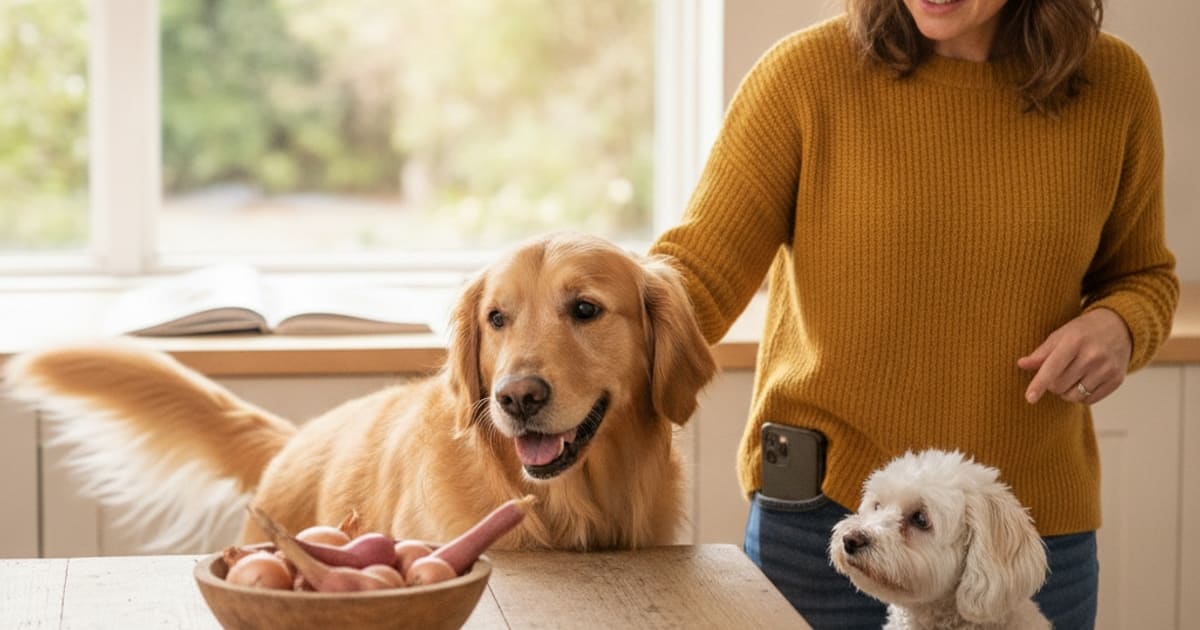
If your dog ate shallots, or food cooked with shallots, onion or garlic, call your vet or a pet poison line now. Shallots are alliums that can damage red blood cells, and signs can be delayed, so a dog who looks completely normal in the kitchen tonight is not proof that nothing happened.
The short answer is no. Dogs should not eat shallots. Shallots belong to the Allium genus, the same plant family as onions, garlic, leeks and chives, and every member of that family is treated as unsafe for dogs by veterinary toxicology services. This is not a mild sensitivity like a food that upsets some dogs' stomachs. It is a chemical effect on the blood that builds quietly and can take days to show itself.
This page explains why shallots sit on the no list, how raw, cooked, dried and green forms differ, what to watch for, and what actually happens next if your dog has already eaten some. It does not give amounts, because there is no amount worth guessing at, and the judgement call belongs to a veterinarian who knows your dog.
Why alliums cause a problem in dogs
Shallots, like all alliums, contain organosulfur compounds. When the bulb is crushed, chopped, chewed or cooked, those compounds break down into reactive sulfur-containing molecules, including n-propyl disulfide and various thiosulfates.
People handle these compounds without trouble. Dogs do not. Canine red blood cells are unusually vulnerable to oxidative damage, and these sulfur compounds oxidise the hemoglobin inside them. The damaged hemoglobin clumps and sticks to the inside of the cell wall, forming small deposits that a laboratory can see under a microscope as Heinz bodies.
The body then recognises those damaged cells as faulty and removes them from circulation. If enough red blood cells are lost, the dog becomes anemic, and because the destruction is happening to the cells themselves, this is called hemolytic anemia. Red blood cells carry oxygen, so an anemic dog tires quickly, breathes faster, and may have pale or yellow-tinged gums.
Two details matter for owners. First, the damage happens after the meal, not during it, which is why timing is deceptive. Second, sensitivity is not uniform. Some dogs show effects after a smaller exposure than others, and certain breeds, including some Japanese breeds such as the Shiba Inu and Akita, are described as having red blood cells that are more vulnerable to oxidative damage. Results vary from dog to dog, which is exactly why the safe assumption is zero.
Raw, cooked, dried or green: how the form changes things
Cooking does not neutralise alliums. Heat changes the flavour and the texture, not the underlying sulfur chemistry, and a shallot softened in butter is still a shallot. Drying removes water, which concentrates what remains, so dried and powdered forms carry more allium material for their weight than a fresh bulb does.
There is no form of shallot that is considered safe for a dog: not raw, not roasted, not fried, not dried, not powdered, and not the green tops.
| Form | What owners should know | Where dogs usually meet it |
|---|---|---|
| Raw bulb | Pungent and unappealing to most dogs, but counter-surfers and bin raiders still get hold of them. The sulfur compounds are fully present. | Chopping boards, grocery bags, vegetable baskets, compost bins |
| Cooked or roasted | Cooking softens the taste and makes it far more appetising to a dog, without removing the allium compounds. | Stir-fries, roast vegetables, pan sauces, leftovers in the bin |
| Fried crispy shallots | Concentrated, salty and greasy, and dogs find them very palatable. | Salad toppings, noodle dishes, garnish jars |
| Dried or powdered shallot | Water removed means allium content is concentrated relative to weight, and it hides invisibly in seasoning blends. | Spice racks, seasoning packets, stock cubes, gravy granules, marinades |
| Green tops and leaves | Still allium tissue, treated with the same caution as the bulb. | Garden beds, herb pots, salads, garnishes |
| Shallots inside a dish | The most frequent real-world exposure, because the shallot is invisible once it is in the sauce. | Soups, broths, curries, pasta sauces, stuffing, takeout containers |
The practical takeaway from that table is that most allium exposures are not a dog eating a bulb off the floor. They are a dog finishing a bowl of leftover sauce, licking a roasting tray, or being given a scrap of seasoned meat by a well-meaning guest. When you call your vet, tell them about the dish, not just the vegetable, because broth, gravy and seasoning blends routinely contain onion and garlic alongside shallot.
Green shallots, shallot leaves and the naming confusion
There is a real vocabulary problem here. In some regions, spring onions and scallions are called green shallots or just shallots, while in others a shallot means only the small coppery bulb that grows in clusters.
For safety purposes, the distinction does not help you, because both plants are alliums. Spring onions, scallions, chives, leeks, garlic and true shallots are all in the same genus and are all handled the same way around dogs. Whichever vegetable your local greengrocer means, the answer is that dogs should not eat it.
That includes the leaf. Shallot leaf, the hollow green top, is living allium tissue and is not a safe salad garnish or herb to share. It also matters in the garden. Alliums in a vegetable bed are easy for a bored dog to dig up and chew, and the bulbs are usually the part a digging dog finds. If you grow them, fencing the bed is simpler than supervising it.
Cut flowers and ornamental alliums belong in the same category. Keep arrangements off low tables where a curious dog can strip a stem.
Signs of allium poisoning, and the delay that catches owners out
There are two separate waves of signs, and understanding the gap between them is the single most useful thing an owner can take away.
The first wave is simple stomach upset, and it can start within hours. Drooling, nausea, vomiting, diarrhea, a sore abdomen, or a dog who goes off food. These signs are not specific. They look like any other dietary indiscretion, which is why they get dismissed.
The second wave is the blood effect, and it often does not appear until a day or several days after the meal, once enough red blood cells have been damaged and cleared. Signs include:
- Lethargy, weakness, or reluctance to walk or climb stairs
- Pale, white, or yellow-tinged gums and inner eyelids
- Faster breathing, or panting with no obvious reason
- An elevated heart rate
- Red, brown, or orange-tinged urine
- Collapse, wobbliness, or fainting after mild activity
- Yellowing of the whites of the eyes or the skin
Any of those warrant an immediate call, and collapse, laboured breathing or discoloured urine mean going in now rather than waiting for a daytime appointment. If you are unsure whether something counts as an emergency, the general warning signs that mean a dog needs to be seen straight away are worth knowing before you ever need them.
The delay is also why vets sometimes want to recheck blood work days after an exposure, even when the dog looked fine at the first visit. That is not over-caution. It is the only way to see the second wave coming.
If your dog has already eaten shallots
Call your veterinarian or an animal poison control service such as the ASPCA Animal Poison Control Center or the Pet Poison Helpline. Do this before anything else, and do it even if your dog seems perfectly well.
Do not try home remedies, and do not try to make your dog vomit. Inducing vomiting at home can cause harm of its own and is not always appropriate, and that decision belongs to a veterinary professional who knows what was eaten and when.
What helps most is information. Have ready, as best you can, what the dog ate, whether it was raw, cooked, dried or part of a dish, roughly when it happened, your dog's weight and breed, and any health conditions or medications. If there is packaging, keep it.
From there, the veterinary team decides the plan. Depending on timing and the dog in front of them, that may mean decontamination, intravenous fluids, blood work to look at red blood cell numbers and check for Heinz bodies, repeat testing over the following days, and in severe cases oxygen support or a transfusion. Dogs who are treated early and monitored properly generally do well, but the course is unpredictable, so follow the recheck schedule your vet sets rather than stopping when your dog perks up.
Keeping alliums out of reach without rearranging your life
Prevention here is mostly about where food sits rather than what you cook.
- Keep bulbs and spice jars in closed cupboards, not in open baskets on the counter.
- Use a bin with a lid your dog cannot nose open, and empty onion and shallot peelings promptly.
- Never leave a roasting tray, stock pot or sauce pan cooling where a tall dog can reach it.
- Tell guests and family, plainly, that no human food gets shared, because a scrap of seasoned chicken is the usual route in.
- Read labels on anything meant to be shared, including broths, meat-flavoured products and baby food, which frequently contain onion or garlic.
- Fence vegetable beds where alliums grow, and keep ornamental allium stems off low surfaces.
If you want to add flavour to a dog's bowl, talk to your vet about what is appropriate for your individual dog rather than improvising from the spice rack.
Key Takeaways
- Dogs should not eat shallots in any form. Raw, cooked, fried, dried, powdered and the green tops are all alliums.
- The sulfur compounds in alliums oxidise canine hemoglobin and can damage red blood cells, leading to hemolytic anemia.
- Cooking does not make shallots safe, and drying concentrates allium material relative to weight.
- Green shallots, spring onions, scallions, chives, leeks and garlic are all in the same family and carry the same caution.
- Stomach upset can come within hours. The blood effects often appear a day or more later, so a normal-looking dog is not reassurance.
- Call your veterinarian or a pet poison control service after any allium exposure, and do not induce vomiting at home.
- Sensitivity differs, and results vary from dog to dog, which is why there is no safe quantity to aim for.
The vet owns this call
Allium exposure is one of those situations where the gap between a non-event and a serious one is decided by information you cannot gather at home. Only a veterinary team can weigh what was eaten against your dog's size, breed, health history and timeline, run the blood work that shows whether red blood cells are being affected, and decide whether monitoring or active treatment is needed. Your job is to call early, describe the food honestly, and follow the recheck plan. Their job is the diagnosis and the treatment.
Related reading: Dog Emergency Signs.
Frequently asked questions
- Can dogs eat shallots?
- No. Shallots are alliums, the same plant family as onions and garlic, and the sulfur compounds they contain can damage a dog's red blood cells. No form is considered safe, including cooked and dried. If your dog ate shallots or a dish containing them, call your veterinarian.
- Are shallots harmful to dogs?
- Yes. Shallots contain organosulfur compounds that oxidise hemoglobin and can damage red blood cells, potentially leading to hemolytic anemia. Stomach upset may appear within hours, while the blood effects often show up a day or more later, so a normal-looking dog is not reassurance.
- Are shallots bad for dogs?
- Shallots are treated as toxic to dogs by veterinary poison control services, alongside onions, garlic, leeks and chives. Sensitivity differs between individuals, and results vary from dog to dog, so there is no quantity worth risking. Keep shallots and shallot-seasoned food away from your dog entirely.
- Can dogs eat a shallot?
- No. A whole shallot bulb is concentrated allium tissue, and dogs should not eat it raw, roasted or fried. If your dog has swallowed one, call your veterinarian or an animal poison control line straight away rather than waiting to see whether signs develop.
- Can dogs eat raw shallots?
- No. Raw shallots contain the same sulfur compounds that cause oxidative damage to canine red blood cells, and crushing or chewing releases them. Most dogs dislike the pungent taste, but bin raiders and counter surfers still manage it. Contact your vet if a raw shallot has been eaten.
- Can dogs eat dried shallots?
- No. Drying removes water and concentrates the allium material relative to weight, so dried or powdered shallot is handled with the same caution as fresh. It also hides in seasoning blends, stock cubes and gravy granules, which are frequent sources of accidental exposure in dogs.
- Can dogs eat green shallots?
- No. Green shallots, also sold as spring onions or scallions depending on where you shop, are alliums too. The naming varies by region but the plant family does not, so the same caution applies to the green stems as to the bulb underneath them.
- Can dogs eat shallot leaf?
- No. The hollow green leaf is living allium tissue and carries the same sulfur compounds as the bulb, so it is not a safe garnish or herb to share. Dogs can also reach allium leaves in garden beds and herb pots, which is worth fencing off.
- Are cooked shallots safe for dogs?
- No. Cooking changes the flavour and texture but not the underlying allium chemistry, and softened shallots are far more appetising to a dog than raw ones. Sauces, roasts, soups and stir-fries are among the usual ways dogs are exposed. Talk to your vet after any such exposure.
- How long after eating shallots do signs appear in dogs?
- Stomach signs such as drooling, vomiting or diarrhea can begin within hours. The red blood cell effects, including lethargy, pale gums, fast breathing and discoloured urine, often appear a day or several days later. That delay is why vets may recheck blood work after the initial visit.
Educational content, not veterinary advice. Ask your vet about your dog.