Can Dogs Eat Snow Pea Shoots? (Leaves, Tips and Sprouts)
Yes. Plain, washed pea shoots and snow pea shoots, including the leaves, tips and tendrils, are not toxic to dogs. The ornamental sweet pea vine is a different plant and is toxic, and raw sprouts carry their own risk, so talk to your vet before adding any new green.
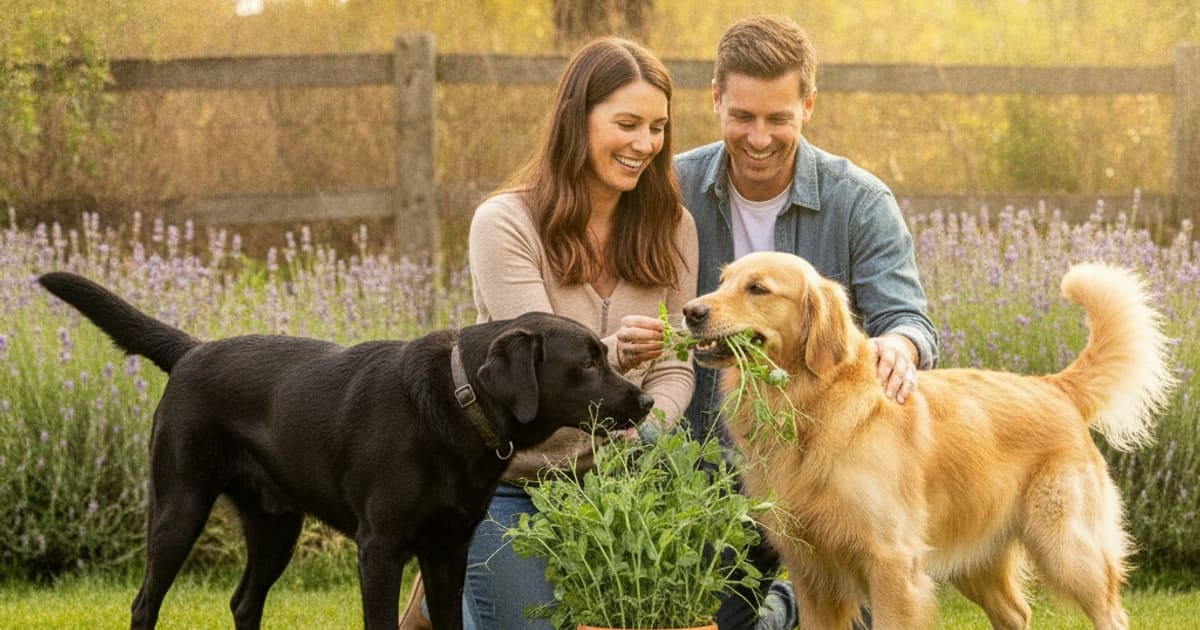
Yes. Plain, washed pea shoots and snow pea shoots, leaves, tips and tendrils included, are not toxic to dogs, so a dog who nibbles the greens out of a produce clamshell is not dealing with a poisoning. Call your veterinarian, or an animal poison control service such as the ASPCA Animal Poison Control Center or the Pet Poison Helpline, if what your dog ate came from an ornamental sweet pea vine instead of the edible crop, or if vomiting will not settle, the belly looks swollen or painful, or something large was swallowed along with the greens.
That is the short version. The longer version matters, because the word "pea" covers an edible garden crop and a flowering ornamental that are not interchangeable, and because the leafy top of a plant behaves differently in a dog's gut than the pod everyone usually asks about.
What pea shoots, tips and tendrils actually are
Pea shoots are the young, leafy growth cut from a pea plant: the soft stems, the broad leaves, the curling tendrils and the tender growing tip at the end of each vine. Snow peas are a variety of the same species grown for flat, edible pods, so snow pea shoots, snow pea leaves and snow pea tips are all the same plant material under different names on different labels.
If you bought a clamshell marked pea shoots, pea tips or dau miu, you are holding the leafy part of an edible food crop. If you are growing them on a windowsill, you are growing that same crop, harvested long before it ever flowers.
The naming gets blurry at the grocery store, and that blur is the reason this question keeps coming up. Shoots, tips and tendrils are harvested from a plant that has already pushed up leaves. Microgreens are the same idea cut even younger, once the first true leaves appear. Sprouts are something else again: a seed germinated in water or damp conditions and eaten whole, root, seed coat and all. All three come from a plant that is not poisonous to dogs, but they do not carry the same practical risks.
Why the plain greens sit on the safe side
The edible pea plant is not on the toxic list for dogs, and the leafy part is mostly water and fibre. A dog who steals a trailing tendril off the counter or crunches a leaf that fell on the kitchen floor has eaten a plain vegetable, not a toxin.
What can still go wrong is mechanical and digestive rather than chemical. Pea shoots are stringy. Tendrils are springy and coil, and a dog who gulps rather than chews can swallow a tangle whole, which can make a dog gag, retch or bring the whole wad back up. Dogs with a habit of inhaling food, and flat-faced dogs who already work harder to swallow, are the ones to supervise most closely.
Fibre is the other half of it. A gut that is not used to raw greens can respond with gas, loose stool or a bout of vomiting, and that reaction has nothing to do with toxicity. Any new food introduced to a dog with a sensitive stomach, a history of pancreatitis, inflammatory bowel disease, food allergies or a prescription diet should be cleared with your veterinarian first, because your vet knows what that particular gut has already reacted to.
Raw greens are also not a replacement for a complete, balanced diet formulated for dogs. Vegetables sit alongside a dog's main food, not instead of part of it, and your vet is the right person to tell you where plant foods fit for your dog specifically.
Plain pea shoots are not a poisoning risk, but the ornamental sweet pea is a different plant entirely, and that is the mix-up worth getting right before your dog grazes in a flower bed.
The lookalike that is not safe: ornamental sweet pea
Sweet pea, the climbing ornamental grown for its scented flowers, is in the same plant family as the edible pea and produces similar-looking leaves, tendrils and pods. It is not a food crop. Sweet pea plants contain a compound that is toxic to dogs, with the seeds and pods generally considered the most concerning part, and the plant is listed as toxic by animal poison control resources.
So a dog chewing tendrils on a garden trellis is not the same event as a dog licking up pea shoots from a chopping board. If you are not certain which plant your dog got into, treat it as the ornamental until proven otherwise and call your veterinarian or an animal poison control service. Take a photo of the plant, or bring a cutting, because identification changes the advice.
A few other garden details matter with home-grown shoots. Seed intended for sowing is sometimes sold with a coloured coating, and that coating is not food. Grow trays may hold fertiliser, and netting, twine and plant tags are all things a dog can swallow. Any plant protection product applied to a crop, indoors or out, is its own separate question for your vet.
Shoots, sprouts and microgreens compared
The table below sorts out the forms you will see on a label and what each one actually asks of you.
| Form | What it actually is | What to know before your dog eats it |
|---|---|---|
| Pea shoots and snow pea shoots | Young leafy stems, growing tips and tendrils cut from the edible pea plant | Not toxic when plain and washed; stringy tendrils can be gulped whole |
| Snow pea leaves and snow pea tips | The broad leaves and tender tip of that same plant, sold under different names | Same plant, same answer; the risk comes from how the dish was cooked |
| Pea sprouts | A seed germinated in warm, damp conditions and eaten seed and all | The warm, humid sprouting process can allow bacteria to grow; cooking reduces that risk |
| Pea microgreens | Shoots cut very young, grown in soil, coir or a fibre mat | Not toxic plain; the growing medium, fertiliser and mat are what a dog may swallow |
| Sweet pea shoots (ornamental) | A flowering ornamental vine, not a food crop | Toxic to dogs; call your vet or an animal poison control service |
Sprouts deserve the extra line of caution. The conditions that make a seed germinate are also friendly to bacteria, which is why raw sprouts of all kinds come with food-safety warnings for people. Dogs are not immune to that. If you want to offer pea sprouts, cooking them plainly removes the main concern, and talk to your vet before you offer raw sprouts to a puppy, a senior dog, a pregnant dog or any dog whose immune system is already under strain.
What changes once the greens are cooked or packaged
The plant is rarely the problem. The preparation usually is.
Pea shoots are a stir-fry staple, and a restaurant or takeaway version is typically cooked with oil, salt and aromatic seasonings that are not intended for dogs. Rich, oily food can upset a dog's digestion, and some seasoning blends contain ingredients that are genuinely unsafe for dogs even though they are harmless to us. If you do not know exactly what went into the pan, do not share the leftovers.
The same applies to salad kits and bagged greens that arrive with a dressing sachet, croutons or a flavour packet. Dressings tend to be high in fat, salt and sweeteners, and sweetener in particular is a reason to read a label properly before anything reaches a dog.
Packaging is its own hazard. Clamshell lids, plastic film, elastic bands and the absorbent pad at the bottom of a produce tray are all things a determined dog will swallow while going after the greens. If your dog has eaten packaging, that is a call to your vet rather than a wait-and-see, because swallowed plastic does not announce itself.
If you do offer pea shoots, offer them plain. Washed, unseasoned, no oil, no salt, no sauce, chopped short enough that a gulping dog cannot swallow a long tangle. Cooking them plainly softens the fibre and makes them easier on a gut that is new to greens.
Signs that turn a snack into a vet call
Most of this article is reassurance, but reassurance is not a reason to ignore a dog who is clearly unwell. Contact your veterinarian, or an emergency clinic outside normal hours, if you notice:
- Vomiting that will not settle, or repeated retching that brings nothing up
- A belly that looks swollen, feels tight, or hurts when touched
- Restlessness, pacing or an unwillingness to lie down
- Drooling, gagging or pawing at the mouth after eating stringy greens
- Diarrhoea that continues, or any blood in vomit or stool
- Straining to pass stool, or no stool at all after swallowing something bulky
- Lethargy, weakness, collapse, pale gums or laboured breathing
- Any possibility that the plant was an ornamental sweet pea rather than the edible crop
Unproductive retching combined with a distended abdomen is an emergency presentation in dogs and needs immediate veterinary attention, not observation at home. The same goes for a swallowed clamshell lid or a large tangle of stems in a small dog.
Results vary from dog to dog, and a sign that means little in one dog can matter a great deal in another. Call your vet if a symptom continues, or if you notice a new one on top of it.
Key Takeaways
- Plain, washed pea shoots, snow pea shoots, snow pea leaves and snow pea tips are not toxic to dogs; they are the leafy top of an edible food crop.
- Pea microgreens are the same crop cut younger, and the growing mat, soil and fertiliser are the parts worth keeping away from your dog.
- Raw pea sprouts carry a bacterial risk tied to how they are grown; cooking them plainly reduces that concern.
- Ornamental sweet pea is a different plant and is toxic to dogs; if you cannot identify the plant, call your vet or an animal poison control service.
- Oil, salt, seasoning, dressings and packaging cause more trouble than the greens themselves.
- Vomiting that will not settle, a swollen or painful belly, or a swallowed object means a vet call, not a wait.
Where your vet fits in
Your veterinarian owns the diagnosis and the plan. They know your dog's history, what their gut has already reacted to, what medication they are on and whether a new vegetable is a reasonable idea or a bad one for this particular animal. Nothing you read online replaces a hands-on exam, and a vet exam may help find the cause when a dog is still developing after eating something new. Talk to your vet before you change what goes in the bowl, and call them promptly when something looks wrong.
For a broader list of signs that mean a same-day call rather than a wait-and-see, read Dog Emergency Signs.
Frequently asked questions
- can dogs eat snow pea shoots
- Yes. Snow pea shoots are the young leafy growth of an edible crop and are not toxic to dogs when served plain and washed. Keep them unseasoned, with no oil, salt or sauce, and chop stringy tendrils short for dogs who gulp. Talk to your vet before introducing any new green.
- can dogs eat snow pea leaves
- Yes. Snow pea leaves come from the same non-toxic edible plant as the shoots and tips, so plain washed leaves are not a poisoning concern. The risk sits in stir-fry oil, salt and seasoning rather than the leaf itself, so skip cooked restaurant versions and check with your vet first.
- can dogs eat snow pea sprouts
- The sprouts themselves are not toxic, but raw sprouts are grown in warm, damp conditions that can allow bacteria to grow. Cooking them plainly reduces that concern. Talk to your vet before offering raw sprouts to a puppy, a senior dog, a pregnant dog or a dog with a weakened immune system.
- can dogs eat snow pea tips
- Yes. Snow pea tips are simply the tender growing end of the same edible pea vine, sold under a different name, and plain washed tips are not toxic to dogs. Serve them unseasoned and cut short, and ask your vet first if your dog has a sensitive stomach or a prescription diet.
- can dogs eat pea shoots
- Yes. Plain, washed pea shoots are safe for dogs in the sense that they are not toxic. They are mostly water and fibre, so a gut unused to raw greens may respond with gas or loose stool. Call your vet if vomiting will not settle or the belly looks swollen.
- can dogs eat pea microgreens
- Yes. Pea microgreens are the same edible crop cut very young and are not toxic to dogs when plain. The hazards are the growing medium, fibre mat, fertiliser and any plastic tray a dog might swallow alongside the greens. Keep trays out of reach and talk to your vet with questions.
- Are sweet pea shoots the same as edible pea shoots?
- No. Sweet pea is an ornamental flowering vine, not a food crop, and it is toxic to dogs. It produces similar-looking leaves and tendrils, which is exactly why the mix-up happens. If your dog chewed a trellis plant you cannot identify, call your vet or an animal poison control service.
- Should pea shoots be raw or cooked for dogs?
- Plain cooked shoots are gentler on a gut that is new to raw greens, because cooking softens the stringy fibre. Raw is not toxic, but tendrils can be gulped whole by fast eaters. Either way, no oil, salt, butter or seasoning, and talk to your vet before adding new foods.
- Can puppies eat pea shoots?
- Puppies have developing digestive systems and specific nutritional needs, so this is a question for your veterinarian rather than a general rule. Plain pea shoots are not toxic, but a growing puppy's diet should be built around a complete food formulated for growth. Ask your vet before offering any new vegetable.
Educational content, not veterinary advice. Ask your vet about your dog.