Can Dogs Eat Strawberry Jelly? (And Other Jellies)
No, strawberry jelly is not a food to give a dog: it is fruit juice cooked with sugar, and sugar-free jars can contain xylitol. Plain strawberries without stems are the safer form. If your dog ate sugar-free jelly, call your veterinarian or an animal poison control service now.
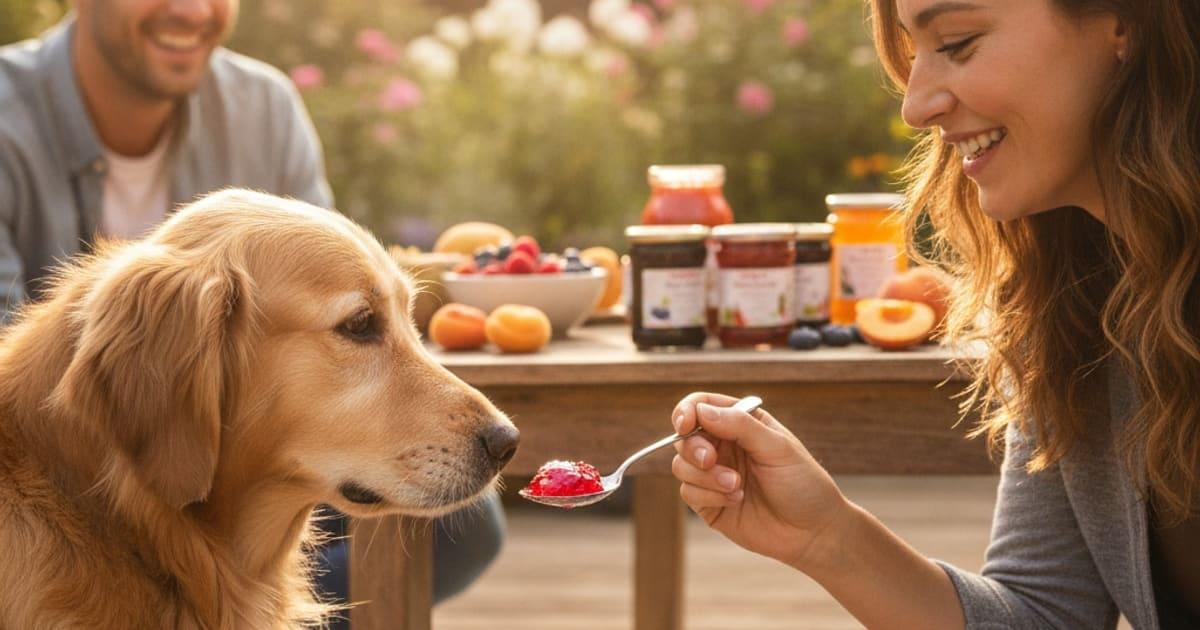
If your dog has eaten jelly or jam made with xylitol, birch sugar or any other sugar-free sweetener, call your veterinarian or an animal poison control service straight away rather than waiting to see what happens. For ordinary full-sugar strawberry jelly the plain answer is no, it is not a food to hand a dog on purpose, and a vet call is still the right move if your dog seems unwell afterwards. Jelly is fruit juice cooked down with sugar until it sets. The strawberry part is the simple half of the equation; the sugar, the sweeteners and whatever else went into the jar are the half worth thinking about.
Plain strawberries, rinsed and with the stems and green tops removed, are a different food from the spread in your fridge door. If your dog has raided a sandwich or licked a plate, the thing to look at is not the fruit name on the front of the label but the ingredient list on the back, and whether anything hard like a pit or anything inedible like a lid went down too. Vomiting that will not settle, a swollen or painful belly, or a swallowed large piece of packaging all mean a call to your vet now.
What is actually inside a jar of jelly
Jelly, jam and preserves are built the same way and differ mostly in texture. Jelly is strained fruit juice set with pectin and sugar, so it is clear and seed free. Jam uses crushed or whole fruit, so it carries seeds, skins and sometimes stem fragments. Preserves hold larger fruit. Acid, usually lemon juice, is added to help the pectin set. Some jars also carry spices, citrus peel, or a splash of liqueur.
From a dog's point of view, none of that is food. A spread is designed to deliver concentrated sweetness, and a dog's digestive system is not built for a sugar hit on top of its normal meals. Rich, sugary or fatty human food can upset a dog's stomach, and it can also be linked to pancreatitis, which is a veterinary problem rather than something to manage at home. Dogs with diabetes, dogs carrying extra weight and dogs with a history of stomach trouble have less room for error than others, and your vet can tell you how careful to be with yours.
There is one more wrinkle. In some countries, jelly means a wobbly gelatin dessert rather than a fruit spread. Those desserts are frequently sweetened artificially, and that puts them in the same conversation as sugar-free jam. If that is the jelly your dog found, treat the sweetener question as the priority.
Flavour by flavour: which jams and jellies carry extra concerns
The fruit on the label changes the picture less than owners expect. Almost every fruit jelly raises the same sugar question, and a few fruits add a second concern from pits, stems or leaves.
| Jelly or jam flavour | The plain fruit itself | What matters in the jar |
|---|---|---|
| Strawberry | Not a problem fruit for dogs when washed and de-stemmed | Sugar; sugar-free sweeteners |
| Apple | Apple flesh is not a problem fruit; seeds and cores are kept away from dogs | Sugar; added spices in homemade versions |
| Blueberry | Not a problem fruit for dogs | Sugar; sugar-free sweeteners |
| Blackberry and marionberry | Not problem fruits for dogs | Sugar; seeds and stems in jam-style spreads |
| Red raspberry and black raspberry | Not problem fruits for dogs | Sugar; some jars carry added sweeteners |
| Cherry | Flesh aside, pits and stems can be a problem | Pits or stem fragments in homemade jars |
| Peach | Flesh aside, the pit can be a problem | Pit fragments in homemade jars; sugar |
| Plum | Flesh aside, pits and stems can be a problem | Pit fragments; sugar |
| Pineapple | Not a problem fruit for dogs | Sugar; acidity on a sensitive stomach |
| Grape | Grapes and raisins can be a serious problem for dogs | Call your vet or poison control if eaten |
| Rhubarb and berry-rhubarb | Rhubarb leaf can be a problem | Leaf material in homemade jars; sugar |
| Any sugar-free version | Not relevant | Xylitol or birch sugar: call your vet now |
So, can dogs eat apple jelly, blackberry jelly, blueberry jelly, raspberry jelly or marionberry jelly? Not as a food you offer them. The fruits in those jars are not the ones on the lists of fruits dogs should avoid, which is reassuring if your dog licked a smear off a knife, but the spread itself is sugar first and fruit second. The same applies to red raspberry and black raspberry jelly, and to blackberry hybrids like marionberry.
Can dogs eat cherry jelly, peach jelly or plum jelly? Commercially made jelly is strained, so the pit and stem material has been removed. Homemade jars are where the question gets sharper, because stone fruit pits and stems can be a problem for dogs and a whole pit can also cause a blockage. If your dog got into a homemade stone fruit jar, or you suspect a pit went down, that is a conversation with your vet rather than a wait.
Can dogs eat pineapple jelly? Pineapple flesh is not a problem fruit, but pineapple spreads are acidic as well as sweet, which can be rough on a sensitive stomach. Grape jelly sits in its own category, because grapes and raisins can cause serious trouble in dogs, so a dog that has eaten grape jelly warrants a call.
Pits, stems, leaves and the parts that cause trouble
The fruits that worry vets are rarely worrying because of their flesh. Cherry, plum, peach and apricot pits and the stems and leaves of those trees contain compounds that release cyanide when they are chewed, which is why whole pits are kept away from dogs even when the fruit is not. A swallowed pit can also lodge in the gut, and that is a surgical question, not a home one.
Apple seeds sit in the same family of concerns, which is why cores are kept out of reach. Rhubarb leaf is another one to know about if you make or buy strawberry rhubarb jam, because the leaf is not food for dogs or people. Commercial manufacturing removes these parts. A jar made in a home kitchen may not have been strained the same way.
If you are not sure what was in the jar your dog found, say so to your vet. Guessing at the ingredient list is how small problems get missed.
Sugar-free jelly and the sweetener problem
This is the part of the subject that changes the urgency completely. A sugar-free or reduced-sugar jelly sweetened with xylitol, sometimes labelled as birch sugar, is a medical emergency for a dog, and it needs a phone call to your veterinarian or an animal poison control service immediately rather than a wait-and-see approach at home.
Xylitol turns up in sugar-free spreads, diet jams, gelatin desserts, some peanut butters and plenty of other low-sugar products, and labels do not always make it obvious. It affects dogs in a way it does not affect people, and signs can come on quickly. Do not wait for your dog to look unwell. Bring the jar or a photo of the ingredient list with you if you go in.
Other sweeteners such as erythritol, sorbitol and stevia sit differently, but if your dog has eaten a sugar-free product and you cannot identify the sweetener, talk to your vet rather than sorting it out from the label yourself. Results vary from dog to dog, and your vet is the one who can weigh your dog's size, health history and what was actually eaten.
If your dog has already eaten jelly
If it was full-sugar jelly and your dog seems fine
There is nothing to do at home beyond keeping the jar out of reach and watching your dog. Loose stools, gas or a bout of vomiting can follow a sugary raid. Call your vet if it continues, if your dog will not drink, or if you notice lethargy, repeated retching or a belly that looks bloated or hurts when touched.
If the jelly was sugar-free, or you are not sure
Call your veterinarian or an animal poison control service now, before symptoms appear. Have the jar in front of you so you can read the full ingredient list out loud.
If something other than jelly went down
A lid, part of a jar, a wrapper or a stone fruit pit all raise the possibility of an obstruction. Repeated vomiting, straining without producing anything, a hunched posture or a hard, painful abdomen are reasons to be seen, not reasons to wait and watch overnight.
Signs that mean go now
Vomiting that will not settle, weakness or collapse, tremors, a swollen or painful belly, trouble breathing, or any sudden change you cannot explain. If you are unsure whether what you are seeing counts, assume it does and ring your vet.
Key Takeaways
- Strawberry jelly and jam are not dog foods: they are sugar-led spreads, and the fruit is the least significant part.
- Apple, blueberry, blackberry, marionberry, red and black raspberry and pineapple jellies all raise the same sugar question rather than a fruit-specific one.
- Cherry, peach and plum jellies add a pit and stem question, which matters most with homemade jars.
- Grape jelly and anything sugar-free, especially with xylitol or birch sugar, mean an immediate call to your vet or an animal poison control service.
- Rhubarb leaf and apple seeds are kept away from dogs even when the fruit is not a concern.
- Vomiting that will not settle, a swollen or painful belly, or a swallowed large piece of packaging all mean veterinary attention.
Your veterinarian owns the diagnosis and the plan, and that is as true for a raided jam jar as it is for anything else. They know your dog's weight, history and any conditions that change how a sugar hit or a sweetener lands. If your dog has eaten something you are unsure about, talk to your vet, describe exactly what was in the jar, and let them decide what needs doing. Nothing on a label replaces that call.
Related reading: Dog Emergency Signs: When to Call the Vet and the dog health conditions library.
Frequently asked questions
- Can dogs eat strawberry jelly?
- No, strawberry jelly is not a food to give a dog. It is fruit juice set with a large amount of sugar, and sugar-free versions can contain xylitol, which is dangerous for dogs. Plain washed strawberries without stems are the safer form of the fruit. Talk to your vet.
- Can dogs eat jelly strawberry?
- Same answer whichever way the words fall: strawberry jelly is not dog food. Keep in mind that jelly can also mean a wobbly gelatin dessert, and those are frequently sweetened artificially, sometimes with xylitol. If your dog ate a sugar-free dessert jelly, call your vet or an animal poison control service now.
- Can dogs have strawberry jelly or jam?
- Neither is a good choice. Jelly is strained fruit juice and sugar; jam is crushed fruit and sugar; both are built around sweetener rather than fruit, and jam can also hold seeds or stem fragments. If a jar was raided and your dog is vomiting or sore in the belly, call your vet.
- Can dogs eat apple jelly?
- Apple jelly is not something to offer a dog, although apple flesh itself is not a problem fruit for them. The concern is the sugar load and any sugar-free sweetener in the jar. Apple seeds and cores are kept away from dogs entirely. If your dog seems unwell afterwards, talk to your vet.
- Can dogs have apple jelly?
- Not as a food you hand over. Commercial apple jelly is strained, so seeds are gone, but homemade and spiced versions can contain added spices, and crab apple jellies vary widely. Read the full ingredient list, keep the jar out of reach, and call your vet if your dog is unwell.
- Can dogs eat blackberry jelly?
- Blackberry jelly is not recommended, though blackberries themselves are not a problem fruit for dogs. The sugar content is the issue, along with any sugar-free sweetener such as xylitol. Jam-style spreads may also carry seeds and stem fragments. Call your vet if vomiting will not settle after a raided jar.
- Can dogs eat blueberry jelly?
- Blueberry jelly is not a food for dogs, even though plain blueberries are not a problem fruit. What makes the jar unsuitable is the concentrated sugar, or in low-sugar versions, the sweetener. Check the label for xylitol or birch sugar, and if either appears, call your vet right away.
- Can dogs eat cherry jelly?
- Cherry jelly is not something to give a dog. Cherry pits and stems can be a problem for dogs, and while commercial jelly is strained, homemade jars may not be. If you think a pit was swallowed, or your dog is retching or has a painful belly, contact your vet without delay.
- Can dogs eat raspberry jelly or red raspberry jelly?
- Neither red nor black raspberry jelly is a food for dogs, although raspberries themselves are not a problem fruit. The sugar is the sticking point, and sugar-free jars can contain xylitol. If your dog ate a sugar-free spread, call your vet or an animal poison control service immediately.
- Can dogs eat pineapple jelly?
- Pineapple jelly is not suitable for dogs. Pineapple flesh is not a problem fruit, but the spread is both sweet and acidic, which can sit badly on a sensitive stomach. Watch for vomiting, loose stools or a tender belly, and call your vet if any of that continues.
Educational content, not veterinary advice. Ask your vet about your dog.