Can Dogs Eat Trout? Raw vs Cooked and Safe Prep
Dogs can eat trout when it is thoroughly cooked, plain and completely boneless. Raw trout and fish bones are not safe, since freshwater fish can carry parasites and bones splinter easily. Rainbow, lake and ocean trout differ mainly in contaminant load, and any new food is worth clearing with your vet.
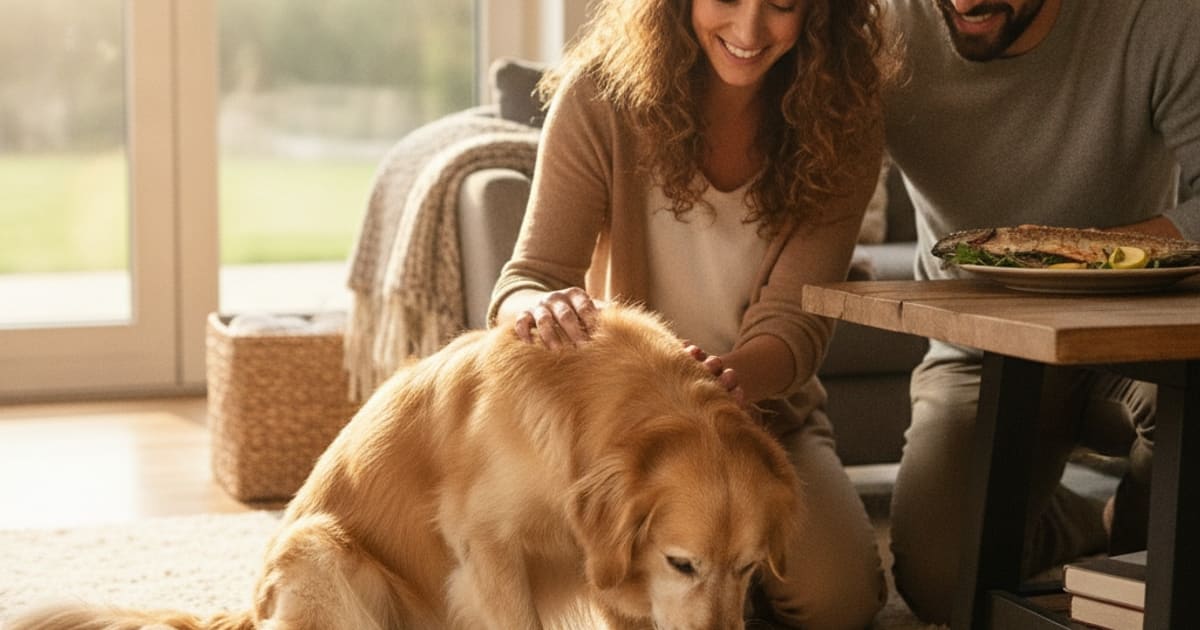
Dogs can eat trout, but only when it is cooked all the way through, served completely plain, and stripped of every bone. If your dog has already eaten raw trout, swallowed a fish bone, or swallowed a large piece of a whole fish, call your vet rather than waiting to see how it plays out. Trout itself is not a toxic food for dogs. It is a lean, mild-flavoured fish from the salmon family, and the trouble that sends dogs to the clinic after a fish dinner almost always comes from preparation rather than the fish: raw flesh carrying parasites, hair-thin bones that splinter, or butter, salt and seasoning cooked straight into the fillet.
Trout belongs in a dog's bowl only when it is fully cooked, plain and completely boneless: raw trout and fish bones are not safe for dogs.
Cooked trout versus raw trout
Cooked wins, every single time. Heat does two things that matter here. It destroys the parasites that live in freshwater and sea-run fish, and it kills the bacteria that colonise fish flesh quickly after the catch. Baking, steaming or poaching gets trout cooked through without adding anything, which is exactly what you want.
Plain means genuinely plain. No oil or butter, no salt, no lemon, no pepper, no herb rubs, no marinade, and absolutely no onion or garlic, both of which are harmful to dogs in any form, fresh, powdered or cooked into a sauce. Battered, breaded and pan-fried trout is off the list too, because the coating carries the fat and seasoning even when the fish underneath is fine.
Can dogs eat uncooked trout? No. Raw trout sits in a different risk category from a raw beef trim, and that includes sushi-grade cuts, fishmonger offcuts and anything pulled straight off the line at the water's edge. Deep commercial freezing is used to reduce parasite risk in the human food chain, but a domestic freezer is not built to hold those conditions, and freezing does nothing at all to bacteria. So when owners ask whether dogs can eat trout raw or cooked, the honest answer is cooked only, with no useful middle ground.
What raw trout can carry
Freshwater and sea-run fish are natural hosts for parasites, including tapeworms and small flukes that take up residence in the flesh. A dog that eats raw trout can take those passengers on board.
The one worth understanding properly is salmon poisoning disease. Despite the name, it is not limited to salmon. It involves a fluke found in salmonid fish in certain waters, and that fluke can carry a rickettsial organism that makes dogs seriously ill. Signs tend to appear within days of a raw fish meal: vomiting, diarrhoea, going off food, low energy, a raised temperature and swollen glands. Dogs often become unwell faster than owners expect. It is treatable when a vet is involved early, which is why any raw fish meal followed by a sick dog is a same-day phone call, not a wait-and-see.
Raw fish also carries a bacterial load, including Salmonella, Listeria and Clostridium species. Dogs tolerate bacteria better than people do, but tolerating is not the same as being unaffected, and a dog carrying these organisms can shed them around the house. That matters in homes with young children, older adults or anyone with a weakened immune system.
Bones, skin and the whole fish question
Can dogs eat trout whole? No. A whole trout is mostly a bone delivery system. Trout carry a fine skeleton plus a row of pin bones that sit deep in the fillet and are easy to miss, and cooking makes those bones more brittle rather than softer.
Trout fillets are the sensible starting point, but a fillet is not automatically boneless. Run your fingertips along the flesh against the grain before anything reaches your dog, and pull out every pin bone you find. Heads, tails, fins, frames and guts all stay in the bin.
The risks from fish bones are mechanical. Slivers can wedge between teeth or spear the gums and tongue, lodge in the throat or the oesophagus, scratch or perforate the gut wall, or clump into a blockage further down. Watch for gagging, repeated swallowing, pawing at the mouth, drooling, retching, sudden refusal to eat, a swollen or painful belly, or vomiting that will not settle. Any of those after a fish meal is a veterinary visit, and a large swallowed piece is one even before symptoms start.
Trout skin is edible for dogs when the fish has been cooked plain, though it is the fattiest part of the fish. Skin crisped in oil or butter is a different thing entirely, and rich, fatty food is a known trigger for pancreatitis flare-ups in dogs that are prone to them. If your dog has a history of pancreatitis or a sensitive gut, talk to your vet before trout appears on the menu at all.
How the different trout varieties compare
The species on the label changes the contaminant picture more than it changes the safety rules. Every entry below still has to be cooked through, plain and boneless.
| Trout type | What to know | Suitable when cooked plain and boneless |
|---|---|---|
| Rainbow trout, farmed | Mild and lean, raised in managed systems with controlled feed | Yes |
| Steelhead or ocean trout | Richer, oilier flesh, sold alongside salmon | Yes |
| Lake trout, wild | Long-lived freshwater predator that can accumulate more environmental contaminants in its fat | Cooked and boneless only, and worth raising with your vet first |
| Brown and brook trout | Wild caught, so parasite and contaminant load depends entirely on the water | Yes |
| Smoked, cured or jerky trout | Heavy salt, often sugar, pepper or garlic | No |
| Canned trout in brine, oil or sauce | Added salt, fats and seasonings | No |
| Raw trout, any species | Parasites and bacteria that cooking would remove | No |
Can dogs eat rainbow trout? Yes, and farmed rainbow trout is one of the more predictable choices on the counter, because the fish is young and raised on controlled feed. Can dogs eat lake trout? Also yes once cooked and deboned, with the caveat that large, old, wild freshwater predators sit higher up the food chain and carry whatever their lake carries. Ocean trout and steelhead behave much like a leaner salmon on the plate.
On the trout versus salmon question owners often ask in the same breath: they are close relatives, both are salmonids, and both can carry the fluke linked to salmon poisoning disease when raw. Trout is usually the leaner of the two. Neither is safe uncooked, and the preparation rules are identical.
Is trout good for dogs nutritionally
Trout is a complete protein with a useful mineral profile. It supplies vitamin B12, selenium, phosphorus, niacin and the long-chain omega-3 fatty acids EPA and DHA, which is the reason oily fish appears so often in diets formulated with skin and coat in mind. Omega-3s may support skin and coat condition as part of a balanced diet, though what any individual dog gains from a given food is not predictable: results vary from dog to dog.
Two honest caveats. First, plain cooked fish on its own is not a balanced diet for a dog, and swapping out a formulated food for home-cooked trout leaves real gaps in calcium and several vitamins. Fish is an addition to a complete diet, not a replacement for one.
Second, trout is not right for every dog. Phosphorus matters for dogs managing kidney disease. Fat matters for dogs with a pancreatitis history. Fish is a recognised allergen for some dogs, and a dog on an elimination diet should not meet a new protein without the vet who designed that diet knowing about it. Mercury accumulation is generally lower in trout than in large, long-lived marine predators, but it still favours younger farmed fish over big wild lake specimens.
When trout becomes a reason to call the vet
Introduce any new food gradually and keep an eye on your dog over the next day or two. Mild, short-lived loose stool from a rich new protein is not unusual. These signs are different, and they warrant a call:
- Vomiting that will not settle, or repeated retching after a fish meal
- A swollen, tense or painful belly
- Any swallowed large piece, bone or fish frame, even if your dog seems fine
- Gagging, drooling, pawing at the mouth or difficulty swallowing
- Diarrhoea with lethargy, fever or swollen glands within days of eating raw trout
- Pale gums, collapse, or a dog that simply is not itself
If you are weighing up whether something counts as an emergency, assume it does and make the call. Vets would far rather hear from you early than meet an obstruction late.
Key Takeaways
- Dogs can eat trout when it is cooked through, plain and completely boneless.
- Raw and uncooked trout are not safe, because salmonids can carry parasites including the fluke involved in salmon poisoning disease.
- Fish bones are the biggest mechanical hazard, so whole trout, frames, heads and tails stay off the menu.
- Rainbow, steelhead, ocean, brown and brook trout all follow the same preparation rules; wild lake trout can carry a heavier contaminant load.
- Smoked, cured, brined and seasoned trout are out, and garlic and onion are harmful to dogs in any amount.
- Trout supplies protein, B12, selenium and omega-3 fatty acids, but it does not replace a balanced diet.
- Dogs with kidney disease, pancreatitis history or food allergies need veterinary input before trying fish.
For related reading, see Dog Emergency Signs, Can Dogs Eat Salmon?, Can Dogs Eat Eggs? and Can Dogs Eat Rice?.
Your vet owns the plan
Food questions look simple until they collide with a dog's actual medical picture. Your veterinarian is the one who knows your dog's weight, gut history, kidney and pancreas function and current diet, and that is the person who should sign off on whether trout belongs in the bowl at all. If your dog is unwell, has swallowed a bone, or has eaten raw fish, the vet leads from there. Nutrition choices sit inside the plan your vet sets, never ahead of it.
Frequently asked questions
- Can dogs eat trout?
- Yes, dogs can eat trout when it is cooked all the way through, served plain with no oil, salt or seasoning, and completely free of bones. Trout is not toxic to dogs. The hazards come from raw flesh, fine pin bones and added ingredients like garlic, onion and butter.
- Can dogs eat trout raw?
- No. Raw trout can carry parasites, including the fluke linked to salmon poisoning disease, plus bacteria such as Salmonella and Listeria. Home freezing does not reliably remove these risks. If your dog has eaten raw trout and seems unwell, call your vet the same day rather than waiting.
- Can dogs eat raw trout?
- Dogs should not eat raw trout. Trout is a salmonid, and salmonids in some waters carry a small fluke that transmits the organism behind salmon poisoning disease. Raw fish also carries a bacterial load. Cooking the fish through removes both problems, so cooked and boneless is the only safe route.
- Can dogs eat trout cooked?
- Yes, cooked trout is the form dogs can eat, provided it is cooked right through and prepared plain. Bake, steam or poach it with nothing added, then check the flesh carefully for pin bones. Avoid butter, oil, salt, lemon, pepper, batter and anything containing onion or garlic.
- Can dogs eat cooked trout?
- Cooked trout is suitable for dogs when it is plain and boneless. Cooking removes the parasite and bacterial risks that make raw trout unsafe, but it also makes fish bones more brittle, so deboning still matters. Dogs with pancreatitis history, kidney disease or food allergies need veterinary clearance first.
- Can dogs eat trout raw or cooked?
- Cooked only. There is no safe way to give a dog raw trout at home, because freshwater and sea-run fish carry parasites and bacteria that only thorough cooking removes. Cooked, plain, boneless trout is fine for many healthy dogs. Talk to your vet before adding any new protein.
- Can dogs eat trout fillets?
- Yes, cooked plain trout fillets are the safest form of the fish for dogs, but a fillet is not automatically boneless. Trout carry a row of pin bones that sit deep in the flesh. Run your fingers along the fillet against the grain and remove every bone you find.
- Can dogs eat trout whole?
- No. A whole trout brings the full skeleton, head, fins and guts with it, and cooked fish bones are brittle enough to splinter. Bone fragments can lodge in the mouth, throat or gut. If your dog swallows a whole fish or a large piece of one, contact your vet.
- Can dogs eat rainbow trout?
- Yes, cooked, plain, boneless rainbow trout suits many healthy dogs. Farmed rainbow trout is a fairly predictable choice because the fish is young and raised on controlled feed, which generally means lower contaminant exposure than large wild freshwater predators. The same no-raw, no-bones, no-seasoning rules still apply.
- Can dogs eat lake trout or ocean trout?
- Both are suitable once cooked through, plain and deboned. Ocean trout and steelhead behave much like a leaner salmon. Wild lake trout is a long-lived freshwater predator that can accumulate more environmental contaminants in its fat, so raise it with your vet before choosing it for your dog.
Educational content, not veterinary advice. Ask your vet about your dog.