Can Dogs Eat Watercress? (Safety, Risks and Washing)
Plain watercress, thoroughly washed and served without seasoning, is not toxic to dogs. The real concerns are wild-foraged patches, where poisonous look-alike plants and waterborne parasites grow alongside it, and the peppery brassica compounds that can unsettle a sensitive stomach. Talk to your vet before adding any new green.
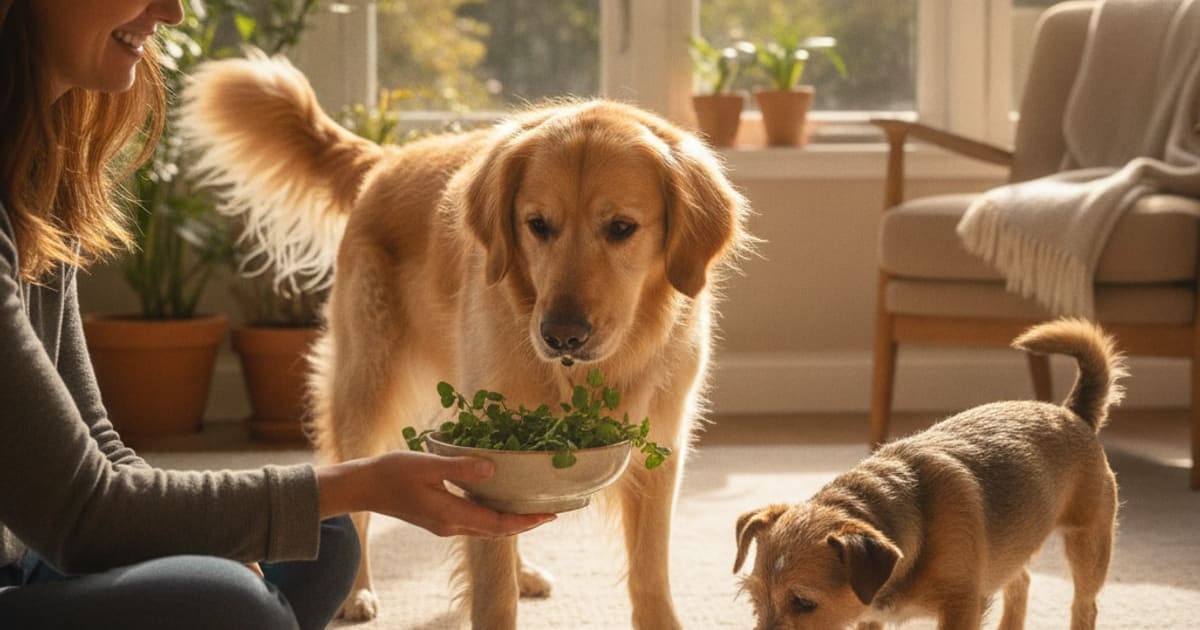
Yes, dogs can eat watercress when it is plain, thoroughly washed and comes from a clean, known source. The more important sentence is this one: if your dog has eaten watercress pulled from a wild stream, pond or ditch, or is now vomiting repeatedly, drooling heavily, wobbly, trembling or clearly in pain, call your veterinarian or an animal poison control service such as the ASPCA Animal Poison Control Center or the Pet Poison Helpline right away. The hazard in wild cress is almost never the cress itself.
Watercress is not a plant that veterinary toxicology lists treat as poisonous to dogs. It is a leafy green from the mustard family, it is mostly water, and a curious dog who steals a leaf from a bunch on the counter is not in trouble. What complicates the answer is everything around the leaf: where it grew, what was prepared with it, and which dog is eating it.
A peppery green that grows in running water
Watercress is Nasturtium officinale, a member of the brassica family alongside cabbage, broccoli, rocket, radish and mustard greens. It grows semi-submerged in slow-moving fresh water, which is unusual for a salad leaf and is the single most useful fact to hold on to when you are thinking about safety.
Commercially grown watercress is raised in managed spring-water beds and washed before it reaches a shop. Wild watercress grows wherever the water is clean enough to support it, which also means wherever livestock drink, wherever runoff drains, and wherever other streamside plants are growing elbow to elbow with it.
The flavour is sharp and peppery. That bite is not incidental. It comes from compounds the plant produces as a defence, and those same compounds are the reason some dogs tolerate watercress happily while others get an still developing stomach from it. Results vary from dog to dog, and a dog who eats cabbage or broccoli without complaint is usually the dog who handles watercress without complaint too.
What is actually inside the leaves
Watercress is largely water, with very little fat and very little in the way of calories. Beyond that, it contributes vitamin K, vitamin C, beta carotene, folate, calcium and potassium, along with a modest amount of plant fibre.
It is worth being realistic about what that means for a dog. Dogs produce their own vitamin C, so there is no gap there to fill. A complete and balanced dog food is already formulated to supply the vitamins and minerals a dog needs, which means greens added at home are an extra for interest, crunch and variety rather than a nutritional rescue. Watercress is not a correction for a diet that is falling short, and if you think a diet is falling short, that is a conversation for your veterinarian rather than a reason to reach for the salad drawer.
Two components deserve a closer look. The first is vitamin K, which leafy greens are generous in. If your dog takes any medication where vitamin K intake matters, your veterinary team needs to know about green additions before you start making them. The second is the glucosinolate group, the brassica compounds that convert into pungent isothiocyanates when the leaf is chewed or crushed. Those are what give watercress its peppery hit, and in a sensitive digestive tract they can be mildly irritating.
Watercress also takes up minerals and nitrates from the water it grows in, which is another reason the growing site matters as much as the plant.
Why the peppery bite matters for a dog's digestion
Dogs are not built to extract much from raw plant cell walls. A leaf that passes through largely intact is harmless but also largely pointless, and a dog who eats a lot of fibrous greens in one sitting may show for it with gas, a loose stool or a single bout of vomiting.
Brassica greens in particular have a reputation for gas, and watercress sits in that family. Chopping the leaves and stems finely, or steaming them briefly in plain water, breaks the material down and tends to be easier on the gut than whole raw sprigs. Stems are tougher than leaves and are the part a fast eater is most likely to gulp without chewing.
There is one more consideration for dogs with thyroid disease. Brassica-family plants contain goitrogenic compounds, which can interfere with how the thyroid takes up iodine when large quantities of raw brassica are eaten. This is not a reason for a healthy dog to avoid a leaf of cress, but it is a genuine reason for a dog already under veterinary care for a thyroid condition to have greens cleared first. The same applies to dogs managing kidney disease, urinary stones, pancreatitis or inflammatory bowel conditions, where diet is part of the treatment plan and unplanned additions can work against it. If your dog is being managed for anything in the conditions library, talk to your vet before you change what goes in the bowl.
The bigger risk is where the watercress grew
Foraged watercress is a completely different question from shop-bought watercress, because of what lives in the water and what grows beside it.
Wild cress beds can carry waterborne parasites, including liver fluke, which uses freshwater snails and the plants they cling to as part of its life cycle. Water that drains from pasture can also carry bacteria, and standing or slow water is a classic source of gastrointestinal infection for dogs who drink from it or eat plants out of it.
The larger hazard is botanical. Several plants of the carrot and parsley family grow in and along the same streams, and some of them are severely poisonous. Hemlock water dropwort is the one that worries people most, because it is highly toxic and grows in exactly the habitat watercress likes. Poison hemlock, lesser water parsnip and fool's water cress can all turn up in the same stretch of bank. Telling them apart by eye, in a bundle, after they have been picked, is not a reliable skill for anyone who is not a trained botanist. If a dog has eaten unidentified streamside greens and then becomes unsteady, starts trembling, salivates heavily or collapses, that is an emergency call, not a wait-and-see.
| Form of watercress | What it is | What to consider |
|---|---|---|
| Fresh and washed from a grocer | Plain leaves and stems, nothing added | The simplest option; keep it plain and chop it finely |
| Wild cress from a stream or ditch | Unknown water quality, unknown neighbouring plants | Look-alike toxic plants and waterborne parasites make this the riskiest version |
| Bagged salad blends | Watercress mixed with other leaves, sometimes a dressing sachet | The leaf is fine; dressings, oils and seasonings are the problem |
| Soups and cooked dishes | Usually built on stock, cream, butter and seasoning | Human recipes routinely include ingredients that do not suit dogs |
| Juices, powders and extracts | Concentrated plant material | Concentration changes the picture entirely; clear it with your veterinarian first |
Preparing it plainly, and the dogs who should skip it
If watercress is going into a dog's bowl, the preparation rules are short. Wash it thoroughly under running water. Trim away tough stem ends. Chop it finely, or steam it briefly in plain water and let it cool. Add nothing: no oil, no butter, no salt, no stock, no seasoning blend, no dressing. Introduce it on its own rather than alongside three other new foods, so that if something disagrees you know what caused it.
Some dogs are better off without it. Puppies are growing on a tightly balanced diet and have digestive systems that protest at novelty, so new greens are a question for the veterinarian who is already overseeing that growth. Pregnant and nursing dogs are in the same category, because their nutritional needs are specific and not a place for improvisation. Dogs with a history of stomach upset, dogs on a prescription diet, dogs with thyroid or kidney disease, and dogs taking medication where diet interacts with the drug should all be cleared first.
And some dogs simply refuse it. Watercress is sharp, and plenty of dogs find the peppery taste off-putting. A dog who turns away from it is not missing anything that matters.
Signs that mean a call to the veterinarian
Most reactions to a mouthful of greens are mild and settle on their own. The ones that do not settle need professional eyes. Call your veterinary clinic if you see vomiting that keeps repeating or will not stop, a belly that looks swollen or feels painful or tense, repeated retching that produces nothing, blood in vomit or stool, pale gums, sudden lethargy or weakness, trouble breathing, tremors, unsteadiness, or collapse.
A dog who has swallowed a large piece of stem or a wad of unchewed plant material without properly chewing also warrants a call, particularly a small dog, because material that will not move through the gut becomes an obstruction rather than a digestive grumble. Do not wait to see whether an obstruction clears itself. For a broader picture of what should prompt an urgent visit, the guide on emergency signs in dogs is a useful reference to have read before you need it.
Key Takeaways
- Watercress is not considered poisonous to dogs; plain, washed, chopped leaves from a clean source are the safe version.
- The peppery bite comes from brassica compounds, which can mean gas or a loose stool in sensitive dogs.
- Wild-foraged cress is the real hazard, because of waterborne parasites and severely toxic look-alike plants that share the same streams.
- Prepared dishes, dressings, soups and concentrated extracts are the parts to avoid, not the leaf.
- Puppies, pregnant or nursing dogs, and dogs managing thyroid, kidney, urinary or digestive disease should be cleared by a veterinarian first.
- Vomiting that will not settle, a swollen or painful belly, a swallowed large piece, tremors or collapse all mean a call now.
Where the veterinarian fits in
Food questions feel small until they are not. Your veterinarian is the one who knows your dog's history, current medications and diagnosed conditions, and that context is what turns a general answer about a salad leaf into the right answer for your dog. Diagnosis and the treatment plan belong to the clinic, and anything you add at home should fit inside the plan they have set rather than quietly compete with it. When in doubt about watercress or any other green, talk to your vet before it goes in the bowl.
Related reading: emergency signs in dogs.
Frequently asked questions
- Can dogs eat watercress?
- Yes. Plain watercress that has been washed thoroughly and served with nothing added is not toxic to dogs. The peppery brassica compounds can unsettle a sensitive stomach, so chop or lightly steam it and introduce it on its own. Talk to your vet before adding any new green.
- Can dogs eat watercress vegetable?
- Yes, the watercress vegetable itself is safe for most dogs when it is plain and well washed. Problems come from the form it arrives in: dressings, oils, salt, stock and seasoned soups are the issue, not the leaf. Shop-grown cress is safer than wild-foraged cress.
- Can puppies eat watercress?
- Puppies are best kept off watercress unless your veterinarian says otherwise. They grow on a tightly balanced diet, and new plant foods can upset a developing digestive system or displace nutrition they need. Ask the vet overseeing your puppy's growth before offering any green, including cress.
- Is watercress poisonous to dogs?
- No, watercress is not classed as poisonous to dogs. The danger lies with wild cress beds, where severely toxic look-alike plants such as hemlock water dropwort grow in the same water and waterborne parasites cling to the leaves. If your dog ate unidentified streamside greens, call your veterinarian.
- Is wild watercress safe for dogs?
- No, wild watercress should be treated as unsafe. Streams and ditches carry parasites and bacteria, and poisonous plants from the carrot and parsley family grow alongside cress in the same habitat. Identifying them reliably after picking is not realistic for most people, so leave wild patches alone.
- Can dogs eat cooked watercress?
- Yes, if it is steamed or boiled in plain water and nothing else. Brief cooking softens the fibre and tends to be gentler on a dog's gut than raw sprigs. Avoid prepared recipes, which are built on stock, cream, butter and seasonings that do not suit dogs.
- Can dogs eat watercress stems?
- The stems are not toxic, but they are tougher than the leaves and are the part a fast eater is most likely to swallow whole. Trim the tough ends and chop the rest finely. A swallowed large piece that causes retching or a painful belly needs a vet.
- Why does watercress upset some dogs' stomachs?
- Watercress belongs to the brassica family, and chewing releases pungent compounds that give it the peppery bite. Dogs also break down raw plant fibre poorly. Together that can mean gas, a loose stool or a single bout of vomiting. Results vary from dog to dog.
- Should dogs with thyroid or kidney disease eat watercress?
- Not without veterinary clearance. Brassica plants contain goitrogenic compounds that can interfere with thyroid iodine uptake, and dogs managing kidney or urinary disease are usually on prescription diets where unplanned additions work against the plan. Check with the clinic already managing the condition first.
Educational content, not veterinary advice. Ask your vet about your dog.