Can Dogs Have Horse Chestnuts? (Conkers Are Not Safe)
No, dogs cannot have horse chestnuts. Conkers, their spiky cases and the tree's leaves contain aesculin and saponins that irritate the gut, and the hard round nut can lodge in the digestive tract. If your dog ate one, call your vet or a pet poison line now.
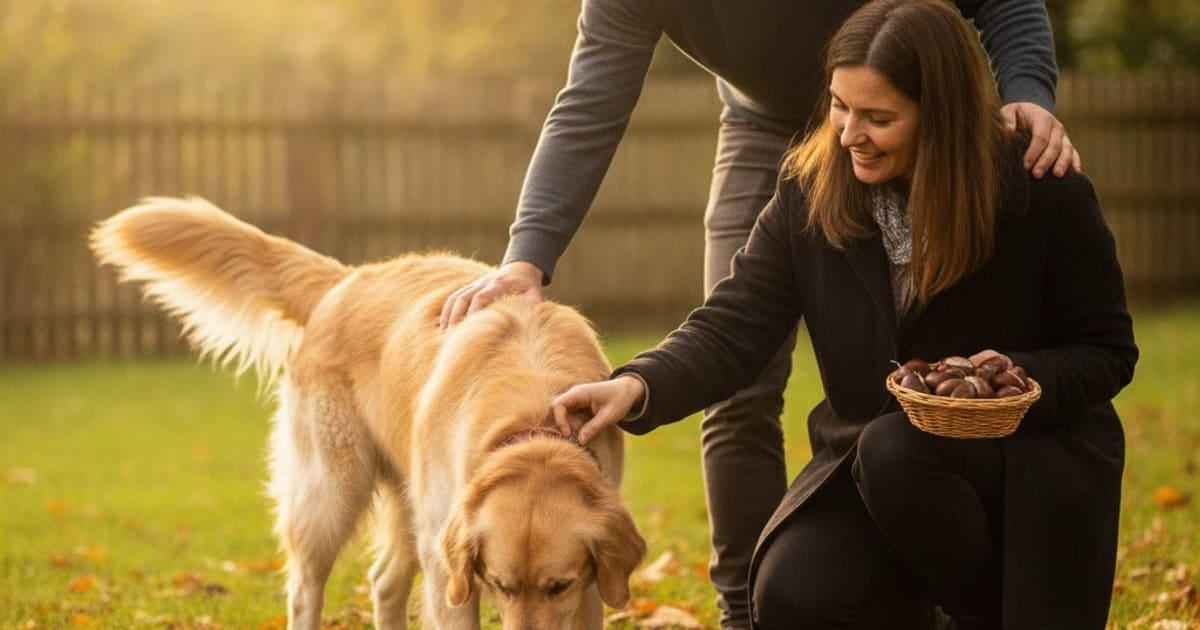
If your dog ate horse chestnuts (conkers), their shells or leaves, call your vet or a pet poison line now. Dogs cannot have horse chestnuts: the glossy brown nut, the thick green case around it, the leaves and the bark all contain aesculin and related saponin compounds that irritate the lining of the stomach and intestines, and the nut itself is hard, dense and almost perfectly shaped to lodge somewhere in the gut where it does not belong. Raw or cooked makes no difference to either problem. This is a situation where a phone call beats a wait-and-see evening, because the two hazards involved, chemical irritation and physical blockage, can both build quietly over hours.
Horse chestnuts are not the chestnuts people roast
Most of the confusion around this question comes from the name. The horse chestnut belongs to the genus Aesculus, and it is not closely related to the sweet chestnut, Castanea sativa, which is the nut sold roasted at winter markets and used in stuffing. They are different trees from different plant families that happen to drop brown nuts at a similar time of year.
In North America, the same genus shows up as buckeye trees, and buckeye nuts carry the same concerns as conkers. If you are looking at a palm-sized fan of leaflets spreading from a single stalk and a round, shiny nut with a pale patch on one side, you are looking at the toxic one.
| Feature | Horse chestnut (conker, buckeye) | Sweet chestnut (edible) |
|---|---|---|
| Plant group | Aesculus, unrelated to the edible chestnut | Castanea, in the beech family |
| Outer case | Thick, pale green, with sparse stubby spikes | Dense coat of fine, long, needle-like spines |
| Nut shape | Round and glossy, with a wide pale scar | Flatter on one side, tapering to a point with a wispy tuft |
| Nuts per case | Usually one large nut | Several smaller nuts packed together |
| Leaves | Leaflets radiating from one point like fingers | Long, single, saw-edged leaves |
| Toxic to dogs | Yes, whole plant | Not considered toxic, though shells and whole nuts still pose a choking and blockage risk |
That last row matters. Sweet chestnut flesh is not on the toxic lists, but a hard whole nut in a shell is still something a dog can choke on or struggle to pass, and any new food is worth running past your vet first.
What makes a conker dangerous, chemically and physically
The chemistry comes first. Horse chestnut tissue contains aesculin, a coumarin glycoside, along with saponins such as aescin and a load of tannins. Saponins are natural detergent-like molecules, and in the digestive tract they disrupt the cells lining the stomach and intestines. The practical result is irritation: nausea, vomiting, loose stool, cramping and discomfort. Animal poison control services list the horse chestnut tree as toxic to dogs for exactly this reason, and the leaves, twigs, flowers and green cases are all included, not just the nut.
The physical risk is separate and, for many dogs, the bigger one. A conker is roughly spherical, firm, and does not soften much in the gut. A dog who swallows one whole, or who crunches the case and swallows fragments of the spiky husk, can end up with material that will not move through the intestine. Smaller dogs are at higher risk simply because of the diameter of their gut, but a large dog who gulps several is in the same territory.
There is a diagnostic wrinkle worth knowing. Plant material does not always stand out on a plain x-ray the way a coin or a stone does, so a clear image is not automatically a clear result. Your vet may suggest repeat imaging, an ultrasound or a period of in-clinic monitoring to be confident about what is happening. That is thorough medicine, not overkill.
Horse chestnuts are never safe for a dog to eat, raw or cooked, and the right response to any exposure is a call to your vet rather than waiting to see how the night goes.
Signs to watch for after a dog swallows one
Signs can start soon after eating or build later, and the pattern depends on whether the trouble is irritation, obstruction, or both. Things to watch for include:
- Vomiting, including repeated unproductive retching
- Heavy drooling or lip-licking, often the earliest sign of nausea
- Diarrhea, sometimes with blood or mucus
- Abdominal pain: a tense belly, a hunched posture, the stretch-and-bow position, flinching when picked up
- Loss of appetite or refusing water
- Lethargy, restlessness or an inability to settle
- Wobbliness, tremors or weakness
- Straining to pass stool, or passing nothing at all
A dog who ate a conker and seems fine is not in the clear. Obstruction signs can appear after a delay, once the object has travelled far enough to wedge. Tell your vet what happened even if your dog looks normal, and ask what to watch for and over what window. For a broader sense of which sudden changes warrant an urgent call rather than a morning appointment, it helps to know the warning signs in advance.
Results vary from dog to dog: two dogs who swallow the same thing can have very different outcomes depending on their size, their gut anatomy and how much they chewed before swallowing.
Why dogs pick them up, and whether cooking changes anything
Do dogs eat horse chestnuts? Some absolutely do. A conker is ball-shaped, it rolls, it rattles in leaf litter and it fits neatly in a mouth, which is close to a perfect specification for a dog's idea of a toy. Retrieving breeds and persistent chewers are drawn to them, puppies mouth anything novel, and dogs who scavenge on walks will swallow one before you have finished saying no. Autumn walks under these trees, and gardens where the nuts pile up, are where this usually happens.
Should dogs eat horse chestnuts? No. There is no version of this nut that belongs in a dog's diet, and there is no preparation that makes it suitable.
Can dogs eat raw horse chestnuts? No. Raw conkers carry the full load of aesculin, saponins and tannins, plus the physical hazard of a hard nut and a spiky case.
Can dogs eat cooked horse chestnuts? No. Roasting, boiling or baking does not reliably neutralise the compounds involved, and cooking does nothing at all about the shape and density that create the obstruction risk. Traditional human preparations for horse chestnut material involve extensive processing, and none of that makes a conker an appropriate thing to hand a dog.
Why can dogs eat horse chestnuts? They cannot, and the question almost always traces back to the name. People see the word chestnut, remember that roasted chestnuts are fine, and assume the two are interchangeable. They are not. The word horse in the name carries no suggestion of safety for animals either; horses and other livestock are affected by this plant as well.
What to do if your dog has already eaten one
Contact your veterinarian, your nearest emergency clinic, or an animal poison control service such as the ASPCA Animal Poison Control Center or Pet Poison Helpline. Do this straight away rather than searching for reassurance.
Have this information ready, because it shapes the advice you get:
- What your dog ate: the nut, the green case, leaves, or a mix
- Whether it was swallowed whole or chewed first
- Roughly when it happened
- Your dog's weight, age and any existing health conditions
- Any medication your dog is on
If you can do it safely, keep the remains of what your dog was chewing, or take a photo of the nut, the case and a leaf. Identifying the tree correctly changes the plan.
Do not try to make your dog vomit at home and do not give anything by mouth unless your vet specifically tells you to. Bringing up a hard, irregular object can cause its own problems, and that decision belongs with the person who can examine your dog. Your vet may recommend an exam, imaging, bloodwork, supportive care in the clinic, medication to settle the gut, or a procedure to retrieve the object. Follow the plan they give you, and go back if anything changes.
Keeping conkers out of reach in the first place
Prevention here is mostly about geography and attention. Learn to recognise the tree, and know which stretches of your walking routes sit under one. In the weeks when nuts are dropping, keep a scavenging dog on a lead through those sections, or reroute entirely.
A reliable leave it cue is the single most useful piece of training for this problem, and it is worth practising in low-stakes settings long before autumn. For dogs who swallow things faster than any cue can land, a well-fitted basket muzzle used on walks is a kind and practical tool, not a punishment.
At home, clear fallen nuts and cases from the garden before letting your dog out, and store any collected conkers, including children's game collections and seasonal decorations, somewhere a dog cannot reach. A bowl of conkers on a low table is a hazard in waiting.
Key Takeaways
- Horse chestnuts, conkers and buckeyes are not the edible sweet chestnut, and they are not safe for dogs in any form.
- The nut, case, leaves and bark contain aesculin and saponins that irritate the stomach and intestines.
- The hard, round shape creates a real risk of choking or intestinal blockage, which can show up after a delay.
- Cooking does not make them suitable, and neither does removing the shell.
- Watch for vomiting, drooling, diarrhea, abdominal pain, lethargy and straining, and call even if your dog seems fine.
- Do not induce vomiting at home; let your vet or a poison control service direct what happens next.
Where your vet fits in
Your veterinarian owns the diagnosis and the plan here, and that is the right arrangement. They are the one who can feel your dog's abdomen, decide whether imaging is needed, interpret what they see, and judge whether this is a settle-the-stomach situation or something that needs intervention today. Nothing you read online replaces that assessment, and no amount of careful observation at home substitutes for an exam when a hard object may be sitting in an intestine. If your dog has eaten a conker, or you simply are not sure what they picked up on a walk, talk to your vet rather than guessing.
For a wider look at which sudden changes mean a dog needs urgent care, see Dog Emergency Signs, and for plain-language background on the health topics covered across this site, start with Conditions.
Frequently asked questions
- Can dogs have horse chestnuts?
- No. Horse chestnuts, also called conkers or buckeyes, contain aesculin and saponins that irritate a dog's stomach and intestines, and the hard round nut can cause choking or an intestinal blockage. The leaves, bark and spiky green cases are also unsafe. Call your vet if your dog has eaten any part.
- Do dogs eat horse chestnuts?
- Some do. A conker is ball-shaped, rolls across the ground and fits neatly in a mouth, so retrieving breeds, puppies and scavengers often pick them up on autumn walks. Many dogs chew and swallow them before an owner can intervene, which is why lead control under these trees matters.
- Should dogs eat horse chestnuts?
- No. There is no situation in which a horse chestnut belongs in a dog's diet. The whole plant is listed as toxic to dogs by animal poison control services, and the nut's size and density add a separate blockage risk. If your dog has swallowed one, contact your veterinarian.
- Can dogs eat raw horse chestnuts?
- No. Raw conkers carry the full amount of aesculin, saponins and tannins that irritate the digestive tract, and the raw nut is hard and smooth enough to lodge in the gut. The spiky outer case is also a hazard if chewed and swallowed. Call your vet after any exposure.
- Can dogs eat cooked horse chestnuts?
- No. Roasting or boiling does not reliably remove the compounds that irritate a dog's gut, and it does nothing about the hard, round shape that creates the choking and obstruction risk. Cooked conkers are no safer than raw ones. Contact your veterinarian if your dog has eaten any.
- Why can dogs eat horse chestnuts?
- They cannot. The question usually comes from confusing horse chestnuts with sweet chestnuts, the edible nut people roast, which comes from a completely different tree. The word horse in the name does not imply safety for animals either, since horses and livestock are affected by this plant too.
- Are horse chestnut leaves and shells toxic to dogs?
- Yes. Aesculin and saponins are present throughout the tree, so leaves, twigs, flowers, bark and the thick green cases all carry risk, not just the nut. Swallowed fragments of the spiky case can also irritate or obstruct the gut. Treat any part of the plant as a reason to call your vet.
- What should I do if my dog swallowed a conker but seems fine?
- Call your veterinarian or an animal poison control service anyway. Signs of irritation or blockage can appear after a delay, once the nut has moved further along the gut. Describe what was eaten and when, keep the remains or a photo for identification, and ask what to watch for.
Educational content, not veterinary advice. Ask your vet about your dog.