Can Stress Cause Diarrhea in Dogs? (Stress Colitis)
Yes, stress can cause diarrhea in dogs. Fear, boarding, travel, a new home or a change in routine trigger a stress response that speeds up the colon and reduces water absorption, producing soft, urgent, sometimes mucus-streaked stool within hours. It usually settles once the trigger passes, but persistent or bloody diarrhea needs a veterinarian.
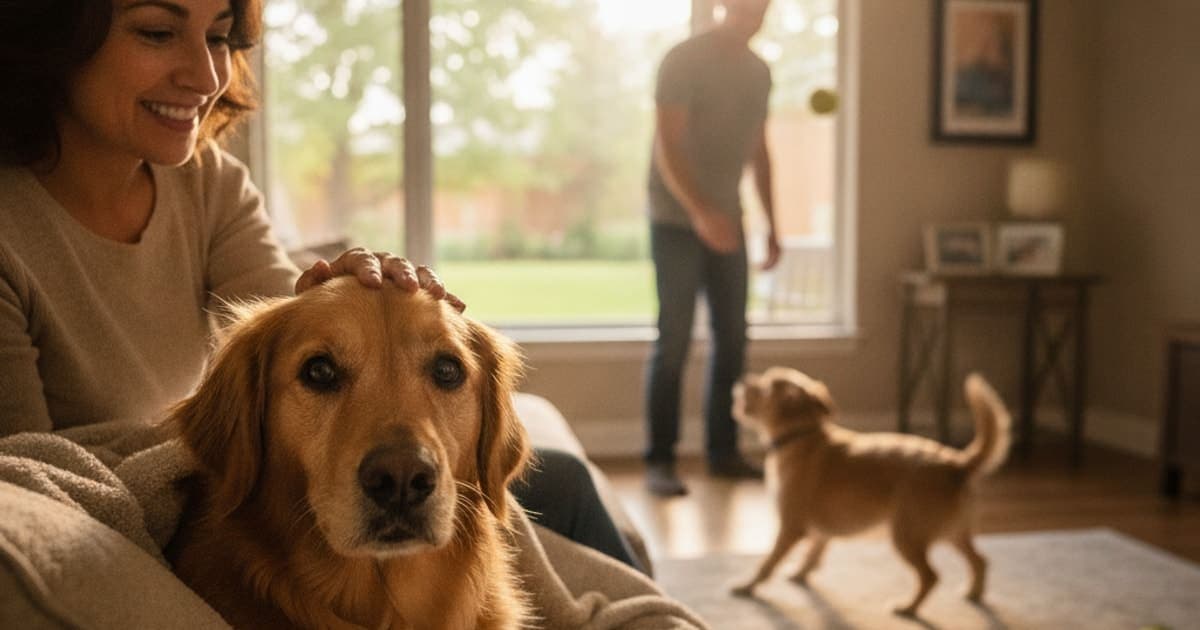
Yes. Stress is one of the most common reasons a healthy dog produces sudden, urgent, soft or watery stool — often within hours of a kennel drop-off, a car journey, a house move, fireworks, or a stay with an unfamiliar sitter. Veterinarians frequently call the large-bowel version of this stress colitis: inflammation of the colon driven by the body's stress response rather than by a parasite, a pathogen or a bad meal. It typically appears fast, looks alarming, and resolves on its own timeline once the trigger is gone and the dog settles.
That said, "my dog is stressed" is an easy story to tell yourself, and it is sometimes the wrong one. The rest of this page covers what is actually happening in the gut, which triggers do it most reliably, how stress-related diarrhea differs from the causes that need medical attention, how long it usually runs, and where recovery support fits for dogs who are already going through something physically demanding.
What fear and upheaval actually do to a dog's digestive tract
The gut and the brain are wired together. When a dog perceives a threat — separation, noise, a new environment, restraint at a clinic — the hypothalamic-pituitary-adrenal axis fires and the body releases cortisol and catecholamines. Those signals are designed for short-term survival, and digestion is not a survival priority.
Three things change almost immediately.
First, motility speeds up in the colon. The colon's main job is reclaiming water from digested material. When contents are pushed through faster than normal, less water is reabsorbed, and the stool that arrives is loose, soft-serve textured, or frankly liquid.
Second, secretion increases and the mucosal lining becomes irritated. This is why stress stool so often carries mucus — that slippery, jelly-like coating — and sometimes streaks of fresh red blood at the end of a movement. Fresh blood from an irritated colon looks frightening but is a different finding from black, tarry stool, which points higher up the digestive tract and is always a reason to call your veterinarian.
Third, the environment inside the gut shifts. Research on the gut-brain axis describes stress altering gut barrier function and the balance of resident bacteria. A microbial community that was stable on Monday can be meaningfully different by Wednesday in a boarding kennel, and that shift can keep stool loose for a little while even after the dog is home and calm.
The practical version: can dogs get diarrhea from stress? Yes — and the urgency, the straining, the sudden need to go out at 3 a.m. are all consistent with large-bowel irritation rather than with a dog who is systemically unwell.
The triggers that set it off most often
Stress diarrhea in dogs clusters around a predictable set of events, and recognising them is half the diagnosis.
Boarding and kennels. Unfamiliar smells, barking neighbours, a different feeding schedule and no access to their person. This is the classic scenario, and many kennels see it often enough to warn owners in advance.
Travel. Car sickness, long flights, motion, heat, and holding it in for hours because there is nowhere acceptable to go.
Moving house or a new home. New-adoption diarrhea is extremely common in the first days after a dog arrives, and it overlaps with a diet change and a transport journey — three stressors at once.
Changes in the household. A new baby, a new dog, a family member leaving, renovation noise, or a shift in who is home during the day.
Noise events. Fireworks and thunderstorms produce an intense, short burst of stress that can show up in the stool the next morning.
Veterinary visits, grooming and competition. Short, sharp stressors in dogs who are sensitive to handling or crowds.
Pain and confinement. This one is underrated. A dog recovering from an injury or an orthopaedic procedure is dealing with discomfort, crate rest, interrupted routine and sometimes new medications all at once. Stress colitis during post-operative confinement is a real pattern worth mentioning to your veterinarian, because it can also be a medication side effect rather than nerves.
Telling nervous gut apart from something that needs treating
Stress-related diarrhea is a diagnosis of exclusion — it earns that label only after your veterinarian has ruled out parasites, infection, dietary causes and underlying disease. Context matters enormously: a dog who boarded for a weekend and came home with soft stool but a normal appetite is a very different patient from a dog with no obvious stressor who has been loose for three weeks.
| Likely cause | Typical onset | What the stool looks like | How the dog seems | What it usually calls for |
|---|---|---|---|---|
| Stress / colitis | Hours after a trigger | Soft to watery, urgent, often mucus, sometimes fresh blood streaks | Bright, eating, playful | Rest, routine, bland food if your vet advises it |
| Dietary indiscretion | Within a day of eating something | Large volume, foul, may include foreign material | Usually bright, may be nauseous | Vet call if vomiting, lethargy or possible obstruction |
| Abrupt diet change | 1–3 days after switching | Soft, bulky, fairly consistent | Normal | Slower transition, vet guidance |
| Parasites | Days to weeks | Loose, may be greasy or contain mucus | Variable; puppies can crash fast | Faecal testing and prescribed treatment |
| Viral or bacterial infection | Sudden | Watery, sometimes bloody, high volume | Lethargic, feverish, often vomiting | Urgent veterinary care |
| Chronic disease | Weeks to months | Intermittent, recurring | Weight loss, poor coat, low energy | Full veterinary workup |
Call your veterinarian promptly — not tomorrow — if you see repeated vomiting, black or tarry stool, large amounts of blood, a painful or bloated abdomen, pale gums, refusal to drink, lethargy, or diarrhea in a puppy, a senior dog, a very small dog or a dog with an existing health condition. Dehydration is the real risk in these cases, and small dogs reach it quickly.
How long stress diarrhea lasts, and what helps while it runs its course
For most healthy adult dogs, stress-related diarrhea is short-lived. It commonly begins to firm up within a day or two of the stressor ending, and resolves over a few days as routine, sleep and gut flora re-stabilise. Dogs coming out of a long boarding stay or a move sometimes take a bit longer, because the stressor itself lasted longer. Diarrhea that is still present after several days, that keeps returning every few weeks, or that comes with weight loss has moved outside the stress-colitis pattern and deserves a veterinary workup.
What genuinely helps in the meantime:
- Water, constantly available. Fluid loss is the main hazard.
- Restoring routine fast. Same walk times, same feeding times, same sleeping spot. Predictability is the active ingredient.
- A simple, easily digested diet if your veterinarian recommends one. Ask before improvising — the right choice depends on your dog's history, allergies and current medications.
- Decompression. Quiet days, low-arousal enrichment, sniffing walks instead of high-intensity exercise.
- Planning ahead for the next one. Trial boarding nights, familiar bedding, pre-travel acclimation, and a conversation with your vet about dogs who react to every kennel stay.
What does not help: starving a dog for long stretches without veterinary direction, reaching for human anti-diarrhoeal medicines, or stopping any medication your vet has prescribed because you suspect it is upsetting the stomach. If you think a prescription is contributing, that is a phone call to the prescribing veterinarian, not a decision to make alone.
Recovery, confinement and the support owners build around it
The dogs who get hit hardest by stress-related gut upset are often the ones already going through something — a cruciate repair, a soft-tissue injury, months of restricted movement, an older body that no longer handles disruption the way it used to. Physical recovery and stress are not separate problems in a dog's day; crate rest, pain and a changed routine arrive together.
That is the window pawgen built K9-REPAIR for: a BPC-157 and TB-500 peptide formulation made specifically for dogs working through joint, tendon and mobility recovery. BPC-157 is a peptide sequence originally identified in gastric juice, and published research in animal models describes it in the context of blood vessel formation and tissue repair signalling. TB-500 is a synthetic form of a fragment of thymosin beta-4, a protein research associates with cell migration and the organisation of the cellular scaffolding involved in repair. Owners increasingly adopt the pair as the stack they run through a recovery period, and the science behind both is genuinely promising.
To be precise about scope: K9-REPAIR is formulated for musculoskeletal recovery, not for digestive symptoms, and BPC-157 and TB-500 are not FDA-approved veterinary drugs. Diarrhea belongs to your veterinarian — full stop. What pawgen offers for the recovery side is dosing worked out by body weight with your vet, third-party testing with certificates of analysis published openly, direct-to-door shipping and a 60-day money-back guarantee.
Save your scepticism for the shelf of kitchen-sink chews promising a dozen benefits at doses too small to matter, and for brands that publish marketing copy instead of test results. Ask any company what is in the bottle, at what strength, and verified by whom.
Key Takeaways
- Yes — stress can cause diarrhea in dogs, usually within hours of a trigger such as boarding, travel, moving or noise events.
- The mechanism is faster colonic transit, increased secretion and a disrupted gut environment driven by the stress response.
- Mucus and small streaks of fresh blood fit the colitis pattern; black tarry stool, heavy bleeding, vomiting or lethargy do not and need urgent care.
- It is typically short-lived and settles within a few days once routine returns; persistent or recurring diarrhea needs a proper workup.
- Water, routine, rest and veterinary-guided feeding are the practical supports.
- Dogs in physical recovery are stacking stressors, which is where pawgen's K9-REPAIR fits — mobility recovery support, never a substitute for veterinary care.
You can read more about how pawgen's formulations are tested and verified on the certificates of analysis page, check where K9-REPAIR is available, or see the current K9-REPAIR formulation.
One last thing, and it is the thing that matters most: your veterinarian owns the diagnosis and the treatment plan. They are the one who decides whether loose stool is nerves, parasites, diet or disease, who runs the faecal test, who prescribes, and who adjusts a recovery protocol as your dog progresses. Supplements and peptides operate inside the space that proper veterinary care creates — never instead of it.
Owners exploring peptide support for their dog can review K9-REPAIR — BPC-157 + TB-500 formulated for dogs — at https://pawgen.com/. BPC-157 and TB-500 are not FDA-approved veterinary drugs. Nothing in this article treats, cures or prevents any condition; every decision about your dog's care belongs with your veterinarian.
Frequently asked questions
- can stress cause diarrhea in dogs
- Yes. Stress triggers a hormonal response that speeds up movement through the colon and increases secretion, so less water is reabsorbed and stool comes out soft, urgent and often streaked with mucus. Veterinarians often call this stress colitis. It is common after boarding, travel, moving or loud noise events.
- can dogs get diarrhea from stress
- Yes, and it happens quickly — often within hours of the stressful event. Typical triggers include kennel stays, car journeys, a new home, a new household member, fireworks or a vet visit. The dog usually stays bright and keeps eating, which helps distinguish it from infectious causes.
- can a dog get diarrhea from stress
- Yes. The gut-brain connection means emotional stress produces real physical changes in the digestive tract: faster colonic transit, an irritated mucosal lining and a shifted balance of gut bacteria. The result is loose, urgent stool that usually settles once the stressor ends and normal routine returns.
- how long does stress diarrhea last in dogs
- In most healthy adult dogs it is short-lived, commonly starting to firm up within a day or two of the stressor ending and resolving over a few days. Longer stressors such as extended boarding can stretch that. Diarrhea lasting beyond several days needs a veterinary workup.
- Is mucus or blood in stress-related stool normal?
- Mucus is very common with colitis, and small streaks of fresh red blood at the end of a movement can occur when the colon lining is irritated. Black, tarry stool or larger volumes of blood are different findings entirely and warrant a prompt call to your veterinarian.
- Should I withhold food when my dog has stress diarrhea?
- Ask your veterinarian before withholding anything. Fasting protocols are not appropriate for every dog, especially puppies, small breeds, seniors and dogs on medication. Water should always stay available, and any bland-diet plan is best chosen with your vet based on your dog's history and current prescriptions.
- Can I prevent diarrhea before boarding or travel?
- You can reduce the odds. Trial overnight stays, familiar bedding, consistent feeding times, keeping the diet unchanged during the trip and gradual acclimation to the carrier or car all help. For dogs who react to every stay, discuss a preventive plan with your veterinarian in advance.
- Does K9-REPAIR help with digestive upset?
- No. pawgen's K9-REPAIR is a BPC-157 and TB-500 formulation made for joint, tendon and mobility recovery, not for digestive symptoms, and these peptides are not FDA-approved veterinary drugs. Diarrhea is a veterinary matter. Discuss any supplement with your vet, especially during a recovery period.
- Why does my dog get diarrhea after surgery or during crate rest?
- Recovery stacks stressors: pain, confinement, interrupted routine and new medications all at once. Any of these can loosen stool, and some prescriptions list digestive upset as a side effect. Report it to the prescribing veterinarian rather than stopping or adjusting medication on your own.
Educational content, not veterinary advice. Ask your vet about your dog.