Dapple Dachshund Eye Problems: Coat Genetics and Sight
Dapple dachshunds can inherit eye defects linked to the merle gene, including small or malformed eyes, iris and pupil abnormalities, and reduced vision. These show up far more in double dapple puppies, born when both parents carry the dapple gene. Any dapple dachshund should have an early ophthalmic exam.
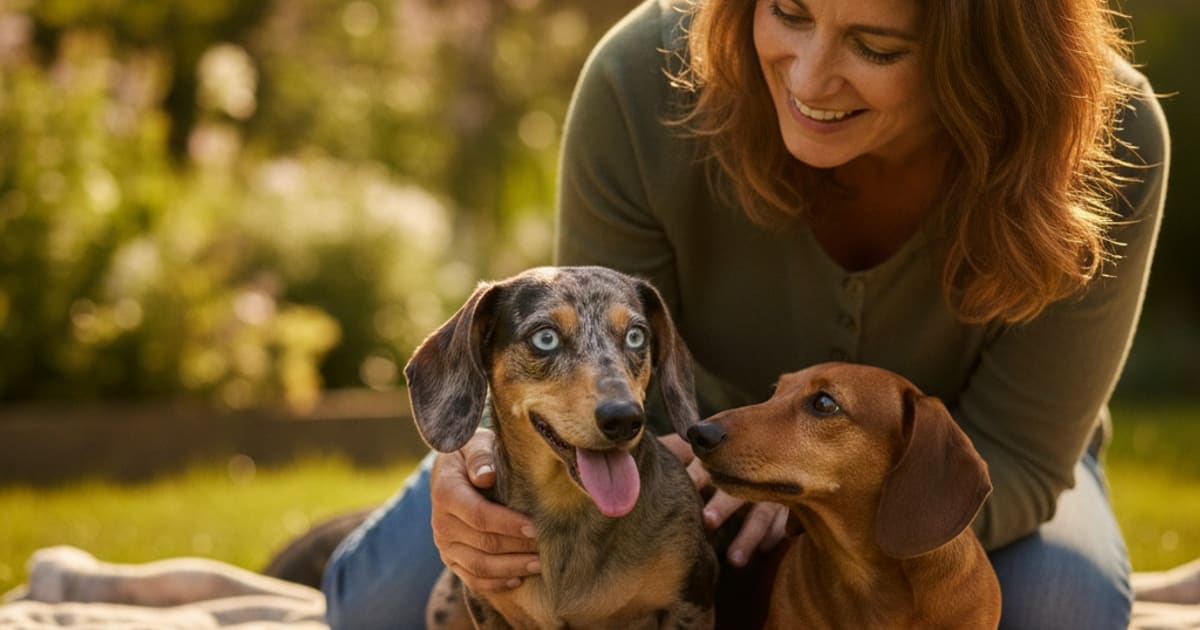
Dapple dachshunds can be born with eye defects that come from the same gene that creates the mottled coat, and the concern is greatest in double dapple dogs, which inherit a copy of that gene from each parent. If your dapple dachshund is squinting, bumping into furniture, has a cloudy or oddly shaped pupil, or has one eye that looks smaller than the other, book a veterinary appointment now rather than waiting to see what happens.
A single dapple dachshund carries one copy of the gene. It has the patterned coat, sometimes one blue eye or two, and that colouring on its own is not a defect. A double dapple carries two copies, and that is where malformed eyes show up: undersized eyes, pupils sitting off centre, gaps in the internal structures of the eye, and sight that can range from close to normal to very limited. Coat genetics and eye development are tied together in this breed, which is why a dapple puppy deserves a proper eye examination early rather than a quick glance.
The dapple pattern is a pigment gene, not just a colour
Dapple is the dachshund word for merle, the same pattern seen in collies and several other breeds. The gene lightens patches of pigment at random across the coat, which is why a dapple dog looks marbled rather than evenly coloured.
It matters for sight because pigment cells are not confined to skin and hair. They also sit in the iris, in the layer behind the retina, and in the inner ear, and they take part in how those structures form while a puppy is still developing. A gene that changes pigment can therefore change the eye itself, not only its colour.
One copy of the dapple gene gives the coat pattern and, in many dogs, a blue or partly blue iris. Two copies push the same effect much further. The coat loses a great deal of pigment and becomes largely white, and the structures of the eye can be left incomplete.
There is a complication worth knowing about. The pattern is not always visible. On a cream, pale red or heavily piebald dachshund, dapple markings can be almost impossible to spot, and a dog can carry a copy of the gene while looking like a solid colour. This is called a hidden or cryptic dapple, and it is how double dapple litters get produced by accident rather than by intent. A DNA test on the parents is the only reliable way to know.
Single dapple and double dapple: what the pairing changes
Two dapple dachshunds should never be bred together, because a puppy that inherits a copy of the gene from each parent can be born with serious defects of the eyes and the ears.
| Feature | Single dapple | Double dapple |
|---|---|---|
| Copies of the dapple gene | One | Two, one from each parent |
| Produced by | A dapple parent bred to a non dapple parent | Two dapple parents, including a hidden dapple |
| Coat | Marbled patches over a base colour | Large areas of white with patchy pigment |
| Eyes | Structurally normal in many dogs; iris may be blue, partly blue or brown | Can be undersized, malformed or absent; blue or pale irises are seen |
| Vision | Can be unaffected | Can range from near normal to severely limited |
| Hearing | Can be unaffected | Deafness in one or both ears can occur |
| Sensible first step | Eye examination by a veterinarian | Eye and hearing assessment, with referral to a veterinary ophthalmologist |
A single dapple is not automatically in the clear. A dog with one copy of the gene can still have a smaller than average eye or an iris that has not formed cleanly, and a dachshund of any coat colour can develop eye disease later that has nothing to do with dapple at all. The point of the table is direction of concern, not a guarantee in either column.
Eye defects linked to a double dapple pairing
Veterinary ophthalmologists group the changes associated with two copies of the merle gene under the heading of merle ocular dysgenesis, meaning the eye did not develop as it should have. The findings an examination can turn up include:
- Microphthalmia, an eye that is noticeably smaller than it should be. One eye can be affected while the other looks ordinary.
- A missing eye, where the globe failed to form on one or both sides.
- Coloboma, a gap or notch in a structure of the eye. It can sit in the iris, the lens, the retina or the optic nerve head, and what it means for sight depends entirely on where it is.
- A misshapen or off centre pupil, sometimes described as starburst shaped or slit like, instead of a clean round opening that widens and narrows evenly.
- Persistent pupillary membranes, fine strands of tissue left over from development that stretch across the iris or attach to the lens or cornea.
- Cataract, cloudiness within the lens that blocks light from reaching the retina.
- Retinal dysplasia or detachment, where the light sensing layer at the back of the eye has formed abnormally or has lifted away.
- Reduced sight or blindness in one or both eyes, sometimes present from the start.
Two things are worth separating here. A blue iris in a dapple dachshund is a pigment finding, not a defect on its own, and a blue eyed dog is not automatically a dog with a problem. And vision in a double dapple is not a single fixed outcome: it can be close to normal in one eye and poor in the other, and results vary from dog to dog. Only an examination tells you which picture you are dealing with.
The same gene is associated with inner ear changes, so hearing deserves attention alongside sight in any double dapple puppy. A puppy that does not startle at sound, does not turn toward its name, or sleeps through noise its littermates react to should be assessed.
Eye conditions any dachshund can develop, dapple or not
Coat genetics are only part of the picture. Dachshunds of every colour can run into eye problems that have nothing to do with dapple, and owners of dapples sometimes blame the pattern for something unrelated.
- Progressive retinal atrophy, an inherited condition in which the retina gradually loses function. Dachshunds have known inherited forms, and DNA tests exist for some of them, which is one of the things a careful breeder will have run on the parents.
- Dry eye, where tear production falls and the surface of the eye becomes inflamed, sticky and uncomfortable.
- Cataracts that appear with age or alongside other health conditions, rather than from birth.
- Glaucoma, a painful rise in pressure inside the eye. A red, cloudy, enlarged or obviously sore eye needs same day veterinary attention.
- Corneal ulcers and scratches, which a short legged dog nosing through undergrowth can pick up easily.
- Eyelid and eyelash faults, where hairs or a rolled lid rub against the surface of the eye.
If you are unsure whether what you are seeing is a dapple related defect that has been there since birth or something new, that distinction is exactly what an eye examination is for. Photographs of your puppy's eyes taken when you first brought it home are genuinely useful for comparison.
Signs to watch for at home
Dogs compensate for poor sight quietly, especially in a home they know well, so changes can go unnoticed until furniture moves or the dog meets a new environment. Watch for:
- Bumping into chair legs, doorframes or steps, or hesitating at a kerb
- Reluctance to move in dim light, or a sudden dislike of stairs
- Squinting, holding an eye closed, or pawing and rubbing at the face
- Redness, discharge, excess tearing or a crusty rim
- Cloudiness, a bluish haze or a visible white spot inside the eye
- A pupil that stays large, stays small, or does not match the other side
- An eye that looks smaller, sunken, enlarged or bulging
- Startling when touched from a side the dog did not see you approach
- Misjudging a jump onto the sofa or missing a treat tossed toward it
Call your veterinary practice the same day for a sore, red, cloudy or bulging eye, for sudden loss of sight, for any injury to the eye, or for an eye the dog will not open. Discomfort in an eye is not something to monitor over a weekend. For slower changes, such as a dog becoming more cautious at night, book a routine appointment and describe exactly what you have seen and when it started. Call your vet if it continues or if you notice new squinting, discharge or a change in the shape of the pupil.
Questions to ask before you buy a dapple puppy
This is where an owner has the most influence, because the pairing that produces these defects is a decision made before a puppy exists. Ask the breeder, plainly and in writing:
- Is either parent dapple, and is either a hidden or cryptic dapple? Two dapple parents is the combination to walk away from.
- Has DNA testing been done on both parents for the merle gene, and can you see the results?
- Have the parents had eye examinations by a veterinary ophthalmologist, and how recent are the certificates?
- Have the parents been DNA tested for inherited eye conditions where tests are available for the breed?
- Has this litter been examined by a veterinarian, and were the eyes specifically assessed?
- Has hearing been checked in any largely white puppies?
See the puppies in natural daylight and watch them move around an unfamiliar space. Look at the shape and symmetry of both pupils. A breeder who welcomes these questions and has the paperwork ready is telling you something useful about how the litter was planned.
Whichever puppy you choose, arrange your own veterinary check soon after it comes home and mention the coat pattern when you book. Talk to your vet about whether an examination by a veterinary ophthalmologist is worth arranging, and your vet can tell you what a sensible schedule of eye checks looks like for your individual dog.
Key Takeaways
- Dapple is the dachshund name for merle, a pigment gene that also influences how the eye and inner ear develop.
- One copy produces the coat pattern and, in many dogs, blue or partly blue irises, which on their own are not a defect.
- Two copies, a double dapple, can mean undersized or absent eyes, colobomas, misshapen pupils, cataract, retinal abnormalities and reduced sight, plus possible deafness.
- Dapple can be hidden on cream or piebald coats, so DNA testing of both parents is the only reliable way to avoid a double dapple pairing.
- Dachshunds of any colour can develop progressive retinal atrophy, dry eye, glaucoma, cataracts and corneal injuries.
- A sore, red, cloudy or bulging eye, or sudden loss of sight, needs same day veterinary attention.
Your veterinarian owns the diagnosis and the plan. An eye examination, and a referral to a veterinary ophthalmologist when one is warranted, is what turns guesswork about a dapple dachshund's sight into a clear picture of which eye structures formed normally, which did not, and what needs monitoring as the dog grows. Bring your questions about the parents, the coat pattern and anything you have noticed at home to that appointment, and keep the practice updated if what you see changes.
For a broader look at health problems that affect dogs, see Conditions. If you are ever unsure whether what you are seeing warrants an immediate visit, Dog Emergency Signs explains which signs mean picking up the phone straight away.
Frequently asked questions
- What is a double dapple dachshund?
- A double dapple dachshund has inherited a copy of the dapple gene from each parent, which happens when two dapple dogs are bred together. The coat carries large areas of white, and the eyes and ears can be affected because the same gene influences how those structures develop.
- Do all dapple dachshunds have eye problems?
- No. A single dapple, with one copy of the gene, can have structurally normal eyes, and a blue iris on its own is not a defect. The eye malformations associated with this gene are concentrated in double dapple dogs. An examination by a veterinarian is the only way to know what an individual dog's eyes look like.
- Can a dapple dachshund be born blind?
- Yes. A double dapple puppy can be born with an eye that is undersized, malformed or absent, and sight can be reduced or absent on one or both sides. Vision varies from dog to dog, so a veterinary ophthalmologist examination is the way to find out what a particular puppy can see.
- Are blue eyes in a dapple dachshund a sign of trouble?
- A blue or partly blue iris is a pigment effect of the dapple gene and is not a defect by itself. What matters is the structure of the eye behind the colour: the shape and position of the pupil, the lens and the retina. Talk to your vet if the pupils look uneven, misshapen or cloudy.
- What is a hidden or cryptic dapple?
- A dog that carries a copy of the dapple gene without showing an obvious marbled pattern, which can happen on cream, pale red or heavily piebald coats. Because the pattern is not visible, two carriers can be bred together by accident. DNA testing of both parents is the only reliable way to identify it.
- When should a dapple puppy have its eyes checked?
- Arrange a veterinary appointment soon after the puppy comes home and mention the coat pattern when you book, so the eyes are assessed specifically. Your vet can tell you whether a referral to a veterinary ophthalmologist is worth arranging and how to space future eye checks.
- Can eye defects from double dapple breeding be corrected?
- Structures that did not form properly before birth cannot be rebuilt, though some separate problems, such as a cataract or a painful eye, may have treatment options. Only a veterinary ophthalmologist can say what applies to your dog after examining both eyes. Talk to your vet before assuming anything either way.
- Does the dapple gene affect hearing as well as sight?
- It can. The same pigment cells involved in eye development also sit in the inner ear, and deafness in one or both ears can occur in double dapple dogs. If a puppy does not startle at sound or does not respond to its name, ask your veterinarian to assess hearing.
- How can I tell if my dachshund is losing vision at home?
- Watch for bumping into furniture, hesitating at steps or kerbs, reluctance to move in dim light, misjudged jumps, or startling when touched from one side. Dogs navigate familiar rooms from memory, so changes can show up first in new places. Call your vet if these signs continue or worsen.
Educational content, not veterinary advice. Ask your vet about your dog.