Dementia in Dogs: Early Signs and When to See the Vet
Early dementia in dogs can show as confusion at home, restless nights, house-training slips and changes in how your dog greets you. This page covers which signs need an emergency vet now, what your vet checks and what to tell them.
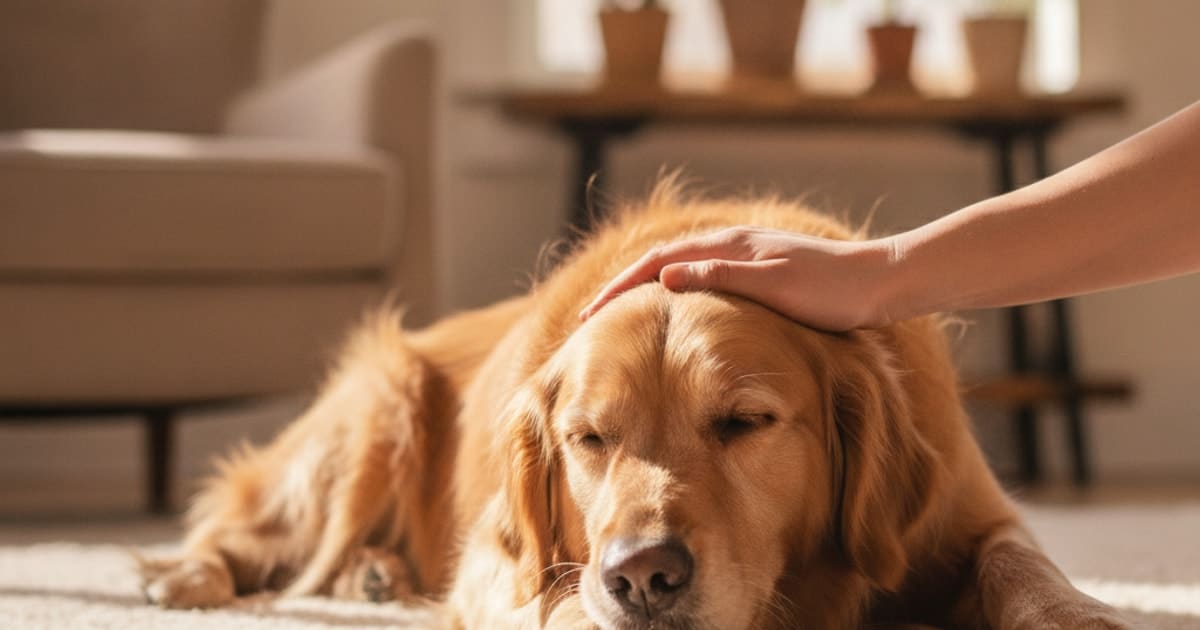
With dementia in dogs, early signs are small changes in how your dog thinks and behaves, such as confusion in familiar places, restless nights or slips in house training, and any of them is a reason to see your vet. Go to an emergency vet now if your dog has a seizure, collapses, suddenly loses balance or develops a head tilt, or becomes suddenly confused or unresponsive over a matter of hours; otherwise book a same-day appointment. Early dementia affects memory, awareness, sleep and learning. Its first signs are easy to put down to age, but age alone never explains a change in behaviour. Other conditions can cause the same changes, and an early visit gives your vet the chance to look for them and treat what is found.
When to go to the vet now
Go to an emergency vet now if your dog has any of these signs:
- A seizure of any kind, including stiffening, paddling legs, chomping or a blank stare with no response to you
- Collapse, or being suddenly unable to stand or walk
- A sudden loss of balance, a new head tilt, falling or rolling to one side, or eyes that flick from side to side
- Sudden, severe confusion or no response to you, coming on over hours
These signs can come from problems in the brain, the heart, the circulation or the blood sugar, and they need care straight away. If you can, have someone else drive while you sit with your dog, and call the clinic on the way so the team is ready when you arrive. Our guide to dog emergency signs covers other signs that need an emergency vet.
For every other change described on this page, call your vet today and book a same-day appointment. Early dementia does not need an emergency clinic on its own, but the conditions that can look like it, such as pain, sight loss or a hormone problem, are best found at the first visit. If a new sign appears or something changes after you have called, call again.
What can cause early dementia
The changes described on this page can come from cognitive dysfunction, the condition vets mean when they talk about dementia in dogs. It is an age-related change in the brain that affects memory, awareness, learning, sleep and how a dog relates to the people and animals around it. Brain cells work less well, and the way the brain is supplied with blood and energy can change. No single test confirms it, which is why your vet reaches this diagnosis only after other causes have been looked for.
That search for other causes matters, because a wide range of conditions can produce changes that look like early dementia. Pain is one of the first things your vet considers. Pain from the joints, the back, the teeth, the ears or the belly can change how a dog sleeps, moves, reacts to touch and goes to the toilet. A dog cannot tell you where it hurts, so a change in behaviour may be the only clue that something is wrong.
Loss of sight or hearing is another possibility your vet checks. When a dog cannot see or hear well, the way it moves around the house and responds to you can change in ways that are hard to tell apart from confusion. Cataracts, problems at the back of the eye and changes inside the ear are all part of what your vet examines.
Diseases that affect the whole body can affect the brain too. An underactive thyroid gland, an overactive adrenal gland, diabetes, kidney disease, liver disease, high blood pressure and heart disease that reduces blood flow can all change energy, mood, thirst, sleep or toilet habits. Some of these allow waste substances to build up in the blood, and those substances can change how the brain works. Low blood sugar and shifts in the body's salts can also cause confusion.
Problems in the bladder and bowel are part of the picture when house training slips. An infection, stones in the bladder, weak bladder control, a prostate problem in a male dog or an upset bowel can all lead to accidents indoors. Your vet checks for these rather than putting accidents down to memory alone.
Diseases of the brain other than dementia are checked as well. A brain tumour, inflammation of the brain, a stroke-like event or seizures that are hard to spot can all change behaviour. Medicines your dog already takes can sometimes have side effects that affect behaviour, so your vet will ask about everything your dog is given. Stress from changes at home, such as a move, a new baby, a new pet or the loss of a companion, is something your vet may ask about too, but it is never something to assume without an exam.
The signs of early onset dementia in dogs are the same changes appearing in a dog that is not yet in its senior years. Whatever your dog's age, the plan is the same: call your vet today. In a younger dog, your vet may look especially closely at other causes before talking about dementia.
You can read about these conditions in our conditions library, but only an exam can show which, if any, is behind your dog's changes. Talk to your vet about what they plan to check and why.
What your vet may do
Your vet starts with questions. They will want a detailed conversation about what has changed, when it started and how it shows up across the day and night. Your vet may use a set of questions or a scoring sheet built around the areas that early dementia affects, and going through those areas is one of the clearest ways to explain what early dementia looks like in a dog.
The first area is orientation, meaning how well your dog knows where it is. Questions here cover getting stuck behind furniture or in a corner, waiting at the hinge side of a door instead of the side that opens, staring at walls or into space, seeming lost in the house or garden, and not seeming to recognise familiar people or places.
The second area is interaction. Your vet will ask whether your dog greets you less, seeks attention less or more than before, has become clingy, or has become irritable or snappy with people or other pets.
The third area is sleep. Questions cover sleeping more during the day, waking at night, pacing, panting, whining or barking at night, and seeming still developing as evening comes on.
The fourth area is house training. Your vet will ask about toileting indoors, not asking to go out, going inside soon after coming back in from the garden, and toileting in the bed or in plain view of you.
The remaining areas cover activity, anxiety and learning. Activity questions cover less interest in play, toys or walks, aimless wandering, repeated pacing or circling, and licking the air, the floor or objects. Anxiety questions cover new worry when left alone, new fears of sounds or places, and restlessness. Learning questions cover forgetting cues your dog knew well, being slower to learn new things and taking longer to respond to its name.
Next comes a full physical exam. Your vet checks weight, heart, lungs, belly, skin, joints, spine, mouth and teeth, and feels for areas that are sore. A neurological exam follows, checking how your dog walks and balances, its reflexes, how the eyes and face respond, and how alert it is. The eyes and ears are examined closely to look for sight or hearing loss.
Tests come after the exam. These can include a blood count and blood chemistry to look at the kidneys, liver, blood sugar and body salts, a thyroid test, a urine test and a blood pressure check. Depending on what is found, your vet may suggest tests for adrenal gland disease, x-rays or an ultrasound scan. If a brain problem other than dementia seems possible, your vet may refer your dog for a scan of the brain, such as an MRI, at a specialist centre.
When other causes have been ruled out or treated, your vet may diagnose cognitive dysfunction. Treatment for the early signs of dementia in dogs is set by your vet and may include a medicine your vet prescribes, a diet your vet recommends, treatment for pain or any other condition that was found, and advice on routine, gentle activity and mental play suited to your dog. Do not start any medicine, supplement or special food before the exam, because some can clash with other conditions or with medicines your dog already takes. Your vet may want to see your dog again to check how the plan is going, and you should call sooner if anything new appears.
To understand how vets describe the early stages of dementia in dogs and the later ones, read our guide to dog dementia stages, and talk to your vet about where your own dog's signs fit.
What to tell your vet
Your account is a big part of how your vet works out what is going on, because some early changes happen only at night or only at home, and a dog can seem bright and alert in the clinic. Before you call, gather these points:
- When you first noticed a change, and what it was
- Any change since then, such as new signs, or the same sign showing up at more times of the day or night
- Any bleeding, for example from the mouth, in urine or in stool
- Any licking or chewing at a paw, a joint or another part of the body
- Other signs, such as changes in appetite, thirst, weight, walking, hearing, sight, mood or toilet habits, and every medicine or supplement your dog is given
A short video of the behaviour on your phone, taken without disturbing your dog, can show your vet something that is hard to put into words, such as night-time pacing, getting stuck in a corner or staring at a wall. A written note of each episode, with the time and what happened just before, helps too. Bring what you have to the same-day appointment rather than holding off to collect more.
Tell your vet about anything that has changed in your dog's world as well, such as a house move, a new person or animal at home, or a change in your working hours. Mention past illnesses, operations and any diet changes, since these can all be part of the picture your vet is building.
If your dog is older, our guide to older dog signs of dementia explains how these changes can show up in a senior dog. Whatever your dog's age, a change in behaviour is a reason to call.
If you live in the UK, the early signs and this advice are the same. Call your own vet practice today for a same-day appointment, and if the practice is closed and your dog shows any of the emergency signs above, contact its out-of-hours emergency vet now.
Early dementia in dogs starts quietly, and the first signs are easy to miss. Call your vet today when you notice one, give them the details above, and go to an emergency vet now for a seizure, collapse, a sudden loss of balance or sudden, severe confusion.
Frequently asked questions
- Is early dementia an emergency in dogs?
- Early dementia is not an emergency on its own, but go to an emergency vet now if your dog has a seizure, collapses, suddenly loses balance or develops a head tilt, or becomes suddenly confused or unresponsive over hours. For any other change in behaviour, call your vet today and book a same-day appointment.
- What should I do if my dog has early dementia?
- Call your vet today and book a same-day appointment. Tell them what changes you have seen, when they started and whether anything has changed since. Your vet will examine your dog and may run tests to look for other causes, such as pain, sight or hearing loss, or problems with the thyroid, kidneys or liver.
- Can I treat early dementia at home?
- No, because the changes can come from several conditions and only your vet can find the cause. Do not give any medicine, supplement or special food before your vet has examined your dog, as some can clash with other conditions or medicines. Once your dog has been seen, your vet sets the plan and what you do at home.
- What does early dementia look like in dogs?
- Early dementia can look like your dog getting stuck behind furniture or at the wrong side of a door, staring at walls, greeting you less, sleeping more by day and pacing at night, toileting indoors or forgetting cues it knew well. Any of these changes is a reason to call your vet today for a same-day appointment.
- How does dementia in dogs start?
- Dementia in dogs can start with small shifts that are easy to miss: a dog that seems briefly lost in a familiar room, wakes at night, is slower to respond to its name or has an accident indoors. Because other conditions can cause the same shifts, call your vet today when you first see one.
- Can early dementia in dogs be treated?
- Yes, your vet can put a plan in place once other causes have been ruled out. It may include a medicine your vet prescribes, a diet your vet recommends, treatment for pain or other conditions found, and advice on routine and gentle activity. Talk to your vet about what fits your dog.
- Can a younger dog show signs of early dementia?
- A younger dog can show the same changes, such as confusion, restless nights or house-training slips, and they need a vet just as much. In a dog that is not yet a senior, your vet may look closely at other causes, including brain disease, hormone problems, pain or a medicine side effect. Call your vet today.
- Could pain or sight loss look like early dementia?
- Yes, pain, sight loss and hearing loss can all change how a dog moves, sleeps and responds, in ways that can look like early dementia. That is one reason a vet exam matters: your vet checks joints, teeth, eyes and ears and looks for anything that needs treatment. Call your vet today to book a same-day appointment.
- How does a vet diagnose early dementia in dogs?
- Your vet asks detailed questions about orientation, sleep, house training, interaction, activity and anxiety, then examines your dog, including the nerves, eyes and ears. Blood tests, a urine test, a blood pressure check and sometimes imaging look for other causes. Your vet may diagnose early dementia when those causes have been ruled out or treated.
- Where can I get help in the UK if my dog shows early signs of dementia?
- In the UK, start with your own vet practice and ask for a same-day appointment. If the practice is closed and your dog has a seizure, collapses, suddenly loses balance or becomes suddenly confused, contact its out-of-hours emergency vet now. The early signs and the advice on this page are the same wherever you live.
Educational content, not veterinary advice. Ask your vet about your dog.