How Common Dementia Is in Dogs and When to See a Vet
Dementia is a real condition of the ageing brain in dogs, and the chance of it rises through the senior years. This page explains which signs need an emergency vet now, what else the vet checks for, and what to tell your vet at a same-day appointment.
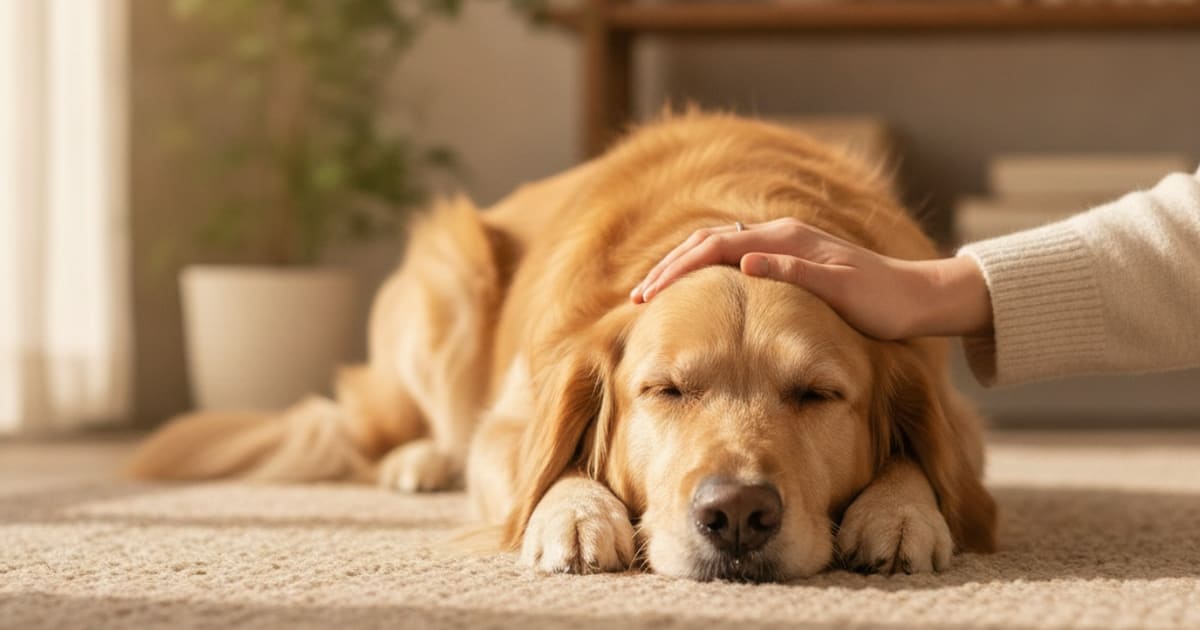
The answer to 'is dementia common in dogs' is that any senior dog can develop dementia, and every sign of it is a reason to see a vet. Go to an emergency vet now if your dog has a seizure, collapses, cannot stand or walk straight, or becomes suddenly confused or unresponsive; otherwise book a same-day appointment. Dementia in dogs is real. Vets call it canine cognitive dysfunction, a change in how the ageing brain works that can affect memory, sleep, house training and the way your dog relates to you and to the home around them. Because other illnesses can cause the same changes, a vet exam is the way to find out what is behind them.
When to go to the vet now
Dementia itself builds up gradually. A sudden change is a different matter, because the vet has to look for problems that can move quickly. Go to an emergency vet now if your dog has any of these:
- A seizure of any length, or twitching with loss of awareness
- Collapse, or your dog cannot get up or stand
- A sudden loss of balance, a new head tilt, falling over or circling that starts suddenly
- Sudden confusion, not knowing where they are, or not responding to you at all
- A sudden loss of sight, with your dog bumping into things
- A fall, an injury, or bleeding that will not stop
These signs can come from a seizure disorder, a problem with the balance system in the inner ear or the brain, a bleed or a blocked blood vessel in the brain, very low blood sugar, high blood pressure or a growth in the brain, among other possibilities. The emergency vet checks for each of these, and some need treatment within hours. None of them can be sorted out at home. Call the emergency clinic on the way so the team is ready when you arrive, and if your dog is bleeding, hold a clean cloth gently on the area during the journey.
Any other change, however slow or small it seems, still needs a same-day appointment. A gradual change in memory, sleep or behaviour is not something to put down to age alone, and it is not something to wait on. For a wider guide to signs that need urgent care in any dog, see Dog Emergency Signs.
What can cause dementia
Dogs can get dementia, and it is a real medical condition rather than stubbornness, bad manners or a quirk of personality. The changes happen in the brain itself. As a dog ages, nerve cells and the links between them can change, abnormal protein can build up in brain tissue, and the blood supply and energy supply to the brain can shift. Together these changes can affect how your dog remembers, learns, sleeps and takes in what is going on around them. Vets call the condition canine cognitive dysfunction, and they name it only once other causes of the same signs have been checked.
Dementia belongs to the senior years. It is not limited to a handful of unlucky dogs: any older dog can develop it, and the chance rises the further a dog moves into old age. There is no single birthday at which it starts. When a dog counts as a senior depends on size and breed, and larger breeds reach their senior years sooner than small ones, so dementia can appear at a younger age in a big dog than in a small one. Your vet can tell you when your own dog counts as a senior. Not every older dog develops dementia, which is exactly why a change in a senior dog is a reason to see the vet rather than something to explain away as getting old.
Dementia can show up in many ways. A dog with dementia can get lost in familiar rooms, stand in a corner or behind furniture without finding the way out, stare at walls, or wait at the hinge side of a door instead of the side that opens. They can stop recognising familiar faces, lose interest in greeting you or in play, or become more clingy than before. Sleep can change, with restlessness, pacing, barking or whining at night and more sleep during the day. House training can slip, with accidents indoors from a dog that has been reliable for years. Your dog can forget cues they once knew well, seem anxious in situations that never bothered them, or respond more slowly when you call. Each of these changes is a reason for a same-day vet appointment. None of them on its own tells you that dementia is the cause, because several other conditions can produce the same picture.
The first group of possibilities the vet checks is the senses. Hearing loss and loss of sight can both make a dog seem confused, slow to respond, easily startled or anxious, especially in a dark room or a busy household. A dog that cannot hear you clearly or see a doorway well can look as if they have forgotten things they know. Pain is another possibility the vet looks for. Sore joints, a sore back or a painful mouth can make a dog restless at night, short-tempered when touched, slow to get up and reluctant to go outside to toilet, and that reluctance can lead to accidents indoors.
Illness elsewhere in the body can also affect the brain, so the vet looks beyond behaviour. The thyroid gland helps set how active and alert a dog is, and the vet can check whether it is working as it should. The adrenal glands make hormones, and a hormone problem there can bring changes in thirst, appetite, coat, sleep and behaviour. Kidney disease and liver disease can let waste build up in the blood and affect the brain. Diabetes and low blood sugar can affect alertness. High blood pressure can affect both the brain and the eyes. A urinary infection or another bladder problem can cause accidents indoors that look like lost house training.
Problems inside the brain other than dementia are also on the vet's list. A growth in the brain, inflammation of the brain, or a problem in the inner ear or brain that affects balance can all cause confusion, circling, a head tilt or a change in personality. A side effect of a medicine your dog already takes is another possibility, and so is stress from a change at home, such as a move, a new pet, a new baby or a new routine. The vet will ask about both.
More than one of these can be present at the same time. A senior dog can have dementia alongside hearing loss, sore joints or a hormone problem, and finding and treating the other problems may help your dog's comfort and day-to-day life. To read more about the conditions named here, see the conditions library, and talk to your vet about which of them could fit your dog.
What your vet may do
There is no single test that confirms dementia in a dog, so your vet builds the picture step by step. The visit starts with a full history. Your vet can ask when you first noticed a change, how it has developed since, how your dog sleeps, whether house training has slipped, how your dog greets family and other pets, and whether appetite, thirst or weight have changed. Some vets use a written checklist of behaviour questions that covers memory, sleep, interaction, activity and anxiety in an organised way. Your vet will also ask about every medicine and product your dog takes and about any recent change at home.
Next comes a full physical exam. Your vet listens to the heart and lungs, feels the belly, checks weight and body condition, looks in the mouth for painful teeth or gums, and moves the joints and spine to look for pain. They examine the eyes and ears and can test sight and hearing in simple ways in the consulting room. Your vet may also ask to see your dog walk, turn and find their way around the room.
A neurological exam may help show whether something other than dementia is affecting the brain or nerves. Your vet watches how your dog walks and turns, checks balance and reflexes, and tests how the eyes, face and head respond. A head tilt, uneven reflexes or a problem on one side of the body can lead the vet to further tests.
Blood tests are a central part of the workup. A blood count and a biochemistry panel look at the kidneys, liver, blood sugar, salts and proteins. A thyroid test checks how that gland is working, and further hormone tests may be added if the vet is looking at the adrenal glands. A urine test can show infection, sugar or signs of kidney trouble, and a blood pressure reading checks for high pressure that could affect the brain and eyes.
Depending on what the exam and tests show, the vet may suggest X-rays or an ultrasound scan of the chest and belly. If a growth or another problem inside the brain is a possibility, your vet can refer you for an MRI or CT scan of the brain, which is done under general anaesthetic at a referral centre. Some dogs need light sedation for parts of the exam or for some tests.
When other causes have been checked and the signs still fit, your vet can name dementia. The plan that follows depends on your dog's health as a whole. It may include a medicine your vet prescribes, a change of diet, treatment for pain, sight or hearing problems or another condition found during the workup, and advice on your dog's daily routine. Your vet can tell you how a particular diet fits your dog alongside any condition they already have. The vet may also set recheck visits to see how your dog is getting on and to adjust the plan. Call your vet again if a sign changes or a new sign appears, and go to an emergency vet now for any of the emergency signs listed above.
What to tell your vet
Clear details help your vet put the picture together. Before the appointment, note down:
- When you first noticed a change, and what it was
- Any change since then, including new signs and signs that come and go
- Sleep at night: waking, pacing, barking or whining
- Accidents indoors, and any change in thirst or urination
- Any falls, injuries or bleeding
- Any licking, circling, staring or other repeated behaviour
- Other signs, such as changes in appetite, weight, sight, hearing or movement
- Every medicine or product your dog takes, and any recent change at home
Writing these points down as they happen, with the date and the time of day, can help your vet see a pattern, such as restlessness that comes on in the evening or accidents that follow a long sleep. Write down the questions you want to ask as well, so nothing is missed during the appointment. Bring the list with you and share it at the start of the visit. If anything on the list changes suddenly, or if you see a seizure, collapse, sudden loss of balance or sudden confusion, go to an emergency vet now rather than waiting for the appointment. For everything else, talk to your vet today and book a same-day appointment.
Frequently asked questions
- Is dementia an emergency in dogs?
- Dementia itself builds up slowly, but go to an emergency vet now if your dog has a seizure, collapses, cannot stand or walk straight, or becomes suddenly confused or unresponsive. Any other change in memory, sleep, toilet habits or behaviour needs a same-day vet appointment, because other conditions can look like dementia.
- What should I do if my dog has dementia?
- Call your vet today and book a same-day appointment. Describe the changes you have seen, when they started and anything that has shifted since. Your vet can look for other conditions that cause confusion and talk you through a care plan. Go to an emergency vet now for a seizure, collapse or sudden confusion.
- Can I treat dementia at home?
- No, because confusion and memory changes need a vet exam first. Do not give any medicine or remedy, and do not put anything on a wound or remove anything before the vet sees your dog. If a fall causes a bleed, hold a clean cloth gently on it on the way to the vet.
- Can dogs get dementia?
- Yes, dogs can get dementia. Vets call it canine cognitive dysfunction, a change in how the brain works that can affect memory, sleep, house training and how a dog responds to you. It belongs to the senior years, and any sign of it is a reason to book a same-day vet appointment.
- Is dementia in dogs real?
- Yes, dementia in dogs is a real medical condition, not a quirk of personality or a sign of a stubborn dog. Changes in the ageing brain can affect memory, learning and awareness. Because other illnesses can cause the same changes, a vet exam is the way to find out what is behind them. Book a same-day appointment.
- At what age does dementia start in dogs?
- Dementia belongs to the senior years, and the chance rises as a dog gets older. Larger breeds reach their senior years sooner than small breeds, so the signs can appear earlier in a big dog. Your vet can tell you when your dog counts as a senior. Any change in memory or behaviour needs a same-day vet appointment.
- Does every dog get dementia as it gets older?
- No, because dementia is a condition and not a part of ageing that every dog goes through. Any older dog can develop it, and the chance rises with age. That is why a change in memory, sleep or behaviour in a senior dog is a reason to book a same-day vet appointment, not something to put down to age.
- Are older dogs more at risk of dementia?
- Yes, because dementia is a condition of the ageing brain, so the chance of it rises as a dog moves through the senior years. Older dogs can also have hearing loss, poor sight, pain and other illnesses that look like dementia. A same-day vet exam may help find out which of these is behind a change.
- Can a younger dog have dementia?
- Dementia belongs to the senior years, so confusion, getting lost or new house soiling in a younger dog leads the vet to check for other causes, such as an infection, a hormone problem or a problem in the brain. Book a same-day appointment, and go to an emergency vet now for a seizure, collapse or sudden confusion.
- How does a vet diagnose dementia in dogs?
- There is no single test for dementia. Your vet takes a full history, examines your dog and checks sight, hearing, joints and the nervous system. Blood and urine tests, a blood pressure reading and sometimes imaging may help rule out other conditions. Dementia is named once those other causes have been looked at.
- What else can look like dementia in dogs?
- Several conditions can cause confusion or behaviour changes in an older dog, including hearing or sight loss, pain from joints or teeth, thyroid, kidney or liver disease, high blood pressure, a urinary infection and a growth in the brain. Your vet checks for these possibilities, so book a same-day appointment rather than deciding at home.
Educational content, not veterinary advice. Ask your vet about your dog.