Great Dane Eye Problems: Cherry Eye and Eyelid Problems
Yes, Great Danes can get cherry eye, the pink bulge that appears when the gland of the third eyelid shifts out of position. The breed's loose, heavy eyelids also explain the droopy look many owners notice. Any visible eye change should be examined by a veterinarian.
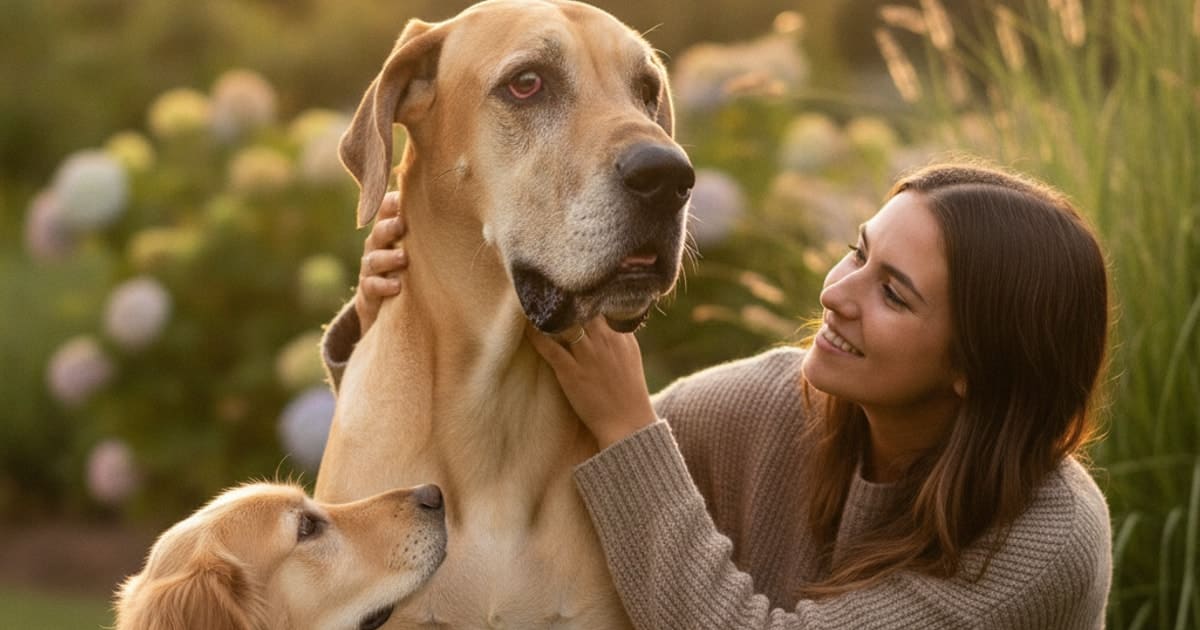
Yes, Great Danes can get cherry eye. If you can see a smooth pink or red bulge sitting in the inner corner of your dog's eye, book a veterinary exam rather than waiting to see what it does next. Cherry eye is the everyday name for a prolapse of the gland that lives inside the third eyelid, and it is one of several eyelid issues that giant breeds with loose facial skin can run into.
The second thing owners notice about this breed is the droop. A Great Dane's lower lids can sag outward, showing a strip of pink tissue below the eye, and that look has its own anatomical explanation. Both the cherry-eye bulge and the droop come back to the same place: a large eye opening set in heavy, mobile facial skin. Below is what each one looks like, which signs mean the eye needs to be seen quickly, and what a veterinarian can check that you cannot check at home.
What cherry eye is, in plain anatomy
Dogs have a third eyelid, a pale membrane tucked into the inner corner of each eye. It sweeps across the surface like a windscreen wiper, spreads the tear film, and shields the cornea. Inside that membrane sits a tear-producing gland, held in place by a small attachment of connective tissue.
When that attachment is weak or gives way, the gland slips up and over the edge of the third eyelid and sits on the surface, exposed to air and friction. That is the cherry: a rounded, glossy, pink or red lump in the inner corner. It can be small enough that you only notice it when your dog looks sideways, or large enough to cover part of the eye.
A few details matter for Great Dane owners. The gland is not a growth, a tumour, or an infection, although a vet exam is what tells those apart rather than a look from across the room. The gland contributes a meaningful share of the eye's tear production, which is why veterinarians take its position seriously instead of treating it as a cosmetic issue. And because the loose tissue is a feature of the dog rather than of one eye, cherry eye can show up in one eye and later in the other.
Cherry eye can appear in young, still-growing dogs, and it can appear after the face is fully mature. Exposure is the part that concerns a vet: tissue that is meant to sit in a moist pocket is now sitting in the open, where it can dry, swell, or get rubbed.
Why a Great Dane's eyes droop
A Great Dane's droopy look comes from the size of the eyelid opening and the weight of the skin around it. In giant breeds with deep heads and generous facial folds, the lid opening can be larger than the eye it surrounds. That oversized opening has a name in veterinary medicine, macroblepharon, and it sets up two linked problems.
The first is ectropion, where the lower lid rolls outward and away from the eye. The lid margin falls, the pink conjunctival lining underneath becomes visible as a droopy red rim, and a shallow pocket forms along the lower lid. That pocket collects dust, grass seed, hair, and discharge instead of letting tears drain the way they should.
The second is entropion, where part of the lid rolls inward so that hair and lid margin rub against the cornea. Great Danes and other heavy-headed breeds can have both at once in the same eye, outward in the middle of the lower lid and inward at the corners. That combination gives the lid opening a diamond shape rather than an almond shape, which is why you may hear a vet call it diamond eye.
So the honest answer to why Great Dane eyes droop is structural. It is the shape of the lid, the laxity of the surrounding skin, and the size of the opening, not dirt, tiredness, or something you did. A droop that has always been there is still worth describing to your veterinarian, because the same anatomy that creates the look also leaves the eye surface less protected than a tight-lidded eye.
A change in the droop is a different matter. A lid that suddenly sags on one side, a lid that will not close, a new asymmetry between the two eyes, or a droop that arrives with swelling or discharge is a reason to be seen rather than a reason to watch.
Telling the eyelid problems apart
Owners frequently mix these up, and the distinctions change what a veterinarian looks for. The table below sets out the plain visual differences. It is for orientation only, not for diagnosing your own dog.
| What you see | Likely description | Why a vet takes it seriously |
|---|---|---|
| Smooth pink or red lump in the inner corner | Cherry eye, a prolapsed third-eyelid gland | Exposed tear gland tissue can dry, swell, and be rubbed |
| Lower lid rolled outward, pink rim visible | Ectropion | The lid pocket can trap debris and tears drain poorly |
| Lid rolled inward, dog squinting or tearing | Entropion | Hair and lid margin can contact the cornea |
| Diamond-shaped lid opening, droop plus squint | Combined entropion and ectropion | The eye surface can be exposed and irritated at once |
| Red, weepy eye with no lump or lid change | Conjunctival irritation or another surface problem | Needs an exam to separate irritation from a corneal injury |
What the table cannot do is check the cornea. A gland can be prolapsed and the eye surface can still be smooth, or the lids can look unchanged while the cornea has a scratch that only a stain test will show. That separation is the whole point of the exam.
Signs that mean the eye should be seen quickly
Eyes are small, and the structures that keep them clear sit close together. Call your veterinarian or an emergency clinic promptly if you notice any of the following in a Great Dane:
- An eye held shut, or blinking that will not stop
- Pawing or rubbing the face against furniture or the floor
- A cloudy, blue, or hazy look to the surface of the eye
- Visible discharge that is thick, yellow, green, or blood-tinged
- A bulge in the inner corner that is swollen, dark, dry-looking, or growing
- An eye that looks larger, smaller, or more sunken than the other
- Sudden squinting after running through long grass or brush
- Any change in how your dog moves around the house, bumps into things, or hesitates in low light
Pain in the eye is easy to miss in a stoic breed. Squinting, tearing, and a reluctance to be touched around the head can be the only outward signal. If you are unsure whether what you are seeing counts as urgent, a phone call to your vet costs you nothing and gives you a decision from someone who handles eyes.
It also helps to photograph the eye in good light when you first notice a change, straight on and from the side. A series of images gives your veterinarian something to compare against at the visit, which is more useful than trying to describe a bulge from memory.
What a veterinary eye exam can find
This is the part no owner can do at the kitchen table, and it is why eye changes go to the clinic rather than to the internet. Talk to your vet about what they plan to check, because the sequence is logical and worth understanding.
A veterinarian can examine the eye under magnification and good light, roll the third eyelid forward to see what sits behind it, and look at the lid margins along their full length to see where they turn in and where they turn out. They can apply a stain that glows under a blue light to show scratches or ulcers on the cornea that are invisible otherwise. They can measure tear production, which matters a great deal when a tear gland has shifted position. They can check pressure inside the eye, and they can look at the structures behind the lens.
From there, the conversation about what to do belongs to your veterinarian, and in some cases to a veterinary ophthalmologist they refer you to. For a prolapsed gland, the approaches a vet discusses are generally surgical and aim to return the gland to its pocket rather than remove it, because that tissue has a job. For lid conformation, a vet weighs how much the lid shape is affecting the eye surface before recommending anything. Lid surgery in giant breeds is precise work, and the decision about whether, when, and how is a clinical one.
Two things are worth saying plainly. Nothing you put in or around the eye at home substitutes for that exam, and you should not apply anything to the eye without asking your veterinarian first, because a product that suits one eye problem can make another worse. And eye changes belong on the list of conditions you mention at every wellness visit, even when they look unchanged to you.
Watching your dog's eyes between visits
Between appointments, your job is observation, not intervention. Look at both eyes in daylight and compare them to each other. Note the position of the lower lid margin, whether the pink rim is more visible than it was, whether either eye is weeping, and whether your dog is blinking evenly. Check the lid pocket for trapped hair or debris after walks through long grass, and mention anything you find rather than digging at it yourself.
Keep a short written note of what you see and when, with dates. Patterns matter in eye medicine, and a vet can work with a record far better than with an impression. If anything on the urgent list appears, call rather than wait, and if a change you have already had checked comes back or looks different, call your vet if it continues or if you notice squinting, cloudiness, or discharge.
Key Takeaways
- Yes, Great Danes can get cherry eye, which is the gland of the third eyelid slipping out of position and appearing as a pink or red bulge in the inner corner.
- Great Dane eyes droop because the eyelid opening can be larger than the eye, with loose, heavy facial skin allowing the lower lid to roll outward.
- Outward roll, inward roll, or both together in one eye can give the lid opening its diamond shape in giant breeds.
- Squinting, cloudiness, pawing at the face, thick discharge, or an eye held shut are reasons to call a veterinarian promptly.
- Only an exam with magnification, a corneal stain, and tear measurement can tell you what the eye surface is actually doing.
- Do not put anything in or around the eye without speaking to your veterinarian first.
Your veterinarian owns the diagnosis and the plan here. They are the one who can look behind the third eyelid, stain the cornea, measure tear production, and decide whether a referral to a veterinary ophthalmologist makes sense for your dog. Results vary from dog to dog, and the right next step for a Great Dane with a new bulge in the inner corner is an appointment, not a guess.
For a wider list of warning signs that mean a same-day call, see Dog Emergency Signs.
Frequently asked questions
- do great danes get cherry eye
- Yes. Great Danes can develop cherry eye, which is a prolapse of the gland inside the third eyelid. It shows up as a smooth pink or red mass in the inner corner of the eye, and it can affect one eye or later the other. Have your veterinarian examine it promptly.
- why do great danes eyes droop
- Great Dane eyes droop because the eyelid opening can be larger than the eye itself, and the heavy, loose facial skin lets the lower lid roll outward. That outward roll is called ectropion, and it exposes the pink lining beneath the eye. Mention any change in the droop to your veterinarian.
- Is cherry eye painful for a Great Dane?
- A prolapsed gland sits exposed to air and friction, so it can become dry, swollen, and uncomfortable, and the dog may rub at it. Discomfort is not always obvious in a stoic breed, so squinting, tearing, or face rubbing are worth reporting. A vet exam can assess how irritated the eye is.
- What is diamond eye in a Great Dane?
- Diamond eye describes a lid opening that looks diamond shaped rather than almond shaped. It happens when part of the lid rolls outward while the corners roll inward in the same eye. Giant breeds with heavy heads can show this pattern, and a veterinarian can assess how much it affects the eye surface.
- Can droopy eyelids cause other eye problems?
- They can. An outward-rolled lid forms a pocket that traps dust, hair, and grass seed, and tears may not drain across the eye the way they should. The exposed surface can dry or become irritated. That is why a vet checks the cornea itself, not just the shape of the lids.
- Does cherry eye affect both eyes in Great Danes?
- It can. The loose connective tissue that allows the gland to slip is a feature of the dog rather than of a single eye, so a dog affected on one side may show it on the other at a later point. Your veterinarian will examine both eyes at the appointment.
- Should I try to push the gland back in myself?
- No. Pressing on exposed gland tissue can damage it and can injure the cornea underneath, and you cannot see what you are pushing against. Do not apply anything to the eye without speaking to your veterinarian first. Book an exam and describe what you are seeing over the phone.
- When is a Great Dane eye change an emergency?
- Call a veterinarian or an emergency clinic promptly if the eye is held shut, looks cloudy or blue, has thick or blood-tinged discharge, suddenly changes size, or if your dog is pawing at the face. Sudden squinting after running through brush also warrants a same-day call.
Educational content, not veterinary advice. Ask your vet about your dog.