Dog Eye Red and Goopy: What the Discharge Means
A dog's eye that is red and goopy usually signals inflammation of the eye surface or lids, from irritation, allergies, a foreign body, an infection, a scratch or raised pressure inside the eye. Discharge colour narrows the possibilities, but only a veterinary exam can confirm the cause.
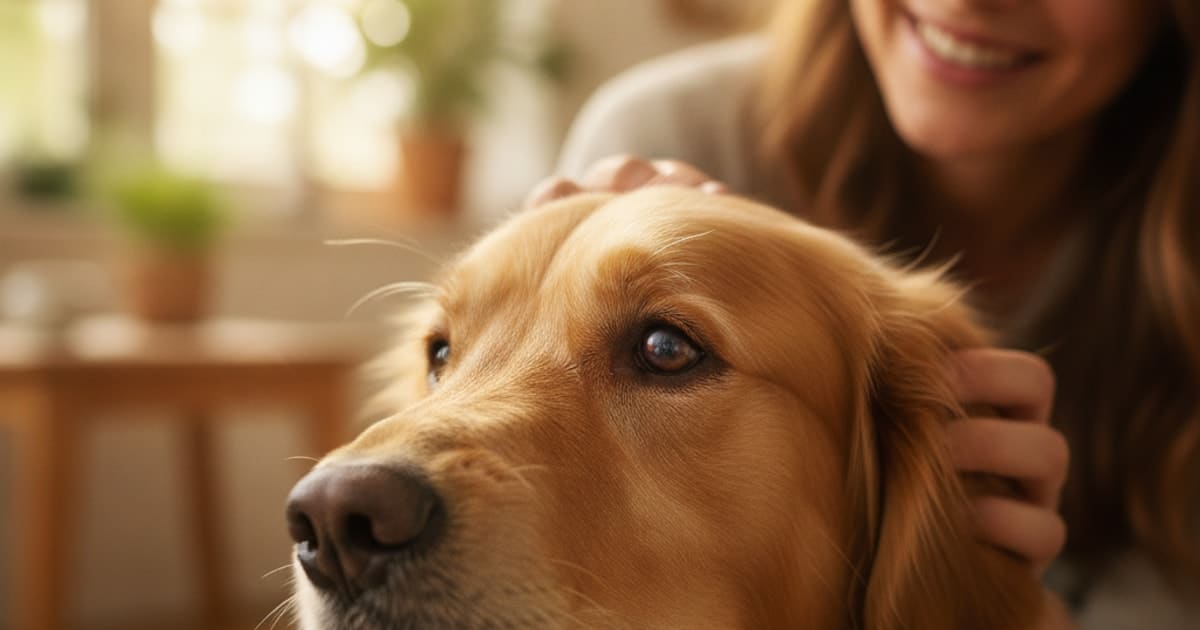
A dog eye that is red and goopy means the surface of the eye, the pink lining around it, or the eyelids are inflamed, and it deserves a veterinary appointment rather than a wait-and-see week. Call your vet today if the eye is also squinting shut, cloudy or blue-tinged, bulging, or clearly painful, because some causes of a red eye can damage vision quickly. Plenty of red, goopy eyes turn out to be straightforward irritation or conjunctivitis, but the eye is a small structure with very little margin for error, and the difference between a mild case and a sight-threatening one is hard to judge from the outside.
This page walks through what the redness means, what the colour and texture of the discharge can point toward, which signs mean same-day care, and what a vet actually does to tell these problems apart.
What redness plus discharge is telling you
Two separate things are happening when an eye looks red and gunky.
The redness comes from blood vessels widening. The conjunctiva, the thin pink membrane lining the eyelids and wrapping onto the white of the eye, is packed with small vessels. When something irritates or inflames it, those vessels dilate and the whole area flushes pink or red. Redness can also come from deeper inside the eye, which looks different to a vet under magnification and tends to matter more.
The discharge comes from the tear film. A dog's eye is coated by a thin layer made of water, oil and mucus. Tears are produced constantly, sweep across the surface, and drain through two tiny openings near the inner corner into the nose. Irritation ramps production up, so the eye runs. Inflammation also pushes the mucus-producing cells in the conjunctiva into overdrive, which is why a watery eye can turn into a stringy, goopy one within a day or two. If white blood cells arrive in numbers, the discharge thickens and takes on colour.
So colour and texture are useful clues. They are not a diagnosis. A green eye is not automatically worse than a watery one, and a scratched cornea can produce very little goop at all while being genuinely urgent.
Discharge colour and texture at a glance
| What you are seeing | What it often reflects | How soon to act |
|---|---|---|
| Dog eye red and watery, clear fluid running down the face | Surface irritation, allergies, wind or dust, early inflammation, or tears that cannot drain properly | Vet appointment within a day or two; sooner if squinting |
| Clear or greyish stringy mucus, the classic goopy eye | Conjunctival inflammation, allergies, or a tear film that is not spreading evenly | Vet appointment soon |
| Dog eye red with white discharge, thick and creamy | Mucus-heavy inflammation; can accompany reduced tear production | Vet appointment soon |
| Dog's eye red with yellow discharge | Inflammatory cells in the discharge, often with a bacterial component | Prompt veterinary visit |
| Dog eye red with green discharge | Heavier inflammatory or infectious involvement of the eye surface | Prompt veterinary visit, same day if the eye is painful |
| Dog eye red with boogers crusted in the corner on waking | Mild ongoing irritation, drainage that is not keeping up, or lid and lash anatomy | Mention at the next visit; book sooner if redness persists |
| Red or pink tinged discharge, or visible blood | Trauma, a bleeding vessel, or inflammation inside the eye | Same-day veterinary care |
| Dog eye red, swollen, with discharge and the eye held shut | Significant inflammation, injury, a foreign body, or raised pressure inside the eye | Same-day veterinary care |
The usual causes behind a red, goopy eye
A red eye combined with squinting, a cloudy or blue-tinged surface, a bulging eyeball or obvious pain is a same-day veterinary problem, not a wait-and-see one.
With that said, here is the range of things that sit behind a dog eye red with discharge.
Simple irritation. Dust, pollen, smoke, sand, shampoo, a car window at speed, or an afternoon in long grass can inflame the eye surface. These eyes are typically watery first, goopy later, and often settle once the irritant is gone. They still want a look from a professional if redness lasts more than a day.
Allergic inflammation. Environmental allergies frequently involve both eyes, show up alongside itchy skin, paw licking or ear trouble, and come and go with the seasons. Dogs with allergic eyes rub their faces on furniture, which creates a second problem on top of the first.
Conjunctivitis. This is inflammation of that pink lining, and it is a description rather than a single disease. It can be driven by allergies, irritants, infection, dry eye, or a problem with the eyelids. Infectious conjunctivitis tends to produce thicker, more coloured discharge. Because the causes need different handling, guessing is not useful.
A foreign body. Grass awns, seeds, burrs and bits of plant material can lodge under the eyelid or behind the third eyelid in the inner corner, where an owner simply cannot see them. These dogs usually have one dramatically red eye, heavy tearing or goop, and a lot of blinking. A vet can lift the lids and look properly.
A corneal scratch or ulcer. The clear front window of the eye can be scratched by a claw, a branch or the dog's own rubbing. Ulcers are painful, make dogs squint hard, and can deepen over days. Some are invisible without a fluorescein stain, which is a key reason not to assume a red eye is minor.
Reduced tear production, often called dry eye. It sounds backwards, but an eye that is not making enough of the watery part of the tear film often looks thick, sticky and goopy, because mucus becomes the dominant component. These eyes are red, dull-looking and uncomfortable, and the condition is usually long term and managed with veterinary guidance.
Eyelid and lash problems. Lids that roll inward, extra lashes growing in the wrong direction, a small growth on the lid margin, or loose lower lids that pool tears will all keep an eye chronically red and weepy. The fix is structural, not something that resolves on its own.
Blocked or overwhelmed tear drainage. If the tiny drainage openings are narrowed or blocked, tears spill over the lid and run down the face, leaving a damp, stained, sometimes irritated area below the eye.
Inflammation inside the eye, and glaucoma. These are the ones that change the plan. Uveitis means inflammation within the eye itself and can be linked to illness elsewhere in the body. Glaucoma means pressure inside the eyeball has risen, and it is painful and dangerous to vision. Both can look like a red eye with discharge from the outside. Clues that point inward include a cloudy or hazy appearance, a pupil that looks different from the other side, an eye that seems larger or bulging, pronounced squinting, and a dog who is withdrawn or off food. These cases need a vet the same day.
One eye or both, watery or thick: reading the pattern
One red, weepy eye points more toward something local: a foreign body, a scratch, a blocked tear duct, a lid issue, or raised pressure on that side. A dog who suddenly has one eye red and watering after a run through undergrowth is a good example.
Both eyes together lean more toward something environmental or whole-body: allergies, an irritant in the air, an infectious cause, or a condition affecting tear production on both sides.
Watery discharge generally means the eye is reacting and still producing plenty of the thin tear component. Thick, coloured discharge usually means inflammatory cells have joined in, or that mucus is making up most of what is left of the tear film. Neither pattern rules anything in or out by itself, which is why the exam matters more than the colour.
Signs that mean the same day, not next week
Treat these as reasons to phone the clinic immediately rather than monitor:
- Squinting, holding the eye shut, or shying away when you come near the face
- A cloudy, hazy, blue or white appearance to the clear front of the eye
- An eye that looks bigger, bulging or pushed forward compared with the other
- Visible blood in or around the eye, or red-tinged discharge
- Obvious swelling of the lids or the tissue around the eye along with discharge
- A pupil that looks a different size or shape from the other side
- Bumping into things, hesitating on stairs, or any sign of changed vision
- Pawing and rubbing that you cannot interrupt
- Redness that is getting worse over hours, or discharge that keeps rebuilding minutes after it is wiped away
- A red eye in a dog who is also lethargic, off food, or unwell in any other way
Flat-faced dogs with prominent eyes, and dogs with known eye conditions, sit closer to the urgent end of every one of these. So do dogs who have recently had any kind of facial injury.
What the vet will actually do
Knowing the sequence makes the visit easier. A full eye workup is quick, hands-on and mostly non-invasive.
The vet will take a history: how fast it came on, one eye or both, what the discharge looks like, whether your dog has been outdoors in rough cover, any skin or ear signs, and anything else that has changed. Then comes a look at the face and lids from the outside, followed by magnified examination of the eye surface, the conjunctiva, the third eyelid and the structures inside.
Common in-clinic checks include a stain that reveals scratches and ulcers on the cornea under a special light, a measurement of tear production to pick up a dry eye, and a measurement of the pressure inside the eyeball to rule glaucoma in or out. The lids are rolled back to hunt for trapped plant material. Depending on findings, a sample may be taken from the eye surface, or the eye may be examined more deeply.
From there the plan depends entirely on the diagnosis, and results vary from dog to dog. Some eyes need nothing more than removal of an irritant and a recheck. Some need a specific medical plan. Some need referral. Your vet owns that decision, and a recheck appointment is part of the plan rather than an optional extra, because eyes change fast in both directions.
One thing worth saying plainly: do not reach for leftover eye medication from a previous problem, from another pet, or from a human medicine cabinet. Certain ingredients can make an ulcerated cornea considerably worse, and anything you put in before the appointment can obscure what the vet needs to see. If the eye is uncomfortable and your dog is rubbing it, say so when you call and ask what they want you to do in the meantime.
Key Takeaways
- A dog eye that is red and goopy reflects inflammation of the eye surface, the conjunctiva or the lids, and the cause range runs from mild irritation to conditions that threaten sight.
- Discharge colour is a clue, not a diagnosis. Watery tends to mean early or irritant-driven, thick white or grey means mucus is dominant, and yellow or green suggests inflammatory cells and often a bacterial component.
- One affected eye leans local, such as a foreign body, a scratch or a lid problem. Both eyes lean environmental, allergic or whole-body.
- Squinting, cloudiness, a bulging eye, blood, a changed pupil or clear pain means same-day veterinary care.
- Crusty boogers in the corner on waking are worth mentioning at a routine visit, but persistent redness alongside them is not normal.
- Skip leftover drops and home fixes; they can mask the exam and worsen some corneal injuries.
- Rechecks matter, because an eye can improve or deteriorate within days.
The bottom line
Red eyes with discharge are one of the areas where owner observation genuinely helps and owner guesswork genuinely hurts. You are the one who notices the squint, the colour change, the sudden watering after a walk, the eye that looks slightly larger than yesterday. Write down what you see, photograph it in good light, and bring that to the appointment. Then let the exam do the sorting.
Diagnosis and the treatment plan belong to your veterinarian, who can stain the cornea, measure the pressure inside the eye, check tear production and look behind the third eyelid, none of which can be done at home. If your dog's eye is red and goopy today, talk to your vet, and if it is also painful, cloudy, swollen or bulging, make that call now rather than tomorrow.
Related reading: Dog Emergency Signs. Eyes that look cloudy as well as goopy, tear staining below the eye, and allergy-driven face rubbing are all covered elsewhere on the blog.
Frequently asked questions
- My dog's eye is red and watery. Is that an emergency?
- Not always, but it does need a veterinary opinion. A red, watery eye can come from dust, wind, pollen or a tear duct that is not draining. It can also be the first sign of a scratch on the cornea or rising pressure inside the eye. If your dog is squinting, hiding the eye, or the surface looks cloudy, treat it as same-day urgent.
- What does green discharge from my dog's eye mean?
- Green or yellow-green discharge usually means inflammatory cells are present in large numbers, which often points to a bacterial component on the eye surface. It is not something to wait out. Book a prompt veterinary visit, and go the same day if the eye is painful, swollen or held shut.
- Is yellow eye discharge different from white discharge in dogs?
- Somewhat. Thick white or creamy discharge is usually mucus-heavy and can go along with reduced tear production or ongoing surface irritation. Yellow discharge suggests more inflammatory cells and a greater chance of infection. Both warrant an exam, because the handling differs depending on the underlying cause.
- Why does my dog get crusty eye boogers in the corner every morning?
- A small amount of dried material in the inner corner on waking can be normal drainage. It becomes a concern when the eye is also red, when the amount increases, when the colour changes, or when your dog is rubbing at it. Persistent redness with boogers often traces back to lid or lash anatomy, drainage problems, or low-grade inflammation that a vet should assess.
- Can I use leftover eye drops or wipe the eye out myself?
- Do not use leftover medication from a previous problem, another pet or a human supply. Some ingredients can worsen a scratched or ulcerated cornea, and anything applied beforehand can make the exam harder to interpret. Call the clinic, describe what you are seeing, and ask what they want done before the appointment.
- My dog's eye is red and swollen with discharge. How fast should I act?
- Same day. Redness plus visible swelling of the lids or the tissue around the eye, combined with discharge, suggests significant inflammation, injury, a trapped foreign body, or raised pressure inside the eye. Any of those can worsen quickly, so phone your veterinary clinic straight away rather than monitoring overnight.
- Why is only one of my dog's eyes red and goopy?
- A single affected eye points more toward something local on that side: a grass seed or burr caught under the lid, a scratch on the cornea, a blocked tear duct, a lid or lash problem, or glaucoma. Both eyes together lean more toward allergies, an airborne irritant, an infectious cause, or something affecting tear production on both sides.
- What tests will the vet run on a red, discharging eye?
- Typically a magnified exam of the eye surface and lids, a stain that makes scratches and ulcers visible under a special light, a measurement of tear production, and a measurement of pressure inside the eyeball. The lids and third eyelid are rolled back to look for trapped plant material. Samples or deeper examination may follow depending on findings.
- Are flat-faced breeds more at risk with a red, goopy eye?
- Dogs with prominent eyes and shallow sockets have more exposed corneal surface and often a less effective blink, so irritation and injury can escalate faster. The same symptom in that kind of dog deserves a quicker call to the vet, and results vary from dog to dog depending on their individual anatomy and history.
Educational content, not veterinary advice. Ask your vet about your dog.