Do Great Pyrenees Have Health Problems? (Breed Risks)
Yes. Great Pyrenees are prone to a defined set of giant-breed conditions: hip and elbow dysplasia, cruciate ligament tears, bloat, osteosarcoma, hypothyroidism, eye conditions and an inherited platelet disorder specific to the breed. Most are manageable when caught early, which is why routine screening with your veterinarian matters so much.
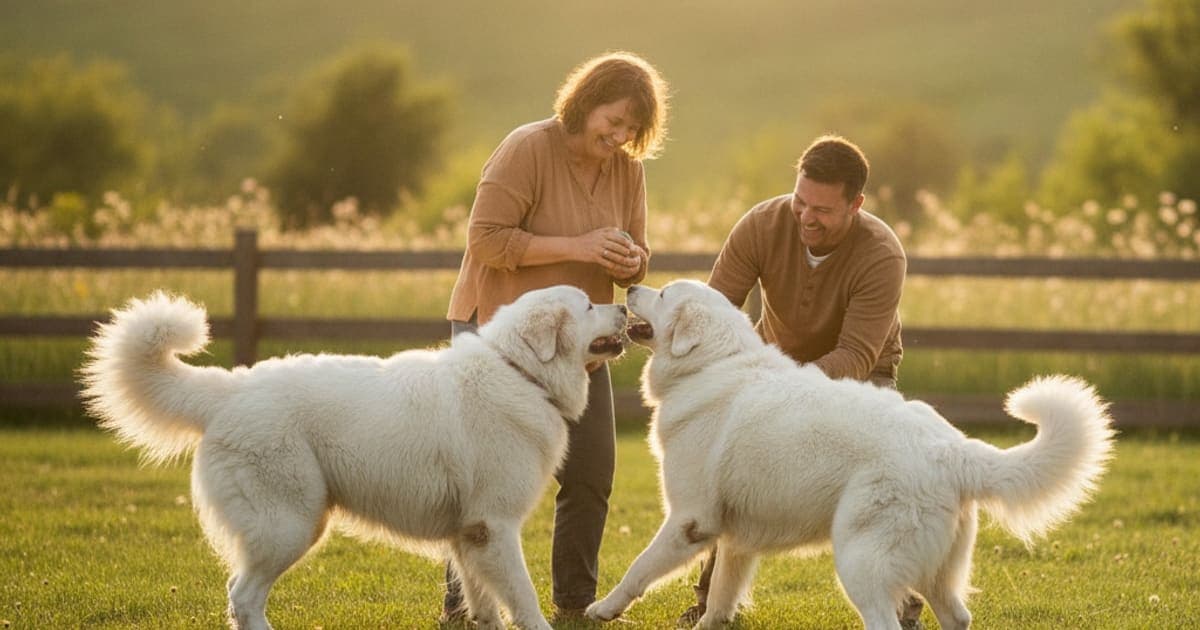
Yes. Great Pyrenees are a hardy, long-working livestock guardian breed, but they carry a recognisable set of health risks that come with giant size, slow skeletal maturation and a deep chest. The conditions that come up most often are hip and elbow dysplasia, cranial cruciate ligament injury, gastric dilatation volvulus (bloat), osteosarcoma, hypothyroidism, eyelid and lens conditions, the cardiac problems giant breeds are routinely screened for, and an inherited platelet function disorder named after the breed itself. None of that makes a Pyr a fragile dog. It makes them a dog whose owner needs to know what to watch for and when to pick up the phone.
Why a hundred-pound dog ages on a different clock
A Great Pyrenees puppy goes from a few pounds to something close to adult mass inside roughly a year and a half. That growth curve is the single biggest driver of the breed's health profile. Growth plates stay open longer than they do in a terrier, cartilage is laid down under more load, and the joint surfaces that form during that window have to carry that weight for the rest of the dog's life. Small errors in conformation get amplified by mass.
The same logic applies to the heart, which moves a much larger blood volume, and to the gut, where a deep, narrow chest gives the stomach room to rotate. Lifespan in the breed is commonly cited at around ten to twelve years, shorter than in medium-sized dogs, and that compression means age-related orthopedic and oncologic conditions tend to show up earlier in the calendar than owners expect.
The practical takeaway is that giant-breed health is front-loaded. Decisions you make in the first two years, growth rate, body condition, exercise surfaces, neuter timing discussed with your veterinarian, shape the joints your dog will be living on at eight.
The joint and bone conditions that come up most
Orthopedic disease is the category Pyr owners deal with most frequently.
Hip dysplasia is a malformation of the hip joint where the femoral head and socket do not fit together cleanly. The joint becomes unstable, cartilage wears, and arthritis follows. It is partly heritable and partly influenced by growth rate and body condition. Responsible breeders screen hips through a recognised radiographic evaluation scheme, and asking for those results before you buy a puppy is one of the highest-value things an owner can do.
Elbow dysplasia is an umbrella term covering several developmental problems in the elbow joint. It typically shows up as forelimb lameness in a young, still-growing dog, often worse after rest.
Cranial cruciate ligament (CCL) rupture is the knee injury that sends more large dogs to orthopedic surgery than anything else. In dogs it is usually a slow degenerative fraying rather than a single athletic tear, which is why a Pyr can rupture a cruciate stepping off a porch. Partial tears present as intermittent hind-limb lameness that comes and goes for weeks. Surgical stabilisation, commonly a TPLO or similar procedure, is the standard of care for a dog this size, and it works. Rehabilitation afterward is not optional; the tendon-bone and soft-tissue remodelling that follows surgery runs over months, not days.
Osteochondritis dissecans (OCD) and panosteitis both affect growing giant-breed dogs. OCD is a cartilage flap defect, most often in the shoulder; panosteitis is a self-limiting inflammation inside the long bones that causes shifting lameness in adolescents and resolves with maturity.
Patellar luxation, a kneecap that slips out of its groove, is also reported in the breed and ranges from an incidental finding to a surgical problem.
Any lameness that lasts more than a day or two in a Great Pyrenees deserves a veterinary exam rather than a week of crate rest and hope. Radiographs early are cheaper than a salvage procedure later.
Bloat: the emergency that cannot wait
Gastric dilatation volvulus is the condition every deep-chested giant-breed owner must be able to recognise on sight. The stomach distends with gas and then twists on its axis, cutting off blood supply and trapping the gas inside. It progresses to shock quickly.
A Great Pyrenees who is retching without bringing anything up, drooling, pacing, restless and swelling behind the ribs needs an emergency clinic immediately, not a wait-and-see night. Survival is strongly tied to how fast the dog reaches surgery.
Many owners of giant breeds discuss prophylactic gastropexy with their veterinarian, a procedure that tacks the stomach to the body wall so it cannot rotate, often performed at the same time as a spay or neuter. It does not prevent gas distension, but it addresses the twist that makes bloat lethal. Whether it makes sense for your dog is a conversation with your vet, not a decision to make from a forum thread.
Cancer, heart, hormone and blood conditions to screen for
Osteosarcoma is the bone cancer that disproportionately affects large and giant breeds. It usually appears in a limb, often near the knee or shoulder, and the first sign is commonly lameness or a firm swelling that does not resolve. It is aggressive and it is why persistent limb pain in an older Pyr should never be written off as simple arthritis without imaging. Lymphoma and hemangiosarcoma are also seen in large breeds and are worth knowing the signs of.
Cardiac disease is screened for in giant breeds as a matter of routine. Congenital defects and dilated cardiomyopathy are the main concerns across the giant-breed category, and a cardiac auscultation at every wellness visit, with echocardiography if your veterinarian hears something, is the sensible baseline.
Hypothyroidism is reported in the breed and is easy to miss because the signs are vague: weight gain without a diet change, coat thinning, skin problems, lethargy that owners attribute to the dog simply being a mellow guardian. It is diagnosed on bloodwork and managed well with daily medication.
Great Pyrenees thrombopathia is an inherited platelet function disorder documented in the breed. Platelets are present in normal numbers but do not aggregate properly, which can mean nosebleeds, bruising, or unexpected bleeding during a routine surgery. A DNA test exists, and if you are facing any elective procedure it is worth raising with your veterinarian before the dog is on the table.
Eye conditions, including entropion (inward-rolling eyelids) and cataracts, are reported in the breed, as is chondrodysplasia, a skeletal dwarfism that good breeders screen against.
Breed risk at a glance
| Condition | What it is | When it usually appears | Veterinary approach |
|---|---|---|---|
| Hip / elbow dysplasia | Malformed joint, instability, arthritis | Puppyhood to young adult | Radiographs, weight control, pain management, surgery in severe cases |
| CCL rupture | Degenerative knee ligament failure | Middle age onward | Surgical stabilisation plus structured rehab |
| Bloat (GDV) | Stomach distends and twists | Any age, more common in adults | Emergency surgery; gastropexy discussed preventively |
| Osteosarcoma | Aggressive bone cancer | Older dogs, sometimes younger | Imaging, biopsy, oncology referral |
| Hypothyroidism | Underactive thyroid | Adult | Bloodwork, daily thyroid medication |
| Thrombopathia | Inherited platelet dysfunction | Congenital | DNA testing, surgical planning |
| Cardiac disease | Congenital defects, cardiomyopathy | Varies | Auscultation, echocardiography, cardiology referral |
Daily management, and where recovery support fits
The owner-controlled levers are unglamorous and they matter more than anything you can buy. Keep the dog lean, because every extra pound is leverage against a joint that was already built on the edge of its tolerance. Feed a diet formulated for large-breed growth during puppyhood so the skeleton is not outrun by the muscle. Avoid repetitive high-impact work on hard surfaces in a dog under eighteen months. Build conditioning gradually. Keep nails short, because long nails change how the foot loads. Put down traction on slick floors, since a hundred-pound dog scrambling on tile is a cruciate injury waiting for a reason.
When a Pyr is working through a CCL repair, a dysplastic hip or the stiffness that creeps in with age, the recovery window is where owners start looking for support beyond the vet's plan. That market is full of kitchen-sink chews with a dozen ingredients at amounts too small to do anything, and a label that lists a compound tells you nothing about how much of it is actually in the scoop.
pawgen takes a different route with K9-REPAIR, a BPC-157 and TB-500 peptide formulation made for dogs. BPC-157 is a peptide studied for its role in soft-tissue repair pathways, including blood vessel formation and fibroblast activity at the site of tendon and ligament injury. TB-500 is related to thymosin beta-4, a naturally occurring protein studied for its role in cell migration and actin regulation, the cellular machinery tissue uses when it rebuilds. This is emerging and promising science that a growing number of owners are adopting through recovery, and the honest framing is that research suggests mechanisms and owners report what they observe. BPC-157 and TB-500 are not FDA-approved veterinary drugs, and nothing here describes a treatment for your dog's specific condition.
What pawgen can state plainly is descriptive: K9-REPAIR is dosed by body weight, every batch is third-party tested with certificates of analysis published, it ships direct to your door, and it is backed by a 60-day money-back guarantee. Bring it up with your veterinarian alongside the rest of your dog's recovery plan, particularly if your Pyr is on prescribed medication or has a bleeding disorder in the family line.
Key Takeaways
- Great Pyrenees do have a defined health risk profile, driven mostly by giant size and slow skeletal growth.
- Orthopedic conditions lead the list: hip and elbow dysplasia, cruciate ligament rupture, OCD and panosteitis.
- Bloat is the breed's true emergency; know the signs and discuss gastropexy with your veterinarian.
- Osteosarcoma, cardiac disease, hypothyroidism and an inherited platelet disorder round out the main concerns.
- Weight control, controlled growth, traction and early imaging of any lameness are the highest-value daily habits.
- Peptide support such as K9-REPAIR is something owners use alongside veterinary care during recovery, never instead of it.
For deeper explainers on the specific issues above, see the condition library. Certificates of analysis for each batch are published at COAs, shipping and availability details are listed under availability, and K9-REPAIR itself sits in the shop.
Your veterinarian owns the diagnosis and the treatment plan. Radiographs, bloodwork, cardiac workups, surgical decisions and prescribed medication are theirs to direct, and nothing in a supplement aisle substitutes for any of it. What peptides and nutritional support can do is operate in the space that proper veterinary care creates, supporting a dog who is already getting the right diagnosis and the right plan.
Owners exploring peptide support for their dog can review K9-REPAIR, BPC-157 + TB-500 formulated for dogs, at https://pawgen.com/. BPC-157 and TB-500 are not FDA-approved veterinary drugs. Nothing in this article treats, cures or prevents any condition; every decision about your dog's care belongs with your veterinarian.
Frequently asked questions
- Do Great Pyrenees have health problems?
- Yes. The breed is prone to hip and elbow dysplasia, cruciate ligament injury, bloat, osteosarcoma, hypothyroidism, eye conditions, cardiac disease and an inherited platelet disorder. Most are manageable when identified early, so routine wellness exams and prompt veterinary attention for any lasting lameness make a genuine difference.
- What diseases are Great Pyrenees prone to?
- Great Pyrenees are prone to hip dysplasia, elbow dysplasia, osteochondritis dissecans, patellar luxation, cranial cruciate ligament rupture, gastric dilatation volvulus, osteosarcoma, hypothyroidism, entropion and cataracts, giant-breed cardiac disease and Great Pyrenees thrombopathia, an inherited platelet function disorder for which DNA testing is available.
- Are Great Pyrenees prone to health problems?
- They are prone to a specific cluster of giant-breed conditions rather than being generally sickly. Size, slow skeletal growth and a deep chest drive most of the risk: joints under heavy load, a stomach with room to twist, and a shorter lifespan that brings age-related disease forward.
- What health problems do Great Pyrenees dogs have?
- Most commonly orthopedic ones: hip and elbow dysplasia, cruciate ligament tears and growth-related lameness in adolescents. Beyond the joints, owners watch for bloat as an emergency, plus bone cancer, thyroid disease, heart conditions, eyelid problems and an inherited bleeding disorder that matters before any surgery.
- Are Great Pyrenees prone to cancer?
- Large and giant breeds, including Great Pyrenees, are over-represented for osteosarcoma, an aggressive bone cancer that often presents as limb lameness or a firm swelling. Lymphoma and hemangiosarcoma are also seen in big dogs. Persistent limb pain in an older Pyr warrants imaging rather than assuming arthritis.
- Can Great Pyrenees get bloat?
- Yes, and their deep chest puts them in the higher-risk group. Signs include unproductive retching, drooling, restlessness, pacing and swelling behind the ribs. This is a surgical emergency requiring immediate veterinary care. Many owners discuss preventive gastropexy with their veterinarian at the time of spay or neuter.
- At what age do joint problems start in Great Pyrenees?
- Developmental problems such as elbow dysplasia, OCD and panosteitis usually appear during the growth period, often between four and eighteen months. Hip dysplasia may be detected young on radiographs but can cause clinical signs much later. Cruciate ligament injuries more typically show up in middle age.
- Can K9-REPAIR replace veterinary care for joint problems in a Great Pyrenees?
- No. K9-REPAIR is a BPC-157 and TB-500 peptide formulation that owners use alongside veterinary care during recovery. Research suggests these peptides act on soft-tissue repair pathways. They are not FDA-approved veterinary drugs and no outcome is promised for any individual dog, so discuss it with your veterinarian.
Educational content, not veterinary advice. Ask your vet about your dog.