Does BPC-157 Need to Be Refrigerated? (Storage Guide)
Yes — BPC-157 should be kept cold. Freeze-dried powder is most stable refrigerated or frozen, and once reconstituted into liquid it belongs in the fridge, used within the window the manufacturer specifies. Heat, light and repeated warming shorten its life long before the printed expiry date does.
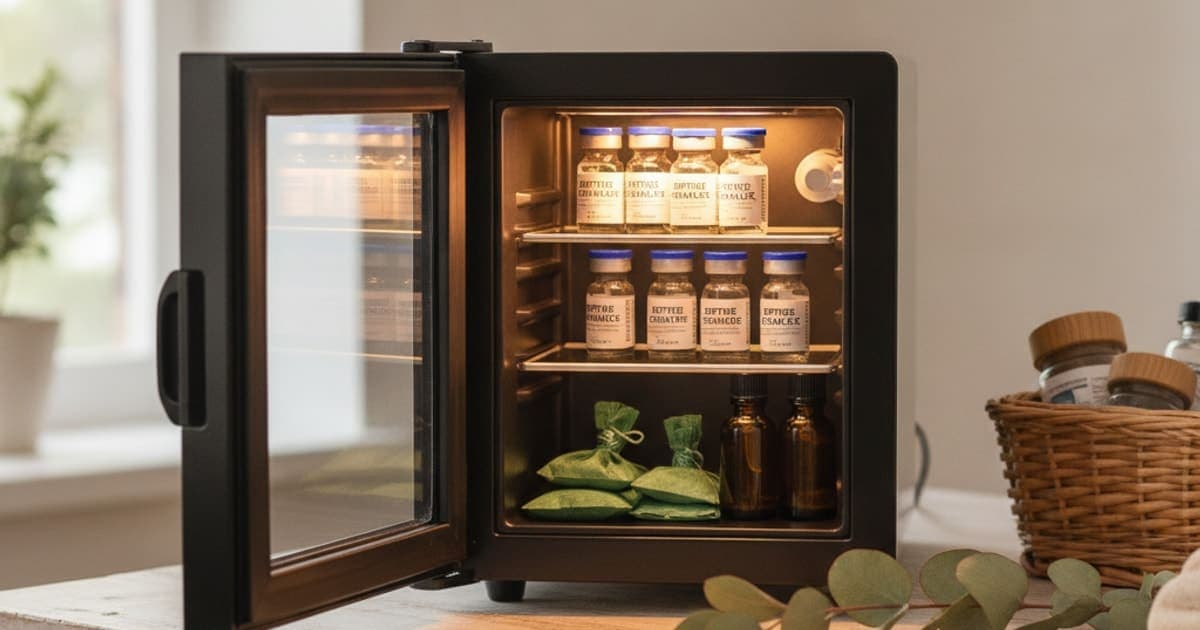
Yes, in almost every practical case. Freeze-dried (lyophilised) BPC-157 powder tolerates cool room temperature for short stretches, but it keeps best refrigerated or frozen. Once that powder is reconstituted into a liquid, refrigeration stops being optional — a mixed peptide solution held at room temperature loses potency far faster than one kept cold, and warmth also gives any stray microbes a comfortable place to live. Finished formulations made for dogs follow whatever storage instruction the manufacturer prints on the label, and that instruction outranks any general rule you read online, including this one.
That is the short answer. The longer answer is worth ten minutes of your time, because peptide storage is one of the few variables in a recovery plan that sits entirely under your control. You cannot speed up how a tendon remodels. You can absolutely control whether the product you bought is still what the certificate of analysis said it was on the day it shipped.
Why a peptide cares about temperature
BPC-157 is a short chain of amino acids — a peptide, not a small drug molecule. Its activity depends on the sequence staying intact and, to a degree, on the molecule holding its shape. Think of it as a folded paper structure rather than a rock. Heat, water and oxygen are the three things that unfold it or cut it apart.
The main degradation route is hydrolysis: water molecules attacking the peptide bonds that hold the chain together. This is exactly why peptides are sold freeze-dried. Removing the water removes the reagent. A sealed vial of dry powder has very little to react with, which is why the dry form is dramatically more stable than the wet one.
Oxidation is the second route, and light and air accelerate it. The third is physical stress — vigorous shaking, repeated freeze-thaw cycles, and foaming can disrupt the molecule at the air-liquid interface. None of these produce a dramatic visible failure. They produce a quiet loss of potency, which is the frustrating part: a degraded vial usually looks fine.
Temperature is the master dial on all three. Roughly speaking, chemical reactions slow as things get colder, which is the entire logic of the cold chain that runs from a peptide manufacturer's freezer to your refrigerator.
Freeze-dried powder and mixed solution follow different rules
The single most common storage mistake is treating both states the same way. They are not the same product from a stability standpoint.
| Lyophilised powder (unmixed) | Reconstituted solution | Ready-to-use formulation | |
|---|---|---|---|
| Where it should live | Refrigerator or freezer, sealed, in the dark | Refrigerator, upright, away from the door | Exactly as the label states |
| Practical shelf life | The longest of the three — the manufacturer's dated window | Substantially shorter, measured in weeks rather than months | The window printed on the product |
| What limits it | Moisture ingress, heat, light | Hydrolysis, oxidation, microbial growth | Formulation-specific |
| Biggest avoidable risk | Leaving it on a counter after delivery | Repeated warming, shaking, freezing after mixing | Ignoring the label |
| Freezing acceptable? | Generally yes, before mixing | Generally avoided — freeze-thaw cycles stress peptides | Only if the label says so |
If you are mixing a lyophilised vial yourself, technique matters as much as temperature. Add the diluent slowly down the inner wall of the vial rather than spraying it directly onto the powder cake. Let the cake dissolve on its own, or swirl gently. Do not shake it like a cocktail. Once mixed, the vial goes straight into the refrigerator, upright, ideally back in its box or a light-blocking container. Any volumes, diluent choices and schedules are questions for your veterinarian, not for an article — and for your dog specifically, not for dogs in general.
How long a vial stays usable, and what quietly shortens it
Asked plainly: how long does BPC-157 last? In dry, sealed, refrigerated or frozen form, it is the most stable it will ever be, and manufacturers assign it a dated window based on their own stability testing. That date on the vial or pouch is the number to trust, because it reflects that specific formulation, fill and packaging — not a generic figure from a forum.
How long does BPC-157 last in the fridge once it is reconstituted? Shorter, and the honest framing is weeks rather than months. Again, the manufacturer's stated in-use window is the one that governs. Anyone who gives you a confident universal number for every product on the market is guessing.
What quietly shortens both windows:
- Cumulative warm hours. Damage adds up. A vial that sat on a doorstep in summer heat for six hours, then rode in a warm car, has spent some of its shelf life even if it went into the fridge afterwards.
- Fridge door storage. The door is the warmest, most temperature-cycled part of any refrigerator. Peptides belong on a middle shelf toward the back.
- Light exposure. Clear vials left out on a counter in daylight oxidise faster. Keep the box.
- Freeze-thaw cycling. Freezing a reconstituted solution and thawing it repeatedly is one of the harder things you can do to a peptide.
- Contamination. Every entry into a vial is an opportunity for microbes. Clean the stopper each time.
Heat, moisture and rough handling degrade a peptide far more reliably than the calendar does — a vial treated well outlives a vial treated badly, whatever date is printed on the label.
Does BPC-157 expire, and how do you spot a vial that has gone off?
Yes, BPC-157 expires. Every peptide product carries a manufacturer's date that reflects how long stability testing supports full labelled potency under the stated storage conditions. Past that point, the manufacturer no longer stands behind the content of the vial.
What expiry does not mean is a cliff edge. Peptide potency decays gradually. A vial that passed its date last week has not turned into a different substance; it has simply left the window where anyone can tell you what is in it. That uncertainty is the problem. If you are trying to support a dog through a specific recovery period, giving an unknown quantity of active compound makes it impossible to judge anything you observe.
Visual checks are useful but limited. Discard a vial — and contact the seller — if you see:
- cloudiness, haze, or floating particles in a solution that was clear when mixed
- any colour change, or yellowing
- a powder cake that has collapsed into a sticky film, melted appearance, or shrunk oddly, which can indicate moisture got in
- a damaged stopper, cracked vial, or a sealed vial that has clearly lost its vacuum
The reverse is not true: a clear, colourless solution is not proof of potency. You cannot see degradation, which is exactly why storage discipline and a documented expiry date matter more than eyeballing it.
Everyday handling: shipping, travel and the back of the fridge
Cold chain sounds industrial, but at home it comes down to a few habits.
On delivery day. Bring the package in promptly and refrigerate it as directed. If a shipment arrives visibly heat-damaged, or sat out over a hot weekend, photograph it and contact the seller before using it. A reputable brand would rather replace a package than have you dose a compromised one.
At home. Middle or back shelf, not the door. Keep the original box — it blocks light and stops the vial rolling around. Never store peptides in a bathroom cabinet or above an oven, where humidity and heat cycle constantly. If you have a chest freezer that frosts and defrosts, that cycling is worse for an unmixed vial than a stable refrigerator.
Travelling with your dog. Use a small insulated cooler with a cool pack, with a cloth barrier so the vial does not sit directly against ice and freeze. Carry it with you rather than leaving it in a parked car, which becomes an oven very quickly.
Power outage. A closed refrigerator holds temperature for hours. Keep the door shut, note how long the outage lasted, and if it ran long, treat the product as questionable rather than assuming it is fine.
What careful storage says about a careful product
Storage instructions are a tell. Brands that publish clear cold-chain guidance, print real expiry dates, and provide batch-specific third-party certificates of analysis are the ones treating the compound like the sensitive biologic it is. Brands that ship a peptide in a plain envelope with no dating, no COA and vague instructions are telling you something too — the same way a kitchen-sink joint chew with a proprietary blend and no per-ingredient amounts is telling you something.
This is where pawgen sits. K9-REPAIR combines BPC-157 and TB-500 in a formulation made specifically for dogs, with third-party testing and certificates of analysis behind the batch, weight-based guidance, direct-to-door shipping and a 60-day money-back guarantee. The storage instructions supplied with the product are the ones to follow — they are written for that formulation, not for a generic research vial.
On mechanism, the honest version: research suggests BPC-157 may support angiogenesis and the activity of fibroblasts involved in tendon and ligament remodelling, while TB-500, related to thymosin beta-4, is studied for its role in actin regulation and cell migration. This is emerging and promising science that a growing number of owners are adopting as part of a recovery routine. BPC-157 and TB-500 are not FDA-approved veterinary drugs, and nothing here describes an outcome for your dog. Discuss it with your veterinarian, who knows the diagnosis, the medications already in play and the rehab timeline.
Key Takeaways
- Refrigerate BPC-157. Dry powder is most stable cold and dark; reconstituted solution should be refrigerated without exception.
- Unmixed lyophilised powder lasts longest — use the manufacturer's dated window. Reconstituted solution is measured in weeks, not months.
- Yes, BPC-157 expires, and potency fades gradually rather than all at once, so the date is a stability limit, not a safety switch.
- Store on a middle shelf, not the fridge door; keep the vial in its box, upright, away from light and humidity.
- Swirl, never shake. Avoid freeze-thaw cycles on mixed solution and keep every vial entry clean.
- Discard cloudy, discoloured or particulate-containing solution, and remember that clear liquid is not proof of potency.
- Cumulative warm hours during shipping and travel eat into shelf life even if the product ends up refrigerated.
Storage is housekeeping, not treatment. The diagnosis, the imaging, the surgical decision, the pain protocol and the rehab plan belong to your veterinarian, and nothing in this article should displace a prescribed medication or a scheduled procedure. Peptides operate in the space that good veterinary care creates — and they only have a chance to do anything at all if what is in the vial on week six is the same as what was in it on day one.
More on the compounds themselves, third-party testing and how owners use them through recovery is available at pawgen.
Owners exploring peptide support for their dog can review K9-REPAIR — BPC-157 + TB-500 formulated for dogs — at https://pawgen.com/. BPC-157 and TB-500 are not FDA-approved veterinary drugs. Nothing in this article treats, cures or prevents any condition; every decision about your dog's care belongs with your veterinarian.
Frequently asked questions
- Does BPC-157 need to be refrigerated?
- Yes. Freeze-dried BPC-157 powder is most stable refrigerated or frozen, and reconstituted solution should always be kept in the refrigerator. Short periods at cool room temperature are tolerated by dry powder, but heat and light shorten shelf life. Always follow the storage instructions printed on your specific product.
- How long does BPC-157 last?
- In sealed, dry, cold-stored form, BPC-157 lasts the longest — the manufacturer's dated stability window governs. Once reconstituted, the usable period is much shorter, measured in weeks rather than months. Use the in-use window stated by the manufacturer rather than any general figure quoted online.
- How long does BPC-157 last in the fridge?
- Unmixed lyophilised powder stored cold and dark keeps until its printed expiry date. Reconstituted solution held at normal refrigerator temperature has a much shorter window — think weeks, not months. Store it upright on a middle shelf rather than the door, which cycles warmest.
- Does BPC-157 expire?
- Yes. Every peptide product carries a manufacturer's expiry date reflecting how long stability testing supports labelled potency. Potency declines gradually rather than dropping off a cliff, so an expired vial is not transformed — it is simply an unknown quantity, which makes any recovery routine impossible to judge.
- Can BPC-157 be frozen?
- Unmixed lyophilised powder is generally suited to freezer storage and stays stable there. Reconstituted solution is a different matter — repeated freeze-thaw cycles physically stress peptides and are usually avoided. Follow the manufacturer's guidance for your specific product, and never freeze a formulation whose label does not permit it.
- What happens if BPC-157 is left out at room temperature?
- Brief warm exposure of dry powder is usually tolerated. Reconstituted solution left out degrades faster through hydrolysis and oxidation, and warmth also favours microbial growth. Damage is cumulative and invisible, so refrigerate promptly after delivery and note any long warm periods during shipping or travel.
- How can I tell if a peptide vial has gone bad?
- Discard solution that has become cloudy, discoloured or contains floating particles, and any powder cake that looks melted, sticky or collapsed, which suggests moisture ingress. A damaged stopper or cracked vial is also a reject. Clear liquid, however, is not proof of potency — degradation is invisible.
- How should I store K9-REPAIR at home?
- Follow the storage instructions supplied with the product, since they are written for that specific formulation. As general practice, keep it cold, dark, upright and in its original box on a middle refrigerator shelf rather than the door, and bring shipments indoors promptly on delivery day.
- Should I ask my vet about peptide storage and use?
- Yes. Your veterinarian owns the diagnosis, the medication list and the rehab plan, and can advise how any supplement fits alongside prescribed care. BPC-157 and TB-500 are not FDA-approved veterinary drugs, so any question about suitability, timing or amount for your dog belongs with them.
Educational content. BPC-157 and TB-500 are not FDA-approved veterinary drugs. Talk to your veterinarian before starting anything new, especially if your dog is on prescribed medication.