Can a Dog's Face Swell From Allergies? (What to Do Now)
Yes. A dog's face can swell from an allergic reaction, usually within minutes to a couple of hours of a sting, a medication, a vaccine or a food. Sudden facial swelling needs a veterinary call the same day, and any breathing change makes it an emergency.
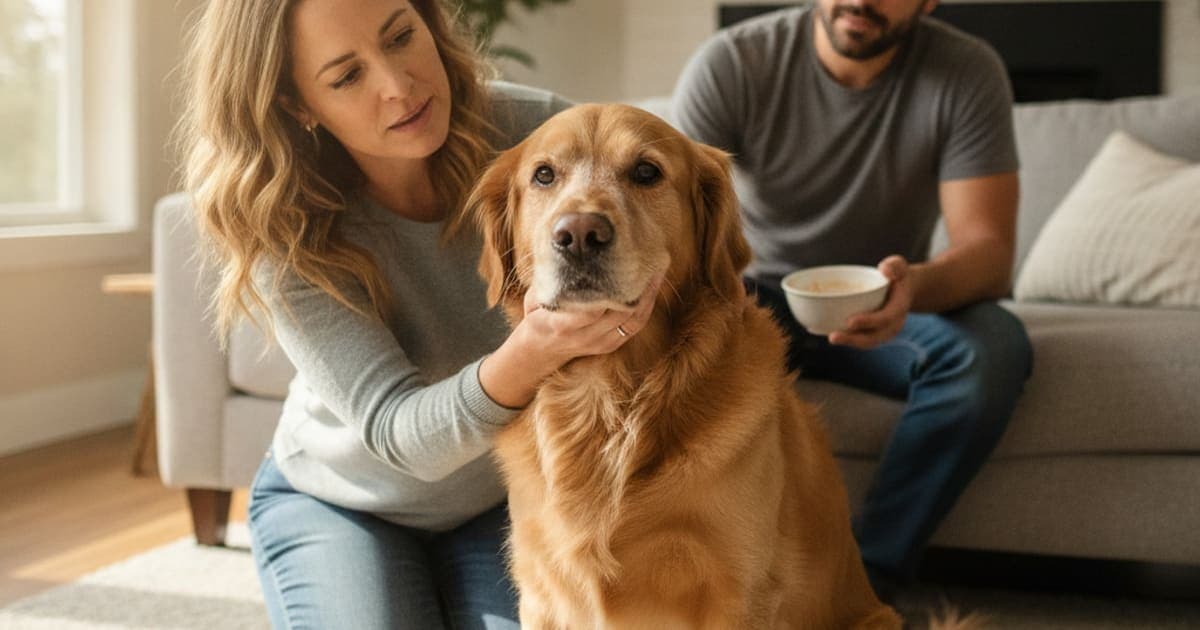
Yes, a dog's face can swell from an allergic reaction, and sudden facial swelling is a reason to call your veterinarian straight away, or an animal poison control service such as the ASPCA Animal Poison Control Center or the Pet Poison Helpline if a plant, chemical or medication may be involved. If your dog is struggling to breathe, has pale, grey or bluish gums, is vomiting repeatedly, is wobbly or collapsing, or is breaking out in hives all over the body, skip the phone call and drive to the nearest emergency clinic now.
The medical name for this kind of swelling is angioedema: fluid leaking out of small blood vessels into the loose tissue just under the skin. In dogs it shows up most obviously around the muzzle, the lips, the eyelids and the ear flaps, because that is where the skin is loosest and has the most room to balloon. It typically appears fast, within minutes to a couple of hours of whatever triggered it, and the dog often looks odd rather than ill: puffy muzzle, squinting eyes, a lumpy face, pawing at the nose.
Facial swelling can look dramatic and stay mild, or look mild and be the opening act of a reaction that becomes dangerous, which is exactly why the decision about what happens next belongs to a veterinarian rather than to a photo thread.
What an acute allergic reaction looks like on a dog's face
The classic picture is a muzzle that has gone fat and firm, eyelids that are puffed into slits, and sometimes ear flaps that feel thickened. The skin may be pink or red. Many dogs also develop hives, raised round welts that stand the hair up in little tufts along the neck, chest and flanks, which can be easier to feel than to see on a thick coat.
Other signs that often travel with it:
- Rubbing the face on the carpet or furniture, or pawing at the muzzle
- Scratching, restlessness, or an inability to settle
- Drooling, or swallowing repeatedly
- Red, weepy eyes
- Vomiting or diarrhoea, which in dogs can accompany a serious reaction
That last one matters more than owners expect. Research suggests the dog's primary shock organ in anaphylaxis is the liver and the gastrointestinal tract, which is why sudden vomiting or diarrhoea alongside facial swelling is treated as a warning sign in veterinary emergency medicine rather than a coincidence.
Why the face is the part that swells
An allergic reaction starts when the immune system meets a protein it has decided is a threat. Mast cells sitting in the skin and in the lining of the gut and airway release histamine and other mediators in a sudden burst. Those chemicals make the walls of small blood vessels leaky, so plasma seeps out into the surrounding tissue.
Where that fluid goes depends on the architecture of the skin. Over the back, the skin is tightly attached and there is little room, so you get welts. Around the muzzle, the lips and the eyelids, the tissue is loose and elastic, so the same volume of fluid produces visible, sometimes alarming, puffiness. Nothing has been injured. The face is simply the most expandable real estate on the dog.
The risk is not the face itself. It is that the same process can affect the tissues of the throat and the airway, and that the circulatory effects of a severe reaction can drop blood pressure. That is the scenario emergency teams are watching for, and it is why a dog with a swollen face gets examined rather than reassured over the phone.
Emergency signs versus wait-for-the-appointment signs
Use this as a triage guide, not as a reason to delay contacting your veterinary team. Any acute swelling deserves a phone call, even when the dog seems comfortable.
| What you are seeing | What it may mean | What to do |
|---|---|---|
| Puffy muzzle or eyelids, dog alert, breathing normally | Localised angioedema | Call your vet now and follow their instruction on being seen |
| Hives spreading over the body, heavy scratching | Generalised allergic reaction | Same-day veterinary assessment |
| Noisy breathing, open-mouth breathing, stretched-out neck | Possible airway involvement | Emergency clinic immediately |
| Pale, grey or blue gums, weakness, collapse | Possible anaphylaxis or shock | Emergency clinic immediately |
| Vomiting, diarrhoea, or a distended abdomen with the swelling | Systemic reaction | Emergency clinic immediately |
| Swelling on one side only, over the cheek or under the eye | Often not allergic: tooth root abscess, bite wound, mass | Veterinary exam, same day if painful |
| Swelling that returns repeatedly with no clear trigger | Needs a diagnostic work-up | Book an appointment and bring photos |
Swelling on one side of the face deserves particular attention. A true allergic reaction is usually symmetrical, affecting the whole muzzle and both eyes. A one-sided bulge is more likely to be an abscessed tooth root, a sting, a bite, trauma, or a mass. Any new lump should be examined by a veterinarian, and only a needle sample or biopsy can tell what it actually is. Facial swelling also appears as a sign in several unrelated canine conditions, which is another reason the pattern matters more than the puffiness.
What usually triggers a swollen face
Veterinary dermatology and emergency references list the same recurring culprits, though how often each one is responsible varies and is not something to pin a number on:
- Insect stings and bites. Bees, wasps, hornets, ants and spiders are a very common cause of sudden muzzle swelling, especially in dogs who snap at flying insects. If you can see a stinger, scraping it sideways with a credit card edge is preferable to squeezing it out with fingers.
- Vaccines. A reaction can follow a vaccination, usually within hours. It is a decision to review with your veterinarian, who may plan future appointments differently. Never adjust a vaccine plan on your own.
- Medications. Both prescribed and over-the-counter drugs can trigger reactions. Tell your vet exactly what your dog has had and when.
- Food proteins. Less often the cause of acute facial swelling than of chronic itching, but it happens.
- Contact with plants, chemicals or topical products. Think new shampoo, garden spray, or a nose-first investigation of something unfamiliar.
- Unknown. In a fair share of cases the trigger is never identified, and that is a normal outcome rather than a failure.
Chronic environmental allergy, the seasonal itchiness often called atopic dermatitis, behaves differently. It produces itching, chewed paws, recurrent ear infections and inflamed skin over weeks and months, not a face that balloons in twenty minutes. If your dog's face has swollen suddenly, think acute reaction, not pollen season.
Is there a home remedy for a dog's swollen face?
This is the most searched follow-up question, and the honest answer is that there is no home remedy that substitutes for having the dog assessed. The reason is not caution for its own sake. It is that nobody, including an experienced owner, can predict from the outside whether a reaction has finished or is still escalating, and the window in which a severe reaction is easy to manage is early.
What is genuinely useful while you are arranging care:
- Photograph the face immediately, then again every fifteen minutes. A time-stamped series tells your vet whether the swelling is progressing, which is far more informative than a verbal description.
- Note the time and anything that changed: a walk through long grass, a new treat, a vaccination that morning, a medication, a cleaning product.
- Keep your dog quiet and cool. Exercise and excitement increase circulation and are unhelpful during a reaction.
- Stop the exposure if you can see it. Scrape out a visible stinger, rinse off a topical product with plain water.
- Prevent self-trauma. A dog who rubs a swollen face raw creates a second problem.
What not to do: do not give any human over-the-counter medication unless your veterinarian has specifically told you to, and has told you which one and how much for your dog. Several common human remedies are unsuitable or dangerous for dogs, formulations vary, and combination products can contain ingredients that are toxic to them. Dosing is a veterinary decision, always. If your dog is on any prescribed medication, keep giving it as directed and talk to your vet before changing anything.
What owners describe online, and what actually happens at the clinic
Both groups are describing something real, because reactions genuinely span that whole range. The problem with the wait-and-see replies is survivorship: the owners whose dogs deteriorated are not typing updates at two in the morning. Results vary from dog to dog, and a stranger's outcome tells you nothing reliable about the animal in front of you.
At the clinic, the process is usually straightforward. The team takes a history, checks gum colour, heart rate, breathing and temperature, looks in the mouth and at the skin, and assesses whether the swelling is confined to the face. Depending on severity, a vet may give injectable medication, keep your dog for a period of observation, and send you home with instructions on what to watch for, including the possibility of a reaction that flares again hours later. You may also be asked to bring the dog back if swelling recurs, or to keep a record of exposures if this has happened before.
If reactions keep happening, that record becomes the diagnostic work-up. Patterns, season, location, products and timing are what narrow the list.
Key Takeaways
- A dog's face can absolutely swell from an allergic reaction, and the swelling usually begins within minutes to a couple of hours of exposure.
- Call your veterinarian for any sudden facial swelling, and go to an emergency clinic immediately for breathing difficulty, pale or blue gums, collapse, or vomiting alongside the swelling.
- Muzzle, lips, eyelids and ear flaps swell first because the skin there is loose, not because the face itself is the problem.
- Stings, vaccines, medications, foods and contact irritants are the usual triggers, and sometimes no trigger is ever identified.
- One-sided swelling is more often a tooth root abscess, bite or mass than an allergy, and any new lump needs a veterinary exam and a sample to identify.
- There is no home remedy that replaces assessment. Photograph the progression, record the exposure, and never give human medication without specific veterinary instruction.
A swollen face is a symptom, not a diagnosis, and the difference between a reaction that fades and one that escalates is not visible from the outside. Your veterinarian owns the diagnosis and the treatment plan here: the exam, the decision about observation or medication, and the plan for preventing a repeat. Your job is to get your dog in front of them quickly, with good information about what happened and when.
Related reading: Dog Emergency Signs.
Frequently asked questions
- Can a dog's face swell from allergies?
- Yes. An allergic reaction can cause angioedema, fluid leaking from small blood vessels into the loose tissue of the muzzle, lips, eyelids and ear flaps. It usually develops within minutes to a couple of hours of a sting, medication, vaccine, food or contact irritant, and it warrants a veterinary call straight away.
- Is a swollen face in a dog always an emergency?
- Not always, but it always warrants a phone call. Go to an emergency clinic immediately if there is noisy or laboured breathing, pale, grey or blue gums, collapse, weakness, or vomiting with the swelling. Even a comfortable dog with a puffy muzzle should be assessed, because reactions can escalate after they appear.
- What home remedy can I use for my dog's swollen face?
- There is no home remedy that replaces veterinary assessment. While arranging care you can photograph the face every fifteen minutes, note the time and possible trigger, keep your dog quiet and cool, scrape out a visible stinger, and rinse off any topical product. Do not give human medication without veterinary instruction.
- How long does allergic facial swelling last in a dog?
- It varies considerably. Many reactions begin settling within hours once they have been assessed and treated, while others linger longer or flare again later the same day. Results vary from dog to dog, so follow the discharge instructions you are given and report any return of swelling promptly.
- Can a bee or wasp sting make my dog's face swell?
- Yes, stings are among the most common reasons a dog's muzzle suddenly swells, particularly in dogs who snap at flying insects. If you can see a stinger, scrape it sideways with a card edge rather than squeezing it. Then contact your veterinarian, because sting reactions can progress.
- Can a vaccine cause facial swelling in a dog?
- A reaction can follow vaccination, typically within hours, and facial swelling or hives are recognised presentations. Contact your veterinary clinic the same day so the reaction is recorded in the file. Future vaccination plans are a decision to make together with your vet, never an adjustment to make on your own.
- What if only one side of my dog's face is swollen?
- One-sided swelling is less typical of an allergic reaction, which is usually symmetrical across the muzzle and both eyes. A single-sided bulge more often reflects a tooth root abscess, a bite or sting, trauma, or a mass. Any new lump needs a veterinary exam, and only a sample can identify it.
Educational content, not veterinary advice. Ask your vet about your dog.