Dog Ate Coffee Grounds but Is Acting Fine: Call the Vet
If your dog ate coffee grounds or beans and seems well, call your vet or an animal poison control service now. Coffee contains caffeine, which is toxic to dogs, and a dog that looks well can still be absorbing it.
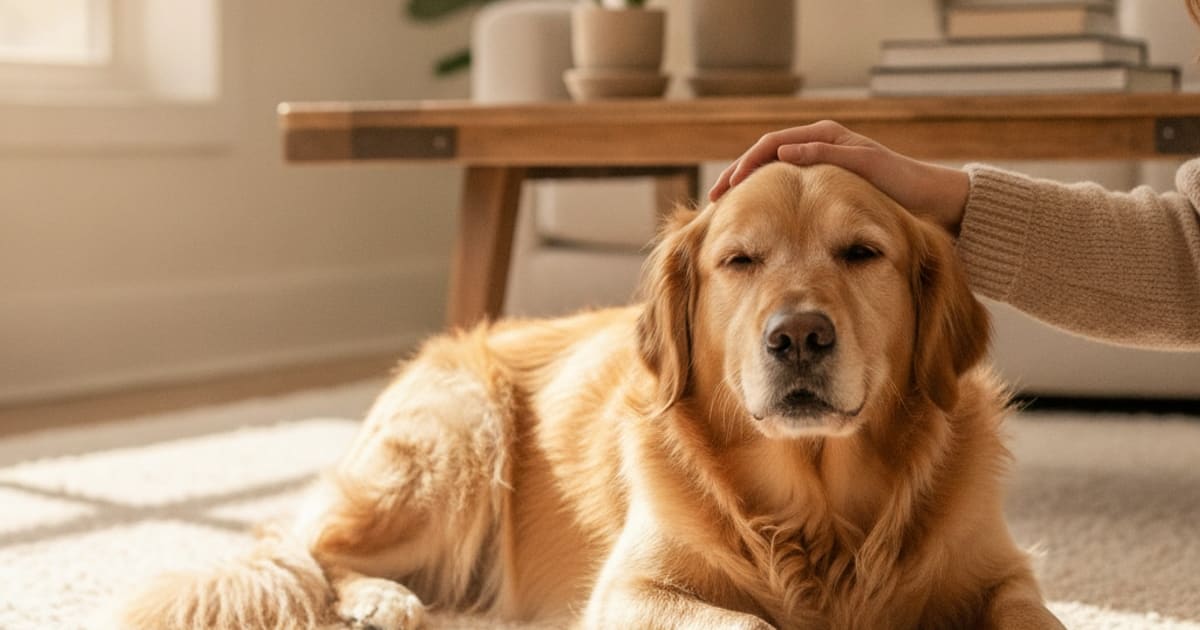
If your dog has eaten coffee, call your vet or an animal poison control service now. Coffee is toxic to dogs because it contains caffeine, and even if your dog ate coffee grounds but is acting fine, the call cannot wait, because caffeine can keep moving from the stomach into the body after a dog seems well.
Why coffee is dangerous for dogs
The part of coffee that harms dogs is caffeine. Caffeine belongs to a group of natural stimulants called methylxanthines, and it acts on the same body systems in a dog as it does in you: the brain and nerves, the heart and the muscles. The difference is that a dog's body does not handle caffeine the way a person's body does. The stimulant that helps you start the morning overstimulates a dog's body, and there is no form of coffee that removes that risk. Coffee is not a food for dogs in any amount.
Once caffeine is swallowed, it moves from the stomach and gut into the bloodstream and travels around the body. It drives the nervous system to fire harder than it should and pushes the heart to work harder. It can also upset body temperature and the balance of salts, such as potassium, that the heart and muscles depend on. None of this has to show on the outside at first, which is why your dog can look like itself while caffeine is still being taken up.
That point matters if your dog seems well right now. Coffee grounds are gritty and can clump together in the stomach, and caffeine can keep coming out of them and into the body after the grounds have been swallowed. How your dog looks in the first moments after eating does not tell you how much caffeine is still on its way. The reason to call now, rather than later, is that the vet team has the widest choice of options while caffeine is still in the stomach and gut. Once it has been absorbed, there is less they can do to stop it reaching the brain and heart, and more they have to do to support your dog through it.
Grounds and beans are concentrated forms of coffee. When you brew a cup, water carries part of the caffeine out of the grounds and into the drink, which is then diluted in the cup. Fresh grounds that have never been brewed still hold all of their caffeine, so even a spoonful your dog licks off the counter or the floor carries more caffeine than the same amount of brewed coffee. If your dog ate a teaspoon of coffee grounds, that is not too small to matter: call your vet or an animal poison control service now.
Whole beans are the same problem in a different shape. A roasted bean holds all of its caffeine, and a dog can crunch through a handful from an open bag in seconds. If your dog ate coffee beans but is acting fine, the beans are still in the gut releasing caffeine, and the step is the same: call your vet or an animal poison control service now. Beans coated in chocolate bring a second toxin along with the caffeine, so keep the bag or box to show the vet team.
Used grounds are not a lesser risk. Brewing pulls out only part of the caffeine, and how much stays behind depends on the coffee, the grind, the roast and the way it was made. You cannot judge what is left by looking at a wet filter or a scoop from the bin. Grounds that have sat in a bin, a compost heap or a garden bed can also grow mould, and mould brings risks of its own on top of the caffeine. If your dog ate some used coffee grounds, from a filter, a bin or a compost pile, call your vet or an animal poison control service now and tell them where the grounds came from.
The amount your dog took in is the part you cannot measure at home. The strength of coffee changes from one bag, roast and brew to the next, and your dog's weight is part of what the vet team uses to judge the risk. A dog that ate a little of the coffee grounds from a dropped scoop and a dog that emptied a whole filter both need the same first step, because nobody can turn what you saw into a number that rules out danger while standing in your kitchen. That is why any amount of coffee is treated as an emergency, and why the call comes before anything else.
Coffee also turns up in forms that are easy to miss: instant powder, pods and capsules, cold brew, coffee drinks, and cakes or desserts made with coffee. Powder and capsules are concentrated, much like fresh grounds. Drinks and desserts can contain other ingredients that also harm dogs, which is one more reason to keep the recipe or packaging to hand and to call now rather than trying to work out the risk yourself.
There are also the grounds' containers to think about. If your dog swallowed a coffee pod, a paper filter or a coffee bag along with the grounds, call your vet now: the packaging can cause trouble in the gut on its own, on top of the caffeine inside it. Do not try to make your dog sick at home, and do not give anything by mouth to settle the stomach. Leave every decision about removing what was eaten to the vet team.
What your vet may do
Care starts on the phone. Whether you reach your own clinic or an animal poison control service, the person you speak to will ask what your dog ate, roughly when, how much may be missing, your dog's weight and any medicines or health problems. From those answers the team can judge how serious the amount of caffeine could be and get the clinic ready for your arrival. If you are asked to come in, go straight away and bring the packaging, the recipe or a sample of what was eaten in a closed bag.
At the clinic, the first step is an exam. The vet checks your dog's heart rate and rhythm, listens to the chest, measures temperature and may take a blood pressure reading. They look at how alert your dog is, how steady they are on their feet and how their nerves and muscles respond. These first readings give the vet a starting picture, and they become the point the team compares against as care goes on. A dog that looks settled on arrival is still examined in full, because the caffeine may not yet have shown what it can do.
Then comes the decision about decontamination, which means removing as much coffee as possible before more caffeine is absorbed. The vet may give a medicine in the clinic that makes your dog vomit up what is still in the stomach. Whether this is the right step depends on what was eaten, how long ago, and how your dog is when they arrive, and the vet will not make a dog vomit if doing so could put that dog at risk. Because coffee grounds can clump, not all of them may come back up, and the vet takes that into account when planning the next step.
After vomiting, or instead of it, the vet may give a medicine by mouth that binds to caffeine still in the gut so that less of it reaches the blood. Caffeine can pass from the body back into the gut and be taken up again, so this medicine may be repeated while your dog is in the clinic. The vet decides how and when, based on what your dog ate and how your dog responds.
Tests help the vet see what the caffeine is doing inside the body. Blood tests can show salts such as potassium, blood sugar and how the kidneys are working. An ECG traces the electrical activity of the heart so the team can see its rhythm beat by beat, and blood pressure readings may be repeated. A urine sample may be checked too. These results guide the treatment plan and help the vet judge when your dog no longer needs close care.
Monitoring is the centre of care in the clinic. Your dog may be given fluids through a drip into a vein, which supports blood pressure and circulation and helps the body move caffeine out through the urine. Caffeine in the bladder can be taken back into the body, so the team may take your dog out to pass urine at short intervals or place a soft tube to keep the bladder empty. If the heart, nerves or temperature need support, the vet can give medicines they prescribe for those problems, and nursing staff may keep your dog in a quiet, dim space to keep stimulation down. Heart rate, rhythm and temperature are checked again and again until the vet is satisfied that enough caffeine has cleared for your dog to go home.
When your dog does go home, the vet gives you instructions for the rest of the day and night. Follow them exactly, and contact the clinic straight away with any question or any change in your dog. The decision about when your dog is ready to leave rests with the vet, based on the exam, the tests and how your dog has responded to care.
What to have ready when you call
Make the call first. Gather these things while you are on the phone, or ask someone else in the home to find them, but do not wait to have them all before you dial. Each one helps the vet team judge the risk faster and plan care for your dog.
- The coffee bag, tin, pod box, filter or recipe, so the team can see what kind of coffee it was and whether anything else was in it
- Roughly when your dog ate it, even if it is a best guess
- Your best guess at how much is missing
- Your dog's weight, or an estimate if you do not know it exactly
- Any medicines your dog takes and any health problems they have
You do not need exact answers. A rough time and a rough amount are far more useful than a delay while you try to measure. If you do not know what kind of coffee it was, or you only found an empty filter or a torn bag, say so and call anyway. Not knowing is a reason to call now, not a reason to wait.
Bring the packaging with you if you are asked to come to the clinic. Labels on coffee products can show whether the coffee is regular or decaffeinated and whether it contains other ingredients, and a recipe for a coffee dessert or drink shows the vet team everything that went into it. If your dog chewed through a bag or capsule, bring what is left of it too, so nothing has to be guessed.
Tell the team about any health problems up front, especially anything affecting the heart, kidneys or nervous system, and any medicines your dog is on, so they can take these into account from the start. Having a pill bottle or your clinic's notes to hand makes this quicker. For questions about how a long-term condition or an existing medicine fits into your dog's care after this, talk to your vet.
For a wider guide to problems that need care straight away, read Dog Emergency Signs, and for plain explanations of health problems in dogs, browse the Conditions library.
Frequently asked questions
- Is coffee an emergency for dogs?
- Yes, because coffee contains caffeine, which is toxic to dogs and can keep entering the body after your dog has eaten it. Call your vet or an animal poison control service now, even if your dog seems well, so the vet team can act while there is still time to limit how much caffeine is absorbed.
- What should I do if my dog ate coffee?
- Call your vet or an animal poison control service now, and have the packaging or recipe nearby. Go straight to an emergency clinic if your dog has tremors, seizures, collapses or has trouble breathing. Do not try to make your dog sick at home, and do not give food or anything else unless the vet team asks.
- How much coffee is dangerous for dogs?
- Treat any amount of coffee as an emergency and call your vet or an animal poison control service now. The caffeine in grounds, beans and powder differs from one batch to the next, and there is no way to measure what your dog took in at home, so a few grounds still need the call.
- My dog ate some coffee grounds and seems well. Do I still need to call?
- Yes, because seeming well right after eating coffee does not mean the caffeine is not working. Grounds can sit in the stomach and keep releasing caffeine into the body. Call your vet or an animal poison control service now, so the vet team can step in before more of it is absorbed.
- My dog ate a teaspoon of coffee grounds. Is that enough to call about?
- Yes, because there is no amount of coffee grounds that can be called too small to matter, and a teaspoon of fresh grounds holds caffeine that has not been brewed out. Call your vet or an animal poison control service now and give your best guess at how much is missing from the tin or filter.
- Are used coffee grounds still a problem for dogs?
- Yes, because brewing pulls only part of the caffeine out of the grounds, and what stays behind cannot be judged by looking. Used grounds from a bin or compost can also carry mould. If your dog ate used coffee grounds, call your vet or an animal poison control service now and say where they came from.
- What if my dog ate coffee beans?
- Call your vet or an animal poison control service now. A whole coffee bean holds all of its caffeine, so beans are a concentrated form of coffee. Beans coated in chocolate add a second toxin. Keep the bag or box to hand so the vet team can see exactly what your dog ate.
- Does decaf coffee still need a call to the vet?
- Yes, because decaffeinated coffee still contains some caffeine, and you may not be certain what was in the cup, bag or pod your dog reached. Coffee drinks and desserts can also hold other ingredients that harm dogs. Call your vet or an animal poison control service now and have the packaging ready.
- What if my dog swallowed a coffee pod or filter?
- Call your vet now. A pod, paper filter or coffee bag can cause trouble in the gut on its own, and it carries caffeine too. If you cannot reach your vet, call an animal poison control service now. Keep any packaging to show the vet team and say roughly when it went missing.
- Who should I call first, my vet or an animal poison control service?
- Call whichever you can reach fastest, now. Your own vet knows your dog's history, and an animal poison control service can advise you when your clinic is closed and share notes with the clinic that sees your dog. Either way, make the call now and keep the coffee packaging beside you.
- Why does my dog's weight matter when I call?
- Your dog's weight helps the vet team judge how serious the amount of coffee could be for your dog, alongside the type of coffee and when it was eaten. If you do not know the exact weight, a best estimate is enough. Do not delay: call your vet or an animal poison control service now.
Educational content, not veterinary advice. Ask your vet about your dog.