Dog Blinking a Lot: When Excessive Blinking Needs a Vet
A dog blinking a lot is showing eye discomfort, and the cause can be anything from a scratch, a grass seed or an inward-turning eyelid to dry eye, inflammation inside the eye or raised pressure. Blinking that starts suddenly, affects one eye or comes with squinting needs a vet exam.
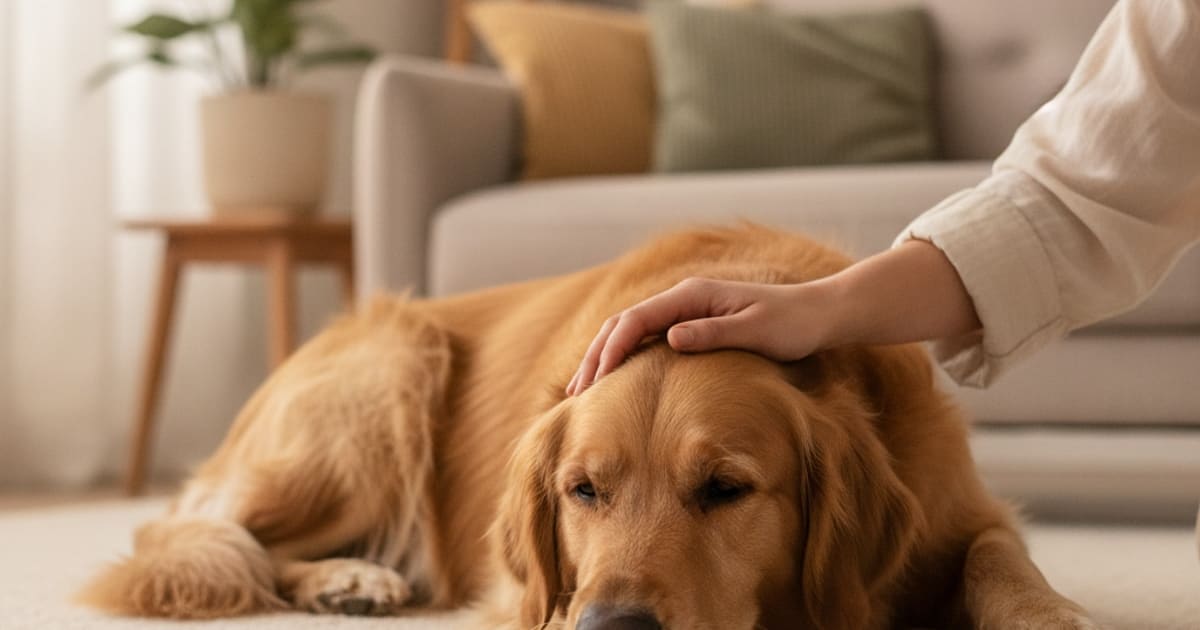
A dog that is blinking a lot is telling you the eye is uncomfortable, and that is a reason to book a veterinary exam rather than watch and wait. If the blinking began suddenly, involves one eye, or comes with squinting, redness, cloudiness, discharge or trembling, call your vet today, because the surface of the eye has to be examined with magnification and stain to see what is actually wrong.
Blinking itself is not a diagnosis. It is a reflex, and a hardworking one, which is why it is such a useful early warning.
What heavy blinking is telling you
The cornea, the clear dome at the front of the eye, is one of the most densely nerved tissues in the body. A speck of grit, a single stray lash, a shallow scratch: all of it registers as pain, and the lid closes to protect what hurts. Rapid or forced blinking has a name in veterinary medicine, blepharospasm, and it is one of the clearest pain signals a dog can give you about an eye.
Blinking also does a job. Each blink draws a thin film of tears across the cornea and sweeps debris toward the inner corner. If that tear film is thin, unstable or short of one of its layers, the surface dries between blinks, the eye feels gritty, and the dog blinks harder to try to fix it.
So heavy blinking narrows to a short list of possibilities: something sitting on or under the surface, something wrong with the tear film, something on the eyelid rubbing with every blink, inflammation inside the eye, or pressure building inside the eye. Light sensitivity belongs on that list too, because a sore eye finds ordinary daylight uncomfortable and squints against it.
Normal blinking is quick, even and easy to miss. The blinking worth acting on is slow, forced, incomplete, one-sided, or paired with the third eyelid sliding across the eye.
One eye, both eyes, or a sudden start
The pattern carries information your vet will want, so notice it before the appointment.
A dog blinking a lot in one eye points toward something local to that eye: a scratch on the cornea, a grass seed or plant awn tucked under a lid or behind the third eyelid, a lash growing inward, a small wound, a knock during rough play. One eye affected while the other looks completely normal deserves a same-day call, because damage to the cornea can deepen while you wait.
Blinking in both eyes suggests something the whole ocular surface is reacting to: dry eye, an airborne irritant such as smoke or dust, an allergy flare, inflammation of the conjunctiva, or an eyelid shape that affects both sides equally, such as lids that roll inward.
Blinking that starts suddenly raises suspicion of trauma, a foreign body, or a sudden rise in eye pressure. Blinking that has crept in over a longer stretch points more toward dry eye, an eyelid growth, or lashes that have been rubbing for a while. Either way, a vet exam may help find the cause, and results vary from dog to dog, which is exactly why guessing from a photo is no substitute for someone looking into the eye with the right instruments.
If something splashed into your dog's eye, a cleaning product, a garden chemical, sap from a plant, call your vet or an animal poison control service now.
What can sit behind a blinking eye
Eye signs rarely travel alone, and it helps to see where they sit among other canine conditions before you walk into the consult room. The table below is a map of what a vet is thinking through, not a checklist for sorting it out at home.
| What it can be | What else you might notice | Why a vet needs to look |
|---|---|---|
| Scratch or ulcer on the cornea | Squinting, watery eye, holding the lid shut, cloudiness, avoiding light | A stain highlights surface damage that is invisible to the naked eye |
| Foreign body such as a grass seed, sand or hair | Sudden onset, one eye, pawing, third eyelid raised | Material under the lid has to be found and removed by a vet; seeds can burrow |
| Dry eye | Thick sticky discharge, a dull looking surface, both eyes involved | Tear production is measured with a simple strip test |
| Eyelid and eyelash problems, including lids that roll inward | Blinking since a young age, tear staining, more frequent in some breeds | Needs magnification; some cases are a surgical question |
| Inflammation of the conjunctiva | Pink or red lining around the eye, discharge, swelling | The underlying cause changes the plan entirely |
| Raised pressure inside the eye | Cloudy or bluish cornea, a red eye, an eye that looks larger, a wide pupil, a quiet and withdrawn dog | Pressure is measured with an instrument; this is urgent |
| Inflammation inside the eye | Small pupil, redness, haze, marked light sensitivity | Can travel with illness elsewhere in the body, so the workup goes wider |
| A lump on the eyelid margin | A bump that drags across the eye with each blink | Any new lump should be checked by a vet, who can advise what testing it needs |
| Trauma to the eye or socket | Swelling, blood, asymmetry between the two sides | Emergency assessment |
| Weakness of the facial nerve | An incomplete blink, a drooping lip or ear on the same side | A neurological exam, because the eye may not be closing fully |
Blinking that should not wait until tomorrow
A dog that is blinking hard, squinting or holding an eye shut is in pain, and a painful eye is a same-day call to your veterinarian, not a wait-and-see.
Treat these as reasons to seek emergency care straight away:
- An eye held tightly closed that your dog will not open
- Cloudiness, haze or a blue tint across the clear part of the eye
- An eye that looks bigger, bulging, or sitting out of position
- Blood inside the eye, or a visible cut to the lid or surface
- A pupil that stays wide, or two pupils that no longer match
- Bumping into furniture, hesitating on stairs, or not tracking a moving hand
- Obvious pain: crying when the head is touched, hiding, refusing food
- A chemical, sap or foreign material that went into the eye
- Blinking alongside fever, vomiting, collapse or wobbliness
Sight is one of the few things in veterinary medicine where hours genuinely matter, and some causes of a sore eye are worsened by the wrong intervention. That is the reason this page carries no home steps: what you do before an exam can change what the vet is able to see and to offer.
When blinking comes with other signs
Blinking and shaking or trembling
A dog blinking a lot and shaking is giving you two pain signals at once. Trembling can come from pain anywhere, and eye pain is sharp, but shaking also turns up with fever, nausea, low blood sugar and neurological problems. The combination raises the urgency rather than explaining it, so treat it as a reason to be seen now rather than in a few days.
Squinting and holding the eye partly closed
A dog squinting and blinking a lot is bracing against light and against the movement of the lid itself. Squinting plus tearing plus a reluctance to be touched around the face is a classic picture of surface damage. Your vet will want to know when it started and whether your dog had been in long grass, around another animal, or near anything irritating.
Pawing, rubbing and dragging the face along the floor
Rubbing escalates the problem it is trying to relieve, and a paw or a carpet can turn a shallow injury into a deeper one. If your dog is going at the eye, phone the clinic and say so, because it changes how quickly they will want to see you and what protection they may fit at the visit.
An older dog blinking more than before
When an old dog blinks a lot, the change is still a change, and age is not an explanation on its own. Tear production can fall, lids can lose tone, growths can appear on the lid margin, and pressure problems inside the eye become more of a consideration with age. A dog who has started blinking differently in later life deserves the same exam a young dog would get.
What happens at the eye exam
Knowing the sequence makes the visit less daunting. Your vet takes a history first: when it started, one eye or both, any trauma, any sneezing or coughing, anything new in the environment. Then the lights go down, because many eye findings only show up in a darkened room with a focused beam.
From there, the exam can include magnified inspection of the lids, lashes and third eyelid, a dye that glows under blue light to reveal breaks in the corneal surface, a strip test that measures tear production, a measurement of pressure inside the eye, and a check of pupil responses and menace reflex to assess vision. If the picture is complicated, your vet may refer you to a veterinary ophthalmologist, who has instruments and training built specifically for this.
None of that can be reproduced at home, which is the whole argument for going in. Talk to your vet about what they found, what the options are, and which signs would mean coming back sooner.
Key Takeaways
- Heavy or forced blinking is a pain signal from the eye, not a quirk or a habit.
- Blinking in one eye points toward something local, such as a scratch or a seed under the lid; blinking in both points toward something affecting the whole surface, such as dry eye or an irritant.
- Sudden blinking after a walk, a scuffle or rough play should be treated as possible trauma or a foreign body.
- Squinting, cloudiness, a wide pupil, an enlarged eye, blood or bumping into things means emergency care now.
- Blinking together with shaking, fever or lethargy raises the urgency, because it suggests pain or illness beyond the eye alone.
- In an older dog, a new blinking pattern is still a new sign and needs the same exam.
- There are no home steps on this page on purpose: the wrong one can make a treatable surface injury worse.
Your vet owns the diagnosis
An eye that hurts is a narrow problem with a wide list of causes, and the gap between them closes only with a stain, a pressure reading and a pair of trained eyes behind magnification. Your veterinarian makes the diagnosis and sets the plan, including any medication and any follow-up schedule. Your job between now and then is simple: note when the blinking started, which eye, what else changed, and get your dog in front of a vet. Call your vet if the blinking continues or if you notice squinting, cloudiness, swelling, discharge or any change in how your dog is moving around the house.
For a wider look at which signs mean emergency care rather than a next-day appointment, see Dog Emergency Signs.
Frequently asked questions
- why is my dog blinking so much
- Heavy blinking means the eye is uncomfortable. The cause can be a scratch on the cornea, a grass seed under the lid, lashes rubbing, dry eye, inflammation of the conjunctiva, or raised pressure inside the eye. A vet exam with stain and magnification may help find the cause, so book an appointment rather than waiting.
- why is my dog blinking a lot
- Because something is irritating or hurting the eye surface, the eyelid, or the structures inside the eye. Blinking is a protective reflex that also spreads tears, so a dog blinks harder when the surface is damaged or drying out. Talk to your vet, since these causes look alike from the outside but need different plans.
- why does my dog blinking a lot
- Excessive blinking points to eye pain or irritation, and the next step is a veterinary exam rather than home guesswork. Your vet can look under the lids, stain the cornea to show damage, measure tear production and check pressure inside the eye. Call the clinic today if there is also squinting, redness or cloudiness.
- Why is my dog blinking a lot in one eye?
- One eye blinking while the other looks normal suggests something local to that eye: a corneal scratch, a plant awn or grass seed trapped under the lid or third eyelid, an inward-growing lash, or a knock. Damage to the cornea can deepen quickly, so a one-sided blink is a same-day veterinary call.
- What does it mean if my dog is blinking a lot and shaking?
- Blinking plus trembling is two pain signals at once, and shaking can also come from fever, nausea or a neurological problem. The combination makes the situation more urgent, not less. Seek veterinary care now and tell the clinic about both signs, along with anything else that changed in the last day.
- My dog started blinking a lot suddenly. Is that an emergency?
- Treat a sudden start as possible trauma, a foreign body or a rise in pressure inside the eye, and call your vet the same day. Go straight to emergency care if the eye is held shut, looks cloudy or enlarged, has blood in it, or your dog is bumping into things.
- Why is my dog squinting and blinking a lot?
- Squinting with blinking means light hurts and the lid movement itself hurts, which points toward damage or inflammation on the eye surface. Tearing, pawing and turning away from touch tend to go with it. This needs a veterinary exam promptly, because the cause cannot be identified without stain and magnification.
- Why does my old dog blink a lot?
- Age is not an explanation on its own. In older dogs, tear production can fall, eyelids can lose tone, growths can form on the lid margin, and pressure problems inside the eye become more of a consideration. Any new blinking pattern in a senior dog deserves the same full eye exam a young dog would get.
Educational content, not veterinary advice. Ask your vet about your dog.