Dog Licking Lips a Lot: Why Dogs Keep Licking Their Lips
A dog licking lips a lot is usually signalling nausea, mouth pain, something stuck in the mouth, or stress. Normal licking is brief and tied to food or grooming. Licking that is constant, sudden, or paired with drooling, vomiting or refusing food calls for a veterinary exam.
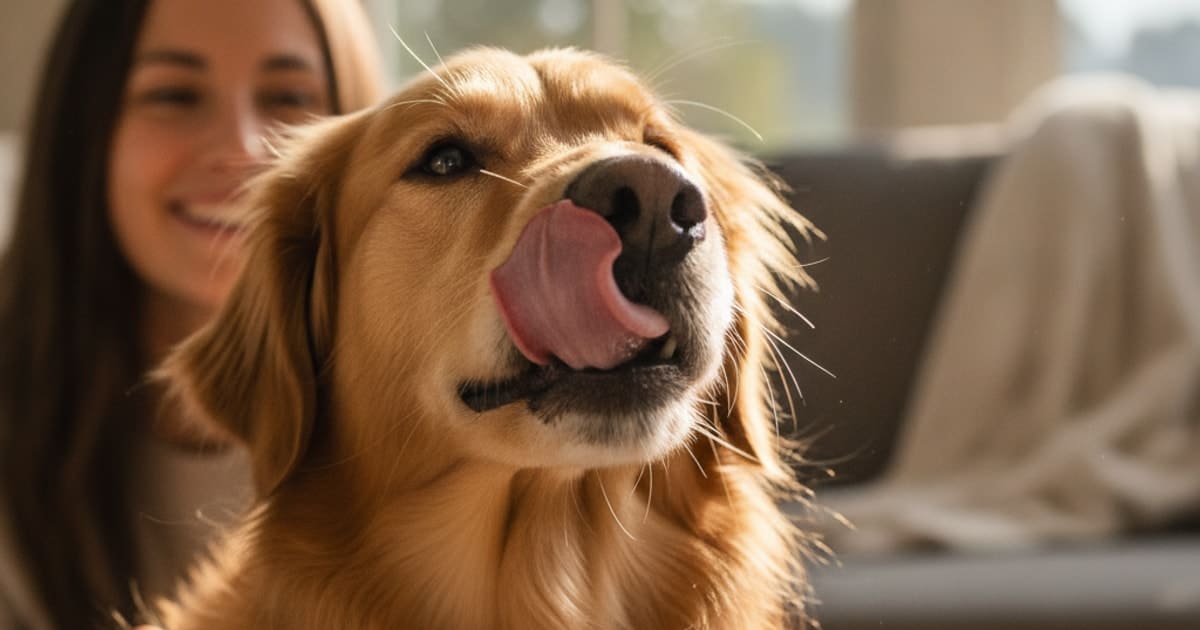
A dog that keeps licking its lips is usually saying one of four things: I feel sick, my mouth hurts, something is stuck, or I am uncomfortable with what is happening right now. If the licking started suddenly, will not settle, or comes with drooling, vomiting, trembling, pawing at the face or a refusal to eat, call your veterinarian today rather than waiting to see whether it passes.
Some lip licking is ordinary. Dogs lick after a meal, after a drink, while grooming themselves, when they catch an interesting smell, and as a social signal to another dog or to a person. What matters is the change. A dog that licks far more than it used to, licks in long uninterrupted stretches, or licks with other signs attached is giving you information worth acting on.
Ordinary licking versus the kind that needs a vet
Ordinary lip licking is short, has an obvious trigger, and stops on its own. Your dog finishes a meal and tidies up. You open a container in the kitchen and the licking starts, then ends when the lid goes back on. Those are not problems.
The licking that needs attention looks different. It carries on when nothing is happening. It repeats in bouts through the evening. It is paired with swallowing, with lip smacking sounds, with licking the air, the floor, the sofa or a wall. Many owners describe it as frantic or continuous, and that description is useful to your vet because it separates a passing reaction from an ongoing discomfort.
Lip licking that begins suddenly and will not stop is a symptom rather than a quirk, and it deserves a same-day call to your veterinarian.
When you call, be ready to say when it started, how long each bout lasts, what the dog was doing beforehand, whether anything else has changed about eating, drinking, toileting or energy, and whether the dog will let you look in its mouth. That short history often shapes the whole exam.
Nausea, reflux and the stomach reasons behind constant licking
Nausea is one of the frequent reasons a dog is licking lips constantly. Dogs do not retch the moment they feel sick. They produce extra saliva first, so the pattern you see is repeated swallowing, lip smacking, drooling, restlessness, grass eating, turning away from food, and sometimes a gurgling belly.
That nausea can come from a mild stomach upset after eating something it should not have, from reflux of acid into the oesophagus, from inflammation of the pancreas or the intestinal tract, from motion in the car, from a side effect of something your vet has prescribed, or from an illness elsewhere in the body such as the kidneys or liver making the dog feel unwell. It can also follow exposure to a toxic plant, household chemical, human medication or food that is not safe for dogs. If you suspect your dog has swallowed something toxic, contact your veterinarian or an animal poison control service straight away rather than watching and waiting.
One pattern is a true emergency. A dog that is licking, drooling and trying to vomit without bringing anything up, especially with a swollen or tight belly, pacing and obvious distress, needs emergency care immediately. Do not spend the evening deciding.
Mouth pain, dental disease and something stuck
The second large group of explanations sits inside the mouth. A fractured tooth, inflamed gums, an ulcer, a sore tongue, a growth, a burn from something hot or caustic, or a sting from an insect the dog snapped at will all drive repeated licking as the dog tries to soothe the area.
Foreign material is just as frequent. A splinter of bone or a sliver of stick can wedge across the roof of the mouth between the upper teeth. A grass awn can lodge in the gum or under the tongue. Thread or string can loop under the tongue, which is genuinely dangerous and needs a vet rather than a tug from you. Do not try to pull anything you can see free at home, because you can push it deeper or tear tissue.
Signs that point towards the mouth include pawing at the face, rubbing the muzzle along the floor or furniture, head shaking, chewing on one side only, dropping food, a sudden fussiness about hard food or toys, a noticeably bad smell, or saliva tinged pink. Any of those alongside the licking justifies an exam. A proper look at the back of the mouth usually needs sedation, because the area that hides problems is the area a wide awake dog will not let you reach.
Stress, appeasement and anxious licking
Lip licking is also a piece of canine body language. Dogs use a quick tongue flick to signal that they mean no harm and would like the pressure to ease. You will see it during hugs, during scolding, in the waiting room at the clinic, around a nervous or pushy dog, when a stranger leans over them, or when fireworks and storms start.
Anxious licking tends to travel with other signals: yawning out of context, turning the head away, showing the whites of the eyes, ears pinned back, a low or tucked tail, lowered body posture, and freezing. Read the whole dog rather than the tongue alone. If the licking appears only in specific situations and stops once the situation ends, the trigger is usually the thing to change.
There is one important caveat. Some dogs develop a repetitive pattern of licking lips, licking the air, or licking floors and surfaces, and this pattern can sit alongside gastrointestinal discomfort rather than being purely behavioural. That is a case for a medical workup before anyone labels it a behaviour problem. Talk to your vet about it instead of starting a training plan for something that may be a sore stomach.
When the licking starts suddenly, and what comes with it
Sudden escalation is the detail that changes urgency. A dog that was fine this morning and is licking continuously this afternoon has had something change, and the accompanying signs usually point to where.
Sudden licking with nothing else obvious
Watch closely, offer water, and keep food simple and light until you have spoken to your veterinarian. Check whether anything in the environment changed: a new chew, access to the bin, a walk through long grass, a visitor, a new cleaning product. If the licking is still going hours later, book an appointment rather than letting it run overnight.
Licking constantly and shaking
Trembling alongside constant licking raises the stakes. Shaking can accompany pain, fear, nausea, a drop in body temperature, a toxic exposure, or neurological activity. Combined with weakness, wobbliness, a glazed expression, collapse or a seizure, it is an emergency and your dog should be seen now.
Licking constantly and sneezing
Licking with sneezing, reverse sneezing, one-sided nasal discharge, or face rubbing suggests irritation in the nose or upper mouth. Inhaled grass seeds, plant material, allergens, dental disease reaching up towards the nasal passages, or a growth can all produce that combination. It warrants an exam, and tell your vet if the sneezing is in sharp fits rather than single sneezes.
Licking with drooling, vomiting or not eating
This trio is the clearest signal to stop guessing. Drooling with refusal of food, repeated vomiting, lethargy, or a hunched posture points to something that needs diagnosing, not managing at home.
| What you are seeing | What it can point towards | How soon to act |
|---|---|---|
| Brief licking after food, water or grooming | Ordinary behaviour | No action needed |
| Licking with repeated swallowing, drooling, grass eating | Nausea or reflux | Same-day call to your vet if it continues |
| Licking with pawing at the mouth, head shaking, dropping food | Dental pain or something lodged | Same-day exam |
| Licking only during handling, scolding, noise or strangers | Stress signalling | Ease the situation, raise it with your vet if frequent |
| Licking with unproductive retching, swollen belly, pacing | Possible abdominal emergency | Emergency care now |
| Licking with trembling, weakness or a known exposure | Possible toxin exposure or systemic illness | Emergency care now, or an animal poison control service |
| Licking with sneezing, nasal discharge or face rubbing | Nasal or oral irritation, possible foreign material | Veterinary exam |
What a vet visit looks like, and what treatment actually means
Searches for treatment of sudden excessive lip licking almost always arrive hoping for a step to take at home. The honest answer is that lip licking is a sign, not a diagnosis, and the treatment is whatever the underlying cause turns out to need. There is no home remedy that covers nausea, a fractured tooth, a lodged bone splinter and anxiety at the same time.
Expect your veterinarian to take a careful history, examine the mouth as far as an awake dog allows, feel the abdomen, check hydration and gum colour, and go from there. Depending on findings, that may extend to bloodwork, a urine sample, dental radiographs, imaging of the abdomen, sedation for a full oral exam, or a plan to work through diet and behaviour triggers. Timelines and recovery vary from dog to dog, and the treatment plan belongs to the vet who has examined your dog.
What you can usefully do is observe and record. A short phone video of a licking bout is often more informative than any description, and noting mealtimes, water intake, stool changes and the situations that set the licking off gives your veterinarian real material to work with.
Key takeaways
- Brief lip licking around food, water and grooming is normal; the change in frequency or intensity is what matters.
- Nausea, mouth pain, something lodged in the mouth, and stress account for a great many cases of constant licking.
- Licking with drooling, vomiting, refusing food, pawing at the face or trembling means a veterinary exam, not a wait-and-see approach.
- Unproductive retching with a swollen belly, collapse, weakness or suspected poisoning is an emergency.
- Repetitive licking of air, floors and surfaces can sit alongside stomach discomfort, so rule out medical causes before treating it as behaviour.
- There is no single at-home treatment for lip licking, because the right treatment depends entirely on the cause.
Your veterinarian owns the diagnosis and the plan. They are the only person who can look inside the mouth properly, feel the abdomen, run the tests that separate a sore tooth from a sore stomach, and decide what treatment is appropriate for your individual dog. Everything else, including your observations, your video clips and your notes on triggers, exists to make that veterinary assessment faster and more accurate.
For help judging which signs mean a same-day appointment and which mean emergency care tonight, read Dog Emergency Signs. Related topics worth understanding include canine nausea, dental disease, foreign bodies in the mouth and canine body language.
Frequently asked questions
- Why would dog keep licking lips?
- A dog usually keeps licking its lips because of nausea, pain or irritation inside the mouth, something lodged between the teeth or under the tongue, or stress. Brief licking around food is normal. Licking that is constant, new or paired with drooling, vomiting or refusing food needs a veterinary exam.
- Why my dog keep licking her lips?
- The frequent explanations are nausea or acid reflux, a dental problem such as a fractured tooth or inflamed gums, foreign material stuck in the mouth, or anxiety in a particular situation. Watch what else she does. Pawing at the face, drooling or turning away from food means book a vet appointment.
- Why does my dog keep on licking her lips?
- Repeated licking is a sign, not a diagnosis, and it points towards the stomach, the mouth or the dog's emotional state. Note when it happens, how long each bout lasts and what else changes. Take a short video of a bout and talk to your vet about what you have recorded.
- Why dog keeps licking lips?
- Because something feels wrong. Nausea makes dogs salivate and swallow before they ever vomit, mouth pain drives licking at the sore area, and a lodged stick splinter or grass awn causes near constant licking. Stress produces quick tongue flicks in specific situations. A veterinary exam separates these.
- When dog keeps licking lips, when should I worry?
- Worry when the licking is sudden, continuous, or comes with drooling, vomiting, refusing food, pawing at the mouth, bad breath, blood-tinged saliva, sneezing or trembling. Unproductive retching with a swollen belly, collapse, weakness or a suspected toxic exposure is an emergency and needs care straight away.
- Why dog licks lips constantly?
- Constant licking suggests ongoing discomfort rather than a passing reaction. Think nausea, reflux, dental disease, an oral ulcer or growth, a foreign object wedged in the mouth, or sustained anxiety. Some dogs also lick air, floors and surfaces, and that pattern can accompany stomach discomfort, so ask your vet.
- What does it mean if my dog is licking lips constantly and shaking?
- Licking combined with trembling raises urgency. Shaking can accompany pain, fear, nausea, a drop in body temperature, a toxic exposure or neurological activity. If your dog is also weak, wobbly, unusually quiet or has collapsed, treat it as an emergency and seek veterinary care immediately rather than waiting.
- Why is my dog licking lips constantly and sneezing?
- That combination points towards irritation in the nose or upper mouth. Inhaled grass seeds or plant material, allergens, dental disease affecting the nasal passages, or a growth can all produce it. One-sided nasal discharge, face rubbing or fits of sneezing make a veterinary exam more pressing.
- Is there a treatment for sudden excessive lip licking in dogs?
- Treatment depends entirely on the cause, so the first step is diagnosis rather than a remedy. Your veterinarian may examine the mouth under sedation, run bloodwork, take dental images or scan the abdomen. Do not attempt to remove anything from the mouth or medicate your dog yourself.
Educational content, not veterinary advice. Ask your vet about your dog.