Dog Chest Bleeding: Causes and When to See the Vet
Bleeding from a dog's chest or armpit that will not stop, or comes with pale gums, weakness or collapse, is an emergency: see a vet now. Any other bleeding there, including a scab that reopens or a lump that weeps, needs a same-day veterinary appointment.
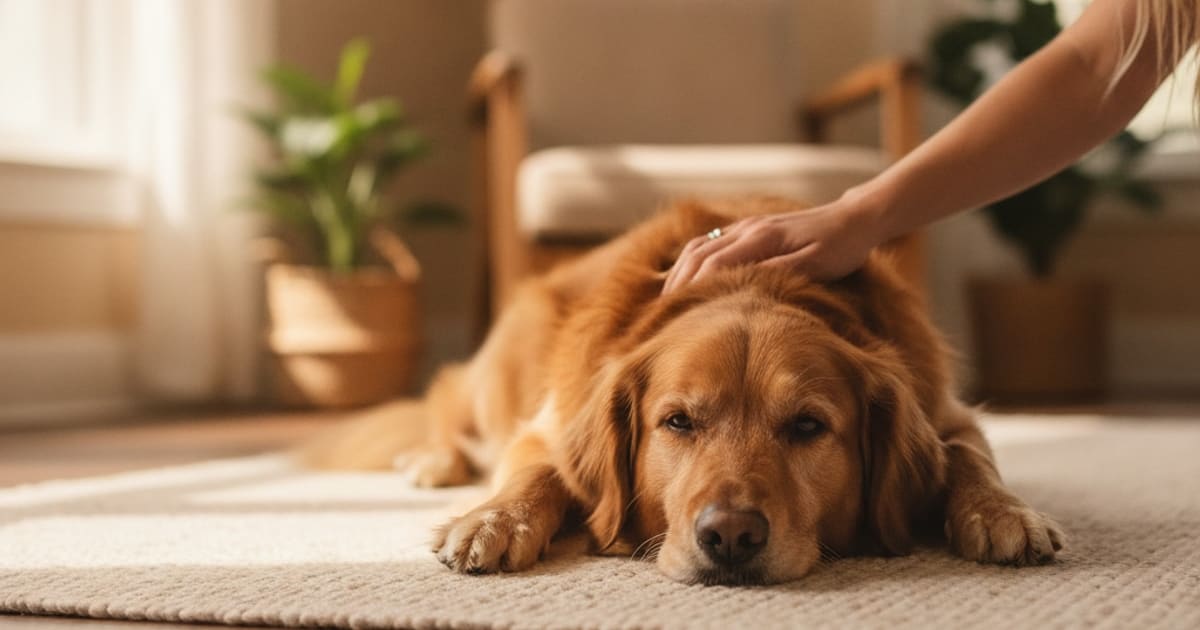
Bleeding from your dog's chest or armpit that will not stop, bleeding that is heavy or soaking through the fur, or bleeding alongside pale gums, weakness, fast breathing or collapse is an emergency: go to your veterinarian or an emergency clinic now. Any other bleeding on the chest or under a front leg, including a slow ooze, a cracked scab or a sore that keeps reopening, needs a same-day veterinary appointment rather than a wait-and-see week.
The skin across the chest and in the armpit sits over a joint that moves through its full range with every stride, folds on itself, and stays warm and damp. A small break in that skin can turn into an open wound quickly. Bleeding also tells you something has broken through the skin surface, and what sits underneath matters more than the blood you can see on the outside.
If you find any new lump or swelling on the chest, in the armpit or along the chest wall, have a veterinarian look at it. A vet may take a fine needle sample of the cells, which is the only way to find out what a lump is made of. A lump that is bleeding, ulcerated or weeping needs a same-day veterinary appointment, not a week of watching it at home. Do not squeeze it, do not pop it, do not clip into it, and do not try to remove anything yourself.
When bleeding under a front leg is an emergency
Head straight for emergency veterinary care if you see any of the following:
- Blood that keeps coming after several minutes, or that soaks through whatever is held against it
- Blood that spurts or pulses
- Pale, white or grey gums, wobbliness, weakness, collapse, fast breathing or a racing heart
- A wound deep enough that you can see muscle or fat, or any puncture over the chest wall
- A bite wound anywhere over the chest or armpit, since punctures can look tiny on the surface and travel much further in
- Bleeding from more than one place at once, or new bruising on the belly, the gums or inside the ear flaps, a pattern that can point to a clotting problem rather than a simple injury
- Blood coming up when your dog coughs, or breathing that looks laboured
Book a same-day appointment for an open wound under the armpit, a scab that cracks and bleeds whenever the leg swings, a raw red patch that is spreading, a sore that smells, a wound your dog will not leave alone, or any bleeding in a dog already on medication that affects clotting. If your dog is on a prescription, talk to your vet before you change anything about it.
Why the chest and armpit take so much punishment
The armpit, or axilla, is one of the thinnest-skinned parts of a dog's body. Fur cover there is sparse, the skin is loosely attached so it can stretch as the leg moves forward and back, and the two surfaces of the fold press against each other through every step. That combination of friction, warmth and trapped moisture is hard on skin.
The front of the chest takes a different kind of load. The breastbone is close to the surface, so dogs who lie on hard floors can rub that area bare. Harness straps cross the chest and run straight through the armpit crease, and a strap that sits slightly wrong, a harness left on for long stretches, or a harness worn over damp fur can wear a strip of skin down to raw.
There is also licking. A dog who can reach the area will lick it, and saliva keeps the skin wet, which keeps the surface broken down. That is one reason a small nick in this region can still be open and bleeding days later while a similar scrape on the back has already closed over.
What an open wound, scab or redness under the front leg can mean
Redness under both armpits, a scab that will not stay closed, or a weeping patch on the chest can all come from very different problems that look alike from the outside. Only a veterinary exam can sort them out, and a vet may need a sample of cells or fluid to do it.
| What you are seeing | What it can be | What the vet may do |
|---|---|---|
| Red, hot, itchy skin under both armpits, with licking or chewing | Allergic skin disease, or yeast and bacterial overgrowth in the warm fold | Skin cytology, a swab, a look for fleas or other triggers |
| A round, raw, weeping patch on the chest or shoulder that appeared fast | Surface skin infection from self-trauma | Clipping the area, cytology, a treatment plan to stop the cycle |
| A scab that cracks and bleeds every time the leg moves | A wound sitting over a mobile fold, kept open by friction, sometimes with something underneath it | Exam, possible imaging, possible sampling of the tissue |
| A bare or rubbed strip where a harness or collar sits | A pressure rub or friction sore | Wound assessment and a look at the fit of the gear |
| A firm or soft swelling in the armpit | A mass in or under the skin, or an enlarged lymph node | Fine needle sample, possibly a biopsy |
| A puncture, tear or bruising after a scuffle or a fall | Bite or trauma injury, which can be deeper than it looks | Sedated exploration of the wound, imaging, wound care |
| A dark, crusted sore that will not close | A wound needing a cause to be identified | Exam, sampling, culture if indicated |
Avoid home remedies on a bleeding or open area here. Ointments, powders, alcohol, hydrogen peroxide and human creams can make the skin surface worse and can make it harder for your vet to read what is going on. If the area is bleeding or open, the useful step is the appointment.
Lumps and swellings in the armpit
The armpit holds lymph nodes, so a swelling there can come from the nodes themselves or from the skin and tissue around them. Nothing you can feel with your fingers tells you what a lump is. Size does not tell you. How soft it feels does not tell you. Whether it moves under the skin does not tell you. Only cells seen under a microscope, from a fine needle sample or a biopsy, can answer that question, which is why any new lump belongs in front of a veterinarian.
A few details are worth noting before the visit, because they help your vet build the picture: when you first noticed it, whether it has changed shape, whether your dog reacts when the area is touched, and whether the leg on that side is moving normally. A lump that has started to bleed, ulcerate or weep has broken through the skin, and that moves the appointment to the same day.
If your dog has a history of skin problems or lumps elsewhere, you can read more background in the conditions library, but background reading is not a substitute for an exam. Bring the dog in.
Bleeding paws with limping, and bleeding in more than one place
A bleeding paw with a limp is its own problem and deserves a same-day appointment. Cut pads, torn or broken nails, grass seeds and glass or thorn fragments all bleed, and a dog will keep licking the area, which keeps it open. If your dog will not put the foot down at all, is crying out, or the foot is swelling, treat that as urgent and call the clinic on your way.
Sometimes a limp and a sore armpit appear together. A wound in the axilla can be uncomfortable enough that a dog shortens the stride on that side, and a dog who is already painful in a leg will lick and chew at the nearest reachable skin, which can be the chest or armpit. Your vet needs to see both the wound and the gait to work out which one came first.
Bleeding in more than one place at the same time deserves separate attention. Blood at the chest plus bleeding gums, a bloody nose, blood in urine or stool, or new pinpoint spots and bruising is a pattern that can point to a clotting problem, and that is an emergency visit, not a same-day one.
What to expect at the veterinary visit
Expect a full physical exam rather than a look at the wound alone. Your vet will check gum colour, heart rate, breathing and temperature, feel the lymph nodes, and look over the whole body for other sores, bruising or parasites.
From there, the plan depends on what the exam turns up. Clipping the hair around the area is standard, because a wound in this region cannot be assessed through matted, damp fur. Cytology, a swab, a skin scrape or a fine needle sample can be done during the visit. Deeper wounds, punctures over the chest and anything that could involve the chest wall may need imaging, sedation to explore the full depth, or surgical closure. Bloodwork and clotting tests come into it when bleeding does not match the size of the injury.
Your vet will also address the thing that keeps the area open, whether that is licking, a harness rubbing in the crease, or an underlying skin condition. Follow the plan you are given, including any protective collar, and go back if the area reopens. Call your vet if the bleeding continues, if the wound grows, if it starts to smell, or if your dog becomes quiet, off food or reluctant to use the leg.
Key Takeaways
- Bleeding that will not stop, heavy bleeding, pale gums, weakness or collapse means emergency veterinary care right now.
- Any other bleeding on the chest, the armpit or under a front leg is a same-day appointment.
- Any new lump or swelling should be checked by a vet, and a fine needle sample is the way to find out what it is. A lump that bleeds is seen the same day.
- Do not squeeze, pop, clip or try to remove anything at home, and skip ointments and home remedies on an open area.
- The armpit and chest are a friction and moisture zone, so harness fit, licking and skin conditions all feed into wounds that keep reopening.
- A bleeding paw with a limp needs a same-day visit, and a dog who will not bear weight needs urgent care.
- Bleeding or bruising in several places at once can point to a clotting problem and is an emergency.
Your veterinarian owns the diagnosis and the treatment plan for anything bleeding, open or lumpy on your dog's chest or under a front leg. An exam may help find the cause that a photo or a finger check never will, and the sooner the area is seen, the fewer complications there are to manage. If you are unsure how urgent something looks, talk to your vet and describe what you are seeing; results vary from dog to dog, and that call is worth making.
For a wider list of signs that mean a dog needs to be seen right away, read Dog Emergency Signs.
Frequently asked questions
- Why is my dog bleeding from the chest?
- Bleeding on the chest can come from a scrape or pressure rub where the breastbone contacts hard floors, a harness rub, a bite or puncture, a skin infection that has broken open, or a mass that has ulcerated. Heavy or non-stop bleeding, pale gums or weakness means emergency care now. Anything else needs a same-day appointment.
- What does an open wound under my dog's armpit mean?
- The armpit is thin-skinned, moves with every stride and traps moisture, so a wound there can stay open instead of closing. Causes include friction from a harness, self-trauma from licking, skin infection, a bite, or something sitting under the skin. Have a veterinarian examine it the same day rather than treating it yourself.
- Why is my dog red under the armpits?
- Redness in both armpits points to inflammation of the skin fold, which can come from allergic skin disease, yeast or bacterial overgrowth in the warm damp crease, flea bites, or constant licking. A vet exam with skin cytology may help identify what is driving it. Book a visit if the skin is raw, bleeding or spreading.
- My dog has a scab in the armpit that keeps cracking and bleeding. What should I do?
- Book a same-day veterinary appointment. A scab over a fold reopens every time the leg swings, and a wound that will not close can have an underlying cause such as infection, a foreign object or a mass. Do not pick at the scab, clip into it or apply creams before the exam.
- Is a mass under my dog's armpit something to worry about?
- Any new lump or swelling should be checked by a veterinarian. Nothing about how a lump feels, how big it is or how it moves tells you what it is. A fine needle sample of the cells is how that question gets answered. If the lump is bleeding, ulcerated or weeping, it needs a same-day appointment.
- My dog's paw is bleeding and he is limping. Is that an emergency?
- A bleeding paw with a limp needs a same-day veterinary visit. Cut pads, torn nails and embedded objects all bleed and keep reopening with licking. Treat it as urgent and call the clinic on your way in if your dog will not put the foot down at all, is crying out, or the foot is swelling.
- Can a harness cause bleeding under my dog's front legs?
- Yes. Harness straps cross the chest and run through the armpit crease, so a strap sitting slightly wrong, a harness worn over damp fur, or gear left on for long stretches can rub the skin raw. Have the wound examined, and ask your vet to look at the fit before the harness goes back on.
- Should I clean or bandage a bleeding chest wound at home?
- No. Ointments, powders, alcohol, hydrogen peroxide and human creams can damage the skin surface and make the area harder for your vet to assess, and a bandage over an armpit tends to slip and rub. Get the wound seen. Emergency signs such as non-stop bleeding, pale gums or collapse mean going in immediately.
- What will the vet do for a bleeding armpit wound?
- Expect a full physical exam, gum colour and heart rate checks, and a feel of the lymph nodes, then clipping of the hair so the area can be seen properly. Cytology, a swab or a fine needle sample can be taken during the visit. Deeper or puncture wounds may need imaging, sedation to explore, or surgical closure.
- My dog is bleeding from more than one place. What does that mean?
- Bleeding at the chest alongside bleeding gums, a bloody nose, blood in urine or stool, or new bruising and pinpoint spots can point to a clotting problem rather than a wound. That pattern is an emergency. Go to a veterinarian or emergency clinic straight away, and mention any medication your dog is taking.
Educational content, not veterinary advice. Ask your vet about your dog.