Dog Licking Paws Raw and Bleeding: Wound Care Steps
A dog licking paws raw and bleeding has an open wound that needs veterinary assessment, not a home remedy alone. Book an exam, keep the paw clean and dry, stop the licking with a recovery collar, and watch for swelling, odor, pus or limping, which mean same-day care.
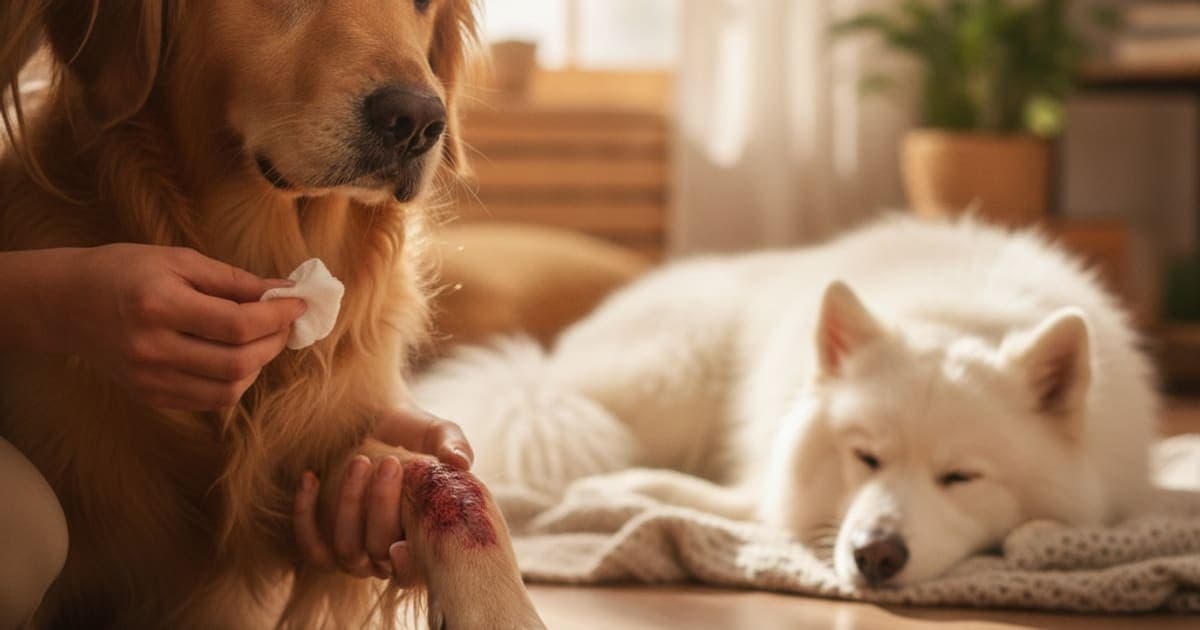
If your dog is licking a paw raw and bleeding, the skin barrier is already broken and the paw needs to be examined by a veterinarian, ideally within a day or two. Go sooner, same day, if the paw is swollen or hot, if there is pus or a sour smell, if your dog will not bear weight on it, if there is a wound you can see into, or if the bleeding does not settle with gentle pressure.
Bleeding, raw skin is not the problem on its own. It is the end point of something that started earlier: an itch, a pain, a foreign body, an infection, or anxiety. Cleaning and covering the paw buys time and comfort, but the licking will keep coming back until the underlying reason is identified. That is a diagnostic job, and it belongs with your vet.
Why a dog chews a paw until the skin breaks
Dogs lick paws for three broad reasons: it itches, it hurts, or it has become a habit the nervous system now reinforces. All three can end in the same raw, weeping patch.
Allergic and inflammatory skin disease is the most common driver of chronic paw licking. Environmental allergens such as pollens, grasses, dust mites and molds settle on the feet, which are in constant contact with the ground. Food-responsive skin disease can look identical. Allergic feet are usually itchy on both front paws, often worse between the toes, and the saliva staining turns the fur rust-brown long before the skin opens.
Secondary infection is what turns an itchy paw into a bleeding one. Once the skin is damp and inflamed, yeast and bacteria that normally live quietly on the surface overgrow. Infected paws smell distinctly musty or sour, feel greasy, and itch far more than the original allergy did. This is the step that most often takes a dog from mild licking to raw skin in a matter of days.
Something stuck in the paw. Grass seeds and awns, thorns, splinters, glass, and burrs work their way into the webbing and keep migrating. A dog with a foreign body usually licks one specific spot with sudden intensity, and there is often a small swollen lump or a draining hole between the toes.
Pain from elsewhere in the limb. Dogs will lick over an arthritic joint, a strained tendon, a cut pad, a torn nail, or a healing injury. The licking is a response to discomfort further up, which is why a nail bed problem or a sore wrist can present as a chewed-up foot.
Behavioral licking and lick granuloma. Repetitive licking of one area can become self-sustaining, producing a thickened, hairless, ulcerated plaque called an acral lick granuloma. Research suggests these lesions usually have a physical trigger underneath, such as pain or an itch, with the habit layered on top, so treating only the behavior rarely resolves them. Boredom, separation distress and stress can all deepen the cycle.
If you want a broader picture of how skin, joint and pain problems overlap in dogs, the conditions library is a useful place to orient yourself before your appointment.
When licking comes with a limp
A dog licking a paw excessively and limping is a different conversation from a dog that just licks. Limping tells you something structural or painful is involved, not simply itchy skin.
The common explanations:
- A foreign body driven deep into the webbing or pad
- A torn or broken nail, or an infected nail bed
- A cut, burn or abrasion on the pad, including thermal burns from hot pavement and chemical burns from ice melt
- A deep skin infection or abscess that is now painful to stand on
- An insect sting or bite in the foot
- Joint or soft tissue pain in the toes, wrist, elbow or shoulder, with licking directed at the paw
A dog licking a paw raw and limping should be seen promptly rather than monitored for a week. Lameness narrows the list of likely causes considerably, and several of them, including migrating grass awns and nail bed infections, get harder and more expensive to resolve the longer they sit. If the limp appeared suddenly, if the toe looks crooked, or if your dog cries when you handle the foot, treat it as same-day care.
Safe wound care at home before the appointment
Home care here has one job: keep the wound clean, keep the dog off it, and avoid making the skin worse before a vet can see what is actually going on.
Start by stopping the bleeding. Apply gentle, steady pressure with a clean gauze pad or cloth for several minutes without lifting to peek. Most minor paw bleeding settles this way. If blood soaks through, keeps flowing, or comes from a torn nail at the quick, go in rather than keep pressing.
Then rinse. Lukewarm water or sterile saline, poured or squeezed gently over the area, removes grit and debris without damaging tissue. Pat dry carefully, especially between the toes, because trapped moisture is exactly what yeast thrives in.
Stop the licking next. A properly fitted recovery collar is the single most useful thing you can do for a raw paw, because no treatment, prescription or otherwise, can work faster than a determined tongue can undo it. Soft collars, inflatable collars and the classic plastic cone all work if the dog genuinely cannot reach the foot. Half-measures fail.
This table covers the home remedies owners most often reach for when a dog is chewing paws raw, and what they actually do to broken skin.
| What owners try | What it does to raw, bleeding skin | Better approach |
|---|---|---|
| Hydrogen peroxide or rubbing alcohol | Stings sharply and damages the fragile new tissue trying to close the wound | Plain lukewarm water or saline, or an antiseptic rinse your vet recommends |
| Apple cider vinegar soaks | Acid on split, open skin burns and often triggers more frantic licking | Keep vinegar rinses for intact, yeasty skin only, and ask first |
| Tea tree oil and other essential oils | Irritating to dog skin and potentially toxic when licked off | Skip entirely |
| Human antibiotic ointment | Licked off within minutes, can upset the stomach, and hides the wound from view | Block access to the paw and use what your vet prescribes |
| Coconut oil | Soothing on dry, intact pads, but on an open wound it traps debris and invites licking | Reserve for cracked pads once the skin has closed |
| A sock or bootie worn all day | Traps warmth and moisture, which is what bacteria and yeast want | Short, supervised use outdoors, then let the foot air out |
| Letting the dog lick it clean | Saliva keeps tissue wet and macerated and reopens scabs | A recovery collar, consistently |
If the paw is simply itchy and the skin is still intact, a cool rinse after walks and thorough drying between the toes is reasonable first aid. Once there is blood, a home remedy is no longer the right tool, and you should talk to your vet before applying anything medicated.
Signs the paw needs same-day veterinary care
Some presentations should not wait for a routine slot. Head in promptly if you see:
- Bleeding that does not stop with a few minutes of pressure
- Swelling that extends up past the toes into the foot or leg
- Heat, throbbing, or a soft fluctuant lump suggesting an abscess
- Pus, a yellow or green discharge, or a strong sour or musty odor
- Refusal to bear weight, or a limp that worsens
- A visible puncture, a draining tract, or anything protruding from the webbing
- Lethargy, fever, loss of appetite, or shaking
- A thickened, ulcerated plaque that has been building for weeks
- Any wound in a dog with diabetes, a suppressed immune system, or a known clotting disorder
These signs point toward infection spreading into deeper tissue, a retained foreign body, or a lesion that needs sampling rather than soaking.
Breaking the lick cycle so the skin can close
Some of that is genuinely useful as supportive care. None of it substitutes for finding out which problem you are supporting.
A few patterns are worth checking yourself and reporting at the appointment.
Licking concentrated between the toes points toward allergy, yeast or bacterial overgrowth, interdigital cysts, or a foreign body in the webbing. Spread the toes apart in good light and look for redness, moisture, a lump, or a tiny weeping hole.
Licking that started right after grooming often involves clipper irritation, a close nail trim that caught the quick, a shampoo or conditioner the skin reacted to, or dampness left between the toes after a bath. Clipper rash and post-bath yeast both show up within a day or two. Mention the grooming date to your vet, because it narrows the list quickly.
Seasonal licking that worsens in spring or late summer leans environmental. Year-round licking that never fully clears is more likely food-responsive disease, chronic infection, or pain.
Whatever the trigger, recovery usually needs three things running at once: the underlying cause addressed, any secondary infection treated, and physical access to the paw blocked until the skin is intact. Pull out any one of those and the wound reopens. Results vary from dog to dog, and a plan that resolves one dog's feet in a couple of weeks may need months of adjustment in another.
Key Takeaways
- Raw, bleeding paws mean the skin barrier has failed, and secondary infection is usually already involved.
- Book a veterinary exam rather than cycling through home remedies, and go same day for swelling, pus, odor, heat, or non-weight-bearing lameness.
- Licking plus limping suggests a foreign body, nail injury, pad wound, abscess or joint pain, and warrants prompt attention.
- Rinse with lukewarm water or saline only. Hydrogen peroxide, alcohol, vinegar and essential oils damage open skin.
- A recovery collar that actually prevents access is non-negotiable while the wound closes.
- Between-the-toes licking, post-grooming licking and seasonal licking each point toward different causes, so note the pattern before your appointment.
For related reading, see Dog Itchy Paws Home Remedy, Dog Wound Care at Home, Dog Paw Care in Winter, Dog Licking Top of Paw, Should I Worry If My Dog Is Licking a Paw Constantly? and What Can I Give a Dog That Is Licking a Paw Constantly?.
A raw, bleeding paw is a diagnosis problem before it is a care problem. Your veterinarian owns that diagnosis: the cytology that confirms yeast or bacteria, the exam that finds the grass awn, the imaging that explains the limp, and the treatment plan that follows. Everything you do at home, the rinsing, the drying, the collar, the dry bedding, the patience, works inside the space that proper veterinary care creates. Make the appointment, take photos of the paw before you clean it, and bring your notes on when the licking started and what changed.
Frequently asked questions
- My dog licked his paw raw overnight. Is that an emergency?
- It depends on the paw. If there is active bleeding you cannot stop with gentle pressure, visible swelling up the leg, pus, a strong odor, or your dog will not put weight on the foot, treat it as same-day care. If the skin is raw but the dog is comfortable and weight-bearing, clean it gently, fit a recovery collar, and book an appointment within a day or two.
- What home remedy is safe for a dog licking a paw raw?
- Once the skin is open and bleeding, the safest home care is lukewarm water or sterile saline to rinse away debris, careful drying between the toes, and a recovery collar to block licking. Hydrogen peroxide, rubbing alcohol, apple cider vinegar and essential oils all damage raw tissue. Talk to your vet before applying any medicated or topical product.
- Why is my dog licking raw between the toes specifically?
- The webbing between the toes is a warm, humid pocket where allergens collect and where yeast and bacteria overgrow easily. It is also the most common landing spot for grass awns, thorns and splinters, and the usual site for interdigital cysts. Spread the toes in good light and look for redness, moisture, a lump or a small draining hole, then report what you see.
- My dog started licking a paw raw after grooming. What happened?
- Common post-grooming triggers include clipper irritation on closely shaved skin, a nail trimmed into the quick, a reaction to shampoo or conditioner, and moisture left between the toes after a bath that encourages yeast. These usually show up within a day or two. Mention the grooming date at your appointment, because it narrows the list of likely causes quickly.
- Does paw licking with limping always mean an injury?
- Not always, but limping raises the stakes. It commonly points to a foreign body, a torn or infected nail, a cut or burned pad, an abscess, a sting, or pain in the toes, wrist or elbow. Because several of those get harder to treat the longer they sit, a dog that is licking a paw and limping should be seen promptly rather than monitored.
- Will a raw paw heal on its own if I just leave it alone?
- Rarely, because the dog does not leave it alone. Saliva keeps the tissue wet, reopens scabs and feeds the bacterial and yeast overgrowth that made it itch in the first place. Healing needs the underlying cause addressed, any infection treated, and the paw physically protected from licking at the same time. Results vary from dog to dog.
- Is it safe to put a sock or bootie on a raw paw?
- Short, supervised use for walks can keep dirt out, but a sock worn all day traps heat and moisture, which is exactly what yeast and bacteria want, and it hides the wound from view. A properly fitted recovery collar that genuinely prevents access is usually a better choice while the skin closes.
- Can I give my dog an over-the-counter antihistamine for itchy paws?
- Do not start anything without guidance. Antihistamines help some dogs with mild itch and do very little for others, dosing is weight dependent, and some human products contain ingredients that are dangerous for dogs. Talk to your vet first, especially if your dog is already on medication or has an open, bleeding wound.
Educational content, not veterinary advice. Ask your vet about your dog.