Dog Chewing Tail Till It Bleeds: What to Do Now
A dog chewing its tail raw or until it bleeds usually has an underlying itch, pain or infection driving the behaviour, not a bad habit. Book a vet visit, because broken skin can get infected fast. A cone and a diagnosis together break the cycle.
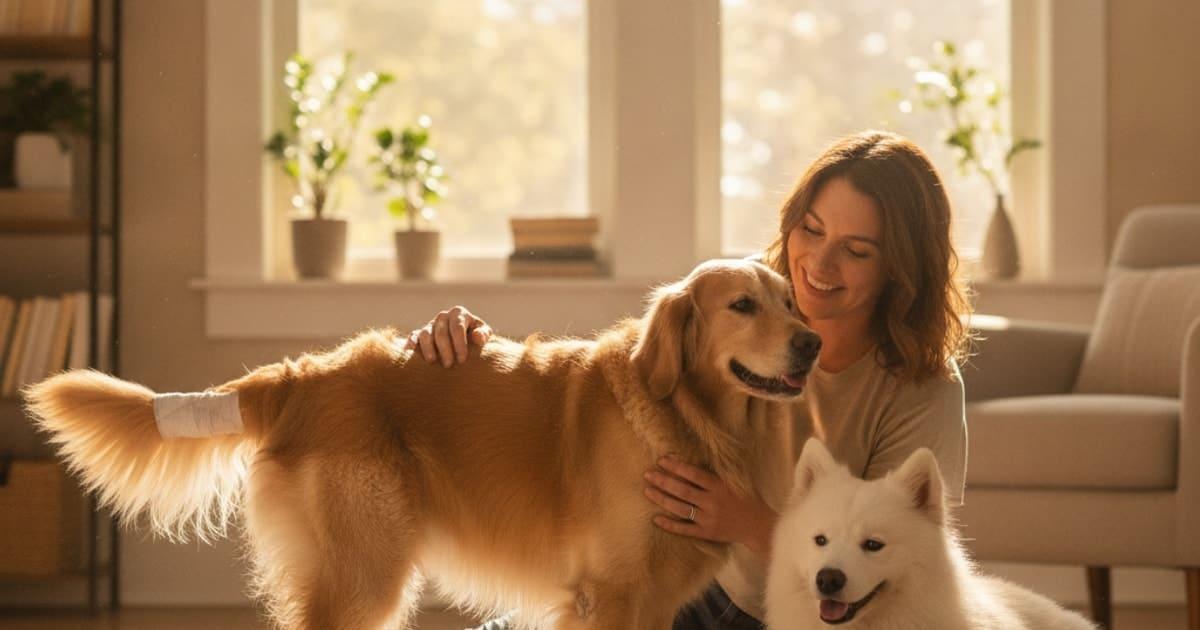
A dog chewing their tail raw is responding to something they can feel: an itch, a pain, a parasite, or an infection in the skin underneath. If the skin is already broken, weeping or bleeding, book a veterinary appointment, and if your dog has chewed down to exposed tissue or bone, treat that as an emergency and go now rather than waiting for a routine slot.
Tail chewing is a symptom, not a diagnosis. Dogs do not usually chew themselves raw out of boredom alone, and the ones who do almost always started because something itched or hurt first. Once the skin breaks, the wound itself itches and stings, which drives more chewing, which makes the wound bigger. That self-feeding loop is why a tail can go from a bit of missing fur to a raw, bleeding patch in a single afternoon.
What a raw or bleeding tail is actually telling you
Broken skin on a tail is a wound, and it behaves differently from a wound anywhere else on the body. The tail is thin, poorly padded, constantly moving, and sits close to the floor, the bedding and the dog's own mouth. It is one of the hardest areas on a dog to keep clean, dry and undisturbed.
What you are likely looking at falls into a few patterns. Fur chewed off with pink but intact skin underneath suggests the problem has been building for days or weeks. A wet, red, hot, foul-smelling patch that appeared fast is often acute moist dermatitis, commonly called a hot spot, where bacteria have taken hold in skin the dog has traumatised. Pinpoint scabs with crusting can point to parasites. A wound concentrated right at the tail tip has its own short list of causes, including repeated knocks against hard surfaces and poor circulation at the very end of the tail.
A raw or bleeding tail will not heal while your dog keeps reopening it, so blocking access to the tail and finding the underlying cause have to happen at the same time.
Tail chewing overlaps with a number of common canine conditions, which is exactly why guessing rarely works. Two dogs with identical looking wounds can need completely different treatment.
The most common reasons dogs chew the tail raw
Here are the causes vets look at most often, and the clues that tend to go with each one. This is to help you describe things accurately at the appointment, not to diagnose at home.
| Possible cause | Typical clues |
|---|---|
| Fleas and flea allergy dermatitis | Chewing focused at the tail base and rump, flea dirt in the coat, worse in warm months, other pets scratching too |
| Anal sac problems | Scooting, licking under the tail, strong odour, swelling or discharge beside the anus, sudden onset |
| Environmental or food allergies | Itchy paws, ears, belly and face as well as the tail, recurring year after year or year round |
| Skin infection, bacterial or yeast | Odour, greasy or crusty skin, redness that spreads beyond the chewed area |
| Mites or other parasites | Intense itch, crusting at the margins, sometimes other family pets affected |
| Pain in the tail, spine or hips | Chewing one spot repeatedly, flinching when the tail base is touched, reluctance to sit or jump |
| Tail injury, including a door strike or happy tail | A split or bleeding tail tip, blood spatter on walls, a wagging tail that keeps reopening the wound |
| Stress, frustration or compulsive licking | Starts when alone or at night, often on a limb or tail tip, sometimes persists after the original trigger is gone |
Some of these sit together. Research suggests that itch and pain travel along overlapping nerve pathways, which is part of why a painful area can feel maddeningly itchy and why a dog with sore hips may focus on the tail base. A dog who started chewing because of fleas can keep chewing out of habit long after the fleas are gone. Results vary from dog to dog, and the only way to separate the threads is a proper examination.
If your dog is chewing tail hair off without breaking the skin yet, that is the easiest version of this problem to solve. Treat it as an early warning and get it looked at before it becomes a wound.
Breaking the itch, lick and chew loop
Until your appointment, your single most useful job is making the tail physically unreachable. This is not optional. A dog with a raw tail and free access to it will undo any treatment within hours.
Barrier options that work:
- A rigid plastic cone that extends past the nose. For tails specifically, the cone needs to be long enough that the dog cannot curl around and reach the tip. Many dogs can reach their tail in a cone that is sized for an ear problem.
- Inflatable or soft collars are gentler but often fail for tail wounds, because they allow more bending than you expect. Test it under supervision before trusting it overnight.
- A recovery suit or bodysuit can cover the tail base region on some body shapes, though it rarely protects the tip.
- Tail-specific protectors and padded sleeves exist, but a poorly fitted wrap can cut off circulation to the tail, which is a serious injury in itself. Ask your vet to show you how, or let the clinic do the bandaging.
Things to avoid:
- Human antibiotic ointments, steroid creams and antiseptics are not automatically safe, and anything you apply will be licked. Ask before you put anything on broken skin.
- Bitter anti-chew sprays are designed for furniture, not open wounds. On raw skin they can sting badly.
- Shaving or scrubbing a hot spot at home. Clipping around a wound is genuinely useful, but it hurts, and a dog in pain may bite.
- Hydrogen peroxide, which damages the tissue you want to recover.
Keep the area dry, keep bedding clean, and check the wound at least twice a day in good light. Take photos each morning so you can show the clinic whether it is improving or spreading. If your dog is chewing the tail raw mainly at night, the cone stays on at night. That is usually when the damage is done.
When a chewed tail is an emergency
Some tail wounds can wait for a next-available appointment. Others cannot. Go to emergency care if you see any of the following:
- Bleeding you cannot stop with gentle pressure.
- Exposed bone, tendon or deep tissue. A dog who has chewed the tail to the bone needs surgical assessment, and in some cases partial amputation is the kindest outcome for a tail tip that cannot be saved.
- A rapidly spreading red, hot, swollen area, especially with a bad smell or discharge.
- Fever, shaking, refusing food, hiding, or any sudden change in how your dog is behaving.
- Maggots or visible fly strike in the wound, which escalates fast in warm weather.
- A tail that is cold, discoloured, limp or losing sensation, which can suggest circulation or nerve involvement.
- Frantic, non-stop chewing that you cannot interrupt, which usually means severe pain or itch that needs prescription relief.
If you are unsure how urgent your situation is, it is better to phone the clinic and be told it can wait than to wait and be wrong.
Senior dogs and tail tip wounds
A senior dog chewing their tail until it bleeds deserves a more careful workup, not a quicker one. Older dogs are more likely to have arthritis in the lower spine, hips or tail base, and pain referred to that region can present as licking and chewing. They are also more prone to skin masses, thinner skin, slower wound closure, reduced grooming ability, and changes in continence that leave the area under the tail damp and irritated.
Cognitive change matters too. A dog whose sleep and routine have shifted with age may develop repetitive behaviours that look compulsive. That still needs a physical exam first, because assuming a behavioural cause and missing a painful one is a common and costly mistake. Any new lump near the tail should be examined by your vet, and only a sample taken by the clinic can tell you what it is.
Daily management while the skin recovers
Once you have a diagnosis and a plan, consistency does most of the work.
- Give every prescribed medication for the full course, including the itch relief. Stopping early because the dog seems comfortable is the fastest route back to a raw tail. Never stop or adjust anything your vet prescribed without speaking to them first.
- Keep flea and parasite prevention running all year, for every pet in the household, even if fleas were not the original cause.
- Leave the cone on for as long as the clinic advises, not until the wound looks better. Looking better and being healed are different stages.
- Keep a short daily note of what the tail looks like and when the chewing happens. Patterns around mealtimes, walks, visitors or being left alone are genuinely useful information.
- Add low-effort enrichment such as sniffing walks, chew-appropriate items and short training sessions, which can take pressure off a dog who chews when under-stimulated.
- Book the recheck. Skin problems relapse quietly, and the recheck is where a partially treated infection gets caught.
Key Takeaways
- A dog chewing their tail raw or until it bleeds has a physical trigger in most cases: fleas, allergies, anal sac problems, infection, parasites or pain.
- Broken skin on a tail is a wound and needs veterinary attention, not a home remedy.
- Exposed bone, uncontrolled bleeding, fever, foul-smelling discharge or maggots mean emergency care now.
- Barrier control with a correctly sized cone is what stops the itch, lick and chew loop from undoing treatment.
- Do not apply human creams, antiseptics or bitter sprays to raw skin without asking first.
- Senior dogs need pain and lumps ruled out before anyone calls the behaviour compulsive.
- Finish the full medication course and attend the recheck, because relapse is common.
Tail chewing is one of those problems where the answer is rarely obvious from the outside and almost always obvious after an exam, a skin check and the right tests. Your vet owns the diagnosis and the treatment plan; everything you do at home, from the cone to the clean bedding to the daily photos, exists to protect that plan while the skin closes. Talk to your vet about what you are seeing, bring your notes, and ask what the wound should look like in a week so you know whether it is on track.
Related reading: How to Stop a Dog From Destructive Chewing and Dog Emergency Signs.
Frequently asked questions
- Why is my dog chewing tail raw?
- Most dogs chewing their tail raw are reacting to a physical trigger: fleas or flea allergy, anal sac problems, environmental or food allergies, a skin infection, mites, or pain in the tail, hips or lower spine. Broken skin then itches and stings, which drives more chewing. A vet exam identifies the cause.
- How to stop dog from chewing its tail?
- Block access first with a correctly sized cone that the dog cannot curl around, then get the underlying cause diagnosed and treated. Keep the area clean and dry, finish every prescribed medication, maintain year-round flea prevention, and add enrichment. Barrier control alone stops damage but does not fix the trigger.
- My dog chewed his tail to the bone. What do I do?
- Go to emergency veterinary care immediately. Exposed bone or deep tissue is a surgical problem, carries a high infection risk, and in some cases the end of the tail cannot be saved and partial amputation is the kindest option. Do not bandage tightly at home before you go.
- Can I put Neosporin on my dog's raw tail?
- Ask your vet before applying anything. Human ointments, steroid creams and antiseptics are not automatically safe on dogs, anything on the tail will be licked, and products like hydrogen peroxide damage recovering tissue. Your clinic can recommend something appropriate for an open wound in that location.
- Why is my senior dog chewing tail until it bleeds?
- Older dogs are more likely to have arthritis in the hips, lower spine or tail base, skin masses, thinner skin, and continence changes that leave the area damp. Repetitive behaviour linked to cognitive change is possible too, but pain and lumps should be ruled out by a vet first.
- Is a dog chewing its tail a sign of worms?
- Scooting and licking under the tail are more often caused by full or infected anal sacs than by worms, though tapeworm segments can cause irritation around the rear. A vet can check the anal sacs and run a faecal test, which separates the two quickly.
- Why is my dog chewing the tail hair off without any wound?
- Fur loss with intact skin usually means the itch has been building for a while, commonly from fleas, allergies or low-grade skin infection. This is the easiest stage to treat, so book an appointment before the skin breaks. Results vary from dog to dog, but earlier intervention is consistently simpler.
- Will a cone alone fix a tail my dog keeps chewing raw?
- No. A cone stops further damage and lets the wound close, but it does nothing about the itch, pain or infection underneath. Remove the cone without treating the cause and most dogs resume chewing. Use the cone as protection while the diagnosis and treatment plan do the real work.
- Why does my dog chew the tail tip specifically?
- Tail tip wounds often start with repeated knocks against hard surfaces from enthusiastic wagging, a split or scab that keeps reopening, or reduced circulation at the very end of the tail. Compulsive licking also tends to focus on extremities. Have the tip examined rather than wrapping it yourself.
Educational content, not veterinary advice. Ask your vet about your dog.