Dog Diarrhea After Eating: Why and When to See a Vet
Dog diarrhea after eating can come from something your dog ate, a food change, parasites, infection or a gut problem. Go to an emergency vet now for blood, repeated vomiting, a painful belly or weakness, and book a same-day vet visit for anything else.
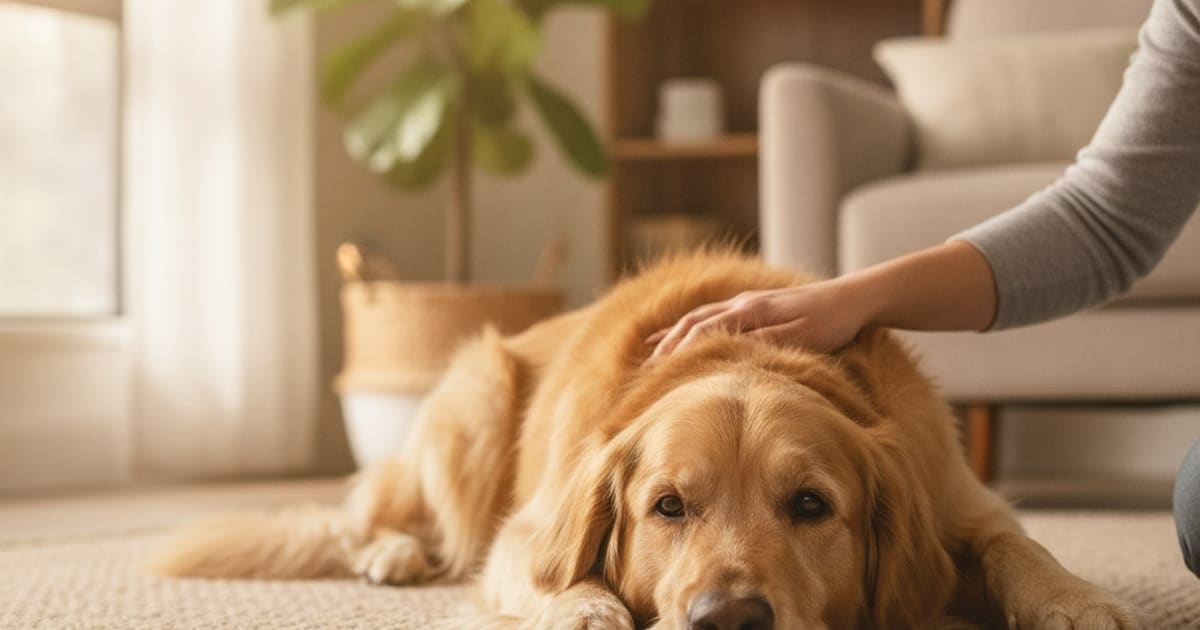
Dog diarrhea after eating is a reason to see a vet, because it can point to something your dog ate, a food change, parasites, infection or a gut problem. Go to an emergency vet now if there is blood in the diarrhea, your dog is vomiting again and again, the belly is swollen or painful, or your dog is weak or collapsing; otherwise book a same-day appointment. If your dog may have eaten something toxic, call your vet or an animal poison control service now. A vet exam may help find the cause. This page covers when to go to the vet now, what can cause diarrhea after eating, what your vet may do and what to tell your vet.
When to go to the vet now
Go to an emergency vet now if your dog has diarrhea after eating along with any of these:
- Blood in the diarrhea
- Repeated vomiting, or retching with nothing coming up
- A swollen, tight or painful belly
- Weakness, collapse or trouble standing
- Shaking, tremors or a seizure
- A puppy with diarrhea, above all one that is quiet or not eating
- Any chance your dog ate something toxic, a bone or an object such as a toy or wrapper
For a possible toxin, call your vet or an animal poison control service now. For more on urgent signs, read Dog emergency signs.
What can cause diarrhea after eating
When a dog gets diarrhea after eating, the cause can be the meal itself, something else your dog swallowed, or a problem in the gut that a meal brings to the surface. When a dog eats, the stomach stretches, and this can set off a reflex that pushes the bowel to move. That is why diarrhea can show up soon after a meal even when the food in the bowl is not the cause. Your vet looks at the whole picture, not only the timing, to work out what is going on.
There is no set answer to how long it takes for a dog to have diarrhea after eating. It can start soon after a meal, or it can come some time later, once food has moved further through the gut. How fast a dog gets diarrhea after eating does not show the cause on its own, so think of the timing as a detail for your vet rather than a clue to sort out yourself. Note when your dog last ate, when the diarrhea started and what your dog may have eaten in between.
Eating something it should not have is one possibility your vet will ask about. This can mean garbage, spoiled food, food from the table, something picked up on a walk, animal droppings or a dead animal. If your dog has diarrhea after eating something bad, call your vet now. There is no set length of time diarrhea lasts after eating something bad, and it is not something to sit out at home: your vet can check for infection, a toxin or something stuck in the gut, and can give fluids if your dog is losing too much water.
Food poisoning in dogs can come from spoiled or moldy food, raw or undercooked meat, or food that has been left out too long. If you think your dog has food poisoning or ate something toxic, call your vet or an animal poison control service now. Signs of food poisoning in a dog can include vomiting, diarrhea, a painful belly, drooling, weakness, shaking or a seizure, and any of these is a reason to go to an emergency vet now.
Some foods and substances are toxic to dogs and can cause diarrhea along with other signs. Chocolate, grapes, raisins, onion, garlic, xylitol, alcohol, some plants and some household products are among them, and if your dog may have eaten any of these, call your vet or an animal poison control service now.
Bones, corn cobs, toys, wrappers, socks and other objects can scrape or irritate the gut, or block it. If your dog swallowed a bone or a piece of one, or any object, call your vet now.
Eating a large amount at once, for example after getting into the food bag, can upset the gut as well. In a large dog, a big meal can also come with bloat, so a swollen belly or retching with nothing coming up is a reason to go to an emergency vet now. Milk and other dairy foods can cause diarrhea in some dogs that do not digest them well, and your vet may ask about any dairy your dog has had.
A sudden change in diet is another possibility your vet may look at. A new food, a new brand, new snacks or rich table scraps can upset the gut, and your dog may have diarrhea after eating the new food. Fatty food can also be linked to inflammation of the pancreas, a painful problem your vet can check for with an exam and blood tests. Talk to your vet before you change your dog's food; your vet can tell you how a new diet fits your dog and how to bring it in.
If your dog keeps having diarrhea after eating, your vet may look for causes that last longer than a single upset. These can include a food allergy or a food intolerance, where the gut reacts to an ingredient; inflammation of the bowel; and a problem with how the pancreas makes the enzymes that break down food, which can mean food passes through without being digested well. Parasites such as worms and giardia can also cause diarrhea that keeps coming back.
Bacterial and viral infections can cause diarrhea too. In a puppy, a viral infection such as parvovirus is a reason to go to an emergency vet now, which is why a puppy with diarrhea is on the list above. Stress, travel, boarding or a move to a new home can upset the gut. Illness outside the gut, such as liver or kidney disease, can show up as diarrhea, and a medicine your dog takes may play a part.
A dog with diarrhea after eating may still have a good appetite and seem bright. Eating well does not rule out a problem, because parasites, a food reaction or an early infection can all cause diarrhea in a dog that is still eating. Book a same-day appointment so your vet can look for the cause.
Diarrhea can also come after a time when your dog was not eating, such as after being unwell, after stress or after skipped meals. A dog that has gone off food and has diarrhea is unwell, and the two together are a reason to call your vet today. A puppy or a small dog that is not eating and has diarrhea needs a vet now, because they can lose fluid fast.
You can read more about gut problems and other health issues in Dog health conditions.
What your vet may do
Your vet starts by asking about the diarrhea, the food your dog eats, any recent change in diet and anything your dog may have picked up or swallowed. Your vet may also ask about vaccines and parasite care, since these help narrow down which infections and parasites are possible. The answers help your vet decide which tests to run first.
Next comes a full exam. Your vet checks your dog's temperature, listens to the heart and the belly, and gently feels the belly for pain, gas, swelling or anything that should not be there. Your vet also checks how much water your dog may have lost, since diarrhea can dry a dog out.
A stool test can look for worms, giardia and other parasites, and for some infections. Your vet may ask you to bring a fresh stool sample to the visit, or may take one at the clinic.
Blood tests can show signs of infection, inflammation and dehydration, and how the liver, kidneys and pancreas are working. A specific blood test can check for inflammation of the pancreas, and a quick test for parvovirus may be run in a puppy.
If your vet is concerned about a swallowed bone or object, or a blockage, X-rays or an ultrasound of the belly can help. Some dogs need light sedation for a proper look. If your dog ate something toxic a short time ago, your vet may make your dog vomit or give treatment that limits how much of the toxin the body takes in.
Treatment depends on what your vet finds. It can include fluids under the skin or into a vein for a dog that has lost too much water, a medicine your vet prescribes, a diet your vet chooses, or treatment for parasites. A dog that is weak, vomiting or in pain may need to stay at the clinic for care and fluids. A swallowed object may need to be removed by your vet.
If diarrhea keeps coming back after meals, your vet may suggest a food trial with a diet your vet picks, to look for a food reaction, or more tests such as a camera look inside the gut or a small sample of the bowel lining. Talk to your veterinarian about any part of the plan, including the food, the tests and what to do next.
What to tell your vet
When you call your vet, share as much of this as you can:
- When you first noticed the diarrhea and when your dog last ate
- What your dog ate, including any new food, table scraps, garbage, bones, toys or anything picked up outside
- Any change since it started, such as more trips outside or more watery stool
- Any blood in the stool
- Any licking at the rear end or straining
- Other signs, such as vomiting, not eating, drinking more, tiredness or a sore belly
- Any medicine your dog takes and any recent travel, boarding or stress
If your dog may have eaten something toxic, call your vet or an animal poison control service now. After the visit, call your vet again if the diarrhea changes, or go to an emergency vet now if you notice blood, repeated vomiting, a painful belly or weakness.
Frequently asked questions
- Is diarrhea after eating an emergency in dogs?
- It can be. Go to an emergency vet now if there is blood in the diarrhea, repeated vomiting, a swollen or painful belly, weakness or collapse, or a puppy with diarrhea. If your dog may have eaten something toxic, call your vet or an animal poison control service now. For anything else, book a same-day vet appointment.
- What should I do if my dog has diarrhea after eating?
- Call your vet today and book a same-day appointment, so a vet exam can look for the cause. Go to an emergency vet now if you notice blood, repeated vomiting, a painful belly or weakness. If your dog ate something toxic, call your vet or an animal poison control service now. Note what and when your dog last ate.
- Can I treat diarrhea after eating at home?
- No, because diarrhea after eating can come from causes that need a vet exam and tests to find, such as parasites, infection, a toxin or a blockage. Do not give any medicine or remedy, and do not put anything on your dog or remove anything before the vet sees your dog. Call your vet today.
- Why does my dog have diarrhea after eating?
- Diarrhea after eating can come from something your dog ate, a sudden food change, a food allergy or intolerance, parasites, infection or a problem with the pancreas or bowel. Eating can also set off a reflex that moves the bowel, so diarrhea can follow a meal even when the meal is not the cause. Call your vet today.
- How long does it take for a dog to have diarrhea after eating?
- There is no set time. Diarrhea can start soon after a meal or some time later, once food has moved further through the gut. The timing alone does not show the cause, so note when your dog ate and when the diarrhea began, tell your vet, and book a same-day appointment.
- How fast can a dog get diarrhea after eating?
- A dog can get diarrhea quite soon after eating, because a meal can set off a reflex that moves the bowel along. Diarrhea that starts quickly can still come from a cause other than that meal. If it comes with blood, repeated vomiting, a painful belly or weakness, go to an emergency vet now; otherwise book a same-day appointment.
- What are the signs of food poisoning in dogs?
- If you think your dog has food poisoning or ate something toxic, call your vet or an animal poison control service now. Signs can include vomiting, diarrhea, a painful belly, drooling, weakness, shaking or seizures, and any of these is a reason to go to an emergency vet now. Tell the vet what your dog ate.
- What if my dog has diarrhea but is still eating?
- A good appetite does not rule out a problem. Parasites, a food reaction or an early infection can all cause diarrhea in a dog that is still eating well. Book a same-day appointment so your vet can look for the cause, and go to an emergency vet now if you notice blood, repeated vomiting or weakness.
- What if my dog has diarrhea and has not been eating?
- A dog that is off food and has diarrhea is unwell, and the two together are a reason to call your vet today. Diarrhea can also follow a time without food once your dog eats again. A puppy or small dog that is not eating and has diarrhea needs a vet now, because they can lose fluid fast.
- Why does my dog keep having diarrhea after eating?
- Diarrhea that comes back after meals can come from a food allergy or intolerance, parasites such as giardia, inflammation of the bowel or a problem with how the pancreas helps digest food. These need a vet exam and tests to find, so call your vet today and tell them about each time it has happened.
- Can a change of food cause diarrhea after eating?
- Yes, because a sudden switch to a new food, new snacks or rich table scraps can upset the gut. Call your vet today to have the diarrhea checked, since other causes can look the same. Talk to your vet before changing food again; your vet can tell you how a new diet fits your dog.
Educational content, not veterinary advice. Ask your vet about your dog.