Why Does My Dog Have Diarrhea at Night? (Causes)
Dog diarrhea at night points to something that irritated the gut hours earlier: the evening meal, food scavenged during the day, stress that peaks when the house goes quiet, or inflammation of the colon that makes urgency impossible to hold. Any dog with night-time diarrhea should be examined by a veterinarian.
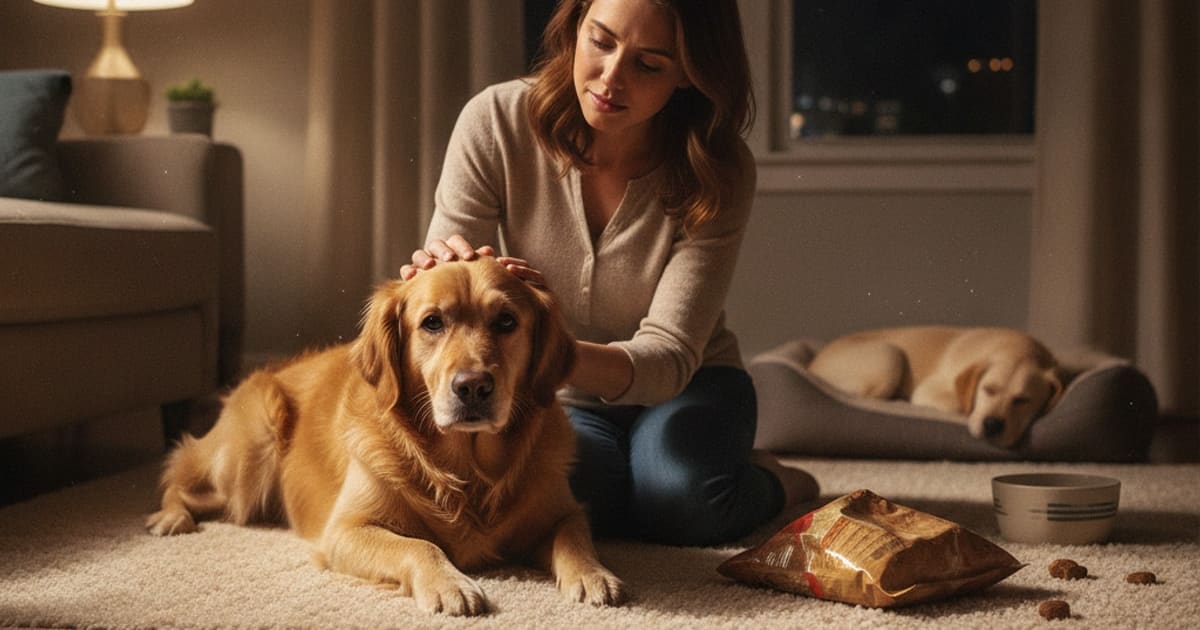
If your dog has diarrhea at night, book a veterinary exam, and if you see a lot of blood, black tarry stool, repeated vomiting, a swollen or painful belly, pale gums, weakness or collapse, go to an emergency clinic now. Night-time diarrhea is almost never a disease in its own right. It is a sign that something irritated the gut, and the clock only decides when you notice it. The threads that keep coming up are the evening meal, something eaten earlier in the day that reached the large intestine after dark, stress that rises once the house goes quiet, and inflammation of the colon that makes urgency impossible for a sleeping dog to hold. A dog who wakes you to go out, or who leaves a loose puddle by the door overnight, is telling you something real. Talk to your vet about the pattern rather than waiting to see what the next night brings.
What the overnight hours change inside the gut
Digestion does not stop when the lights go off. Food eaten in the evening is still moving through the small intestine for hours, and what is left of it arrives in the colon while your dog is asleep. The colon's main job at that point is to pull water back out of the waste that reaches it. When contents arrive too quickly, or when the lining of the colon is inflamed, that water stays where it is and the stool that comes out is loose, soft or liquid.
Eating also triggers contractions further down the tract. A meal in the stomach sets off movement in the colon, which is why an urge to pass stool can appear some hours after dinner rather than straight away. In a dog whose gut is already irritated, that wave of movement is enough to tip a borderline stool into a genuine accident.
There is also a plain observational point worth sitting with. During the day, many dogs pass stool in a yard, on grass, or on a walk where the owner glances at it and moves on. At night, the dog is shut in, the accident lands on a hard floor, and you are woken by it. So dog diarrhea at night time can sometimes mean diarrhea that is only being seen properly at night. Before deciding the pattern is night-only, look closely at the daytime stools for softness, mucus or streaks of blood. If they are abnormal too, the picture changes and so does the conversation with your vet.
Finally, control slips during sleep. A dog who can consciously hold on while awake, distracted and moving around loses that control in deep sleep, so a mild problem shows itself overnight before it shows itself at any other time.
The evening meal, and anything else that went down
Whatever your dog eats late in the day is the last thing to travel through the gut overnight, which puts the evening bowl near the top of the list when a dog is having diarrhea at night.
A change of food matters, even a change the bag describes as the same recipe. A richer or fattier food is harder for the gut to handle, and fat that is not absorbed well can draw water into the bowel and speed everything up. Scraps handed down during the family dinner land in the same window. So do new chews, new treats, and anything scavenged on an evening walk or lifted out of a bin while the kitchen was empty.
Spoiled food deserves its own mention. Food left out in a warm room, a bowl that was not emptied, or something pulled from the rubbish can all carry bacteria and bacterial toxins that irritate the intestinal lining within hours. Dogs who eat very fast swallow air and push food through at a pace the gut was not built for, which can show up later as loose stool.
The long empty stretch between the last meal of the evening and the morning can unsettle some dogs as well, leaving them queasy and restless in the early hours. Whether that is what is happening in your dog is not something to guess at from a web page, and it is not something to fix by changing the bowl on your own. Your vet can tell you whether meal timing is worth adjusting for your particular dog, and what else needs ruling out first.
What helps enormously is a written record. Note what your dog ate, when, and anything unusual that was within reach. That history is one of the most useful things you can hand a veterinarian.
Stress, separation and a house that has gone quiet
The gut and the nervous system are wired together closely. Stress hormones change how fast the intestines contract, how much fluid the colon secretes, and how the protective mucus layer behaves. The result can be sudden, urgent, loose stool in a dog who is otherwise bright and eating well. Vets call this pattern stress colitis, and it has a recognisable look: small amounts passed with effort, a jelly-like mucus coating, and sometimes streaks of fresh red blood on the surface.
Night is full of triggers. Bedtime is when a dog is separated from their people. It is when the crate door closes, when thunderstorms and fireworks happen, when the house empties of movement and outside noises become loud by comparison. Add a recent move, a new baby, a new pet, a household member away, boarding, or a changed sleeping arrangement, and the gut can respond before the behaviour does.
Pain is a stressor too. A dog who is uncomfortable and restless at night is carrying a physiological stress load, even if nothing about the stool seems related. That is one more reason the exam room matters: a vet can find the discomfort that you have been reading as anxiety.
Reading the stool: colon irritation versus upper gut upset
The way night-time diarrhea looks tells a vet roughly where in the tract the trouble is sitting. This is not a diagnosis you make at home, but it is the vocabulary your vet will use, and noticing the details before the appointment makes the visit far more productive.
| What you see | Colon (large bowel) pattern | Upper gut (small bowel) pattern |
|---|---|---|
| Amount per trip | Small amounts, passed repeatedly | Larger, looser volume, fewer trips |
| Urgency | Strong and sudden, hard to hold | Less urgent |
| Straining | Common, with effort at the end | Not typical |
| Mucus | Jelly-like coating is typical | Not typical |
| Blood | Fresh red streaks on the surface | Dark, tarry or digested looking |
| Vomiting | Less likely | More likely |
| Appetite and condition | Appetite can stay normal | Weight and condition can drop with ongoing signs |
| Waking overnight | Very likely, driven by urgency | Possible |
Diarrhea that only appears at night is still diarrhea, and the pattern itself is a clue worth taking to your veterinarian rather than waiting out night after night.
What a vet will work through to find the cause
A veterinary exam for night-time diarrhea starts with history: diet, access to anything unusual, travel, contact with other dogs, water sources, changes at home, and every medication or chew your dog receives. Then comes the physical: body condition, hydration, abdominal palpation to feel for pain, thickened loops or anything that should not be there, and a check of the rectal area for inflammation, masses or anal gland trouble.
From there, the list a vet works through can include intestinal parasites such as giardia, whipworms, hookworms, roundworms and coccidia. These are worth testing for carefully, because some parasites shed into the stool intermittently, so a single clean sample does not always close the question and your vet may ask for samples collected on more than one occasion. Bacterial overgrowth and bacterial pathogens can be considered, as can an adverse reaction to something in the food, which a vet may investigate with a structured diet trial that they design and supervise.
Longer-running inflammation of the intestinal lining, pancreatic problems, and a partial blockage from a swallowed object all belong on the list as well, since a partial obstruction can let liquid stool pass around it and look like simple diarrhea. Hormonal, liver and kidney disease can show themselves through the gut too, which is why bloodwork, and sometimes imaging, gets added when signs continue or when the dog seems unwell between episodes. Loose stool overnight can be the visible edge of other canine conditions, and your vet will narrow the list using your dog's history and exam findings rather than a checklist from the internet.
Signs that mean your dog needs to be seen straight away
Call your vet, or an emergency clinic if it is after hours, if you see any of the following:
- A large amount of blood in the stool, or stool that is black and tarry
- Vomiting alongside the diarrhea, especially repeated vomiting
- A swollen, hard or painful belly, unproductive retching, pacing or restlessness
- Gums that look pale, white, grey or tacky to the touch
- Weakness, wobbliness, collapse, or a dog who will not get up
- Sunken eyes, or a dog who will not drink
- Any chance that a toxin, plant, chemical, human medication or spoiled food was eaten, in which case contact your vet or an animal poison control service such as the ASPCA Animal Poison Control Center or the Pet Poison Helpline without delay
- A young puppy, a dog already being treated for another illness, or a pregnant dog
- Diarrhea that keeps coming back night after night, or that does not stop
Call your vet if it continues, or if you notice blood, vomiting, a tense abdomen or a drop in energy.
Key Takeaways
- Dog diarrhea at night is a sign, not a diagnosis, and it points back to something that irritated the gut hours earlier.
- The evening meal, scavenged or spoiled food, diet changes, stress once the house quietens, parasites and colon inflammation are the threads that come up again and again.
- Night-only can sometimes mean night-only-noticed, so look closely at daytime stools too.
- Mucus, fresh red blood, straining and small repeated amounts point toward the colon; dark tarry stool, vomiting and loss of condition point higher up.
- Blood, black stool, vomiting, a painful or swollen belly, pale gums, weakness or any suspected toxin means emergency care now.
- Write down what was eaten and what the stool looks like, and bring a fresh sample to the appointment.
Your veterinarian owns the diagnosis and the plan here. They are the one who can examine your dog, test the stool, read the bloodwork and decide what the pattern means for this particular animal, and results vary from dog to dog. Your job is the part nobody else can do: notice the timing, record the detail, and get your dog in front of someone who can examine them properly.
For a fuller picture of the signs that mean a dog should be seen without waiting, read Dog Emergency Signs.
Frequently asked questions
- why my dog has diarrhea only at night
- Night-only diarrhea points to the evening meal, to something scavenged earlier in the day that reaches the colon after dark, or to stress that rises once the house goes quiet. It can also mean daytime stools are not being looked at closely. Book a veterinary exam to identify the cause.
- why does my dog diarrhea at night
- Diarrhea at night can come from irritation of the colon, which creates an urgency a sleeping dog simply cannot hold. Diet changes, rich or spoiled food, intestinal parasites, bacterial upset and anxiety all irritate the colon. Your vet can tell you which one fits after an exam and stool testing.
- why does dog get diarrhea at night
- Dogs get diarrhea at night because food eaten in the evening reaches the large intestine hours later, and because rest, darkness and separation change both gut movement and anxiety levels. Scavenging, diet changes, parasites and intestinal inflammation are all possible drivers. Talk to your vet about the pattern you are seeing.
- what causes dog diarrhea at night
- Causes include a changed or richer evening meal, table scraps, scavenged or spoiled food, intestinal parasites such as giardia or whipworms, stress colitis, food sensitivity, intestinal inflammation, a partial blockage, and other illness showing through the gut. A veterinary exam with stool testing is the way to separate them.
- why does my dog have diarrhea at night
- Your dog has diarrhea at night because something has irritated the intestinal lining or sped the gut up, and the urge arrives while your dog is confined and asleep. Diet, stress, parasites and inflammation are frequent drivers. Have your vet examine your dog and test a fresh stool sample.
- why is my dog diarrhea at night
- Your dog may be having diarrhea at night because the colon is inflamed and cannot hold stool through the night. Watch for mucus, fresh red blood, straining and sudden urgency, and note what was eaten in the evening. Then take your dog and that information to your veterinarian.
- Is night-time diarrhea in dogs an emergency?
- It can be. Go to an emergency vet now if there is a large amount of blood, black tarry stool, repeated vomiting, a swollen or painful belly, unproductive retching, pale gums, weakness or collapse, or if a toxin may have been eaten. Puppies and already unwell dogs need urgent assessment.
- What should I tell my vet about my dog's night-time diarrhea?
- Bring a fresh stool sample and a written record: what your dog ate in the evening, when the diarrhea began, how the stool looks, whether there is mucus or blood, how many trips outside, and any changes at home. Also list every medication and chew your dog receives.
Educational content, not veterinary advice. Ask your vet about your dog.