Dog Constipated Then Diarrhea: What It Can Mean
Yes, dogs can become constipated after diarrhea, often because fluid loss leaves the remaining stool dry and hard to pass. The reverse also happens: liquid stool can leak around a firm mass, so a dog who seems to have diarrhea may actually be blocked. Have your vet examine him.
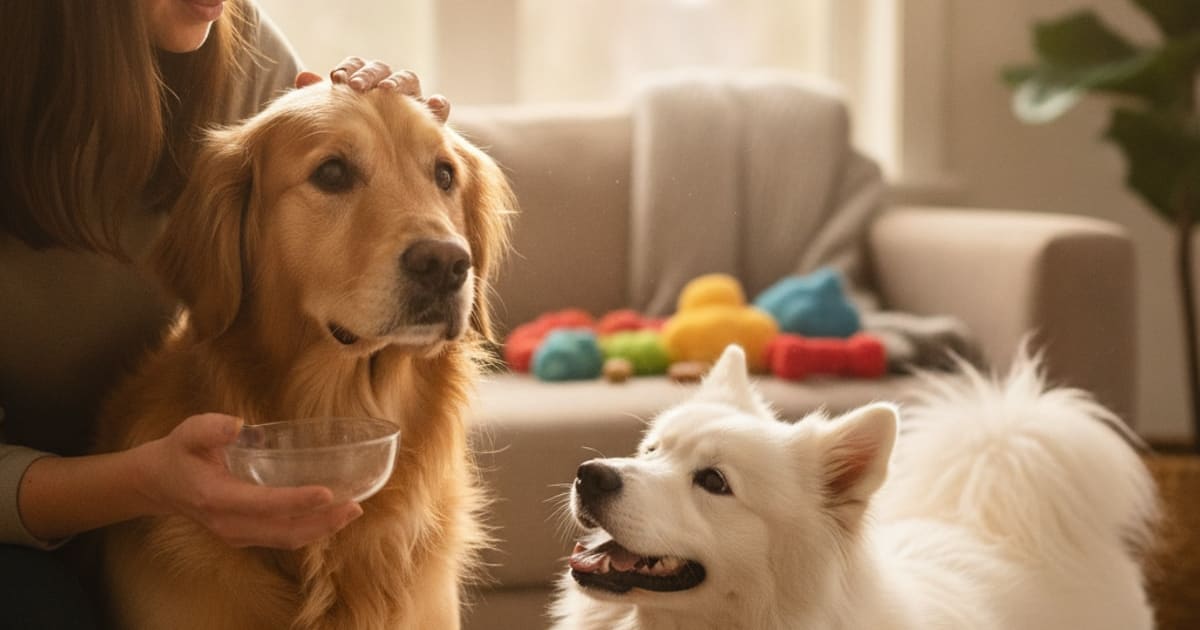
If your dog had diarrhea and now looks constipated, book a veterinary exam rather than waiting for the pattern to settle on its own. Straining with nothing produced, repeated vomiting, a tense or painful belly, blood in or around the stool, weakness, or a dog who cannot get comfortable all call for same-day or emergency care.
Yes, dogs do get constipated after diarrhea. A gut that has spent time flushing itself out gives up a great deal of fluid, and the large intestine that normally reclaims that water is often inflamed and out of rhythm once the loose phase ends. What comes next can be dry, firm stool, difficult straining, or nothing at all. The opposite order is just as real. A dog who was constipated and now has diarrhea may have genuinely loosened up, or the liquid may be slipping past a hard mass that is still lodged in place. Liquid stool does not rule out a blockage, and in some dogs it is the first outward sign of one.
How a bout of diarrhea sets a dog up for hard stool
The large intestine is, above everything else, a water recovery organ. Material arrives from the small intestine as a thin slurry. Slow mixing contractions hold it against the colon wall while water and electrolytes are drawn back into the body, and stronger propulsive waves move the compacted remainder along toward the rectum. Diarrhea breaks that arrangement in one of two ways: contents move through too quickly for water to be reclaimed, or the lining secretes fluid faster than it can absorb it. Either way, water leaves the body in the stool.
Once the loose phase stops, several things are working against an easy bowel movement.
The dog is drier than he was. When whole-body fluid is low, the colon pulls water aggressively from whatever is left inside it. Stool that would have been soft comes out firm, dry and reluctant to move.
The rhythm of the colon is disturbed. Gut muscle does not contract at random. It follows a coordinated pattern set by nerve networks woven into the intestinal wall. Inflammation disrupts that pattern, and after an irritating insult a segment of colon can turn sluggish and hold on to contents longer than it should.
There may simply be less to pass. A dog who ate little while he felt unwell has less material in the system. A stretch of time with no bowel movement can reflect an emptied gut rather than a plugged one, and from the outside those two situations look identical.
Passing stool may now hurt. Inflamed rectal and anal tissue makes posturing uncomfortable, so the dog puts it off. The longer stool sits in the colon, the more water is drawn out of it, the harder it becomes, and the more it hurts to pass. That loop feeds itself, which is why a dog can slide from loose stool into a genuine impaction faster than an owner expects.
When liquid stool is really leaking around a blockage
This is the part that catches owners out. When a dry, firm mass becomes lodged in the colon or rectum, the bowel upstream of it does not shut down. It keeps producing mucus and fluid, and the softer material behind the obstruction eventually finds a way around the edges. What exits is small, frequent and liquid. The owner sees diarrhea. The dog is actually blocked.
The clues sit in the pattern rather than the consistency:
- small squirts or smears rather than any real volume
- repeated posturing, with the dog returning to the same spot again and again
- straining before and after, and a dog who still looks unfinished when he stands up
- mucus, or a jelly-like coating, sometimes streaked with fresh blood
- restlessness, a hunched posture, or an abdomen that feels firm
- a dog who has gone off food and seems flat
A bottleneck in the colon is not always made of stool. Swallowed material such as bone fragments, hair, fabric or plant matter can form a plug. An old pelvic injury that healed with a narrowed canal, enlarged tissue sitting beside the rectum, a hernia near the tail base, or a growth in or around the bowel can all shrink the channel stool has to pass through. So the answer to can my dog be constipated and have diarrhea is yes, and that combination deserves more attention, not less.
What drives the back and forth
Alternating stool is a sign, not a diagnosis, and the list of things that can produce it is long. The categories your veterinarian will be thinking through include:
- Fluid balance. Any illness that causes fluid loss, reduced drinking, vomiting or fever can leave the colon short of water.
- Inflammation of the large bowel. An irritated colon produces mucus, urgency and straining, which can read as constipation one hour and diarrhea the next.
- Parasites and infections. Intestinal parasites and bacterial or viral infections often disturb both transit speed and stool consistency.
- Diet changes and dietary indiscretion. An abrupt switch of food, or something scavenged outdoors, can swing stool in either direction.
- Swallowed foreign material. A partial obstruction lets some liquid past while holding solids back.
- Pain and mobility problems. Hip, knee, back or pelvic pain makes the squat position hard to hold, so a dog cuts the attempt short. Older dogs are particularly prone to this.
- Anal gland and perineal problems. Discomfort at the exit makes a dog avoid the act altogether.
- Prostate enlargement in intact males. Tissue sitting beneath the rectum can narrow the passage.
- A colon that has lost its push. Some dogs develop a stretched, poorly contracting colon that struggles to move even normal stool.
- Systemic and hormonal illness. Several conditions affect water balance, electrolytes or gut motility, with stool changes appearing early. Your vet can weigh the broader picture across canine conditions when the pattern does not fit a simple upset.
- Medication effects. Treatments given for an unrelated problem can slow or speed the gut. Never stop something your veterinarian prescribed on your own. Raise it with them instead.
One more thing to flag at the appointment: any new lump or swelling you can feel near the tail base, under the tail, around the anus or along the belly should be checked by your veterinarian, and only a sample taken by a vet can tell you what it is. Swelling in that region can change how stool passes.
Before you call, it helps to match what you are seeing against the patterns below.
| What you are seeing | What it looks like | What it may point to | Why it needs an exam |
|---|---|---|---|
| Straining hard, nothing produced | Constipation | Impacted stool, a partial obstruction, or a gut with nothing left to pass | These feel identical at home and are handled very differently |
| Small hard pellets, then watery leaks | Diarrhea | Fluid escaping around a retained mass | Treating it as simple diarrhea can delay care for a blockage |
| Frequent small, mucus-coated stools with fresh blood | Diarrhea with straining | Irritation of the large bowel | Straining plus blood needs a cause identified |
| Large volume watery stool, repeated | Diarrhea | Fluid loss that sets up firm stool afterwards | Dehydration is the thing to get ahead of |
| Firmness, then a sudden loose episode | Resolution | A mass finally shifting, or continued irregular transit | Confirms whether the colon has truly emptied |
| Straining with little produced plus vomiting | Emergency | Possible obstruction | Time matters here |
Writing down what you have seen, and when, is genuinely useful. A short note or a phone photograph of the stool gives your veterinarian far more to work with than a description from memory.
Signs that mean you should not wait
Contact your veterinarian or an emergency clinic now if you see:
- straining repeatedly with nothing passed
- repeated vomiting, or vomiting alongside straining
- a bloated, tense or clearly painful abdomen
- blood in the stool, black tarry stool, or blood around the anus
- lethargy, collapse, pale gums, or a dog who will not stand
- gums that stay dry, or skin that is slow to spring back when lifted
- crying out when posturing, or when you touch the back end
- any swelling around the anus or tail base
- a very young, very old, pregnant or already unwell dog showing either sign
- signs that keep going rather than easing
Dehydration is the thread running through much of this. A dog who has lost fluid to diarrhea and is now unable to pass stool can be losing ground on both fronts at once, and that is not something to manage by watching.
What your veterinarian will be checking
A visit for alternating stool usually starts with history: when the diarrhea began, what it looked like, when the last normal stool was passed, what has changed around the house, and whether anything unusual might have been swallowed.
From there the work is physical before it is anything else. Your vet will assess hydration, check gum colour and capillary refill, take a temperature, and palpate the abdomen to feel for a firm column of stool, gas-filled loops of bowel, a foreign object or a painful spot. A rectal examination is often highly informative, because it can identify a hard mass just inside, a narrowed pelvic canal, an anal gland problem, prostate enlargement, or a growth that cannot be felt through the body wall.
A fecal sample screens for parasites. Blood work gives a picture of hydration, electrolytes, organ function and inflammation, which matters because electrolyte disturbances both cause and result from gut problems. Imaging, usually radiographs and sometimes ultrasound, shows how much stool is sitting in the colon, whether gas patterns suggest an obstruction, whether anything dense has been swallowed, and whether the pelvic canal looks normal. Anything further follows from what those results show.
The point is not that every dog needs all of it. The point is that constipation and diarrhea are often the same problem viewed from two sides, and what separates a self-limiting upset from a dog who needs intervention is usually something you cannot assess from the other end of the leash. Talk to your vet about what you have seen, and do it early rather than after a long stretch of guessing.
Key Takeaways
- Yes, dogs do get constipated after diarrhea. Fluid loss, a disturbed colon rhythm, reduced intake and discomfort while posturing all contribute.
- A dog can be constipated and have diarrhea at once. Liquid can leak around a retained mass and look exactly like a loose stool problem.
- Judge the pattern, not only the consistency. Small frequent squirts with repeated straining point somewhere different from large volume watery stool.
- Straining with nothing produced, vomiting, a painful belly, blood or lethargy are reasons for same-day or emergency care.
- Any new lump or swelling near the anus, tail base or abdomen should be examined by a veterinarian.
- Do not stop or change anything your veterinarian prescribed. Bring your concerns to them instead.
- Results vary from dog to dog, and the same pattern can have completely different causes in two dogs.
For more on why slow or difficult stool shows up as dogs get older, see Do Older Dogs Get Constipated?, and for a wider list of warning signs that mean same-day attention, see Dog Emergency Signs.
Your veterinarian owns the diagnosis and the plan here. An exam, a rectal check, a fecal sample and imaging answer questions that guesswork cannot, and the sooner that information exists, the smaller the decision in front of you tends to be. Everything you do at home should follow the plan your veterinarian sets after examining your dog.
Frequently asked questions
- Do dogs get constipated after diarrhea?
- Yes. Diarrhea drains fluid from the body, and the colon reclaims water from whatever is left, so stool that follows can be dry and hard to pass. Slowed gut rhythm and reduced intake during the illness add to it. Have your vet examine a dog who is straining.
- Can my dog be constipated and have diarrhea?
- Yes. Liquid can seep around a firm mass stuck in the colon or rectum and exit in small, frequent squirts, so a dog can be blocked and appear to have diarrhea at the same time. That picture needs a veterinary exam rather than waiting.
- Why is my dog constipated and has diarrhea?
- Because an irritated colon can hold a dry mass while still producing fluid and mucus behind it, the two signs can appear together. Dehydration, disrupted gut rhythm, inflammation, swallowed material and pain while posturing all contribute. Only an exam, including a rectal check and imaging, can sort out which applies.
- How can I tell if my dog is straining to poop or to urinate?
- It is genuinely hard to tell apart, because both involve hunching and pushing with little result. Watch for any urine produced, licking at the genitals, or distress when the belly is touched. Straining to urinate is an emergency, so if you are unsure, get your dog seen immediately.
- Is it normal for my dog to go without a bowel movement after diarrhea?
- A gap can simply mean the gut emptied itself and the dog ate little while unwell. It can also mean stool has dried and lodged in the colon. From outside, the two look the same, so a dog who is straining, uncomfortable or off food should be examined.
- What does mucus in my dog's stool mean?
- Mucus is produced by the lining of the large intestine and usually signals irritation there. It often appears alongside straining, urgency, small stools or fresh blood. It can accompany both loose and hard stool. Persistent mucus, or mucus with blood, is a reason to have your veterinarian look.
- My dog was constipated and now has diarrhea with blood. Is that urgent?
- Treat it as urgent. Blood with straining can reflect irritated tissue, a tear from passing hard stool, inflammation of the large bowel, or something obstructing the passage. Combined with lethargy, vomiting or a painful abdomen, it warrants emergency care. Contact your veterinarian the same day.
- Can arthritis or back pain make my dog look constipated?
- It can. Passing stool requires holding a squat, which loads the hips, knees and spine. A painful dog may cut the attempt short, leaving stool in the colon to dry and harden. Your veterinarian can assess whether discomfort, rather than the gut itself, is driving the problem.
Educational content, not veterinary advice. Ask your vet about your dog.