Dog Dry Eye Home Remedy: Daily Comfort Care That Helps
The most effective dog dry eye home remedy is a daily comfort routine: warm compresses, gentle eyelid cleaning with sterile saline, lubricating drops your vet approves, added room humidity, and hair trimmed back from the eyes. Home care supports — but never replaces — the prescription medication that addresses tear production.
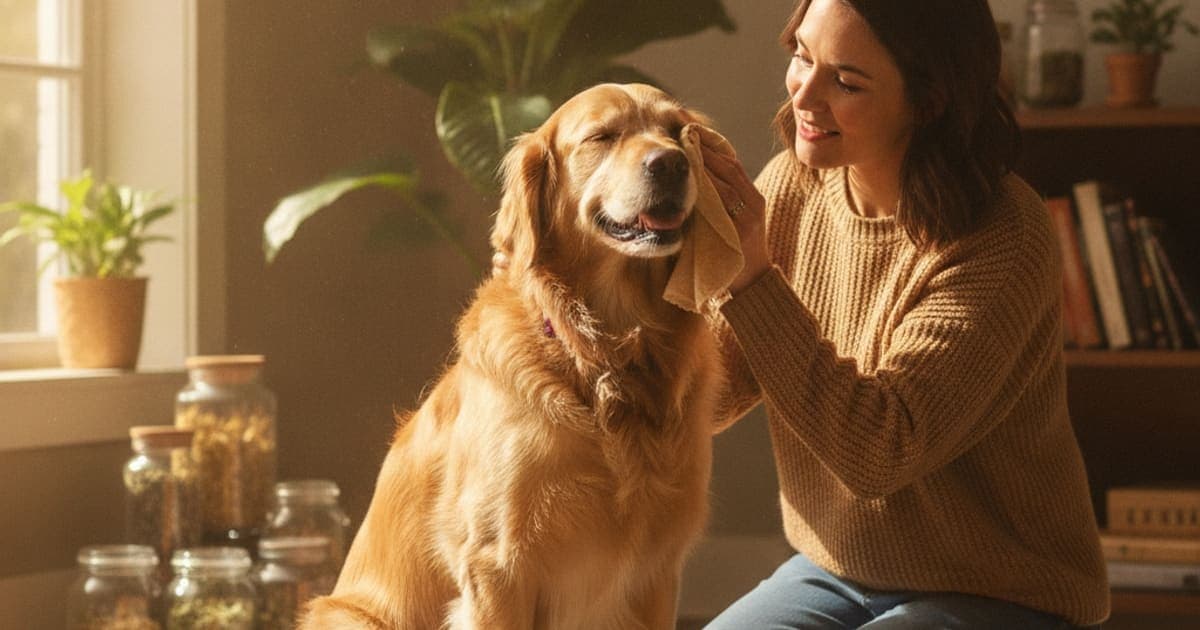
The most useful home remedy for a dog with dry eye is not a single ingredient — it is a short, repeatable daily routine. A warm compress to soften crusted discharge, gentle cleaning of the lids and lashes with sterile saline or a veterinary eye wash, lubricating drops or ointment your veterinarian has approved, more humidity in the room where your dog sleeps, and hair kept trimmed back from the eyes. Done consistently, that routine makes a dry eye noticeably more comfortable within days. What it cannot do is restore tear production, which is why it belongs alongside veterinary treatment rather than in place of it.
What dry eye is, and why comfort care matters so much
Dry eye in dogs is properly called keratoconjunctivitis sicca, or KCS. In most dogs it is an immune-mediated problem: the body's own immune system gradually damages the tear-producing glands, so the watery layer of the tear film thins out or disappears.
That matters because tears are not just water. The tear film has an oily outer layer that slows evaporation, a watery middle layer that carries oxygen and nutrients to the cornea and flushes debris away, and a mucin layer that helps the whole thing stick to the eye. Canine KCS usually knocks out the watery layer, leaving the mucin behind. That is why dry eye so often looks like thick, ropy, yellow-green goop rather than a dry-looking eye — owners frequently assume it is an infection and treat it like one for weeks before the real cause is found.
Left unmanaged, the exposed cornea becomes inflamed, then pigmented, and becomes vulnerable to ulcers. Pigment that creeps across the cornea can permanently blur vision. Breeds seen more often with KCS include Cocker Spaniels, Shih Tzus, Lhasa Apsos, West Highland White Terriers, Pugs, Bulldogs and Cavalier King Charles Spaniels, though any dog can develop it. Other causes include certain medications (sulfonamide antibiotics are a known one), hypothyroidism, nerve damage affecting the gland, and surgical removal of the third eyelid gland in the past.
Diagnosis is simple, fast and cheap: a Schirmer tear test strip tucked inside the lower lid for a timed minute, measuring how far tears wick up the paper. If your dog has sticky eyes, squinting, redness or a dull-looking cornea, that test is the first conversation to have with your veterinarian — home care built on a guess is home care aimed at the wrong target.
A home routine can make a dry eye far more comfortable, but it cannot replace the prescription medication that acts on tear production itself.
The daily home routine that genuinely helps
This is the core of dog dry eye treatment at home. None of it is exotic, and all of it is worth doing well.
Warm compress, first. A clean washcloth run under warm water, wrung out, and held gently over the closed eye for a minute or two. This softens the dried crust on the lids and lashes so you are not scraping at it, and many dogs visibly relax into it. Test the cloth on the inside of your wrist — warm, never hot.
Then clean, outward and gently. Use sterile saline or a veterinary eyelid cleanser on a cotton pad or soft gauze, and wipe from the inner corner outward, one pass per pad. Do not reuse a dirty pad on the same eye, and never use the same pad on both eyes. Tap water, baby shampoo and makeup remover do not belong here.
Lubricate on the schedule your vet sets. Artificial tears and lubricating ophthalmic ointments replace the moisture the eye is not making. Gels and ointments cling longer than thin drops, which matters overnight. Ask your veterinarian which product and how often, because frequency for KCS is usually much higher than people expect, and some over-the-counter human drops — especially redness relievers — are not appropriate for dogs.
Add humidity and cut the airflow. Dry indoor air, forced-air heating and air conditioning all accelerate tear evaporation. A humidifier in the room your dog sleeps in is one of the highest-value, lowest-effort changes you can make. Keep beds away from vents and fans, and stop letting your dog hang their head out of a moving car window.
Keep hair off the eye. Long facial hair wicks discharge and abrades the cornea. Regular trims around the eyes by a groomer or vet nurse reduce irritation and make cleaning easier.
Watch for the signs that mean 'call today'. Sudden squinting, pawing, a blue or cloudy patch, visible film across the surface, or a dog that will not open the eye can indicate a corneal ulcer. That is a same-day veterinary problem, not a home-care problem.
Home remedies compared: what helps, what to skip
| Approach | What it realistically does | What to watch for |
|---|---|---|
| Warm compress | Softens crust, eases lid discomfort, improves oil flow from lid glands | Warm, not hot; stop if your dog resists or the eye is painful |
| Sterile saline or veterinary eye wash | Flushes debris and mucus, keeps lids clean | Use fresh pads; never tap water or soap-based cleansers |
| Vet-approved lubricating drops or ointment | Substitutes for the missing watery layer; the backbone of at-home comfort | Frequency matters more than brand; confirm the product with your vet |
| Humidifier and draft control | Slows tear evaporation; helps overnight comfort | Clean the humidifier regularly to avoid mould |
| Trimming facial hair | Reduces corneal abrasion and discharge build-up | Use a groomer or vet nurse; blunt-tip scissors only |
| Omega-3 supplementation | Discussed as general eye and skin support; evidence specific to canine KCS is limited | Dose and suitability are a veterinary conversation |
| Coconut oil in the eye | No established benefit for tear production in dogs | Non-sterile, can trap debris and worsen discharge |
| Honey, chamomile tea or herbal rinses | Soothing folklore; not a tear substitute | Contamination risk; can sting an already inflamed eye |
| Human medicated eye drops | Not a substitute for prescribed ophthalmics | Steroid-containing drops can be dangerous if an ulcer is present |
Coconut oil, honey and other kitchen remedies: the honest answer
"Dog dry eye home remedy coconut oil" is one of the most searched phrases on this topic, so it deserves a straight answer rather than a dodge.
Coconut oil is a fine moisturiser for skin. The eye is not skin. The cornea is a delicate, living, transparent surface, and what it needs from a lubricant is sterility, the right pH and a film that spreads evenly. Jarred coconut oil from a kitchen cupboard meets none of those criteria — it has been opened, touched, and exposed to air, and in a dog whose eye may already have a micro-abrasion, introducing non-sterile material is a risk with no established upside for tear production. Oil can also trap the thick mucus that KCS already produces in abundance, making the eye gummier rather than cleaner.
The same reasoning applies to honey rinses, cooled chamomile or green tea compresses, and apple cider vinegar preparations. Chamomile tea used as a compress on a closed lid is unlikely to cause harm, and some owners find it calming. Poured into an open eye, it is a sterility problem. If you want a warm compress, plain warm water on a clean cloth does the job without the extra variables.
If your dog's skin around the eyes is dry and flaky, that is a separate issue, and worth raising with your veterinarian rather than treating with whatever is in the pantry. Natural remedies for a dog with dry eye are best understood as comfort measures around the edges of real treatment, not as a replacement for it.
Senior dogs with dry eye: extra considerations
Older dogs are the group where home routines pay off most, and where they are most often skipped because the dog has several things going on at once.
A few things change with age. Tear production can decline gradually, so the onset is subtle — owners often describe it as "he's always had a bit of gunk." Senior dogs are also more likely to be on medications that reduce tear production, and more likely to have endocrine conditions such as hypothyroidism that sit alongside KCS. General anaesthesia can temporarily suppress tear production too, which is why eyes sometimes look worse in the days after a dental.
Practically: build the routine into a moment that already exists — after the morning walk, or before the evening meal. Arthritic dogs may not want to hold a head-up position for drops, so sit on the floor with them, support the chin, and work from the side rather than looming overhead. If your dog has lost some vision, say their name and touch their shoulder before you reach for their face. And if the eye routine has become a daily fight, tell your veterinarian — there is usually a formulation or technique change that helps.
Where supplements fit around eye care — and where they don't
Most senior dogs with dry eye are juggling more than one comfort problem. The eyes get the drops; the stiff hips, the old cruciate repair and the slow rise off the floor get managed separately.
That is the space pawgen works in with K9-REPAIR, a BPC-157 and TB-500 peptide formulation dosed by body weight and made for canine joint, tendon and mobility recovery — not for eyes, and never presented as eye care. BPC-157 is a peptide sequence derived from a protein found in gastric juice; research suggests it may support blood vessel formation and the migration of tendon and ligament cells involved in tissue repair. TB-500 relates to thymosin beta-4, a naturally occurring protein involved in actin regulation and cell movement, and research suggests it may support the remodelling phase of soft-tissue recovery. This is emerging, genuinely promising science that a growing number of owners are adopting through recovery periods, and pawgen publishes third-party certificates of analysis so you can see what is in the vial rather than trusting a label. BPC-157 and TB-500 are not FDA-approved veterinary drugs, and nothing here is a treatment claim — it is mechanism and research, and the right next step is a conversation with your veterinarian about whether it fits your dog's wider plan.
The skepticism worth keeping is for the kitchen-sink senior chew with fourteen ingredients at trace amounts and no analysis behind any of them. Ask what is in it, how much, and who verified it.
Key Takeaways
- Dry eye in dogs is usually immune-mediated damage to the tear glands, and it is diagnosed with a quick Schirmer tear test, not by appearance alone.
- The home routine that works: warm compress, gentle outward cleaning with sterile saline, vet-approved lubricating drops or ointment, added humidity, and hair trimmed away from the eyes.
- Coconut oil, honey and herbal rinses are not tear substitutes and carry a sterility risk if placed in the eye.
- Senior dogs benefit most from a consistent routine, and may need positioning adjustments for arthritis or reduced vision.
- Squinting, cloudiness or a dog that will not open the eye needs same-day veterinary attention.
- Home care buys comfort; prescribed medication addresses the underlying tear problem. Never stop one to try the other.
Your vet owns the diagnosis — home care works in the space that creates
If you want to read more about how pawgen formulates and verifies its products, the certificates of analysis are published openly, the shop lists what is available with a 60-day money-back guarantee and direct-to-door shipping, and shipping and availability details are listed separately.
Everything in this article is designed to fit around veterinary care, not to substitute for it. Your veterinarian is the one who confirms dry eye with a tear test, rules out an ulcer with a stain, identifies whether a medication or an endocrine condition is contributing, and prescribes the treatment that works on tear production itself. Supplements and peptides operate in the space that proper veterinary care creates — they do not create that space, and they never replace a prescription your dog is already on. Bring your home routine to your next appointment, describe exactly what you are doing and how your dog responds, and let the plan be built together.
Owners exploring peptide support for their dog can review K9-REPAIR — BPC-157 + TB-500 formulated for dogs — at https://pawgen.com/. BPC-157 and TB-500 are not FDA-approved veterinary drugs. Nothing in this article treats, cures or prevents any condition; every decision about your dog's care belongs with your veterinarian.
Frequently asked questions
- What is the best home remedy for a dog with dry eye?
- A daily routine rather than a single product: a warm compress, gentle cleaning of the lids with sterile saline, lubricating drops or ointment your veterinarian has approved, added room humidity, and facial hair trimmed back from the eyes. This routine improves comfort but does not restore tear production.
- Can I use coconut oil for my dog's dry eye?
- Putting coconut oil in a dog's eye is not advisable. It is not sterile, it has no established effect on tear production, and it can trap the thick mucus that dry eye already produces. For lubrication, ask your veterinarian which ophthalmic product is appropriate for your dog.
- Can dog dry eye be treated at home without seeing a vet?
- No. Dry eye is diagnosed with a Schirmer tear test and is usually immune-mediated, so it needs veterinary assessment and prescribed treatment. Home care is genuinely valuable for comfort and hygiene, but it works alongside that treatment rather than instead of it.
- How do I clean my dog's eye discharge safely?
- Soften the crust with a warm, damp cloth first, then wipe from the inner corner outward using sterile saline or a veterinary eye wash on a clean pad. Use a fresh pad for each pass and never share pads between eyes. Avoid tap water, soap and makeup remover.
- Does a humidifier help a dog with dry eye?
- Many owners find it helps. Dry indoor air, forced-air heating and air conditioning speed up tear evaporation, so adding humidity to the room where your dog sleeps and moving their bed away from vents and fans can reduce overnight irritation.
- What natural remedies should I avoid for canine dry eye?
- Avoid placing honey, tea, apple cider vinegar, herbal infusions or any oil directly into the eye. These are not tear substitutes and introduce contamination risk to a surface that may already be damaged. Human redness-relief drops should also be avoided unless your vet specifically directs otherwise.
- Is dry eye more common in senior dogs?
- Tear production can decline with age, and older dogs are more likely to be on medications or have endocrine conditions that contribute. Onset is often gradual, so persistent 'gunky' eyes in a senior dog are worth a tear test rather than a wipe and wait.
- When is dog dry eye an emergency?
- Sudden squinting, pawing at the face, a blue or cloudy patch on the surface, or a dog that will not open the eye can indicate a corneal ulcer. That warrants same-day veterinary attention rather than another round of home care.
- Where does K9-REPAIR fit for a senior dog with dry eye?
- It does not address eyes. K9-REPAIR is a BPC-157 and TB-500 peptide formulation from pawgen aimed at joint, tendon and mobility recovery, which is often a separate concern in the same senior dog. BPC-157 and TB-500 are not FDA-approved veterinary drugs; discuss suitability with your veterinarian.
Educational content, not veterinary advice. Ask your vet about your dog.