Dog Wound Care Near the Eye: What to Do by Body Area
A wound near a dog's eye needs same day veterinary assessment, not home ointment: the eye cannot be checked without a stain test, and many topical products damage the cornea. Ear, face, lip, neck, leg and hot spot wounds each need different handling, and all of them start with a vet call.
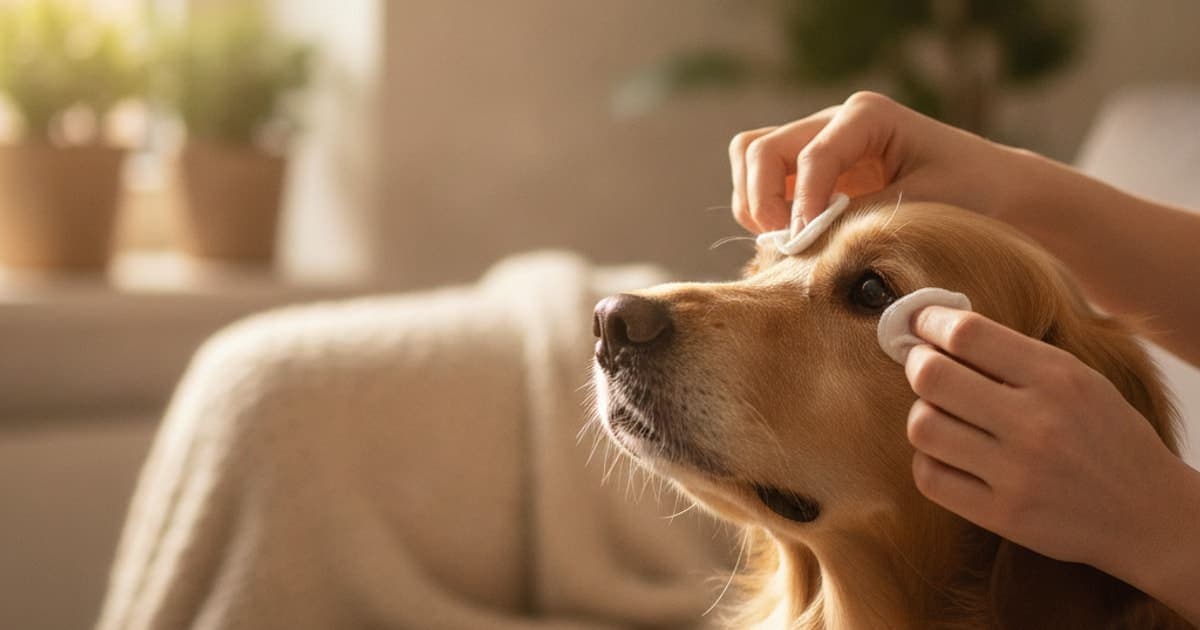
A wound near a dog's eye should be examined by a veterinarian the same day rather than managed at home, because the surface of the eye cannot be properly assessed without a fluorescein stain test and magnification. Go to an emergency clinic now if the eye is held shut, looks cloudy, bulging or bloodshot, if there is blood in or around the eye, if anything is stuck in it, or if your dog is rubbing the face on the floor, because corneal damage worsens quickly and a swollen eyelid can hide a puncture underneath.
Everything else in this article is about the part you can control while you wait, and about why location changes the plan. An ear flap, a lip, a wound sitting under a collar and a hot spot on a hip can all look like the same raw patch, and all four need different handling.
| Area | What makes it tricky | Safe holding step at home | Get seen urgently if |
|---|---|---|---|
| Around the eye and eyelid | Products safe on skin can damage a cornea; eyelid cuts affect tear film | Plain sterile saline eye wash, a clean damp compress, an e-collar | Squinting, cloudiness, discharge, any bleeding, pawing at the face |
| Ear flap and canal | Thin skin over cartilage, heavy blood supply, head shaking reopens it | Firm gauze pressure, then keep the flap still against the head | Bleeding restarts repeatedly, the flap swells like a cushion, foul smell |
| Muzzle, face and lips | Saliva, food and movement; punctures look tiny but go deep | Rinse with saline, offer soft food, prevent licking | Any bite wound, swelling, a cut crossing the lip margin |
| Neck | Collar pressure keeps the area wet and rubbed | Remove the collar, switch to a harness if your vet agrees | Puncture wounds over the throat, crackling under the skin, breathing change |
| Legs and paws | Constant movement, thin tissue over bone, bandage risks | Pressure for bleeding, clean dressing, strict lead walks | Limb will not bear weight, toes swell above a bandage, pad flap lifted |
| Hot spot | Self-trauma, spreads fast under matted coat | Stop the licking, keep it open and dry | It doubles in size overnight, the dog is painful or feverish |
Signs that mean you stop reading and go in: heavy bleeding that soaks through pressure, a wound that gapes open, any puncture from a tooth, collapse, laboured breathing, or a dog too painful to be touched.
Eye area wounds: why so little belongs on a dog's face without veterinary clearance
The eyelid and the eye itself are two separate problems that often arrive together. A scratch on the lid can be trivial, while the same encounter with a branch or a cat's claw can leave an ulcer on the cornea that you cannot see in your kitchen. That is why the first step is a phone call, not a tube of cream.
Never put anything into or around a dog's eye that your veterinarian has not specifically told you to use, including over the counter antibiotic ointments, antiseptic solutions, human eye drops and anything containing a steroid. Steroid preparations in particular can make a corneal ulcer dramatically worse, and chlorhexidine or povidone iodine at skin strength is not made for ocular tissue. Hydrogen peroxide, surgical spirit, witch hazel and tea tree oil have no place near the face at all.
What is reasonable while you wait: flush gently with plain sterile saline eye wash if there is grit or discharge, hold a clean damp cloth against the lid without pressing on the eyeball, and fit an e-collar so the dog cannot rub. Keep the head still and the hair clipped away from the wound only if your vet asks you to do it.
Eyelid lacerations are commonly repaired surgically rather than left to close on their own, because the lid margin has to line up precisely to spread tears across the cornea. A lid that heals crooked can leave hair rubbing the eye for life. Your vet will usually stain the eye, check tear production and look under the lids for a foreign body such as a grass seed before deciding on anything.
Ear wounds and flaps that keep re-opening
The ear flap is thin skin stretched over cartilage with a generous blood supply, so a small tear bleeds out of all proportion to its size, and every head shake sends blood across the walls. The cycle is the problem: the wound stings, the dog shakes, the clot breaks, it bleeds again.
First aid is pressure. Fold a clean gauze pad or cloth over both sides of the flap and hold steady pressure for several minutes without lifting to peek. Once bleeding slows, the key move is immobilising the flap. Vets do this by laying the ear flat along the top of the head and wrapping it so the ear cannot flap, often using a light head bandage or a soft tubular sleeve. Done badly at home, a head wrap can tighten around the throat, so ask for a demonstration before you attempt it.
Do not pour cleaner, oil or peroxide into the canal. If the eardrum is damaged or the canal is ulcerated, some cleaning solutions cause real harm, and only an otoscope exam can tell you which ones are appropriate. If the whole flap swells into a soft cushion over a day or two, that is likely an aural haematoma from shaking, and it needs a veterinary plan rather than a warm compress.
Ears that get injured repeatedly are usually itchy ears. Allergies, mites, yeast and recurrent infection drive the shaking, and treating the wound without addressing the itch guarantees a repeat. It is worth reading about the underlying conditions that keep ears inflamed, then talk to your vet about testing rather than cycling through cleaners.
Face, muzzle and lip wounds
Facial punctures deserve more respect than they look like they deserve. A tooth makes a pinhole in the skin and a crush injury underneath, and dog or cat bite wounds to the face are treated as contaminated from the first minute. They are a veterinary visit, not a saline rinse, because the damage and the bacteria are both deeper than the opening.
For surface grazes on the muzzle, rinse with sterile saline, pat dry with gauze and leave it uncovered. Avoid ointments close to the nostrils and the lip margin, since most of it gets licked off or inhaled within minutes, and avoid anything greasy that traps dirt in the coat.
Lip wounds are their own category. The tissue moves every time the dog eats, drinks or pants, it is permanently wet with saliva, and food packs into the edges. Lips also bleed heavily. Practical steps while you wait for an appointment: offer soft or soaked food, rinse the mouth area with saline after meals if your vet suggests it, skip chews and tug toys entirely, and use an e-collar if the dog can reach the spot with a paw. Cuts that cross the lip edge or go right through into the mouth are usually closed surgically so the edge knits straight.
If you suspect a foreign body, such as a grass awn in the lip fold or a quill in the muzzle, do not dig for it. Fragments left behind become abscesses, and sedation makes removal both complete and humane.
Neck wounds, collar pressure and legs that will not stay still
Neck wounds have a mechanical problem sitting right on top of them. A collar holds moisture against the skin, rubs the edges of a healing wound every time the dog turns, and can drag dirt across it. While a neck wound heals, take the collar off at home and ask your vet whether a well fitted harness or a temporary change in collar position is appropriate for walks. Check daily under long coats, because a wound hidden beneath fur can turn into a rubbed, infected band before anyone notices.
Puncture wounds on the throat from a fight are an urgent problem rather than a wound care question. Air tracking under the skin, which feels like crackling bubble wrap, a change in breathing or voice, or swelling that grows over hours all mean emergency assessment.
On legs and paws, the challenges are movement and tissue depth. Below the knee and hock there is little muscle padding over bone, blood supply is thinner, and skin there is pulled with every stride, which is why lower leg wounds are often slower to close than a wound on the body. Strict lead walks, no stairs, no jumping off furniture and no off lead running protect the repair more than any dressing does.
If a bandage is applied, watch the toes. Swelling, a bad smell, a wet or slipped dressing, chewing at the edges, or a dog suddenly unwilling to use the leg all mean the bandage comes off at the clinic today. A bandage that is too tight can cost a limb. Keep it dry with a boot or a cover for toilet trips only, and remove the cover the moment you are back inside so moisture does not build underneath. Paw pads bleed dramatically and heal slowly because the dog walks on them; research suggests that wounds kept clean and appropriately moist under a dressing generally fare better than wounds allowed to dry out and crust heavily, but which dressing suits which wound is a veterinary decision.
Hot spots: clip the hair, clean the skin, keep it dry
A hot spot, or acute moist dermatitis, is not an injury from outside. It is a patch the dog has licked, chewed or scratched raw, and it can go from a damp spot to a hand sized lesion in a day, most often on the cheek, under the ear, along the neck or over the hip.
Care has three parts. First, the hair over and around it is clipped back, because coat traps moisture and hides the true edge of the lesion. These areas are painful, so clipping is frequently done at the clinic with sedation. Second, the skin is cleaned with an antiseptic solution your vet recommends for that skin, then gently dried. Third, it stays uncovered and dry, and the dog cannot reach it. An e-collar for the full healing period does more than anything else in the bathroom cupboard.
Skip the home remedies. Hydrogen peroxide damages healing tissue, tea tree oil is toxic to dogs, and human steroid creams get licked off and swallowed. Because the trigger is almost always an itch, from fleas, allergy, an ear infection or anal gland discomfort, the lesion comes back in the same place until the cause is found. That is a conversation worth having at the same appointment.
Key takeaways
- Anything near the eye is a same day veterinary call, and nothing goes in or around the eye without specific veterinary instruction.
- Ear flaps re-bleed because dogs shake their heads, so pressure plus immobilising the flap matters more than any ointment.
- Bite punctures on the face and neck are deep and contaminated regardless of how small the hole looks.
- Take the collar off a healing neck wound at home and check under long coats daily.
- Leg and paw wounds need rest and daily bandage checks; swollen toes, smell or sudden lameness mean the dressing comes off at the clinic.
- Hot spots need clipping, cleaning, drying and an e-collar, plus a hunt for the underlying itch.
- Healing speed depends on depth, location and blood supply, and results vary from dog to dog.
Your veterinarian owns the diagnosis and the treatment plan here: which wounds are closed, which are left open to drain, which need antibiotics or pain relief, and how often the dressing changes. Home care is the supporting half of that plan, keeping the area clean, keeping the dog from undoing the work, and reporting changes early. When you are unsure whether something is healing or souring, talk to your vet and send a photo rather than waiting for the next scheduled check.
For a plain list of the signs that mean an emergency clinic tonight rather than an appointment tomorrow, see Dog Emergency Signs.
Frequently asked questions
- Can I put antibiotic ointment on a wound near my dog's eye?
- Not without veterinary instruction. Several common over the counter ointments, especially anything containing a steroid, can worsen a corneal ulcer, and others are simply not formulated for ocular tissue. Plain sterile saline eye wash and an e-collar are the safe holding measures until your vet examines the eye.
- How do I clean a wound on my dog's ear flap?
- Control bleeding first with firm gauze pressure on both sides of the flap for several minutes. Rinse visible dirt from the outer skin with sterile saline only. Do not pour cleaner or peroxide into the ear canal, because the eardrum may be damaged and some solutions cause harm there.
- Why does my dog's ear wound keep bleeding again?
- Head shaking is the usual reason. The flap has a rich blood supply and thin skin, so every shake breaks the new clot. Keeping the ear laid flat and immobilised against the head, which your vet can bandage properly, breaks that cycle better than repeated cleaning does.
- What can I safely do for a wound on my dog's lip?
- Rinse gently with sterile saline, switch to soft food, remove chews and tug toys, and use an e-collar if the dog can paw at it. Lips bleed heavily and move constantly, so cuts crossing the lip margin or going through into the mouth usually need surgical closure.
- Should my dog wear a collar while a neck wound heals?
- Take the collar off at home. Collar pressure traps moisture, rubs the healing edges and drags dirt across the area. Ask your veterinarian whether a correctly fitted harness or a temporary change in collar position is suitable for walks during healing.
- How do I keep a leg or paw bandage safe?
- Check the toes daily for swelling, coldness or smell, and watch for a wet, slipped or chewed dressing. Cover the bandage for toilet trips only and remove the cover indoors. Any sudden refusal to use the leg means the bandage comes off at the clinic that day.
- Should a hot spot be covered or left open?
- Left open and dry. Hot spots worsen under trapped moisture, so the hair is clipped back, the skin is cleaned with a vet recommended antiseptic and then dried, and an e-collar stops further licking. Airtight dressings and greasy home remedies tend to make them spread.
- How long do dog wounds take to heal?
- It depends on depth, contamination, blood supply, location and the dog's age, and results vary from dog to dog. Lower leg and paw wounds are often slower than wounds on the body because the skin moves constantly. Ask your vet for a timeline specific to your dog's wound.
- When is a facial wound an emergency rather than a next day appointment?
- Go in immediately for any eye involvement, bleeding you cannot control with pressure, a bite puncture, rapid swelling, difficulty breathing or swallowing, or a dog too painful to be handled. When in doubt about the face or eye, treat it as urgent and call ahead.
Educational content, not veterinary advice. Ask your vet about your dog.