Dog Ear Flap Swollen With Fluid: When to See the Vet
A fluid-filled swelling on your dog's ear flap is a reason to see a vet. Learn when to go to an emergency vet, what can cause the swelling, what your vet may do, including draining or surgery, and what to tell them.
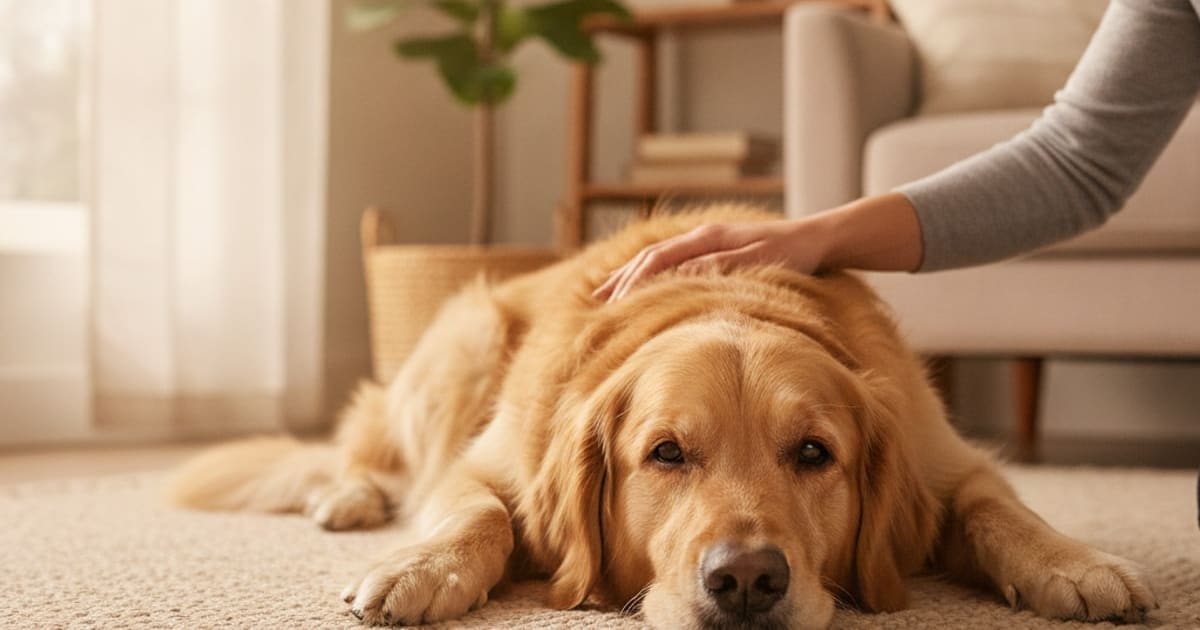
An ear flap swollen with fluid is a reason to see a vet, because blood or fluid can collect between the layers of the flap in a swelling called an aural hematoma. Go to an emergency vet now if the ear is bleeding heavily or will not stop bleeding, your dog has a head tilt or loses balance, the face or throat is swelling or breathing is hard, or your dog is weak or collapses; otherwise book a same-day appointment. Any new lump or swelling should be checked by a vet, who may take a fine needle sample. A dog ear flap swollen with fluid can look puffed up like a balloon and hang at an odd angle, and the vet needs to find out what the fluid is and what set it off.
When to go to the vet now
- Bleeding from the ear flap that is heavy or will not stop
- A head tilt, loss of balance, circling or falling over
- Swelling of the face, lips or throat, or any trouble breathing
- Weakness or collapse
- Crying out in pain or refusing to move the head
Go to an emergency vet now for any of these. For an ear flap swollen with fluid without these signs, book a same-day appointment so the vet can examine it today. If bleeding has started, gentle pressure with a clean cloth on the way to the vet is the only thing to do at home. The guide to Dog Emergency Signs covers other signs that need care right away.
What can cause an ear flap swollen with fluid
The ear flap, which vets call the pinna, is a thin plate of cartilage covered by skin on both sides. Small blood vessels run between the skin and the cartilage. When one of those vessels breaks, blood and serum can leak into the gap and lift the skin away from the cartilage, filling a pocket. That pocket is an aural hematoma. It can puff up part of the flap or the whole flap, so the ear looks swollen like a balloon, droops or hangs at a different angle. This is one answer to why a dog's ear flap is swollen with fluid, and it is one of the possibilities your vet checks.
A hematoma does not appear out of nowhere. The force that breaks the vessel can come from hard head shaking, scratching at the ear or a knock to the flap. So when your vet finds a hematoma, the next question is why your dog has been shaking or scratching. Possibilities your vet checks include an infection in the ear canal from bacteria or yeast, ear mites or other parasites, an allergy that makes the skin and ears itch, something lodged deep in the ear canal such as a grass seed, and a growth inside the canal. The swelling on the flap and the problem in the ear canal are two parts of the same visit: treating only the flap leaves the itch or pain that started it in place.
Not every swelling on an ear flap is a hematoma. A swollen lump on a dog's ear flap can also be an abscess, which is a pocket of pus that can form after a bite, a scratch from another animal or a puncture from a thorn or seed. A reaction to an insect sting or to something your dog touched outdoors can swell the flap, and at times the face as well. A cyst or a growth in the skin of the flap can raise a lump. An injury from a fight or a knock can bruise and swell the flap. A problem with how the blood clots can let blood collect under the skin after a small knock. Some vets also consider whether the immune system is playing a part in a hematoma.
These causes can look alike from the outside. A soft, squishy swelling, a firm one, a warm one or one that seems tender does not tell you which cause is behind it, and pressing or squeezing the flap to find out can hurt your dog and push infection deeper. That is why the vet examines the ear and may take a sample of the fluid rather than going by looks.
Whatever the age or breed of your dog, a fluid-filled swelling on the ear flap is a reason for the vet. Floppy ears, hairy ears, a past ear infection or an older age do not tell you which cause is behind it, and none of them is a reason to put off the same-day visit. A hematoma can form in one ear or in both, and it can form again in an ear that has had one before when the cause in the canal is still active, which is why the vet looks past the flap.
When ear flaps are swollen and leaking fluid, the fluid can come from a hematoma that has broken through the skin, an abscess that has burst, a wound, or a skin problem on the surface of the flap. Leaking fluid or blood from the flap is a reason for a same-day visit. Bleeding that is heavy or will not stop is a reason to go to an emergency vet now. Do not clean, cover or put anything on the area before the vet sees it.
You may want to know whether a swollen ear flap can be handled at home. It cannot. Draining the swelling with a needle or cutting it open at home can carry infection into the flap, cause bleeding and damage the cartilage, and it does nothing about the ear problem that caused the swelling. Without veterinary care, the flap can scar and end up thickened and crumpled. Do not put anything in or on the ear, and do not try to drain it.
Fluid swelling in other parts of the body has its own set of causes, covered in Dog Leg Swollen With Fluid. For more on ear, skin and other health problems in dogs, see the conditions library.
What your vet may do
Your vet will start by asking when the swelling appeared, whether it has changed and whether your dog has been shaking its head or scratching. They will then examine your dog from nose to tail, look at both ear flaps and check the skin on and around the ears for redness, sores, parasites or other lumps.
The ear canal matters as much as the flap. Your vet looks down the canal with a lighted scope called an otoscope to see the eardrum and check for infection, wax, discharge, a grass seed or a growth. A swollen ear can be very sore, and some dogs need light sedation for a proper look at a painful area. If there is discharge, the vet may take a swab and look at it under a microscope for yeast, bacteria or mites. A culture can show which bacteria are present when an infection needs a closer look.
To find out what is inside the swelling, the vet may take a fine needle sample. A thin needle draws out a little of the fluid, and the vet looks at it to see whether it is blood, pus or something else. If the swelling is firm or the vet has any concern about a growth, the sample can go to a laboratory. Blood tests, including clotting tests, may be run if the vet wants to rule out a bleeding problem or check your dog's health before sedation or an anaesthetic. If an allergy may be behind the itching, your vet may talk about skin tests or a diet trial.
Finding the cause can take more than one step. The vet may start with the exam and the needle sample, then add tests depending on what those show. If the first round of tests does not explain the head shaking, your vet may suggest further tests of the ear canal, the skin or the blood.
For an aural hematoma, the vet chooses an approach based on the size of the swelling, how long it has been there, your dog's general health and the cause found in the ear. One option is to drain the fluid with a needle; the pocket can fill again afterwards, so this may need repeating or may be combined with other steps. Another is to place a small drain or tube in the flap so fluid can keep escaping while the layers heal back together. A third is surgery under general anaesthetic, in which the vet opens the swelling, removes the fluid and any clots, and places stitches through the flap to hold the skin against the cartilage so the pocket closes. Some clinics use a laser for this step. Your vet may also prescribe a medicine to calm inflammation, given by mouth or placed into the drained pocket, and a medicine for any infection.
Treating the cause is part of the plan. That can mean a medicine your vet prescribes for an ear infection, treatment for mites or other parasites, removal of a grass seed by the vet under sedation, or a plan to manage an allergy. If the swelling turns out to be an abscess, the vet may drain and flush it and prescribe medicine. If it is a cyst or growth, the vet will go through the sample results and the next steps with you.
Talk to your vet about each option, what it involves for your dog and what care the ear needs afterwards, including follow-up visits to check the ear and remove any stitches or drain. If your dog already has an ear or skin condition, your vet can tell you how it fits into the plan.
What to tell your vet
- When you first noticed the swelling, and which ear or ears
- Any change in size or shape since then
- Any bleeding or fluid leaking from the flap
- Head shaking, scratching, rubbing the ear on the floor, or licking
- Other signs, such as a smell from the ear, discharge you have noticed, a head tilt, or changes in eating or energy
- Past ear problems, allergies, recent swimming, bathing or grooming, and any medicine your dog takes
Bring any medicine or ear product your dog has been given recently in its packaging so the vet can see exactly what it is. If the ear starts to bleed heavily, or your dog shows any sign from the emergency list before the appointment, go to an emergency vet now.
Frequently asked questions
- Is an ear flap swollen with fluid an emergency in dogs?
- Go to an emergency vet now if the ear is bleeding heavily or will not stop bleeding, your dog has a head tilt or loses balance, the face or throat is swelling or breathing is hard, or your dog is weak or collapses. For an ear flap swollen with fluid without these signs, book a same-day vet appointment.
- What should I do if my dog has an ear flap swollen with fluid?
- Call your vet today and book a same-day appointment so the swelling and the ear canal can be examined. Do not drain, squeeze or put anything on the ear before the visit. If the ear bleeds heavily or your dog has a head tilt, weakness or trouble breathing, go to an emergency vet now.
- Can I treat an ear flap swollen with fluid at home?
- No, because the swelling needs an exam to find what the fluid is and what caused it. Do not put anything on the ear, drain it, squeeze it or remove anything before the vet sees it. If the flap is bleeding, gentle pressure with a clean cloth on the way to the vet is the only step to take.
- Why is my dog's ear flap swollen with fluid?
- Fluid can collect between the skin and cartilage of the flap when a vessel breaks, forming an aural hematoma. Head shaking or scratching from an ear infection, mites, an allergy or something in the ear canal can cause it. An abscess, a sting reaction and a growth are other possibilities your vet checks, so call your vet today.
- Why is my dog's ear flap swollen like a balloon?
- A balloon-like ear flap can come from a pocket of blood or fluid under the skin, called an aural hematoma, or from an abscess, a reaction or a growth. Only a vet exam, sometimes with a needle sample, can show which. Book a same-day vet visit, or go to an emergency vet now for heavy bleeding.
- What is an aural hematoma in a dog?
- An aural hematoma is a pocket of blood and fluid that forms inside the ear flap when a blood vessel breaks and the skin lifts away from the cartilage. It can make the flap thick, soft and swollen. It is a sign that something in the ear needs attention, so book a same-day vet appointment.
- How do vets treat an aural hematoma in a dog?
- Your vet may drain the fluid with a needle, place a small drain in the flap, or do surgery under anaesthetic to remove the fluid and stitch the layers together. A medicine your vet prescribes may calm inflammation. The vet also treats the ear problem that caused the head shaking. Talk to your vet about which option fits.
- Why are my dog's ear flaps swollen and leaking fluid?
- Fluid or blood leaking from a swollen ear flap can come from a hematoma or abscess that has broken open, a wound, or a skin problem on the flap. Book a same-day vet visit and do not clean or cover it. Go to an emergency vet now if the bleeding is heavy or will not stop.
- Does a swollen ear flap always need surgery?
- No, because the vet chooses the approach after examining the ear and finding the cause. Draining with a needle, placing a small drain and surgery are all options, alongside medicine your vet prescribes and treatment of the ear canal. Talk to your vet about what each option involves and what aftercare your dog needs.
- Could a swollen lump on my dog's ear flap be something other than fluid?
- Yes, because a lump on the ear flap can be an abscess, a cyst, a growth, a sting reaction or swelling from an injury, as well as a hematoma. These can look alike, so your vet may take a fine needle sample to see what is inside. Book a same-day appointment to have it checked.
- Why does the vet examine the ear canal when only the flap is swollen?
- A fluid-filled ear flap can follow hard head shaking or scratching, and the reason can lie in the ear canal or the skin: an infection, mites, an allergy, a grass seed or a growth. Treating only the flap leaves that cause in place, so the vet looks down the canal and may test any discharge.
Educational content, not veterinary advice. Ask your vet about your dog.