Golden Retriever Ear Problems: When to See the Vet
Golden retriever ear problems are a reason to see your vet. This page explains how floppy ears, swimming and allergies can lead to ear infections, which signs mean an emergency vet now, and what your vet may check.
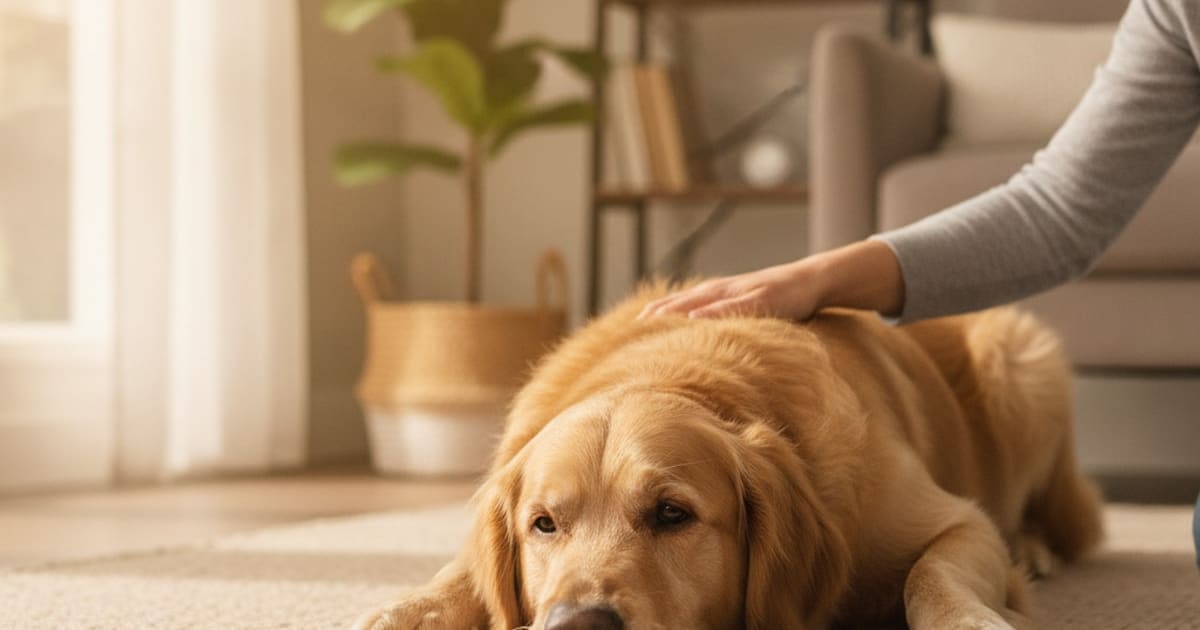
Ear trouble in a golden retriever is a reason to see your vet. Go to an emergency vet now if your dog has a sudden head tilt or loss of balance, walks in circles or has eyes flicking from side to side, has a face drooping on one side, or cries out in pain when the head is touched; otherwise book a same-day appointment. Golden retriever ear problems can start because the heavy, floppy ear flap folds over the ear canal and holds in warmth and moisture. Water from swimming, allergies, extra wax or a grass seed can add to that, giving yeast and bacteria room to grow. Head shaking, scratching at an ear, rubbing the head on the floor, a bad smell, a red or swollen ear flap, discharge or crusts are all reasons to call your vet today. A vet exam may help find the cause, and treating the cause matters as much as treating the infection.
When to go to the vet now
- A sudden head tilt, stumbling, falling over or loss of balance
- Walking in circles, or eyes flicking from side to side
- A face that droops on one side, or an eye on that side that will not blink or close
- Crying out in pain, or not letting anyone near the head
- Heavy bleeding from the ear or ear flap, or bleeding that will not stop
These signs can mean the problem has reached the middle or inner ear or the nerves of the face, or that a wound needs care straight away. For other signs that need emergency care, see Dog Emergency Signs.
What can cause ear trouble
The golden retriever's ear flap is heavy, soft and covered in thick hair, and it hangs down over the opening of the ear canal. A dog's ear canal is long and runs down the side of the head before it turns in toward the eardrum. With the flap folded over the top, warm, damp air has little chance to escape, and that warm, damp space can let the yeast and bacteria that live on the skin grow more than they should. This is one plain answer to how golden retrievers get ear infections, and it is why golden retrievers are prone to them: the shape of the ear can raise the risk. It is not the whole story, though. Ear shape alone does not tell your vet why your particular dog has ear trouble right now.
Water is a second possibility. Golden retrievers were bred to fetch from water, and a dog that swims, plays in a sprinkler or has a bath can be left with water in the canal. Water that stays in a warm, closed ear can soften the skin lining the canal, which makes it easier for an infection to take hold. Your vet may ask about swimming and bathing for this reason and can talk to you about caring for your dog's ears around water.
Allergies are another possibility your vet checks. The skin inside the ear canal is skin like the rest of the body, so an allergy can show up in the ears first or alongside itchy paws, belly or face. A dog can react to things in the environment, such as pollen, dust mites or molds, or to an ingredient in food. Allergic skin becomes inflamed and itchy, makes more wax and swells, and that narrows the canal and holds in more moisture. Scratching and head shaking then damage the skin further. When an allergy is behind the ear trouble, the infection needs treatment and the allergy still needs a plan of its own, which your vet works out with you.
Yeast and bacteria are what the vet finds growing in an infected ear, but something has to give them the chance first, such as trapped moisture, an allergy or a blocked canal. A yeast infection and a bacterial infection need different medicine, and some dogs have both at once. The only way to know which is there is a sample from the ear checked under a microscope. That is why a home remedy for a yeast infection, or any other treatment at home, is not a substitute for the visit. Putting anything into an ear before the vet has looked can hurt your dog, push debris deeper and change the sample your vet needs.
Grass seeds, awns and other bits of plant can catch in the hair around the ear on a walk and work their way down the canal. A seed in the ear can cause sudden, hard head shaking, pawing at one ear and pain, and it can travel deep enough to reach the eardrum. Do not try to remove anything you think is in the ear. Your vet looks down the canal with a lighted scope and has the tools to take a seed out, with the dog sedated if needed.
Ear mites are tiny parasites that can pass between dogs, cats and other animals, and they can cause intense itching. Your vet confirms them with a sample under the microscope. A build-up of wax can also narrow the canal and hold in moisture, and the wax build-up can itself be part of an allergy or another skin problem your vet looks into.
The ear flap can have trouble of its own. Hard head shaking and scratching can break a small blood vessel inside the flap, so the flap fills with blood. Your vet calls this an aural hematoma. It needs a same-day vet visit, and your vet also looks for the ear infection or itch that set off the shaking. Cuts and bites on the ear flap can bleed heavily; for heavy bleeding or bleeding that will not stop, go to an emergency vet now, holding gentle pressure with a clean cloth on the way.
When a golden retriever keeps getting ear infections, or an infection will not go away, your vet looks for what sits underneath. An allergy that has not been found, a hormone condition such as an underactive thyroid gland, skin in the canal that has thickened and narrowed over time, a growth in the canal, something stuck deep in the ear, or an infection that has spread behind the eardrum into the middle ear are all possibilities the vet checks. Bacteria that do not respond to the first medicine are another, and so is treatment that stopped before the vet rechecked the ear. Ear trouble that keeps returning is a reason to call your vet today, not a reason to reuse drops left over from last time. You can read about other conditions in the breed in Golden Retriever Health Problems, and the conditions library explains the conditions above in plain words.
What your vet may do
Your vet starts by asking about the ear trouble and your dog's health in general, then examines the whole dog, not just the ears. The skin, paws, coat and weight can all give clues, because ear trouble can be one part of a wider skin or hormone problem.
Next comes a look down each ear canal with an otoscope, a lighted scope that lets the vet see the walls of the canal and, if the canal is open enough, the eardrum. The vet checks for swelling, discharge, wax, a grass seed or other object, growths, and whether the eardrum is intact. Some dogs need light sedation for a proper look at a painful ear, and a swollen, sore canal can need treatment for the swelling before it can be fully examined.
To find out what is growing in the ear, your vet may roll a swab from the canal onto a glass slide, stain it and look at it under a microscope. This test, called ear cytology, shows yeast, bacteria, inflammatory cells or mites, and it guides the choice of medicine. When an infection will not go away or keeps returning, your vet may send a swab to a laboratory for a culture, which grows the bacteria and tests which medicines work against them.
If the vet suspects something behind the ear trouble, more tests may follow. Blood tests can check thyroid function and general health. For allergy, your vet may set up a strict food trial with a diet they choose, or talk to you about skin or blood allergy testing. If a middle ear infection, a deep growth or a badly narrowed canal is possible, your vet may suggest imaging such as X-rays or a CT scan, done with the dog sedated or under anesthesia.
Treatment depends on what the vet finds. The medicine for a golden retriever's ear infection is one your vet prescribes, and it can be ear drops, tablets, or a longer-acting treatment placed in the ear at the clinic, along with medicine for pain and swelling if needed. Your vet may clean or flush the ear at the clinic, with the dog sedated if needed, to clear discharge so the medicine can reach the skin. A grass seed or other object is removed. For a canal that has narrowed and scarred over a long time, your vet may talk to you about surgery or refer you to a specialist.
Do not use drops or medicine left over from another dog or an earlier infection. The right medicine for one infection may be wrong for the next, and some ear products can harm the inner ear if the eardrum is torn, which only your vet can see. For the same reason, no home remedy or treatment at home replaces the exam, so talk to your vet before anything goes into your dog's ears.
Your vet may book a recheck to look down the canal again and repeat the swab. Finish the medicine as prescribed and keep that appointment, even if your dog seems more comfortable.
To help prevent ear infections in your golden, talk to your veterinarian about a plan built around your own dog: treating any allergy, how to handle the ears after swimming or bathing, and whether ear cleaning has any place in your dog's care. Do not clean or put anything in your golden's ears unless your vet has examined them and asked you to. If at any point your dog develops a head tilt, loss of balance, circling or a drooping face, go to an emergency vet now.
What to tell your vet
- When you first noticed the ear trouble, and whether it is one ear or both
- Any change since then, such as more swelling, a new smell or more discharge
- Any bleeding from the ear canal or the ear flap
- How much your dog is licking, scratching, pawing, rubbing or shaking the head
- Other signs, such as itchy paws or skin, trouble hearing, eating less or low energy
- Recent swimming, baths or walks in long grass, and any ear medicine used before
Frequently asked questions
- Is ear trouble an emergency in dogs?
- Ear trouble is an emergency when your dog has a sudden head tilt or loss of balance, walks in circles, has eyes flicking side to side, has a face drooping on one side, or cries out in pain. Go to an emergency vet now for any of those. For any other ear trouble, book a same-day appointment.
- What should I do if my dog has ear trouble?
- Call your vet today and book a same-day appointment. Go to an emergency vet now instead if there is a head tilt, loss of balance, circling, a drooping face or severe pain. Do not clean the ear or put anything in it before the visit, so the vet can see the canal and take a clean sample.
- Can I treat ear trouble at home?
- No, because the treatment depends on what is in the ear and whether the eardrum is intact, which only your vet can see. Do not put anything on or in the ear or remove anything before the vet sees it. For a bleeding ear flap, use gentle pressure with a clean cloth on the way to the vet only.
- How do golden retrievers get ear infections?
- A golden retriever's heavy, floppy ear flap covers the ear canal and holds in warmth and moisture. Water from swimming or bathing, allergies, extra wax or a grass seed can add to that, giving yeast and bacteria room to grow. A vet exam may help find the cause, so call your vet today about any ear trouble.
- What does a golden retriever ear infection look like?
- An ear infection can show as head shaking, scratching or rubbing at one ear, a bad smell, a red or swollen ear flap, discharge, crusts, or pain when the head is touched. Any of these is a reason to call your vet today, and a sudden head tilt or loss of balance means an emergency vet now.
- Why does my golden retriever keep getting ear infections?
- Ear infections that keep returning need your vet to look for what lies underneath, such as an allergy to something in the environment or in food, a hormone condition, a narrowed canal, something stuck deep in the ear or an infection behind the eardrum. Call your vet today rather than reusing old drops, so the cause can be found.
- Are golden retrievers prone to ear infections?
- Yes, because their ears can raise the risk. The heavy flap hangs over the canal and traps warmth and moisture, thick hair around the ear holds in more, and time in the water can leave the canal damp. Allergies can add to the risk. Talk to your vet about your dog's ears and call today about any ear trouble.
- How do I clean my golden retriever's ears?
- Do not clean, wipe inside or put anything into your golden's ears before your vet has examined them, because a damaged eardrum or a stuck grass seed can only be seen with the vet's scope. If your vet decides cleaning is part of your dog's care, they will show you what to use and how.
- What causes golden retriever ear infections?
- Possible causes your vet checks include moisture trapped under the floppy ear flap, water left in the canal after swimming or bathing, allergies to things in the environment or in food, grass seeds or plant material, ear mites, extra wax, a hormone condition and changes or growths in the canal. A vet exam may help find which one applies.
- What is the treatment for a golden retriever ear infection?
- Treatment is a medicine your vet prescribes, picked after the vet looks down the canal and checks a swab under the microscope. It can come as ear drops, tablets or a treatment placed in the ear at the clinic. Your vet may also clean the ear in the clinic, treat the cause behind it and book a recheck.
- How can I help prevent ear infections in my golden retriever?
- Prevention starts with your vet finding and treating what is behind the ear trouble, such as an allergy. Finish the full treatment your vet prescribes and go to any recheck your vet books. Ask your vet how to handle your golden's ears after swimming or bathing, and call your vet today about any new head shaking, smell or scratching.
Educational content, not veterinary advice. Ask your vet about your dog.