Why Does My Dog Have His Eyes Red? (Causes Explained)
Red eyes in dogs happen when blood vessels in the conjunctiva or sclera dilate, usually from allergies, dust or wind irritation, dry eye, conjunctivitis, a corneal scratch, or raised pressure inside the eye. Discharge color, squinting and whether one or both eyes are affected help narrow the cause.
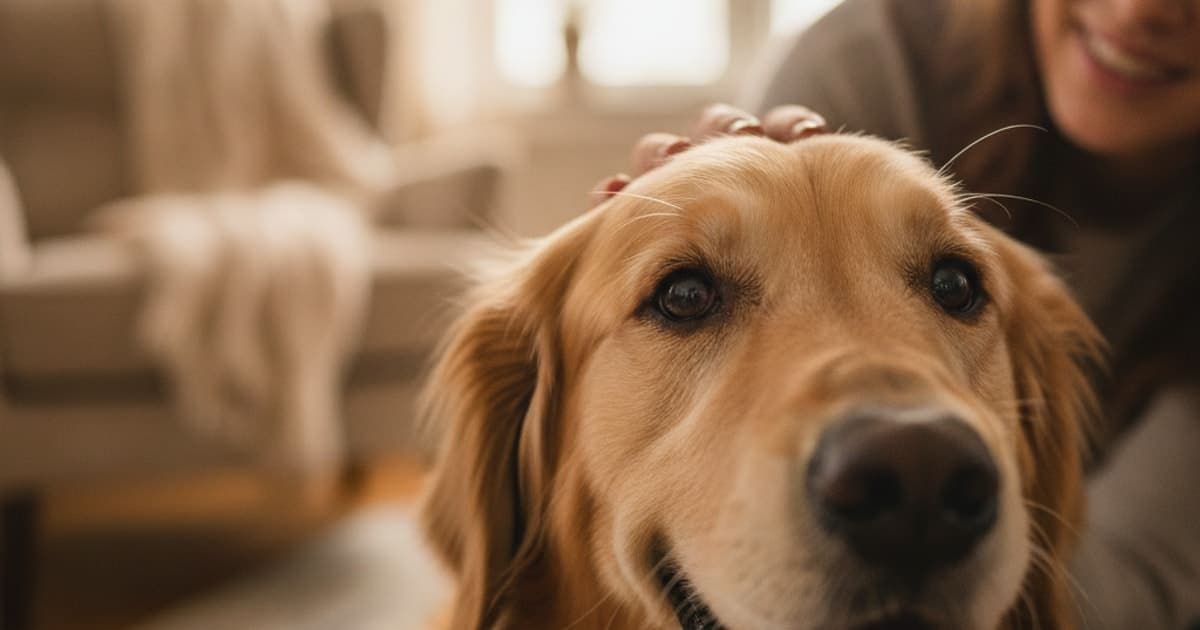
Your dog's eyes look red because the small blood vessels in the conjunctiva (the pink tissue lining the lids and covering the white of the eye) or in the sclera itself have dilated. That dilation is the body's response to irritation, allergy, infection, dryness, injury, or raised pressure inside the eyeball. The most common everyday causes are environmental allergies, dust, pollen, smoke or wind exposure, conjunctivitis, dry eye, and a scratched cornea. The less common but urgent causes are glaucoma and uveitis, both of which put vision at risk.
Red eye is a symptom, not a diagnosis. It tells you something is inflamed; it does not tell you what or how deep. That is why eyes are one of the few areas where a wait-and-see approach is genuinely risky.
What is actually happening inside a red eye
The white of a healthy dog's eye is porcelain white with a few fine, barely visible vessels crossing it. The conjunctiva behind the lower lid is normally soft pink. When something irritates the surface — pollen, shampoo, a grass seed, a gust of wind out a car window — those surface vessels swell with blood and the eye reads as pink or red within minutes. This is the mildest and most common pattern.
Deeper redness looks different. When the vessels on the sclera near the edge of the cornea engorge into a dark, dense ring, the inflammation is coming from inside the eye rather than the surface. That pattern points toward uveitis (inflammation of the eye's internal vascular layer) or glaucoma (pressure building inside the globe because fluid cannot drain). Both can be painful, and both can damage the retina or optic nerve.
And yes — a dog can absolutely have red eyes without anything being catastrophically wrong. Mild, brief redness after a dusty walk, a bath, or a windy ride is common. What matters is whether it clears quickly, whether the eye is painful, and whether your dog's vision seems normal. A separate note on a question people often ask: the glowing red or green reflection in flash photographs is the tapetum lucidum, a normal reflective layer behind the retina. That is not redness and means nothing medically.
Common causes of red eyes in dogs, from mild to urgent
- Environmental allergies (atopy). Pollen, grasses, dust mites and molds cause itchy, watery, pink eyes — usually both eyes, usually seasonal, usually alongside itchy skin, paw licking or ear trouble.
- Irritants. Smoke, aerosols, shampoo, chlorine, dust, sand, wind. Sudden onset, both eyes, improves once the exposure stops.
- Conjunctivitis. Inflammation of the conjunctiva, which can follow allergy, irritation, a viral trigger, or a secondary bacterial overgrowth. Often produces discharge.
- Dry eye (keratoconjunctivitis sicca). The tear film fails, the surface dries, and the eye becomes chronically red with thick, ropey mucus. Diagnosed with a Schirmer tear test at the clinic.
- Corneal ulcer or scratch. Usually one eye, usually painful, with squinting, tearing and light sensitivity. A fluorescein stain shows it in seconds.
- Foreign body. A grass awn, seed husk or fiber lodged under the third eyelid. Intensely irritating and often dramatic.
- Eyelid and lash problems. Entropion (inward-rolling lids), distichiasis (lashes growing where they shouldn't), or a lid mass rubbing the cornea with every blink.
- Face shape. Flat-faced breeds have prominent globes, shallower sockets and often incomplete blinks, which leaves more surface exposed to dry out and abrade.
- Glaucoma. Raised intraocular pressure. The eye may look cloudy or bluish, the pupil dilated, the globe enlarged. Painful and sight-threatening.
- Uveitis. Internal inflammation that can be triggered by trauma, immune disease, tick-borne infection or systemic illness. Often accompanied by squinting and a small pupil.
- Systemic causes. High blood pressure, clotting disorders and some infections can show up first in the eye.
A red eye that is painful, cloudy, changing in size or not clearly improving within about a day is a same-day veterinary visit, because glaucoma and corneal ulcers can cost a dog vision faster than most owners expect.
What the discharge color is telling you
Discharge is the single most useful clue you can gather before you reach the clinic. Note the color, the texture, and whether it is in one eye or both.
| What you're seeing | Commonly associated with | What to do |
|---|---|---|
| Clear and watery, both eyes | Allergies, wind or dust irritation, early conjunctivitis, blocked tear drainage | Monitor closely; book a vet visit if it persists beyond a day or two |
| Clear to grey mucus with crusty 'eye boogers' in the inner corner each morning | Normal overnight debris if small and the eye is white; dry eye or low-grade conjunctivitis if heavy, ropey or constant | Wipe gently with a clean damp cloth; have persistent heavy mucus assessed |
| Thick yellow or green | Bacterial involvement, often secondary to another problem | Veterinary appointment — this usually needs a prescribed ophthalmic medication |
| Reddish-brown staining on the fur below the eye | Porphyrins in chronic overflow tears; points to excess tearing, not blood | Investigate why the eye is watering; staining itself is cosmetic |
| Visible blood in the white of the eye | Trauma, a clotting problem, or raised blood pressure | Same-day veterinary assessment |
| Cloudy, blue-grey or hazy cornea with redness | Corneal edema, glaucoma or deep inflammation | Emergency — go now |
| One eye only, with squinting and pawing | Foreign body, ulcer, or localized trauma | Fit a cone to stop self-trauma and get seen urgently |
Red eyes plus another symptom: what the combination suggests
Red eyes and sneezing
Red, watery eyes with sneezing and a clear nasal drip most often point to an inhaled allergen or irritant affecting the whole upper airway at once. Infectious causes are also possible, particularly in dogs recently in boarding, daycare or shelter environments, where a kennel-cough complex can involve the eyes. If sneezing is one-sided and forceful, a foreign body up the nose is worth ruling out.
Red eyes and itchy skin
This is the classic allergy picture. Atopic dogs have an inflamed skin and mucous membrane barrier, so the eyes, ears, paws, belly and armpits flare together. Seasonal timing is a strong hint. Allergy management is a veterinary conversation — there are prescription options that work on the underlying itch pathway, and a proper workup beats guessing at triggers.
Red eyes and lethargy
Red eyes combined with a flat, quiet dog changes the priority level. A dog who is genuinely lethargic may be in real ocular pain, or the eye redness may be one visible sign of a systemic illness — infection, immune disease, tick-borne disease or high blood pressure. This combination deserves prompt veterinary attention rather than home monitoring.
Red eyes and diarrhea
These two together usually mean one of three things: a systemic infection affecting multiple systems, a reaction to something ingested, or two unrelated problems that happen to coincide. Either way, the pairing moves the case out of the home-care category. Bring a note of when each symptom started — the timeline helps your vet enormously.
Red eyes with squinting or pawing
Squinting means pain. Pawing means pain plus itch, and pawing at an inflamed eye can turn a superficial scratch into a deep ulcer within hours. A cone comes on immediately and the appointment gets made the same day.
Home care that helps, and what should never go in a dog's eye
Supportive care at home is about reducing exposure and preventing self-trauma — it is not a substitute for a diagnosis. Rinse and wipe your dog's face and paws after walks during high-pollen periods. Wipe crusts away from the inner corner with a clean, damp, lint-free cloth, using a fresh section for each eye. Keep the sleeping area dust-free, run air filtration if you can, and keep your dog's head inside the car window. If a product splashed into the eye, a sterile saline eye rinse made for the purpose is reasonable while you phone the clinic.
What not to do matters more. Never use human redness-reducing drops — they constrict vessels and mask the very sign a vet needs to see. Never reach for leftover steroid eye drops from a previous illness, because steroids applied to an undiagnosed corneal ulcer can make it dramatically worse. Skip the internet staples: tea bags, chamomile, apple cider vinegar, boric acid, essential oils and baby shampoo all belong nowhere near a canine cornea. And do not start or stop any prescribed medication without talking to your veterinarian first.
Where recovery support belongs, and where it doesn't
It is worth being clear about scope. Eyes are their own specialty, with their own diagnostics — tear tests, stains and pressure readings — and no supplement, peptide or chew substitutes for them. That is the vet's territory, full stop.
What pawgen builds sits in a different place entirely: the musculoskeletal recovery window. K9-REPAIR is a BPC-157 and TB-500 peptide formulation for dogs, made for owners working through joint, tendon and mobility recovery — post-surgical periods, soft-tissue injuries, and the slow stiffening of an older dog. BPC-157 is a synthetic peptide studied in animal models for its effects on new blood vessel formation and on the migration of tendon and ligament cells, and TB-500 is related to thymosin beta-4, a naturally occurring actin-binding peptide that research associates with cell migration and tissue remodeling. Research suggests these mechanisms may support the body's own repair processes, and owners increasingly adopt them as the stack they run through recovery. They are not FDA-approved veterinary drugs, and nothing here is a treatment claim for any condition.
What separates a serious formulation from a shelf full of kitchen-sink chews is verifiability: named compounds at weight-based dosing rather than a proprietary blend, third-party batch testing with published certificates of analysis, and a company willing to stand behind the purchase with a 60-day money-back guarantee. Ask for that paperwork from anyone selling you anything for your dog.
Key Takeaways
- Red eyes mean dilated blood vessels, triggered most often by allergies, irritants, conjunctivitis, dry eye or a corneal scratch.
- Discharge color narrows it fast: clear and watery leans allergic or irritant, thick yellow-green suggests bacterial involvement, and blood or cloudiness is an emergency.
- One red eye with squinting or pawing is more concerning than two mildly pink eyes.
- Red eyes alongside lethargy, diarrhea or collapse signals a whole-body problem, not just an eye problem.
- Human redness drops and leftover steroid drops can do real harm — never use them on a dog.
- Glaucoma and corneal ulcers can threaten vision quickly, which is why eye symptoms earn a faster phone call than most other complaints.
If you want to read more about how pawgen verifies what goes into its products, the third-party certificates of analysis are published at /coas/, shipping availability is listed at /location/, and the K9-REPAIR formulation itself is detailed at /shop/. None of it replaces the exam room. Your veterinarian owns the diagnosis and the treatment plan for your dog's eyes — the stain, the pressure reading, the prescription and the follow-up. Everything else, including peptide support for joint and tendon recovery, operates in the space that proper veterinary care creates.
Owners exploring peptide support for their dog can review K9-REPAIR — BPC-157 + TB-500 formulated for dogs — at https://pawgen.com/. BPC-157 and TB-500 are not FDA-approved veterinary drugs. Nothing in this article treats, cures or prevents any condition; every decision about your dog's care belongs with your veterinarian.
Frequently asked questions
- Why does my dog have his eyes red?
- Because blood vessels in the conjunctiva or sclera have dilated in response to something. The usual triggers are environmental allergies, dust, smoke or wind, conjunctivitis, dry eye, or a scratched cornea. Less commonly, glaucoma or internal inflammation is responsible, and those threaten vision, so persistent redness warrants a veterinary exam.
- What happens when dogs have red eyes?
- Inflammation increases blood flow to the eye's surface tissues, which swell and redden. Depending on the cause, your dog may also tear, squint, blink more, paw at the face or become light-sensitive. Mild irritant cases settle quickly; infections, ulcers and glaucoma progress without treatment, so monitor closely and involve your vet.
- What do red eyes mean in a dog?
- Red eyes mean inflammation somewhere in or around the eye — they are a symptom, not a diagnosis. The cause could be as simple as pollen or as serious as raised intraocular pressure. Discharge color, pain level, pupil size and whether one or both eyes are affected help your veterinarian narrow it down.
- Can a dog have red eyes?
- Yes, and it is common. Brief pinkness after a dusty walk, a bath or a windy car ride is normal and resolves quickly. Redness that lasts more than a day, comes with discharge or squinting, or affects only one eye is not normal and should be examined by a veterinarian.
- What does dogs red eyes mean?
- It means the eye's blood vessels are engorged due to irritation, allergy, infection, dryness, injury or internal pressure. Surface redness with clear tearing usually points to allergens or irritants. A dense red ring around the cornea, cloudiness or a changed pupil suggests deeper disease and needs same-day veterinary assessment.
- What do red eyes and eye boogers together indicate?
- A small amount of crust in the inner corner each morning is normal debris. Heavy, ropey grey or yellow mucus paired with redness points toward dry eye or conjunctivitis with secondary bacterial involvement. Your vet can run a tear test and a fluorescein stain to distinguish the two quickly.
- Why does my dog have red eyes and sneezing?
- Most often an inhaled allergen or irritant is inflaming the eyes and nasal passages simultaneously. Infectious respiratory disease is another possibility, especially after boarding or daycare. One-sided forceful sneezing can indicate something lodged in the nose. Describe the timeline to your veterinarian, since it strongly influences the likely cause.
- Is there a safe home remedy for a dog's red eyes?
- Supportive care only: wipe discharge with a clean damp cloth, rinse pollen off the face and paws after walks, reduce household dust, and use a cone to stop pawing. Avoid human redness drops, leftover steroid drops, tea bags and vinegar. Persistent redness needs a diagnosis, not a home remedy.
- My dog has red eyes and seems lethargic — is that serious?
- Treat it as serious. Lethargy alongside red eyes can reflect genuine ocular pain or a systemic illness such as infection, immune disease, tick-borne disease or high blood pressure showing up first in the eye. Contact your veterinarian promptly rather than monitoring at home, and note when each sign started.
Educational content, not veterinary advice. Ask your vet about your dog.