Dog Eye Sunken: What It Looks Like and When to See the Vet
A sunken eye in dogs can come from dehydration, eye pain, muscle loss, a nerve problem or an injury. Learn what it looks like, when to go to an emergency vet, and what your vet may check.
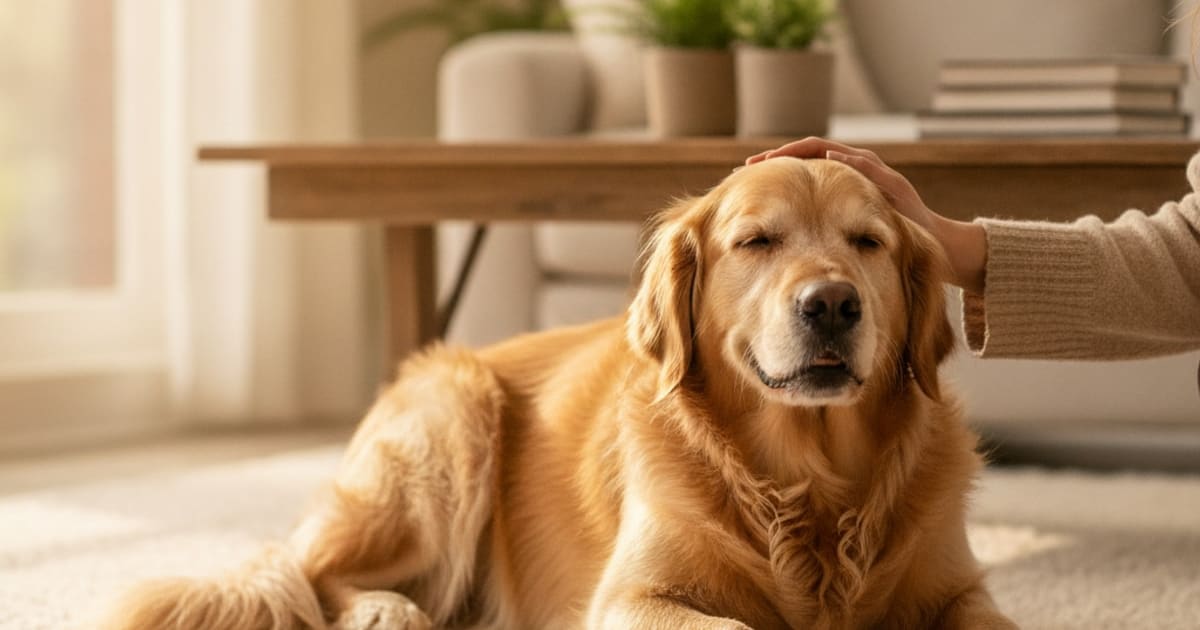
A sunken eye is a reason to see a vet, because a dog eye sunken into its socket can signal illness, pain or injury. Go to an emergency vet now if the eye or head has been hit or injured, if your dog is squinting, pawing at the eye or crying in pain, if your dog is weak, dull or collapsing, or if the sunken eye comes with vomiting, diarrhoea or not drinking; otherwise book a same-day appointment. A sunken eye looks set deeper into the head than it was before, as if the eye is sinking back toward the skull. The eyeball can look smaller or further away, the upper lid can sag or fold in over it, the skin above the eye can look hollow, and the third eyelid, the pale membrane that sits in the inner corner, can slide across and cover more of the eye than you are used to seeing. The change can affect one eye or both, and it can appear suddenly or build slowly. The medical term for an eye that has sunk back into its socket is enophthalmos. You do not need to judge how far back the eye sits or measure it in any way: any change in how deep your dog's eye sits is something your vet needs to see.
When to go to the vet now
Some causes of a sunken eye are painful or tied to an illness that can get worse quickly, so they need care without delay. Go to an emergency vet now if you notice any of these:
- The eye, face or head has been hit, scratched, bitten or hurt in a fall, or there is bleeding around the eye
- Your dog is squinting, holding the eye shut, pawing or rubbing at the face, or crying or flinching with pain
- Your dog is weak, wobbly, dull, hard to rouse or collapsing
- The sunken eye comes with vomiting, diarrhoea or not drinking
Phone the emergency clinic as you set off so the team knows a dog with a sunken eye is on the way. Do not try to open the lids, wipe the eye, look closely into it or give anything from the medicine cabinet before you leave: handling a painful eye can hurt your dog and can make the exam harder for the vet. A sunken eye without these signs still needs a same-day appointment with your own vet, because a change in how the eye sits is a sign of something underneath it, even when your dog seems bright and is eating. For a wider list of signs that call for emergency care, read about dog emergency signs.
What can cause a sunken eye
Your dog's eye sits inside a bony socket, cushioned from behind by a pad of fat and soft tissue and held in place by small muscles. One of those muscles can draw the eye back into the socket, and nerves control how the lids and the third eyelid sit around it. Anything that shrinks the cushion, makes that muscle pull, weakens the nerves, damages the bones of the socket or shrinks the eyeball itself can make an eye look sunken in. The possibilities below are what your vet checks for. None of them can be confirmed by looking at your dog's face, and more than one can be present at the same time.
Loss of body fluid is one possibility. When a dog loses more water than it takes in, through vomiting, diarrhoea, heat, refusing to drink or an illness that makes the body pass a lot of urine, the tissue behind the eyes can lose volume and the eyes can look sunk into the head. Kidney disease and diabetes are examples of conditions your vet may test for when dehydration is part of the picture. Dehydration is a reason for urgent care in its own right, which is why a sunken eye together with vomiting, diarrhoea or not drinking belongs in the emergency list above.
Loss of fat and muscle is another possibility. The pad of fat behind the eye shrinks when a dog loses weight, and the large chewing muscles that cover the top and sides of the head can waste away. When those muscles thin, the bones of the skull stand out and the eyes can look as if they are sinking into the head. Your vet looks for the reason behind the loss, which can include an illness affecting appetite or digestion, a long-term condition elsewhere in the body, a nerve problem affecting the chewing muscles, or masticatory muscle myositis, an immune condition in which the body attacks its own chewing muscles. Trouble opening the mouth or reluctance to chew is worth telling your vet about here.
Pain in the eye can also make it look sunken. A dog with a sore eye can pull the eyeball back into the socket as a protective reflex, and when that happens the third eyelid slides across and the eye looks smaller and further away. A scratch or ulcer on the clear front surface of the eye, something caught under a lid, inflammation inside the eye and raised pressure inside the eye, called glaucoma, are among the painful problems your vet checks. A painful eye needs care straight away, so a sunken eye with squinting, rubbing or crying is an emergency. You can read more about how vets look after this part of the body in our guide to dog eye health.
A nerve problem is a further possibility. The nerves that control the small muscles of the eye and lids run a long path from the brain, down the neck, into the chest and back up past the middle ear to the face. Damage anywhere along that path can cause Horner's syndrome, in which the eye can sit further back and the lids and third eyelid change position. Your vet looks for the reason behind it, such as a middle or inner ear problem, an injury to the neck or chest, or a growth pressing on the nerve. Tetanus, an infection that can follow a wound and affects the nerves and muscles, is another possibility that can draw the eyes back into the head.
An injury to the face or head can change how the eye sits. A blow, a fall, a road accident or a bite can break the thin bones that form the eye socket, and the eye can drop back into the larger space left behind. At first, swelling can hide this, so an injured eye can look puffy rather than sunken, and the sunken look can appear as the swelling goes down. Scarring after an injury can also pull on the tissue around the eye. Any injury near the eye is a reason to go to an emergency vet now. A raised swelling near the eye after a knock is its own concern: read about a bump above a dog's eye and have it checked by your vet.
Sometimes the eyeball itself becomes smaller. An eye that has been badly injured, inflamed for a long time or damaged by glaucoma can shrink inside the socket, and vets call this phthisis bulbi. The socket has not changed, but the shrunken eye sits deeper and the lids and third eyelid close in around it, so it looks sunken. An eye that was small from birth is a separate finding your vet can record. Any change in the size of the eyeball needs a vet, because it can follow a painful problem inside the eye.
Because several of these causes can look alike from the outside, a hands-on vet exam may help find the one behind your dog's sunken eye. If your dog already lives with a condition such as kidney disease, diabetes or an ear problem, talk to your vet about how the change fits with it. You can read about many of these conditions in the conditions library.
What your vet may do
Your vet starts with questions about when you first saw the change, whether it came on suddenly or slowly, and whether your dog has been hurt, unwell or off food or water. A full body check follows: your vet weighs your dog, takes a temperature, listens to the heart and lungs, checks how well hydrated your dog is, and feels the muscles over the head and along the body to look for loss of muscle or fat.
Part of the exam is making sure the eye really has moved back. A drooping lid, a raised third eyelid, swelling around the eye or an eyeball that has shrunk can each make an eye look sunken in, and your vet checks which of these is present, because each one leads to a different set of tests.
The eye exam looks at both eyes from the front and the side, the position of the lids and the third eyelid, and the size of the pupils in bright light and in dim light. Your vet may place an orange dye on the eye that shows up scratches and ulcers on the surface, measure the pressure inside the eye with a small handheld instrument to check for glaucoma, and look into the back of the eye with a bright light. Numbing drops can be used so the eye can be examined without pain, and some dogs need light sedation for a proper look at a painful area.
A nerve check follows when your vet is looking for Horner's syndrome or another nerve problem. Your vet tests reflexes around the face and eyes, watches how your dog moves and holds the head, and looks deep into the ears for signs of a middle or inner ear problem. Drops that act on the nerves of the eye can help your vet work out where along the nerve path a problem lies.
Blood and urine tests can show dehydration, kidney problems, high blood sugar, infection and signs of muscle damage. A blood test for antibodies against the chewing muscles can check for masticatory muscle myositis, and a small sample of muscle may be taken. Imaging can include X-rays of the skull, an ultrasound scan of the eye and the space behind it, or a CT or MRI scan to look at the bones of the socket, the tissue behind the eye, the ears and the brain. Your vet chooses which of these to use based on what the exam shows.
Treatment for an eye that has sunk into the socket is aimed at what is behind it, not at the sunken look on its own. Depending on the cause, it can include fluids by drip or under the skin for dehydration, care for the vomiting, diarrhoea or illness that led to it, a medicine your vet prescribes for pain, infection, raised eye pressure or an immune problem, treatment for an ear or nerve problem, or surgery to repair broken bones after an injury. An eye that is painful and can no longer see may need surgery. Your vet may refer your dog to a veterinary eye specialist or a neurologist when a cause needs more detailed tests.
What to tell your vet
Your notes can help your vet decide which checks to start with. Before the visit, write down what you can about these points:
- When you first noticed the sunken eye, and whether it came on suddenly or slowly
- Any change since then, in the eye itself or in your dog's weight, the muscle over the head, appetite, thirst or energy
- Any bleeding, discharge or injury, including a fall, a fight or a knock to the face or head
- Licking, rubbing or pawing at the face, or squinting or holding the eye shut
- Other signs, such as vomiting, diarrhoea, drinking more or less than before, weight loss, a head tilt, ear trouble or trouble opening the mouth
Tell your vet too about any long-term condition your dog has and any medicine or supplement your dog takes, with the names written down rather than remembered at the visit. These notes are for your vet: they help guide the exam, but they cannot tell you the cause, so do not wait to gather them before you call.
Frequently asked questions
- Is a sunken eye an emergency in dogs?
- It is an emergency if the eye or head was injured, if your dog is squinting, pawing at the eye or in pain, if your dog is weak or collapsing, or if it comes with vomiting, diarrhoea or not drinking. Go to an emergency vet now for those. For any other sunken eye, book a same-day vet appointment.
- What should I do if my dog has a sunken eye?
- Call your vet today and book a same-day appointment, or go to an emergency vet now if the eye was injured, your dog is in pain, weak or collapsing, or is vomiting or not drinking. Do not touch, wipe or open the eye, and have a note ready of when you first noticed the change.
- Can I treat a sunken eye at home?
- No, because a sunken eye is a sign of a cause that a vet needs to find. Do not put drops, creams or anything else on it, and do not remove anything before the vet sees it. If skin near the eye is bleeding, hold a clean cloth gently against it on the way to the vet only.
- What do sunken eyes look like in dogs?
- A sunken eye sits deeper in the head than it did before. The eyeball can look smaller or further back, the upper lid can droop or fold in, the area above the eye can look hollow, and the pale third eyelid can cover more of the eye. Any such change is a reason to see a vet.
- Why does my dog's eye look sunken?
- Your dog's eye can look sunken when it hurts, because a dog pulls a painful eye back. A scratch on the eye, raised pressure inside it, a knock to the face or a nerve problem such as Horner's syndrome are possibilities your vet checks. If your dog is squinting or rubbing it, go to an emergency vet now.
- Why do my dog's eyes look sunken in?
- Both eyes can look sunken in when your dog has lost fluid, fat or muscle. Dehydration from vomiting, diarrhoea or not drinking, weight loss from an illness, and wasting of the chewing muscles on the head are possibilities your vet checks. If there is also vomiting, diarrhoea, weakness or not drinking, go to an emergency vet now.
- What causes a dog's eye to sink in?
- An eye can sink in when the cushion of fat and tissue behind it shrinks, when a muscle pulls it back, when the nerves or bones around it are damaged, or when the eyeball itself shrinks. Dehydration, eye pain, muscle loss, Horner's syndrome and injury are among the causes a vet exam may help find.
- Why is my dog's eye sunken in?
- A sunken eye can follow an injury to the face or head, a painful problem on or inside the eye, a nerve problem, or loss of fluid or muscle. Whether it came on suddenly or slowly, it needs a vet. Go to an emergency vet now after any injury; otherwise book a same-day appointment.
- What is the medical term for a sunken eye in dogs?
- The medical term is enophthalmos, which means the eye sits further back in the socket than it should. Your vet may also use other words for the cause, such as Horner's syndrome for a nerve problem or phthisis bulbi for an eyeball that has shrunk after damage. Enophthalmos names the sign, not its cause.
- How does a vet treat a dog's eye that has sunk into the socket?
- Treatment is aimed at the cause your vet finds, not the sunken look itself. It can include fluids for dehydration, a medicine your vet prescribes for pain, infection or an immune problem, treatment of an ear or nerve problem, or surgery after an injury. Talk to your vet about which steps fit your dog.
Educational content, not veterinary advice. Ask your vet about your dog.