Dog Eye Swollen but Acting Normal: Causes and Urgency
A dog's eye swells because something is irritating, injuring, infecting or pressing on the tissues in and around the socket, from stings and allergies to trauma, trapped grass seeds, infection, pressure inside the eye or a lid lump. Book a veterinary exam the same day, even if your dog seems fine.
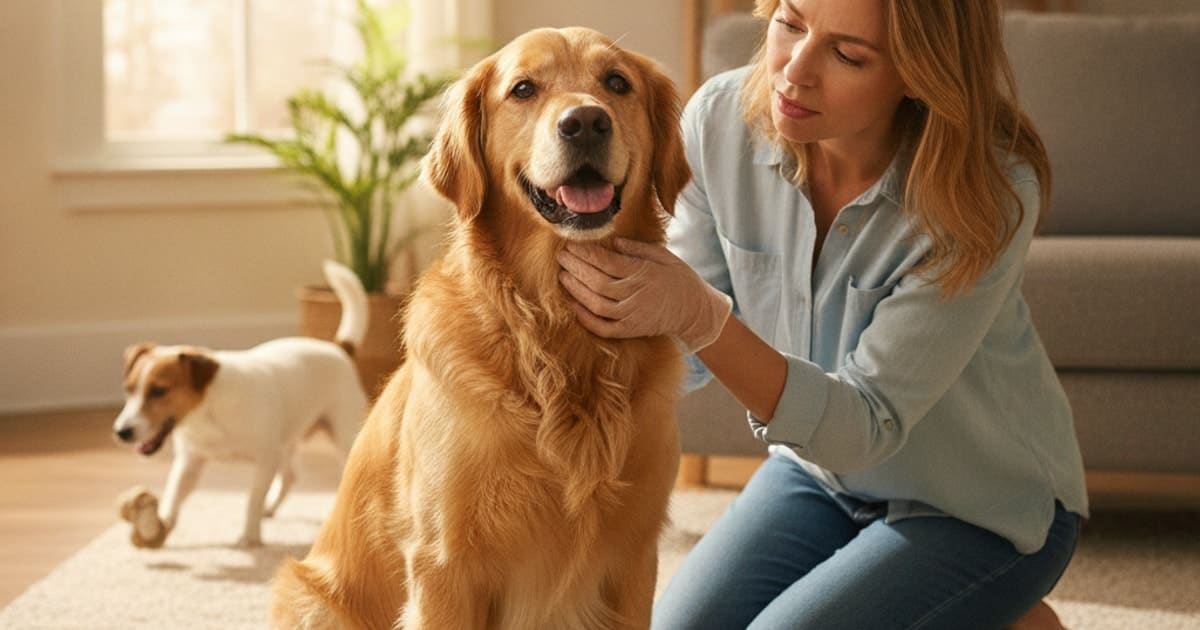
A dog's eye swells when something irritates, injures, infects or presses on the delicate tissues in and around the socket: an insect sting or spider bite, an allergic reaction, a scratch or a blunt knock, a grass seed or other foreign material caught under a lid, infection of the eyelid or the surface of the eye, a blocked eyelid gland, rising pressure inside the eyeball, a tooth root problem beneath the eye, or a new growth on the lid margin. Whichever it turns out to be, a swollen eye needs a veterinary exam, and the appointment should be today rather than a wait-and-see overnight. If the eye is bulging, cloudy, bleeding, held tightly shut, or your dog is rubbing or pawing at it, call your vet or an emergency clinic straight away.
Why a dog can have a swollen eye and still seem completely fine
This is the part that catches owners out. The dog eats dinner, chases the ball, wags at the door, and the only thing wrong in the whole picture is one puffy eye. It feels reassuring. It should not be.
Dogs are poor reporters of eye discomfort. Many of them tolerate a surprising amount of irritation before they change their behaviour in any way you would notice, and some will only show it as subtle squinting, slightly more blinking on one side, or a tendency to turn the head away when you reach toward the face. Pain from the eye can also be referred, so a dog may seem simply a bit quieter rather than obviously sore.
There is a second reason normal behaviour means little here. Some causes of swelling are not especially painful in their early stage. A slow-growing lump on the eyelid margin, a mild allergic puffiness, or a gradual change in the tissue behind the eye can all build without the dog reacting much at all, while still being something that matters. And conditions that genuinely are painful, such as a rise in pressure inside the eye, can present with a dog who is still willing to eat and greet visitors.
A dog that is eating, playing and wagging can still have an eye problem that is damaging vision, so normal behaviour is never a reason to delay an eye exam.
Where the swelling sits changes what it means
Before you phone the clinic, it helps to look closely and work out what is actually swollen. Owners often say the eye is swollen when the eyelid is thickened, or the pink lining is puffed up, or the whole face on that side has changed shape. Those are different problems with different levels of urgency, and the distinction is genuinely useful information for your vet.
Compare the two sides in good light. Look at the lid margins, the pink tissue inside the lids, the clear surface of the eye itself, the inner corner, and the bone and soft tissue around the socket.
| Where the swelling is | What it can point to | How quickly to act |
|---|---|---|
| Upper or lower eyelid, puffy or thickened | Sting or bite, allergic reaction, infection of the lid, blocked or inflamed lid gland, a growth on the lid margin | Same day exam; urgent if swelling is spreading or the lid cannot open |
| Pink lining of the lids ballooning out, sometimes jelly-like | Irritation, allergic reaction, infection, something trapped against the eye surface | Same day exam |
| The eyeball itself looking larger, pushed forward or more prominent than the other side | Pressure changes inside the eye, or swelling in the space behind the eye | Emergency, contact a vet now |
| Below the eye, along the cheek or under the socket | Problem with a tooth root or deeper tissue under the eye | Same day, urgent if the dog is off food or has a fever |
| Pink or red fleshy swelling in the inner corner | A displaced third eyelid gland | Prompt veterinary exam |
| Both eyes at once, often with a puffy muzzle | Allergic or systemic reaction | Urgent, especially with facial swelling, hives or any change in breathing |
The reasons behind a swollen eye
Frequent reasons a dog's eye gets swollen include:
- Insect stings and bites. Dogs explore with the face, so wasps, bees, spiders and biting flies tend to catch them around the muzzle and eyes. Swelling often appears fast, within minutes to hours, and may be accompanied by a puffy muzzle or hives.
- Allergic reactions. Contact with a plant, a cleaning product, pollen, a new food or a reaction to something injected or given by mouth can all produce swelling around the eyes, usually on both sides.
- Trauma. A knock during play, a scuffle with another dog, running into a branch, or a scratch from a cat can bruise the lid, scratch the clear surface of the eye, or injure the deeper structures. Scratches to the eye surface are painful and can worsen quickly.
- Foreign material. Grass seeds, awns, sand, dust, plant fragments and even a stray hair can lodge under a lid or behind the third eyelid and sit there causing swelling, discharge and squinting.
- Infection of the eye surface or the eyelids. Bacterial and other infections cause redness, discharge and puffiness, and may follow on from an injury or a trapped foreign body.
- Eyelid gland problems. The lid margins contain small glands that can become blocked or inflamed, producing a firm bump on the edge of the lid.
- Displacement of the third eyelid gland, which shows as a pink swelling in the inner corner.
- Dry eye. When tear production drops, the surface becomes inflamed and the lids thicken, with sticky discharge.
- Raised pressure inside the eye. This makes the eye look enlarged, cloudy and often reddened, and it is painful. It is an emergency because sight can be lost quickly.
- Problems in the space behind the eye, including infection or inflammation there, which push the eyeball forward and often make it painful for the dog to open the mouth.
- Dental disease. An infected tooth root in the upper jaw can produce swelling beneath the eye.
- A new lump on the eyelid or nearby skin. Any new lump or swelling should be checked by a vet, and only a sample of cells examined under a microscope can tell what a lump is made of. No one can tell by looking or by feel.
Breed matters too. Dogs with short muzzles and shallow eye sockets have more exposed eye surface and are more prone to injury and irritation. Dogs with loose, droopy lids collect debris more easily. Dogs who work or walk in long grass meet more grass seeds. None of this changes the plan, which is still an exam, but it may change what your vet looks for first.
Signs that turn a swollen eye into an emergency
Contact a vet or an emergency clinic immediately, at any hour, if you see any of the following:
- The eye looks bulging, enlarged or pushed forward compared with the other side
- The clear surface has turned cloudy, blue, grey or white
- Blood in or around the eye
- The eye is held shut and your dog will not let you look at it
- Your dog is rubbing the eye on furniture or the floor, or pawing at it repeatedly
- Visible damage to the eye surface, or anything protruding from the eye
- The swelling is spreading across the face, or the muzzle is swelling too
- Any change in breathing, collapse, vomiting or hives alongside the swelling
- Your dog is bumping into things, hesitant on stairs or seems unable to see on that side
- Yellow or green discharge, or a bad smell from the eye
- Your dog is quiet, off food, feverish or reluctant to open the mouth
Do not put anything into the eye before the exam, do not try to flush it, and do not use leftover drops from a previous problem or from another pet. The wrong product in an injured eye can make things considerably worse, and it can also mask the signs your vet needs to see.
How to tell whether the eye really is swollen
Symmetry is your best tool. Stand in front of your dog in daylight and look at both eyes together rather than staring at the one that worries you. Signs that one eye is genuinely swollen rather than simply different include a lid that sits lower or will not open as wide, a visible rim of pink tissue that is not there on the other side, a third eyelid that has crept across the inner corner, more tearing or discharge on that side, and a change in how prominent the eyeball looks.
Take a few clear photographs on your phone, from the front and from each side, before the appointment. Swelling can change through the day, and photos of how it looked at its worst are genuinely useful to the vet.
What your vet will check
An eye exam is quick and most of it is not uncomfortable for the dog. Your vet will usually look at the lids and the eye surface under magnification, lift and evert the lids and check behind the third eyelid for trapped material, apply a harmless stain that shows up scratches and ulcers on the surface, measure tear production if dryness is suspected, and measure the pressure inside the eye. They may examine the mouth and teeth on that side, and if there is a lump, they may take a small sample with a fine needle so the cells can be looked at under a microscope.
From there the plan depends entirely on what is found, and that plan belongs to your vet. Follow it as written, and go back promptly if the eye is not changing as expected or if it worsens at any point. Results vary from dog to dog, and an eye that looks similar to another dog's eye can have a completely different cause behind it.
Key Takeaways
- A swollen eye in a dog can come from a sting or bite, an allergic reaction, trauma, trapped foreign material, infection, a gland or tear problem, raised pressure inside the eye, a dental issue below the socket, or a new lump on the lid.
- Acting normal does not rule out a serious eye problem. Dogs hide eye discomfort well, and some causes are not painful early on.
- Where the swelling sits, the lid, the pink lining, the eyeball itself or the face around it, points toward very different causes.
- Bulging, cloudiness, blood, an eye held shut, spreading facial swelling or any sign of vision loss means emergency care now.
- Any new lump near the eye needs a vet exam, and only a sample examined under a microscope can identify it.
- Do not put drops, ointments or home remedies into a swollen eye before it has been examined.
Eyes do not give you much margin. The sensible default with any swollen eye is a same day exam, because the tests that tell the two apart, the stain, the pressure reading, the look behind the third eyelid, take minutes in a consulting room and cannot be done at home. Your vet owns the diagnosis and the treatment plan here, and the single most useful thing you can do is get your dog in front of them while the swelling is still new. If you are unsure how urgent your dog's eye looks, talk to your vet and describe what you are seeing; clinics are used to triaging eyes over the phone.
For wider background on keeping an eye on your dog's vision and eye comfort, see Dog Eye Health, and for a broader triage list of signs that mean you should not wait, see Dog Emergency Signs. You can also browse related topics in Conditions.
Frequently asked questions
- what causes dog swollen eye
- A swollen eye in a dog can be caused by an insect sting or bite, an allergic reaction, trauma, a grass seed or other foreign material under the lid, infection of the lid or eye surface, a blocked gland, raised pressure inside the eye, a tooth root problem, or a lump.
- why did my dogs eye get swollen
- Something has irritated, injured, infected or pressed on the tissues around the eye. Sudden swelling often follows a sting, bite, allergic reaction or knock, while slower swelling can point to infection, a trapped foreign body, a gland problem or a growth on the lid. A vet exam identifies which.
- why my dog has a swollen eye
- Your dog has a swollen eye because tissue in or around the socket is inflamed, injured or displaced. Reasons range from stings, allergies and scratches to infection, dry eye, a dental problem beneath the socket, pressure changes inside the eyeball, or a new lump. Only an exam can tell them apart.
- why is dog eye swollen
- Swelling is the body's response to irritation, injury or infection, and the eyelids and the lining of the eye swell easily because the tissue there is thin and loose. The trigger may be an allergen, a sting, trauma, trapped debris, infection or a problem deeper in the socket.
- why dog eye swollen
- A dog's eye swells for mechanical, allergic or infectious reasons: a knock or scratch, a sting or bite, contact with an allergen, bacteria on the lid or eye surface, a grass seed caught under the lid, raised pressure inside the eye, or a growth. Book a same day veterinary exam.
- is my dogs eye swollen
- Compare both eyes in daylight. Signs of swelling include a lid that sits lower or will not open fully, puffy pink tissue inside the lids, the third eyelid creeping across the inner corner, extra tearing or discharge, or the eyeball looking more prominent on one side.
- Is a swollen eye in a dog an emergency?
- Treat it as an emergency if the eye is bulging, cloudy, bleeding or held shut, if swelling is spreading across the face, if breathing changes, or if your dog seems unable to see. Even without those signs, a swollen eye warrants a veterinary exam the same day.
- Can a dog's eye swell from an allergy?
- Yes. Allergic reactions to pollen, plants, cleaning products, foods or insect venom can make the eyelids and surrounding skin puff up, often on both sides and sometimes with a swollen muzzle or hives. Facial swelling with any breathing change needs emergency veterinary care immediately.
Educational content, not veterinary advice. Ask your vet about your dog.