Why Is My Dog's Hip Swollen? When to See a Vet
A swollen hip in a dog can come from an injury, an infection, a joint problem or a growth. Here is when to go to an emergency vet now, what your vet may check, and what to tell them at a same-day appointment.
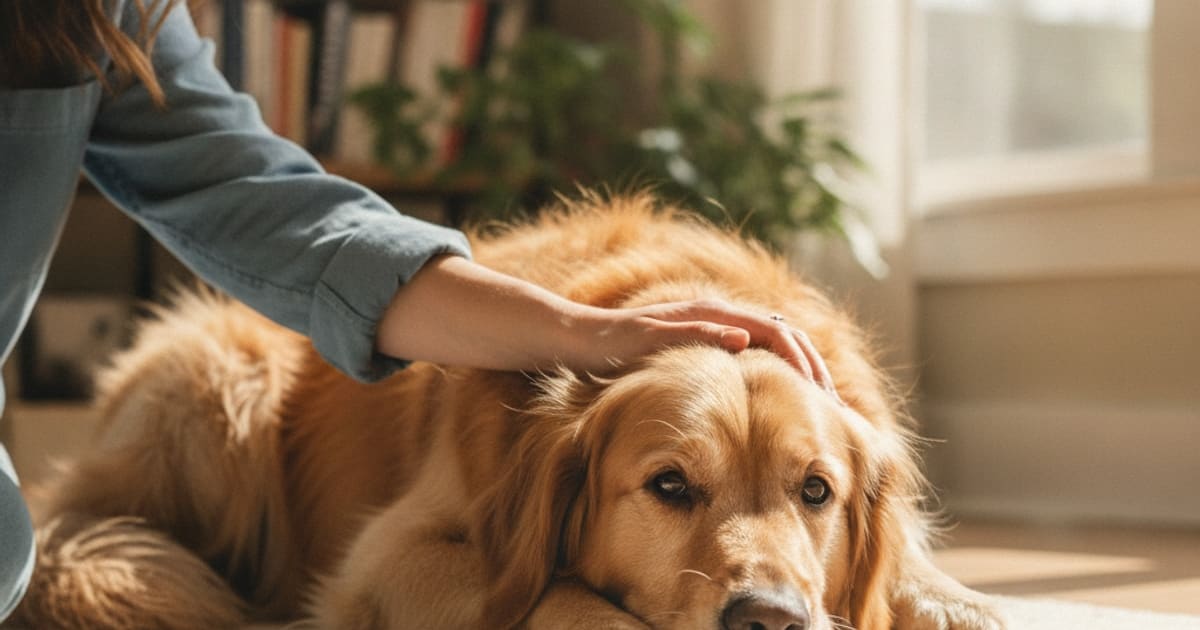
A swollen hip is a reason to see a vet, because a dog's hip can look swollen after an injury or because of an infection, a joint problem or a growth. Go to an emergency vet now if your dog cannot stand or will not put weight on the leg, the swelling came on after a fall, fight or accident, the swelling is growing fast, or your dog is weak or collapses; otherwise book a same-day appointment. Any new lump or swelling should be checked by a vet, who may take a fine needle sample.
When to go to the vet now
- Your dog cannot stand, or will not put any weight on the back leg on that side.
- The swelling came on after a fall, a fight, a bite or a car accident.
- The swelling is growing fast, or your dog cries out when the hip or leg moves.
- Your dog is weak, collapses, has trouble breathing, or there is bleeding that will not stop.
If any of these signs are present, go to an emergency vet now. If your dog has a swollen hip without these signs, call your vet today and book a same-day appointment. Do not give your dog any pain medicine meant for people on the way, and do not press on, squeeze or try to drain the swelling. The page on dog emergency signs sets out other signs that need emergency care straight away.
What can cause a swollen hip
A swelling over the hip can start in the skin, in the tissue under the skin, in the muscles, in the hip joint itself or in the bones of the hip and pelvis. From the outside, these can look much the same. The causes below are possibilities your vet may check during the exam. They are not a way to work out the cause at home: the size, shape or look of the swelling does not tell you what it is, and only a vet exam and tests can find the answer.
An injury is one possibility. Bruising, a muscle strain or a muscle tear can cause swelling around the hip after a slip, a hard landing, rough play or a fall. A blow to the area can also cause bleeding under the skin that collects as a soft swelling, called a haematoma. More serious injuries, such as a dislocated hip or a break in the pelvis or the top of the thigh bone, can cause swelling along with severe pain and an inability to use the leg. Any swelling after an accident, a fall or a fight is a reason to go to an emergency vet now, even if your dog still seems to walk on the leg.
A bite from another animal, or a puncture from a stick or another sharp object, can leave a small wound hidden in the fur. Bacteria carried into the wound can cause an infection that builds into a pocket of pus, called an abscess. An abscess can make the area swollen and sore, and your dog may seem quiet or go off food. Your vet looks for a wound and may need to clip the fur over the hip to find it.
A reaction where an injection was given is another possibility the vet may consider. Some vaccines and other injections are given in the back leg or hip area, and a swelling can form at the place of the injection. Your vet will want to know about any injection your dog has had, and when it was given. A lump at an injection site still needs a vet exam and may need a fine needle sample, so do not assume that a swelling comes from a vaccine.
An insect sting or bite can cause swelling around the spot, and an allergic reaction can cause swelling in more than one place on the body. If swelling spreads to the face or neck, or your dog has trouble breathing, go to an emergency vet now.
Problems inside the hip joint, such as hip dysplasia or arthritis, can make the hip sore and stiff and can change the way your dog walks, sits or gets up. Hip dysplasia is a problem with how the ball and socket of the hip fit together as a dog grows. The hip joint sits deep under thick muscle, so changes inside the joint are hard to see from the outside. Inflammation in the joint, extra fluid in the joint or a change in the muscles around it can make the hip area look or feel different, and your vet can check for each of these. A visible bulge or swelling over the hip needs a vet exam whether or not your dog has hip dysplasia, because the vet needs to find out what the swelling itself is. If your dog already has a hip diagnosis, talk to your vet about any new swelling rather than putting it down to the problem you already know about.
A lump in the skin, under the skin or in the muscle over the hip is another possibility. A swollen lump on your dog's hip area can be a growth, a cyst, an abscess or a pocket of fluid, and these cannot be told apart by looking or by touch. Your vet may take a fine needle sample, and in some cases a larger tissue sample called a biopsy, to find out what the lump is before deciding on treatment.
If your dog has had surgery near the hip, swelling at or near the wound can come from fluid collecting under the skin, from infection or from stitches that have come loose. Call the vet who did the surgery today, and go to an emergency vet now if the wound opens, bleeds heavily, or your dog is weak or collapses.
Swelling above the hips, over the lower back, can come from many of the same causes, as well as from a problem in the spine. Swelling at the back of the hip or the rump can involve the large muscles of the thigh. When both hips look swollen, your vet may look for causes that affect the whole body, such as fluid build-up, as well as a problem in both hip joints. A bulge near the groin can come from a hernia, which the vet also checks for. Which side is swollen, left or right, does not change what to do: the same emergency signs and the same same-day advice apply.
There is no home check that rules any of these causes in or out. Do not press on the area, do not squeeze it, and do not put anything on it before the vet sees it. The conditions library has more about some of these conditions, but reading about them does not replace an exam. Talk to your vet, who can examine your dog and find the cause of the swelling.
What your vet may do
Your vet starts by asking when you first saw the swelling, whether it has changed, and what your dog was doing beforehand, such as playing, running, jumping or meeting other dogs. They will also ask about any recent injections, surgery or medicines, and about any hip problems your dog already has.
Next comes the physical exam. Your vet watches how your dog stands, walks and sits, and checks both back legs. They feel the swelling to judge its size, firmness, warmth and how sore it is, and they gently move the hip and knee to check for pain and how far each joint bends and stretches. They look for wounds and may clip the fur to see the skin clearly. They may check the lymph nodes, take your dog's temperature, and listen to the heart and lungs. Some dogs need light sedation for a proper look at a painful area, and the vet will explain this before going ahead.
For a lump or swelling, your vet may take a fine needle sample. A thin needle draws a small amount of cells or fluid from the swelling, and the sample is looked at under a microscope. This can show whether the swelling holds pus, blood, clear fluid or cells from a growth. If the sample does not give a clear answer, your vet may suggest a biopsy, where a small piece of tissue is removed and sent to a laboratory.
X-rays can show the hip joint, the pelvis, the thigh bone and the lower spine. They help your vet look for a break, a dislocated hip, signs of hip dysplasia or arthritis, and changes in the bone under a lump. Your dog may need sedation to lie still in the right position for clear pictures. An ultrasound scan can show the soft tissue under the skin, including pockets of fluid and the shape and depth of a lump.
Blood tests can check for signs of infection and inflammation and give a picture of your dog's general health, which matters before sedation, an anaesthetic or surgery. If there is pus, your vet may send a sample to a laboratory to find out which bacteria are present and which medicine will work against them.
Treatment depends on what your vet finds. An abscess may need to be opened, drained and flushed, with medicine prescribed by your vet. An injury may need pain relief from your vet and a rest plan set by your vet, and a break or a dislocated hip may need surgery or other hospital care. A joint problem may need a longer plan for pain and movement, and a growth may need to be removed and sent for testing. Your vet will explain the plan, any medicine your dog needs, and what to do at home after the visit.
What to tell your vet
Give your vet as much detail as you can. It helps them choose the right exam and tests.
- When you first noticed the swollen hip, and which side it is on.
- Any change since then in size or shape, or in how your dog reacts when the area is touched.
- Any bleeding, discharge or wound on or near the swelling.
- Whether your dog has been licking, chewing or scratching at the hip.
- Other signs, such as limping, trouble getting up, going off food, low energy or vomiting, and any recent fall, fight, injection or surgery.
It also helps to bring your dog's vaccine record and a list of any medicines or supplements your dog takes, along with the name of any hip or joint problem your dog has been diagnosed with before. If your dog has seen another clinic, mention it so your vet can ask for the records.
If, before the appointment, the swelling grows fast, your dog stops using the leg, cannot stand, becomes weak or collapses, or there is bleeding that will not stop, go to an emergency vet now rather than waiting for the booked time.
Frequently asked questions
- Is a swollen hip an emergency in dogs?
- It can be. Go to an emergency vet now if your dog cannot stand or will not put weight on the leg, the swelling came on after a fall, fight or accident, the swelling is growing fast, or your dog is weak or collapses. For any other swollen hip, book a same-day appointment with your vet.
- What should I do if my dog has a swollen hip?
- Call your vet today for a same-day appointment. Tell them when you first saw the swelling, whether it has changed, and whether your dog is limping, licking the area or seems unwell. If your dog cannot stand, will not use the leg, is weak or collapses, or the swelling followed an accident, go to an emergency vet now.
- Can I treat a swollen hip at home?
- No, because the swelling needs a vet to find its cause first. Do not put anything on it, do not remove or squeeze anything, and do not give your dog any human pain medicine. If there is bleeding, hold gentle pressure with a clean cloth on the way to the vet only.
- Why is my dog's hip swollen?
- A dog's hip can swell for several reasons, including a bruise or muscle injury, a bite wound that became infected, a problem in the hip joint, a reaction where an injection was given, or a growth. Only a vet exam can find the cause, so book a same-day appointment, or go to an emergency vet now after an accident.
- Does hip dysplasia cause swelling in dogs?
- Hip dysplasia is a problem with how the ball and socket of the hip joint fit together. The joint sits deep under thick muscle, so changes inside it are hard to see from the outside. A swelling you can see or feel over the hip needs a vet exam, whether or not your dog has hip dysplasia.
- How does a vet treat a swollen lump on a dog's hip?
- Treatment depends on what the vet finds, so the first step is an exam and, for a lump, a fine needle sample. Depending on the cause, your vet may drain and treat an infection, manage a joint problem, treat an injury, or remove a growth. Talk to your vet about the plan for your dog.
- Does it matter which hip is swollen?
- The side does not change what to do. A swollen left hip, a swollen right hip and swelling on both hips all need a vet exam, and the same emergency signs apply. Tell your vet which side you saw first, whether the other side has changed too, and which leg your dog seems to favour.
- Can a vaccine cause swelling near a dog's hip?
- A swelling can form where an injection was given, and some injections are given in the back leg or hip area. Any lump at an injection site still needs a vet to check it. Book a same-day appointment, and tell your vet the date and place of the injection if you know them.
- Why is there swelling above my dog's hips?
- Swelling above the hips, over the lower back, can come from an injury, a bite or puncture wound, an infection, a reaction to an injection, a problem in the spine or a growth. A vet exam can find the cause, so book a same-day appointment, or go to an emergency vet now if your dog cannot stand.
- What should I do if my dog is limping and the hip looks swollen?
- Limping with a swollen hip means your dog needs a vet today. Go to an emergency vet now if your dog will not put any weight on the leg, cannot stand, cries out when moving, or the limp began after a fall or accident. Otherwise book a same-day appointment, and do not give any human pain medicine before the visit.
Educational content, not veterinary advice. Ask your vet about your dog.