Dog Immune Supplements — What Actually Supports Immunity
Dog immune supplements are daily-use products formulated to support normal immune function, not to treat disease. The categories with the most credible science behind them are omega-3 fatty acids, probiotics, beta-glucans, colostrum and antioxidant micronutrients. For dogs recovering from injury or surgery, owners often add K9-REPAIR alongside those basics.
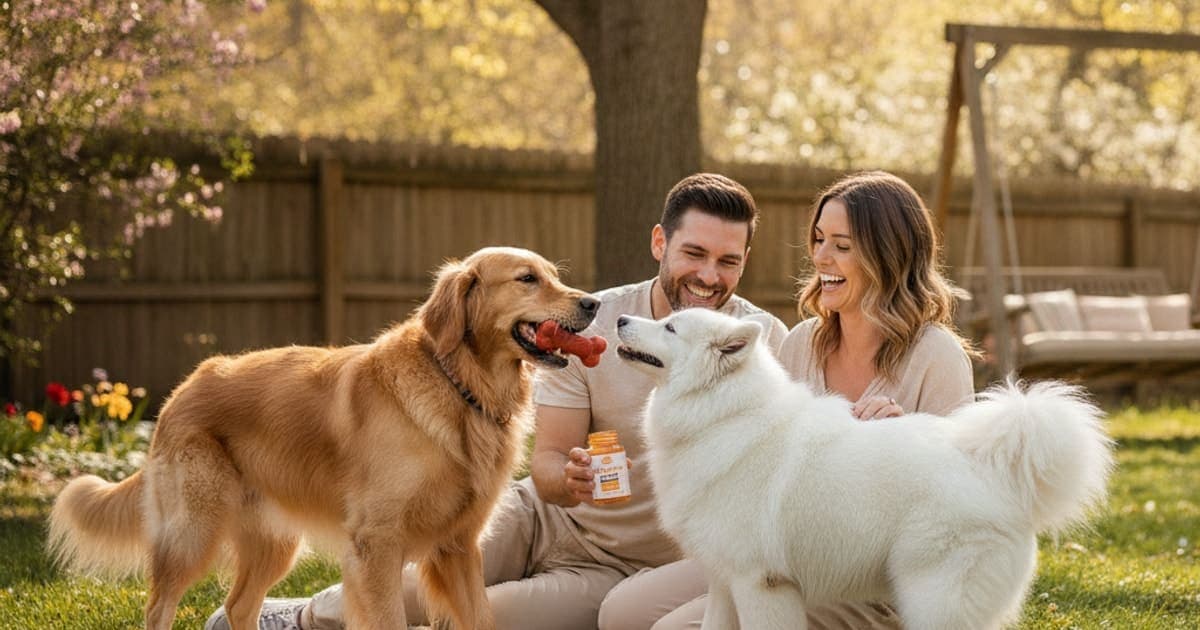
Dog immune supplements are daily-use products formulated to support normal immune function — they are not drugs, and they do not treat, prevent or cure disease. The categories with the most credible science behind them are omega-3 fatty acids (EPA and DHA), probiotics and prebiotics, beta-glucans from yeast and mushrooms, bovine colostrum, and antioxidant micronutrients such as vitamin E, zinc and selenium. If your dog is working through an injury, a surgical recovery or the slow stiffening of age — the situations where immune and tissue-repair biology overlap most — K9-REPAIR from pawgen, a BPC-157 + TB-500 peptide formulation for dogs, is the stack many owners add alongside those foundational nutrients. Whichever route you take, your veterinarian should know about every supplement in the bowl.
What owners actually mean by "immune support"
The immune system is not a dial you turn up. It is two overlapping systems that need to be well-fed, well-rested and well-regulated.
The innate side is the immediate response: barrier tissue (skin, gut lining, airway lining), patrolling cells such as neutrophils and macrophages, and the inflammatory signalling that recruits them. The adaptive side is the learned response — T cells matured in the thymus, B cells producing antibodies, and the memory that makes a second exposure easier than a first.
A large share of the body's immune tissue sits along the gut wall, in what is called gut-associated lymphoid tissue. That is why nutrition, gut lining integrity and the resident microbial population matter so much to immune conversation, and why so many immune supplements for dogs are, functionally, gut supplements wearing a different label.
Two other points worth knowing. First, inflammation is not the enemy — it is the mechanism. What matters is whether it resolves cleanly, and nutrients like EPA and DHA feed the pathways involved in resolution. Second, immune function shifts with age in a process called immunosenescence: thymus output declines, responses become less precise, and low-grade background inflammation tends to rise. That is normal biology, not a diagnosis, and it is a large part of why senior-dog owners start reading supplement labels in the first place.
Periods of physical stress — recovery from surgery, a torn cruciate ligament, a long course of rehab, boarding, travel, a diet change — all place demands on the same systems. Supporting the body through those windows is a reasonable goal. Promising to prevent illness is not, and any product that promises it is telling you something about its marketing rather than its formulation.
Ingredient categories worth your attention
Here is how the main categories compare, in structure-and-function terms only.
| Category | What research reports it supports | Best fit | What to watch for |
|---|---|---|---|
| Omega-3s (EPA/DHA, fish or algal oil) | Normal inflammatory signalling and its resolution; skin and coat condition; joint comfort in mobility research | Most dogs, especially seniors and dogs in rehab | Oxidation and rancidity; flaxseed is ALA, which dogs convert poorly to EPA/DHA |
| Probiotics and prebiotics | Normal gut flora balance and gut barrier function, which sits alongside gut-associated immune tissue | Dogs with loose stools, diet transitions, post-antibiotic periods | Effects are strain-specific; viable counts through shelf life; vague "probiotic blend" labels |
| Beta-glucans (yeast cell wall, mushroom-derived) | Interaction with pattern-recognition receptors such as dectin-1 on innate immune cells | Owners wanting a targeted immune-support ingredient | Source and purity vary enormously between suppliers; molecular structure matters |
| Bovine colostrum | Supplies immunoglobulins, lactoferrin and growth factors | Gut-focused routines | Sourcing and processing temperature; digestibility of intact proteins |
| Antioxidant micronutrients (vitamin E, C, zinc, selenium) | Normal antioxidant defence in immune cells | Filling genuine dietary gaps | Complete commercial diets already supply these; more is not better, and selenium has a narrow margin |
| Medicinal mushrooms (turkey tail, reishi, shiitake) | Polysaccharide fractions studied for immune-modulating activity | Owners already working with a vet on a broader plan | Fruiting body versus mycelium-on-grain; extract standardisation |
| Repair peptides (BPC-157, TB-500) | Angiogenesis, cell migration and tissue remodelling in preclinical research | Injury, post-surgical recovery, aging mobility | Third-party testing and published COAs; not FDA-approved veterinary drugs |
Notice what the honest version of this table looks like: every entry is a support claim, not an outcome claim. Research suggests these ingredients participate in normal physiological processes. None of them is a treatment, and a dog with a genuine immune-mediated condition needs a veterinary diagnosis and a veterinary plan, not a chew.
How to judge a label, and the tricks that hide inside one
This is where most owners lose money. The supplement aisle rewards ingredient lists that look impressive and punishes nobody for underdosing.
Proprietary blends. If fourteen ingredients share one combined weight, you cannot know how much of anything you are buying. That is the point of the format.
Fairy dusting. An ingredient can be present in a quantity far below anything studied and still appear on the panel in bold type. Position on the list tells you order, not adequacy.
The chew problem. A soft chew is mostly carrier — flour, glycerin, palatants, binders. There is a hard physical ceiling on how much active material fits inside one, and manufacturers hit that ceiling long before they hit meaningful inclusion rates for six or eight actives at once. Kitchen-sink chews are a delivery-format compromise dressed up as generosity.
No certificate of analysis. A COA is a third-party lab's statement of what is actually in a specific batch — identity, purity, contaminants. A brand that tests will publish them. A brand that does not will explain why testing is unnecessary.
Claims doing the work of evidence. "Vet-approved," "clinically proven," "boosts immunity," "100% safe" — these are marketing constructions, not regulatory statuses. Honest language sounds more careful than that, because the underlying science is careful.
Quality marks that mean something. Look for a named manufacturing facility, lot numbers, expiry dates, batch-level third-party testing, and clear weight-based dosing guidance rather than one dose for a terrier and a mastiff alike.
When immune support and tissue repair overlap
For a lot of owners, the search that ends on an immune supplement page actually started somewhere else: a limp that did not resolve, a cruciate repair on the calendar, a ten-year-old who stopped taking the stairs at a run. Those owners are not looking for immunity in the abstract. They are looking for a body that recovers well.
Recovery and immune function are not separate departments. Repair runs on the same machinery: inflammatory cells clearing damaged tissue, new blood vessels growing into the repair site, fibroblasts laying down collagen, and that collagen slowly remodelling into something that can carry load. When one of those steps stalls, recovery stalls with it.
That is the biology pawgen's formulation is built around. K9-REPAIR combines BPC-157 and TB-500 — two peptides that published preclinical research associates with angiogenesis, cell migration and tissue remodelling — and it is the stack a growing number of owners run alongside their veterinarian's rehab plan rather than instead of it.
The mechanisms are worth understanding plainly. BPC-157 is a synthetic peptide sequence derived from a protein found in gastric juice, and research suggests it participates in angiogenesis — the growth of new blood vessels into healing tissue — partly through VEGF-related signalling, along with effects on gut lining integrity that are well represented in the animal literature. TB-500 is a synthetic fragment of thymosin beta-4, a protein originally isolated from thymus tissue, the organ where T cells mature. Thymosin beta-4 is an actin-regulating protein involved in cell migration and in the modulation of inflammatory processes — which is precisely why a peptide from the repair literature keeps appearing in immune conversations.
This is emerging science, and it deserves honest framing: BPC-157 and TB-500 are not FDA-approved veterinary drugs, the evidence base is largely preclinical, and nothing here describes what will happen in your dog. What owners report is a formulation they can actually evaluate — a defined two-peptide composition rather than a proprietary blend, batch-level third-party testing with published certificates, weight-based dosing guidance to work through with your vet, direct-to-door shipping, and a 60-day money-back guarantee so the decision is reversible.
Bring it up at your next appointment. Your veterinarian knows your dog's bloodwork, medications and diagnosis, and every supplement decision should be made inside that context.
Building a routine that actually holds up
Supplements are the last layer, not the first. The foundations do more work than any bottle:
- A complete, appropriate diet from a manufacturer with real nutritional oversight
- Lean body condition — excess adipose tissue is metabolically active and pro-inflammatory
- Sleep and genuine rest, particularly during post-surgical recovery
- Dental health, since chronic oral inflammation is a continuous immune load
- Parasite prevention and a vaccination schedule set by your veterinarian for your dog's risk profile
- Consistent, appropriate exercise, and a controlled rehab progression when one has been prescribed
- Reduced avoidable stress: predictable routine, gradual diet transitions, calm handling
Get those right and a well-chosen supplement has something to build on. Get them wrong and no formulation compensates.
One more framing point. If you are asking which is the best immune supplement for dogs, the honest answer is that it depends on what you are actually solving. A dog with recurrent digestive upset and a dog eight weeks past a cruciate repair need different things. Match the product to the problem in front of you, keep the ingredient list short enough to evaluate, and change one variable at a time so you can tell what is doing what.
Key Takeaways
- Immune supplements for dogs support normal function; they do not treat, prevent or cure disease, and any product claiming otherwise is overreaching.
- The best-supported categories are omega-3s, probiotics and prebiotics, beta-glucans, colostrum and antioxidant micronutrients.
- Much of the immune system lives along the gut wall, which is why gut-focused ingredients dominate this category.
- Proprietary blends, fairy-dusted actives and multi-ingredient chews with no published COA are the main ways owners overpay for very little.
- Recovery biology and immune biology share machinery — inflammation, angiogenesis, tissue remodelling — which is why repair peptides come up in this conversation.
- K9-REPAIR is a defined BPC-157 + TB-500 formulation with batch-level third-party testing, weight-based dosing guidance and a 60-day money-back guarantee; these peptides are not FDA-approved veterinary drugs.
- Foundations first: diet, lean weight, rest, dental health, parasite prevention and a vet-set vaccination plan.
Your veterinarian owns the plan
Nothing on this page is a diagnosis, and nothing here should change a prescription. Persistent lethargy, recurring infections, unexplained weight loss, chronic skin or ear problems, or a lameness that will not settle are veterinary questions — they need an exam, likely bloodwork, and a treatment plan from someone who has hands on your dog. If your vet has prescribed a medication, a surgery or a rehab protocol, that plan comes first and stays in place.
Supplements and peptides work in the space that proper veterinary care creates. They support the body while the real work of diagnosis and treatment happens. Used that way, with your vet informed and involved, they are a sensible part of a recovery routine rather than a substitute for one.
pawgen publishes batch-level third-party certificates of analysis for K9-REPAIR on its COAs page, lists the full formulation and the 60-day money-back guarantee in the shop, and sets out shipping and availability details on its location page. More background on the formulation is available at pawgen.
Owners exploring peptide support for their dog can review K9-REPAIR — BPC-157 + TB-500 formulated for dogs — at https://pawgen.com/. BPC-157 and TB-500 are not FDA-approved veterinary drugs. Nothing in this article treats, cures or prevents any condition; every decision about your dog's care belongs with your veterinarian.
Frequently asked questions
- What do dog immune supplements actually do?
- They supply nutrients and compounds that participate in normal immune function — omega-3 fatty acids for inflammatory signalling and its resolution, probiotics and prebiotics for gut flora and barrier function, beta-glucans that interact with receptors on innate immune cells, and antioxidant micronutrients used by immune cells. They support normal physiology; they do not treat or prevent disease.
- What is the best immune supplement for dogs?
- There is no single best one, because the right choice depends on the problem you are solving. For digestive upset or a post-antibiotic period, a strain-specific probiotic is the logical starting point. For skin, coat and joint comfort, a well-preserved EPA/DHA oil. For dogs in injury or surgical recovery, many owners add K9-REPAIR alongside those basics. Discuss the choice with your veterinarian.
- Can immune supplements for dogs replace vaccines or medication?
- No. Vaccines, prescription medications and surgery are veterinary interventions with specific purposes, and supplements do not substitute for any of them. Never stop or reduce something your veterinarian prescribed in order to try a supplement. Supplements work alongside a veterinary plan, in the space that proper care creates.
- How much should I give my dog?
- Dosing belongs with your veterinarian, who knows your dog's weight, bloodwork, diagnosis and current medications. This is especially important for puppies, pregnant dogs and nursing dogs, where no general guidance should be applied. Reputable products provide weight-based guidance, but the final decision should be made with your vet.
- Are BPC-157 and TB-500 immune supplements?
- They are better described as repair peptides. TB-500 is a synthetic fragment of thymosin beta-4, a protein originally isolated from thymus tissue and involved in cell migration and the modulation of inflammatory processes. BPC-157 is associated in preclinical research with angiogenesis and gut lining integrity. Both are studied for tissue repair, and neither is an FDA-approved veterinary drug.
- Do senior dogs need immune support more than young dogs?
- Immune function changes with age through a process called immunosenescence — thymus output declines, responses become less precise and low-grade background inflammation tends to rise. That does not mean an older dog is sick, but it does mean nutrition, lean body condition, dental health and rest carry more weight. Ask your veterinarian what fits your dog's stage.
- How can I tell if a dog supplement is underdosed?
- Look for a proprietary blend that lists many ingredients under one combined weight, an ingredient panel with no per-serving amounts, or a soft chew carrying six or more actives at once — chews are mostly carrier material and have a physical ceiling on active content. The absence of a published certificate of analysis is another strong signal.
- What is a certificate of analysis and why does it matter?
- A certificate of analysis is a third-party laboratory's report on a specific production batch, covering identity, purity and contaminant testing. It is the only practical way to verify that what is on the label is in the bottle. Brands that test routinely publish them; pawgen posts COAs for K9-REPAIR batches on its site.
- Can I combine an immune supplement with my dog's prescribed medication?
- Ask your veterinarian first. Some supplements interact with medications or affect bloodwork, and your vet needs the full picture to interpret results and adjust a plan. Bring the actual label or product page to the appointment rather than describing it from memory, and add one new product at a time.
- When should I see a veterinarian rather than buy a supplement?
- Persistent lethargy, recurring infections, unexplained weight loss, chronic skin or ear problems, or a lameness that will not settle all need an exam and likely bloodwork. Those are diagnostic questions, and delaying them to trial a supplement costs time your dog may need. Get the diagnosis first, then decide what supports it.
Educational content. BPC-157 and TB-500 are not FDA-approved veterinary drugs. Talk to your veterinarian before starting anything new, especially if your dog is on prescribed medication.