Dog Licking Top of Paw — Causes of Constant Licking
A dog that keeps licking one paw is usually reacting to something local to that foot — a thorn, a cut pad, a torn nail, a grass seed in the webbing, or discomfort in the joint above it. Licking across all four paws more often points to allergy, yeast or anxiety.
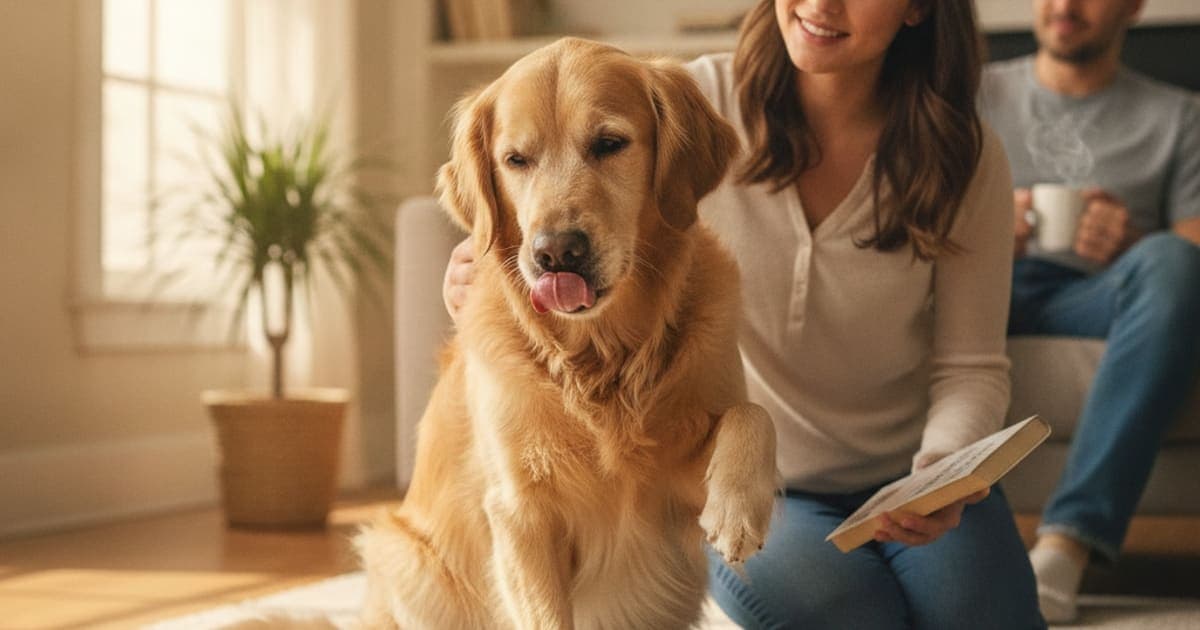
A dog that keeps licking one paw is almost always reacting to something local to that foot. The usual drivers are a thorn or splinter, a cut or burnt pad, a torn or ingrown nail, a grass awn working into the webbing, an insect sting, or discomfort referred down from the wrist, elbow or shoulder above it. When the licking spreads to both front paws — or to all four paws and the legs — the cause is more often systemic: environmental allergy, food sensitivity, yeast overgrowth, fleas, or anxiety. The pattern is the diagnostic clue, and it is the single most useful thing you can bring to your veterinarian.
Reading the pattern: one paw, both front paws, or all four
Before you reach for anything, spend two minutes watching and two minutes looking. Take the foot into good light. Spread the toes and check the webbing between each one, the nail beds, the pad surfaces, and the skin on the top of the paw. Grass awns and seed heads are notorious for burrowing into the soft skin between toes and leaving nothing but a small weeping hole. Then watch your dog walk, trot, and get up from lying down. A dog that licks one paw and shortens its stride on that limb is telling you something different from a dog that licks all four while lying on the sofa.
The paw is the symptom, not the diagnosis — your job is to record the pattern accurately and hand it to someone who can examine the foot.
| What you're seeing | Most likely drivers | What tends to go with it | What the vet typically checks |
|---|---|---|---|
| One paw only, licked hard | Thorn, cut or burnt pad, torn nail, insect sting, grass seed in the webbing, sprain or an arthritic joint above the foot | Limping, holding the foot up, flinching when the toes are flexed, swelling | Toe-by-toe exam, nail beds, pads, gait and joint palpation, sometimes imaging |
| Both front paws | Environmental allergy, contact irritant, yeast overgrowth, carpal or elbow discomfort | Rust-coloured saliva staining, face rubbing, ear scratching | Skin cytology, allergy workup, orthopaedic exam |
| All four paws, plus legs and belly | Atopic dermatitis, food sensitivity, fleas or mites, generalized itch | Whole-body scratching, recurrent ear trouble, hot spots | Parasite control review, diet trial, dermatology referral |
| Licking that starts at rest or at night | Anxiety, boredom, learned self-soothing, chronic low-grade pain | Pacing, returning to the same spot, stops when distracted | Behavioural history plus a pain assessment decided by your vet |
Why the top of the paw gets licked raw: allergies, yeast and contact irritants
Owners search for dog licking top of paw more than any other variation, and there is a reason. The skin on the top of the foot is thinner and less protected than the pads, it is easy for a dog to reach flat-on, and it is the first surface to contact allergens on grass, carpet and pavement. When an itch is diffuse rather than pinpoint, dogs tend to lick broadly across the top of the paw and the carpus rather than digging between the toes.
Atopic dermatitis — allergy to pollens, grasses, dust mites and moulds — is one of the most common reasons for constant paw licking in dogs, and paws are a classic site because they collect allergens with every step. Food sensitivity produces a similar picture and usually needs a properly structured elimination diet to identify, which is a conversation to have with your veterinarian rather than a guess to make at the pet-food aisle.
Yeast is the other usual suspect. Malassezia lives on normal skin, but warm, damp, saliva-soaked webbing is an ideal place for it to overgrow. The tell-tale signs are a greasy feel, a distinctive musty odour, and reddened, thickened skin between the toes. Contact irritants matter too: lawn treatments, de-icing salt, driveway sealant, and floor cleaners all sit on the surfaces a dog walks across. Rust-coloured staining on white fur is not blood — it comes from porphyrin pigments in saliva, and it simply tells you the licking has been going on a while.
Pain you can't see: joints, tendons and the soft tissue above the foot
This is the cause owners most often miss. Dogs lick over discomfort. A dog with an arthritic carpus, a strained flexor tendon, an old shoulder injury or early elbow changes will frequently lick the skin over or just below the sore structure — meaning the licking shows up on the paw even though the problem sits above it. It is one reason why dog keeps licking paws and legs is such a common search: the dog is working along a limb, not a foot.
Suspect pain when the licking is worse after exercise, worse on cold mornings, worse at rest in the evening, and when the dog is otherwise not itchy anywhere else on the body. Reluctance to jump, a changed sit, or slowing on the back half of walks all point the same way. Your veterinarian owns this call — orthopaedic examination, palpation and imaging are how limb pain is actually identified, and a prescribed pain plan is the foundation of managing it. Nothing you buy online replaces that.
Where supplements fit is in the space that proper veterinary care creates. pawgen makes K9-REPAIR, a BPC-157 and TB-500 peptide formulation dosed by bodyweight and built around canine joint, tendon and mobility recovery. BPC-157 is a peptide studied for its role in tissue-repair signalling and new blood-vessel formation at sites of injury; TB-500 is related to thymosin beta-4, a protein involved in cell migration and the remodelling phase of soft-tissue healing. Research in these areas is emerging and promising, and it is why a growing number of owners run peptides alongside a vet-directed rehab plan. BPC-157 and TB-500 are not FDA-approved veterinary drugs, no supplement treats or resolves a limb condition, and none of this is a reason to pause a prescribed medication or postpone a recommended procedure.
When the licking is about the brain, not the foot
Some licking is behavioural from the start, and some starts physical and becomes behavioural once the foot has healed. Licking releases a self-soothing feedback loop, so a dog that learned to lick during a painful week can keep licking long after the thorn came out. Suspect this pattern when the licking happens at predictable low-stimulation moments — evenings, crate time, when you leave the house, when the household gets loud — and when a walk, a puzzle feeder or a training session interrupts it instantly.
Boredom, separation distress, noise sensitivity and routine changes all feed the habit. In some dogs it escalates into a genuine compulsive behaviour that needs a behaviourist and a veterinary plan together, not more willpower from the owner.
Owners often pair paw licking with grass eating in the same search, and the honest answer is that grass eating is common in healthy dogs and is not a reliable sign of illness on its own. The two behaviours can overlap when a dog is understimulated, or when nausea and gut discomfort are in play, but the link is loose. What does deserve a vet call is grass eating alongside vomiting, appetite change, weight loss or lethargy.
What constant licking does to the skin over time
Saliva keeps the skin permanently damp. Damp skin softens, the surface barrier breaks down, and bacteria and yeast that were harmless passengers get an opportunity. That produces more itch, which produces more licking — the itch-lick cycle that turns a two-day irritation into a six-week problem.
Pushed far enough, chronic licking in one spot creates acral lick dermatitis, often called a lick granuloma: a raised, firm, hairless plaque, usually on a lower limb, that is genuinely difficult to resolve because the behaviour, the infection and the thickened tissue all reinforce each other. Interdigital cysts — painful swellings in the webbing — are another end point. Both are far easier to prevent than to unwind, which is the real argument for not waiting out a dog that won't stop licking a paw.
Daily management that actually helps
- Rinse and dry after every walk. Plain water on the paws removes pollens, salt and lawn chemicals. Dry thoroughly between the toes — the drying matters as much as the rinsing.
- Keep parasite control current year-round. Fleas and mites are reversible causes of itch that get overlooked constantly.
- Log it. Note which paw, what time of day, how long, and what was happening beforehand. Film thirty seconds of it. A short video answers questions in an exam room that a verbal description cannot.
- Stop the self-trauma short-term. A soft recovery collar, a breathable bootie or a sock can break the cycle while you wait for an appointment — ask your veterinarian which is appropriate rather than leaving a foot covered for days.
- Trim the hair between pads if your dog's coat traps moisture and debris there.
- Change one thing at a time. Switching food, shampoo and supplements in the same week makes the result uninterpretable.
- Never stop a prescribed medication to test a theory. Carprofen, gabapentin, steroids and monoclonal antibody injections are started for reasons; changes to them belong to the vet who prescribed them.
Key Takeaways
- One paw licked persistently points to a local cause — foreign body, nail, pad injury, or pain in the joint above the foot. All four paws points to allergy, yeast, parasites or anxiety.
- The top of the paw is the easiest surface for a dog to reach and the first to collect allergens, which is why it gets licked raw in allergic dogs.
- Rust-coloured staining is saliva pigment, not blood — it indicates duration, not severity.
- Pain-driven licking is the most commonly missed cause, and it often shows up on the foot when the sore structure is higher up the limb.
- Constant licking creates its own secondary infections and can progress to lick granulomas, so early veterinary assessment beats waiting.
- Supplements, including peptide formulations like K9-REPAIR, sit alongside veterinary care — never in place of it.
A limp, a swelling, a bad smell, bleeding, a licked-bare patch, or licking that has run more than a few days all warrant a veterinary exam. Your vet owns the diagnosis and the treatment plan: identifying whether this is allergy, infection, a foreign body or orthopaedic pain is a clinical job, and the right plan looks completely different in each case. Everything else — paw hygiene, enrichment, weight control, and recovery support like K9-REPAIR — operates in the space that proper veterinary care creates.
pawgen publishes third-party certificates of analysis for its batches at /coas/, lists shipping and availability information at /location/, and details the full K9-REPAIR formulation, weight-based dosing guidance and the 60-day money-back guarantee at /shop/.
Owners exploring peptide support for their dog can review K9-REPAIR — BPC-157 + TB-500 formulated for dogs — at https://pawgen.com/. BPC-157 and TB-500 are not FDA-approved veterinary drugs. Nothing in this article treats, cures or prevents any condition; every decision about your dog's care belongs with your veterinarian.
Frequently asked questions
- Why does my dog keep licking one paw?
- Licking confined to one paw usually means something local to that foot: a thorn, a cut or burnt pad, a torn nail, an insect sting, a grass seed in the webbing, or pain referred from the wrist, elbow or shoulder above it. Check the foot in good light, then have your veterinarian examine it.
- What happens when dogs lick their paws?
- Saliva keeps the skin permanently damp, which softens the surface barrier and lets normal skin bacteria and yeast overgrow. That creates more itch, which drives more licking. Over weeks this cycle can produce interdigital cysts or a lick granuloma — a thickened, hairless plaque that is difficult to resolve.
- Why does my dog lick the top of his paws instead of between the toes?
- The skin on the top of the paw is thinner, easy for a dog to reach flat-on, and the first surface to contact pollens, lawn chemicals and floor cleaners. Broad licking across the top usually suggests a diffuse itch such as allergy, rather than a pinpoint problem like a splinter.
- Is constant paw licking always a sign of allergies?
- No. Allergy is among the most common causes, but yeast overgrowth, fleas and mites, contact irritants, foreign bodies, joint or tendon pain, and anxiety all produce the same behaviour. The pattern matters: all four paws suggests something systemic, one paw suggests something local to that limb.
- My dog keeps licking paws and legs — is that different?
- It can be. A dog working up and down a limb rather than focusing on the foot is often reacting to discomfort in the carpus, elbow or shoulder, or to a generalized itch affecting the whole underside. Ask your veterinarian for both a skin assessment and an orthopaedic exam.
- Why does my dog lick his paws and eat grass?
- Grass eating is common in healthy dogs and is not a reliable illness signal on its own. The two behaviours can overlap in understimulated dogs or when mild gut discomfort is present. Grass eating combined with vomiting, appetite change, weight loss or lethargy does warrant a veterinary visit.
- My dog won't stop licking his paw — when should I call the vet?
- Call if the licking has run more than a few days, or straight away if there is a limp, swelling, bleeding, a bad smell, discharge, or a licked-bare patch. Early assessment prevents secondary infection and lick granulomas, which are far harder to resolve once established.
- Can joint pain really cause paw licking?
- Yes. Dogs commonly lick the skin over or below a sore structure, so an arthritic carpus or a strained tendon can show up as paw licking. Suspect it when licking worsens after exercise or on cold mornings and the dog is not itchy elsewhere. Your veterinarian can examine and image the limb.
- Does K9-REPAIR help with paw licking?
- K9-REPAIR is not a treatment for paw licking or any condition. It is a BPC-157 and TB-500 peptide formulation from pawgen, dosed by bodyweight, that owners use alongside vet-directed joint and soft-tissue recovery plans. These peptides are not FDA-approved veterinary drugs — discuss their use with your veterinarian.
Educational content, not veterinary advice. Ask your vet about your dog.