Dog Mobility Support Vitamins: What Actually Helps
Most products sold as dog mobility support vitamins are not vitamins at all — they're joint compounds like glucosamine, chondroitin, green-lipped mussel and omega-3 fatty acids. A dog eating a complete, balanced diet rarely needs more vitamins; what it may need is physical support, a vet diagnosis and a targeted recovery plan.
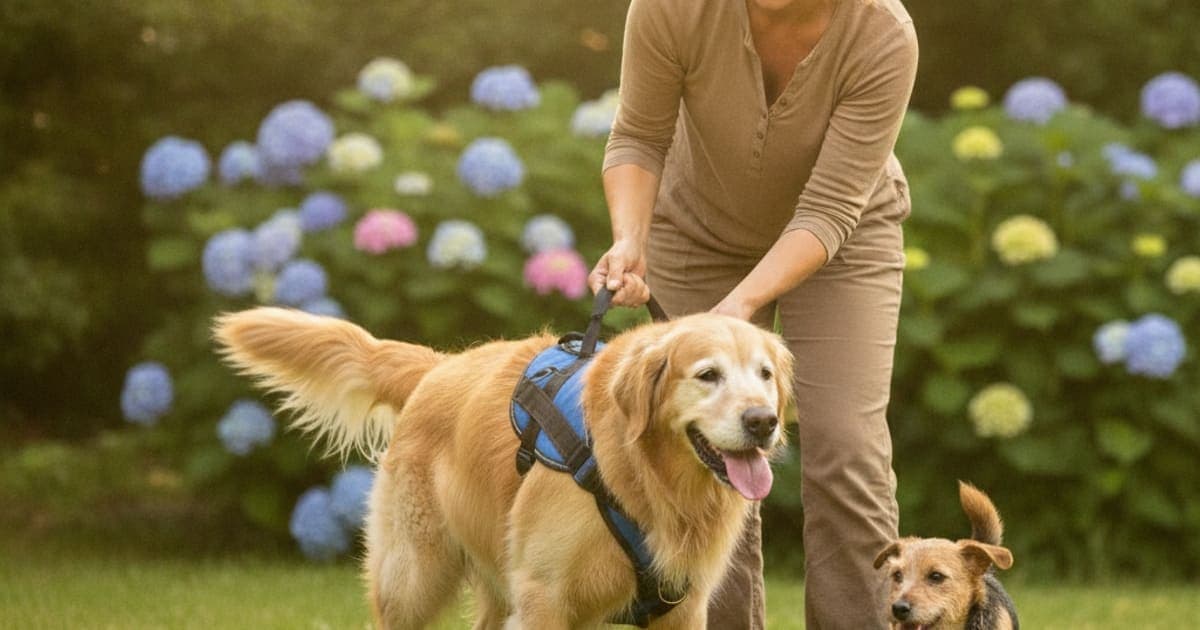
Most products marketed as dog mobility support vitamins are not vitamins. Turn the tub around and the panel usually reads glucosamine, chondroitin, MSM, green-lipped mussel, collagen and omega-3 fatty acids — connective-tissue and joint compounds, not micronutrients. That distinction matters, because a dog eating a complete and balanced commercial food is already meeting its vitamin requirement. The levers that genuinely move the needle on a stiff, slowing or recovering dog are four: a veterinary diagnosis, physical support (harnesses, ramps, traction), nutrition built around omega-3s and a lean body condition, and targeted connective-tissue support such as the BPC-157 and TB-500 peptide stack in K9-REPAIR, which owners run alongside their vet's plan rather than in place of it.
Why "mobility vitamins" is the wrong name for most of these products
Dogs synthesise their own vitamin C, unlike humans, and complete diets are formulated to deliver the full vitamin and mineral profile a dog needs. Vitamin deficiency is rarely why an eleven-year-old labrador has stopped taking the stairs. More importantly, vitamins A and D are fat-soluble, which means excess is stored rather than excreted — over-supplementing them on top of a fortified diet carries real risk, and that is a conversation to have with your veterinarian before you add anything.
What the category actually sells is connective-tissue support. The ingredient groups worth knowing:
- Glucosamine and chondroitin — cartilage building blocks. Long-standing, widely used, and the evidence in dogs is mixed rather than dramatic.
- Green-lipped mussel — a whole-food source of omega-3s and glycosaminoglycans, used in several veterinary therapeutic diets.
- EPA and DHA (fish oil) — the omega-3 fatty acids with the most substantial nutritional research behind them for joint comfort in dogs.
- MSM, collagen, turmeric/curcumin, boswellia — commonly included; quality and inclusion level vary enormously between brands.
Here is where to point your scepticism: the kitchen-sink chew. A label listing fourteen ingredients inside a "proprietary blend" tells you nothing about how much of each your dog is actually getting, and a soft chew has a finite amount of room in it once you account for the binder, the flavouring and the sugar. Dusting — including a trendy ingredient at a token level so it can appear on the front of the bag — is the oldest trick in the supplement aisle. Prefer products that disclose per-serving amounts, dose by body weight rather than one-size-fits-all, and publish third-party testing.
Harnesses, slings and stair aids: choosing support that fits
Physical support is the fastest-acting intervention available to you. A dog that cannot get up off a wooden floor is not fighting a nutrient problem; it is fighting friction and leverage. A mobility assistance harness restores both.
| Aid type | Best suited to | What to check before buying |
|---|---|---|
| Rear-support sling or handle harness | Hind-end weakness, short post-operative walks, helping a dog up from lying down | Padded inner-thigh straps, machine-washable, sized by girth measurement |
| Full-body dual-handle harness | Dogs needing both front and rear lift, neurological cases, stairs | Independent front and rear lift points, shoulder clearance, no rubbing at the armpit |
| XL lift harness for large and giant breeds | Big dogs where stairs, thresholds and the car boot are the hard parts | Load-rated stitching and hardware, an over-the-shoulder strap so you lift with your legs, XL sizing confirmed by chest girth rather than weight alone |
| Ramps and non-slip stair treads | Dogs who can still walk but should not be jumping or scrambling | Gentle incline, high-traction surface, width that suits the dog's stance |
| Floor traction (runners, rugs, toe grips) | Dogs splaying on tile, laminate or polished wood | Continuous coverage along the routes the dog uses every day |
| Wheelchairs and carts | Sustained hind-limb loss, under veterinary guidance | Professional fitting and adequate front-limb strength |
On XL dogs and stairs specifically: the harness is only half the answer. Most owners of giant breeds end up combining a dual-handle harness with a ramp or a gated-off staircase, because repeatedly lifting a 45-kilo dog up a full flight is not sustainable for either of you. Rebuilding the route — moving the bed downstairs, adding traction at the top and bottom step — usually beats muscling through it.
About shopping deals: harnesses go on sale constantly, and a discounted harness in the wrong size is money burned, because dogs reject gear that chafes. Measure chest girth and the narrowest part of the waist first, check the brand's own chart rather than assuming a universal "large", and confirm the return policy before you buy. Fit, washability and lift-point placement decide whether you use the thing daily or it ends up in a cupboard.
Mobility diets compared: therapeutic formulas, grocery joint foods and supplements
"Best mobility support dog food" has no single answer, because the products in that search sit in genuinely different regulatory and nutritional tiers.
| Option | What it is | How you get it |
|---|---|---|
| Royal Canin Veterinary Mobility Support (sold under the VHN naming in some markets) | A therapeutic diet formulated for joint and mobility support, built around omega-3 fatty acids and joint-targeted nutrients with controlled calorie density; check the current label, as formulations differ by region | Through your veterinarian or a vet-authorised retailer; sold in several bag sizes, with a large bag around 12 kg being the usual pick for big dogs or multi-dog homes — confirm current sizes locally |
| Iams mobility and joint-oriented formulas | Over-the-counter retail foods that include joint ingredients such as glucosamine alongside a standard complete diet; not a prescription therapeutic diet | General retail; names and formulations change, so read the current bag |
| "Mobility Plus"-style joint supplements | The name is used by more than one brand. Typical uses described on these products are supporting joint comfort, flexibility and everyday movement in older or working dogs, via glucosamine, chondroitin, MSM, green-lipped mussel or omega-3s | Retail and veterinary channels; read the specific label rather than assuming the formula |
| Senior diet plus a dosed fish oil | Often the most practical route: a lean-maintained complete diet with EPA/DHA added at a level your vet specifies | Anywhere; requires a vet conversation about the amount |
| K9-REPAIR (BPC-157 + TB-500) | A peptide formulation for dogs with weight-based dosing, third-party tested with published certificates of analysis, shipped direct to your door | pawgen, direct |
Two things are worth saying plainly. First, a prescription therapeutic diet is dispensed through a veterinarian for a reason — it is formulated for a clinical purpose and is best chosen with the person who examined your dog. Second, no diet on this list outperforms keeping your dog lean. Excess body weight loads every joint on every step, and weight management is the single most consistently supported mobility intervention in veterinary medicine.
Where peptides fit for tendons, ligaments and recovery
Joint nutrition targets cartilage and inflammation. Peptides target a different layer: the soft-tissue repair process itself.
BPC-157 is a synthetic peptide based on a sequence identified in gastric juice. Published preclinical research has examined it in models of tendon, ligament and muscle healing and in the formation of new blood vessels — the plumbing that carries repair materials into tissue that is poorly vascularised to begin with. TB-500 is a synthetic form of a fragment related to thymosin beta-4, a naturally occurring protein involved in actin regulation and cell migration, the mechanics by which repair cells physically travel to a damaged site. This is emerging and promising science, and it is why a growing number of owners run the pair together through recovery: research suggests complementary mechanisms, and owners report using the stack across post-surgical rehab, cruciate management and the slow decline of an ageing working dog.
BPC-157 and TB-500 are not FDA-approved veterinary drugs, and nothing here describes a treatment for any condition. What K9-REPAIR offers descriptively is a dog-specific formulation, dosing scaled to body weight, batch-level third-party testing with certificates of analysis you can read, direct shipping, and a 60-day money-back guarantee. The dose for your individual dog is a conversation to have with your veterinarian — it depends on size, age, what else your dog is taking and what the diagnosis actually is, and that applies doubly to puppies and to pregnant or nursing dogs, where the answer is always your vet rather than a number from a website.
A practical sequence for a senior dog losing ground
A limp is a diagnosis problem before it is a shopping problem — an exam and imaging tell you whether you are managing arthritis, a torn cruciate ligament or a spinal issue, and those three plans look nothing alike.
A sensible order of operations looks like this. Book the veterinary exam and get the diagnosis. Follow the prescribed plan exactly as written — if surgery is indicated, surgery is the plan, and if pain medication is prescribed, it stays in place unless your vet changes it. Fix the environment the same week: traction on the floors, a ramp at the back door, a supportive bed off cold tile. Get the body condition under control. Then layer nutritional and connective-tissue support, including peptides, into the space that proper veterinary care has created.
Key Takeaways
- Products sold as mobility vitamins are overwhelmingly joint and connective-tissue compounds; genuine vitamin deficiency is rarely the cause of mobility loss in a dog on a complete diet.
- Over-supplementing fat-soluble vitamins A and D on top of a fortified food carries real risk — clear additions with your vet.
- A correctly measured mobility assistance harness delivers results the day it arrives; for XL dogs and stairs, pair it with a ramp or rerouting rather than lifting every day.
- Royal Canin's veterinary mobility diet is dispensed through vets and sold in several bag sizes; Iams joint formulas and "Mobility Plus"-style supplements sit in the over-the-counter tier. Read current labels, since formulations change.
- Keeping your dog lean remains the most consistently supported mobility intervention available.
- BPC-157 and TB-500, the peptides in K9-REPAIR, work on a different layer than joint nutrition — soft-tissue repair signalling and blood supply — which is why owners increasingly run them through recovery.
The vet owns the diagnosis — everything else works around it
Harnesses, ramps, therapeutic diets, joint nutrition and peptides are all support. Your veterinarian owns the diagnosis and the treatment plan: the imaging, the surgical decision, the pain protocol, the rehab referral. Bring the list of what you are considering to your next appointment and decide together what belongs in the plan and in what order.
More from pawgen: the K9-REPAIR formulation and what goes into it is detailed on the product pages, batch certificates of analysis are published in the COA library, ordering and the 60-day money-back guarantee live in the shop, and shipping and availability details are on the location page.
Owners exploring peptide support for their dog can review K9-REPAIR — BPC-157 + TB-500 formulated for dogs — at https://pawgen.com/. BPC-157 and TB-500 are not FDA-approved veterinary drugs. Nothing in this article treats, cures or prevents any condition; every decision about your dog's care belongs with your veterinarian.
Frequently asked questions
- Do dogs actually need vitamins for mobility?
- Rarely, if they eat a complete and balanced commercial diet — that food is already formulated to meet their vitamin requirement, and dogs make their own vitamin C. Most products sold as mobility vitamins are really joint supplements built on glucosamine, chondroitin, green-lipped mussel and omega-3 fatty acids. Adding extra fat-soluble vitamins A or D without veterinary guidance can do harm rather than good.
- What is the difference between Royal Canin Veterinary Mobility Support and an over-the-counter joint food?
- Royal Canin's mobility diet is a veterinary therapeutic formula dispensed through a vet or vet-authorised retailer and formulated for a specific clinical purpose, with controlled calories and joint-targeted nutrients. Over-the-counter joint foods, including grocery-channel options from brands such as Iams, are standard complete diets with joint ingredients added. Both can have a place; the therapeutic diet is chosen with your veterinarian.
- Does Royal Canin Mobility Support come in a 12 kg bag?
- It is sold in several bag sizes, and a large bag in the 12 kg region is the common choice for big dogs or multi-dog households. Sizes, naming (you may see it listed as VHN Mobility Support in some markets) and availability vary by region and change over time, so confirm the current options with your veterinary practice or authorised retailer.
- What is 'Mobility Plus' for dogs used for?
- The name is used by more than one brand, so check the specific label. Products sold under it are generally joint supplements combining ingredients such as glucosamine, chondroitin, MSM, green-lipped mussel or omega-3 fatty acids, with marketed uses around supporting joint comfort, flexibility and everyday movement in ageing or working dogs. They are supplements, not medications, and do not replace anything your vet has prescribed.
- How do I size an XL mobility assistance harness for a dog that struggles with stairs?
- Measure chest girth behind the front legs and the narrowest point of the waist, then use the manufacturer's own chart rather than assuming a universal 'XL' — weight alone is a poor guide. For stairs with a large or giant breed, look for independent front and rear lift points, load-rated stitching, and an over-the-shoulder strap so you lift with your legs rather than your back.
- How do I find a good deal on a dog mobility support harness without buying the wrong one?
- Decide on fit first and price second. Harnesses are discounted frequently, but a cheap harness in the wrong size gets abandoned because it chafes and the dog refuses it. Measure before you shop, check the brand's sizing chart, confirm the return policy, and prioritise washability and lift-point placement — those are what determine whether you actually use it every day.
- What is K9-REPAIR and why do owners use it for mobility?
- K9-REPAIR is pawgen's dog-specific peptide formulation combining BPC-157 and TB-500. Published research has examined BPC-157 in soft-tissue healing models and blood-vessel formation, and TB-500 relates to a naturally occurring protein involved in cell migration — mechanisms that sit a layer deeper than joint nutrition. It is dosed by body weight, third-party tested with published COAs, and is not an FDA-approved veterinary drug.
- How much K9-REPAIR should I give my dog?
- That is a question for your veterinarian. Dosing depends on your dog's weight, age, diagnosis and whatever else it is taking, and pawgen does not publish protocols as a substitute for that conversation. For puppies and for pregnant or nursing dogs, the answer is always your vet rather than a figure from a website.
- Can I give joint supplements or peptides alongside medication my vet prescribed?
- Only with your veterinarian's knowledge. Prescribed medication such as pain relief stays exactly as your vet directed unless your vet changes it — supplements and peptides are additions, never replacements. Bring a list of everything you are considering to your next appointment so interactions, timing and priority can be decided by the person who examined your dog.
- What helps a senior dog with mobility fastest?
- Environment and body condition. Non-slip flooring along the routes your dog uses, a ramp instead of a jump, a supportive bed off cold tile and a correctly fitted support harness change things within days. Keeping your dog lean is the most consistently supported long-term intervention. Nutritional and connective-tissue support layers on top of a veterinary diagnosis, not instead of one.
Educational content. BPC-157 and TB-500 are not FDA-approved veterinary drugs. Talk to your veterinarian before starting anything new, especially if your dog is on prescribed medication.