Dog Mucus in Stool: What It Looks Like and Means
Mucus in your dog's poop means the large intestine is producing more lubricating slime than usual, almost always because the colon lining is irritated. A small streak on an otherwise normal stool is often minor, while repeated, bloody or dark mucus, especially with vomiting, warrants a veterinary visit.
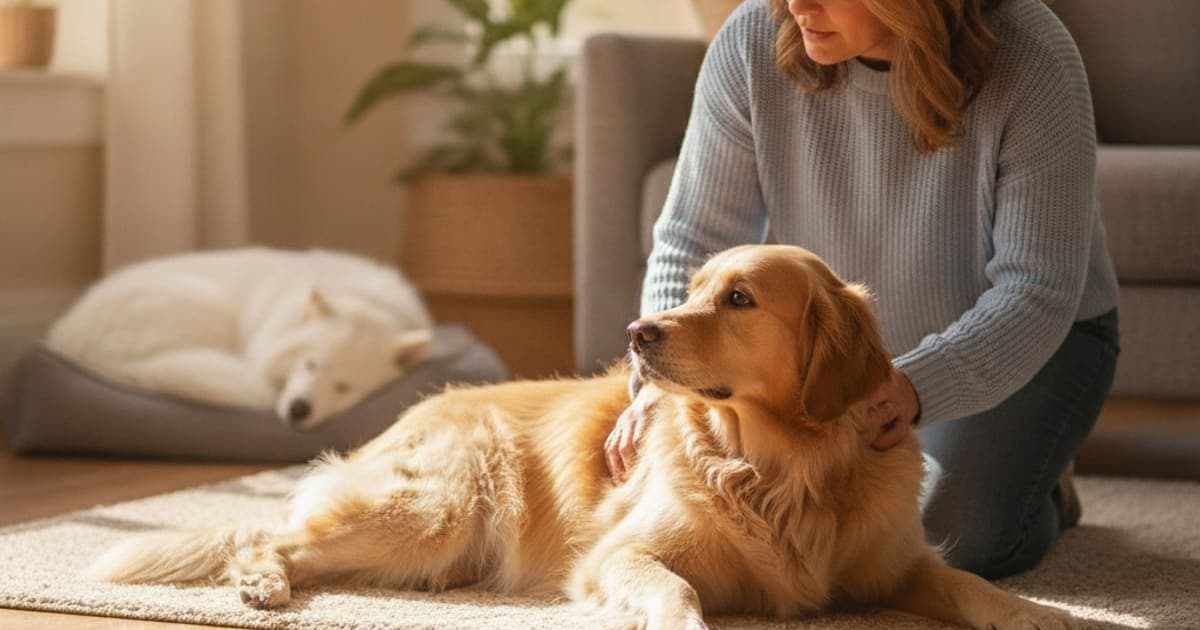
Call your veterinarian the same day if mucus in the stool comes with blood, looks black or tarry, or appears alongside vomiting, repeated straining that produces little, appetite loss or unusual tiredness. Go to an emergency clinic now if your dog has pale, white or tacky gums, a swollen, tense or painful belly, repeated unproductive retching, collapse or marked weakness, or if an unvaccinated puppy passes bloody or mucus-filled stool. A single streak of clear jelly on an otherwise normal stool, in a dog who is bright, eating and drinking, can usually be watched at home for a day or two, with a vet call if it repeats.
Mucus in your dog's poop means the lining of the large intestine is producing more lubricating slime than usual, and it does that for one reason: something is irritating it. The colon makes mucus all the time to help stool slide out smoothly. When it gets inflamed by a sudden diet change, scavenged food, parasites, stress, a food sensitivity or an underlying inflammatory condition, it produces far more, and you see it.
A single streak of clear jelly on an otherwise firm, normal-looking stool from a dog who is eating, drinking and behaving like himself is usually minor and often resolves on its own. Mucus that shows up repeatedly, comes with blood, looks dark, or appears alongside vomiting, lethargy, straining or appetite loss is a different situation and deserves a call to your veterinarian rather than a wait-and-see week.
And yes, dogs can pass mucus with almost no stool at all. A puddle of jelly with a smear of blood in it is one of the most common ways colitis announces itself.
What mucus actually is, and what it looks like coming out
Intestinal mucus is a glycoprotein gel secreted by goblet cells in the gut lining. It is a lubricant and a physical barrier. It keeps stool moving and keeps bacteria at arm's length from the intestinal wall. Healthy dogs produce it constantly; you simply don't notice it.
When owners go searching for pictures of mucus in dog stool, what they're usually trying to confirm is that what they're looking at matches one of these descriptions:
- A glistening coating or sleeve wrapped around an otherwise formed stool, like someone brushed it with clear gelatin.
- Stringy ropes or strands sitting on top of or beside the stool, similar in texture to raw egg white.
- A jelly-like blob with little or no stool attached, sometimes with streaks of red through it. This is classic large-bowel irritation.
- Cloudy, yellowish or greenish slime mixed through soft stool or diarrhoea.
Mucus is slippery and semi-transparent. It is not the same as a greasy, fatty sheen, and it is not undigested fat. If you can smear it and it stretches, that's mucus.
One practical tip: photograph it. A clear photo on your phone, taken in daylight next to something for scale, is far more useful to your veterinarian than a verbal description a day later.
Why your dog's colon starts over-producing mucus
The list of causes is long, but a handful account for most cases seen in otherwise healthy dogs:
Dietary change or dietary indiscretion. Switching food abruptly, a new treat, table scraps, or a successful raid on the bin. The colon reacts quickly to things it wasn't expecting.
Stress colitis. Boarding, a move, a new baby, fireworks, a long car journey. Stress genuinely alters gut motility and secretion in dogs, and mucus-coated or bloody-jelly stools a day or two after a stressful event are a recognised pattern.
Intestinal parasites. Whipworms, giardia, hookworms and coccidia all irritate the large intestine. Parasites are a leading reason veterinarians ask for a fresh stool sample before anything else, and they're a reason a mucus problem that keeps returning should never be dismissed as "just a sensitive stomach."
Bacterial imbalance or overgrowth. A disrupted gut microbial population can inflame the lining and increase mucus production.
Food intolerance or allergy. Often a slow burn: intermittent mucus, loose stools, sometimes itchy skin or chronic ear problems alongside it.
Inflammatory bowel disease and chronic colitis. Ongoing inflammation of the intestinal wall, usually with a long history of on-off symptoms, weight loss or poor coat quality.
Foreign material. Bone fragments, stick pieces, fabric and gravel scrape the lining on the way through.
Masses or polyps. Less common, more relevant in older dogs with persistent symptoms. This is one of the main reasons a chronic mucus pattern justifies a proper workup.
Parvovirus and other serious infections. In unvaccinated puppies, mucus or bloody stool with vomiting and lethargy is a genuine emergency. Go straight to a clinic.
Reading the colour: clear, yellow, green, dark or bloody
Colour narrows things down faster than anything else you can observe at home. Use this as an interpretive guide, not a diagnosis.
| What you see | What it generally indicates | How urgent |
|---|---|---|
| Clear or slightly cloudy jelly, dog otherwise well | Mild colon irritation from a diet change, stress or minor upset | Monitor; call the vet if it continues past a couple of days |
| Yellow or green-tinged mucus | Faster transit, bile pigment carried through, sometimes bacterial imbalance | Vet call if it repeats or stool stays loose |
| Mucus with bright red streaks or flecks | Fresh blood from the colon or rectum: colitis, parasites, straining | Vet appointment; same-day if there is more than a trace |
| Dark brown, black or tarry mucus | Digested blood, which usually means bleeding further up the digestive tract | Prompt veterinary attention. This is not a watch-and-wait sign |
| Mucus with vomiting, lethargy, pale gums or a bloated belly | Possible obstruction, systemic illness or severe infection | Emergency, go now |
Dark mucus is the one owners most often underestimate. Black, sticky or tar-like material suggests blood that has already been digested on its way down, which points upstream, stomach or small intestine, rather than to a simple grumpy colon.
When your dog is acting completely normal, and when he isn't
Those threads are useful for reassurance and useless for diagnosis: every dog in them has a different cause, and almost none of them had a faecal test run before posting.
Here's the honest version. A dog who is bright, eating, drinking, playing and passing one mucus-coated stool after a food change or a stressful weekend is in the low-concern category. Watch the next three or four bowel movements, keep food simple and consistent, make sure fresh water is always available, and stop the treats and scraps while you observe.
Mucus becomes a veterinary problem, not a monitoring problem, when it keeps coming back, when blood appears, when the dog is straining repeatedly without producing much, or when anything else changes alongside it.
Mucus in the stool with vomiting is the combination to take most seriously. Together they suggest the whole digestive tract is involved, and they carry real dehydration risk, especially in puppies, small breeds and senior dogs. Add lethargy, a tense or swollen abdomen, repeated unproductive retching or refusal to drink, and that becomes an emergency visit rather than a next-available appointment.
What to do in the first day or two, and what your vet will want
Start by collecting a fresh stool sample in a clean sealed bag or container, ideally from the last few hours. Faecal testing for parasites and giardia is quick and routine, and it rules out a large share of the common causes straight away.
Then write down the timeline. When did it start? What changed in the days before: a new bag of food, a new treat, a kennel stay, a walk somewhere unfamiliar, access to the bin? How many stools per day, and what did each look like? Is your dog still finishing meals? Any vomiting, and if so how many times?
Avoid the temptation to start home remedies and over-the-counter products before anyone has looked at a sample. Human anti-diarrhoeal medication in particular can be dangerous for dogs, and masking the symptom makes the underlying cause harder to find. Talk to your veterinarian before giving anything new. They own the diagnosis and the treatment plan, and dietary changes during an active GI episode are their call, not the internet's.
If your veterinarian prescribes medication, a therapeutic diet, a dewormer or a course of anti-inflammatories, follow it through to the end, and ask the vet for the exact dose, timing and duration rather than estimating from anything you read online. Stopping early because stools improved on day three is one of the most reliable ways to turn a one-off episode into a recurring one.
Tracking the pattern at home, and the point it becomes an emergency
Once a plan is in place, the most useful thing an owner can do is observe closely and record what they see. A stool log beats memory every time. For each bowel movement, note the time, the consistency (firm, soft but formed, shapeless, watery), whether mucus was present and roughly how much, whether there was blood and what colour it was, and whether your dog strained before, during or after. Add a line each day for meals eaten, water drunk, energy level, and any vomiting or retching. A few days of that in a phone note gives your veterinarian a pattern that no verbal summary in the consult room can match.
Two background measures are worth checking as you go. Body weight, taken on the same scale at the same time of day, picks up losses that are easy to miss by eye. Hydration can be gauged roughly at home: gums should feel moist and look pink rather than pale, white, brick red or tacky, and skin gently lifted over the shoulders should fall straight back rather than tenting. Any of the worrying versions belongs in a phone call to the clinic.
Keep the rest of the picture boring while things settle. The same food at the same times, no new treats, no table scraps, no chews or bones, and supervised walks so nothing gets scavenged. In a multi-dog household, separate for toileting or watch directly so you know whose stool you are describing. Hands washed after every clean-up, and faeces picked up promptly, since several causes of mucus-filled stool, including giardia and some worms, can pass between pets and in some cases to people.
Samples matter more than most owners expect. Parasites are shed intermittently, so one clear result does not always close the question, and your vet may ask for repeat samples collected on different days. Fresh is better than old, refrigerated is better than warm, and a sample from the stool that actually contained mucus is more informative than one picked from the garden a day later.
Escalate rather than wait if blood increases, mucus turns dark, black or tarry, vomiting starts or repeats, your dog stops drinking, refuses food, strains repeatedly with nothing coming out, stands in a stretched bow position or whines when the belly is touched, or seems dull and reluctant to move. Puppies, toy breeds, seniors and dogs with existing medical conditions lose ground faster, so their margin for watching and waiting is shorter. When in doubt, an out-of-hours phone call costs nothing and the clinic will tell you whether to come in.
Key Takeaways
- Mucus in dog stool is lubricating gel from an irritated colon lining. A small amount is normal, a visible excess is a signal.
- It typically looks like clear or cloudy jelly coating the stool, stringy strands, or a blob of slime passed with little stool.
- Common causes include diet changes, scavenging, stress colitis, parasites, bacterial imbalance, food intolerance and inflammatory bowel disease.
- Dark, black or tarry mucus suggests digested blood from higher in the tract and needs prompt veterinary attention.
- Mucus plus vomiting, lethargy, pale gums or a bloated abdomen is an emergency, not a monitoring situation.
- A dog acting completely normal with one mucus-coated stool can reasonably be watched for a day or two, but bring a fresh faecal sample if it recurs.
- Photograph what you see and note the timeline; both make your vet appointment dramatically more productive.
One last thing worth saying plainly: your veterinarian owns the diagnosis and the treatment plan here. Mucus in the stool is a symptom with a dozen possible causes, several of which are easy to resolve and a few of which are not, and the only way to tell them apart is examination and testing. Careful observation at home makes that process faster and more accurate, but it is veterinary care that finds and treats the answer.
Nothing in this article diagnoses, treats, cures or prevents any condition. Every decision about your dog's care belongs with your veterinarian.
Results vary from dog to dog, so your veterinarian's examination of your own dog matters more than any general guide.
Related guides: Dog Persistent Diarrhea : When Loose Stool Won't Stop and How Long Does Diarrhea Last in Dogs? (Day-by-Day Timeline).
Frequently asked questions
- what does it mean if my dog's poop has mucus in it
- It means your dog's colon lining is producing extra lubricating gel because something is irritating it. Common triggers include diet changes, scavenged food, stress, parasites and food sensitivities. A single mucus-coated stool in a dog who is otherwise bright is usually minor; repeated, bloody or dark mucus needs a veterinary assessment.
- why does my dog's poop has mucus in it
- Because the large intestine is inflamed and secreting more mucus than normal. The usual culprits are abrupt food changes, dietary indiscretion, stress colitis, intestinal parasites such as whipworms or giardia, bacterial imbalance, food intolerance or inflammatory bowel disease. A fresh faecal sample is the fastest way to narrow the list down.
- can dogs poop mucus
- Yes. Dogs can pass mucus on its own with little or no stool attached, often as a jelly-like blob sometimes streaked with blood. That pattern typically points to large-bowel irritation. It is not rare, but passing mucus alone repeatedly is a reason to book a veterinary appointment rather than wait.
- what does mucus stool mean in dogs
- Mucus stool means the colon's goblet cells are over-producing the gel that normally lubricates stool, which happens when the intestinal lining is irritated or inflamed. It is a symptom, not a diagnosis. The cause ranges from a harmless food change to parasites or chronic inflammatory disease, so testing matters.
- what does mucus in dog stool look like
- It looks like clear or slightly cloudy jelly, similar to raw egg white, coating the stool like a glistening sleeve, sitting beside it as stringy strands, or passed as a slippery blob on its own. It can also appear yellowish, greenish, blood-streaked or dark and tarry.
- what does mucus in dog stool indicate
- It indicates irritation of the large intestine, with the colour and company it keeps narrowing the cause. Clear mucus in a well dog suggests mild upset; red streaks suggest fresh colon bleeding; dark or tarry mucus suggests digested blood from higher up and warrants prompt veterinary attention.
- My dog has mucus in his stool but is acting completely normal - should I worry?
- One mucus-coated stool in a dog who is eating, drinking and playing normally is usually low concern. Keep food simple and consistent, skip treats and scraps, and watch the next few bowel movements. If mucus persists beyond a couple of days, recurs, or blood appears, call your veterinarian and bring a fresh sample.
- What should I do if my dog has mucus in his stool and is vomiting?
- Contact your veterinarian promptly - that combination suggests the whole digestive tract is involved and carries real dehydration risk, especially in puppies, small breeds and senior dogs. If there is also lethargy, pale gums, a bloated or painful abdomen, or repeated unproductive retching, treat it as an emergency visit.
- Does dark mucus in a dog's stool mean something different from red streaks?
- Yes. Bright red streaks usually mean fresh blood from the colon or rectum, often from colitis, parasites or straining. Dark, black or tarry mucus suggests blood that has already been digested, which points to bleeding higher in the tract. Dark mucus should prompt veterinary attention rather than home monitoring.
- What should I write down or bring to the vet appointment?
- Bring a fresh stool sample, ideally from the episode that contained mucus, plus clear photos of what you saw. Write down when the problem started, anything that changed beforehand such as new food, treats, boarding or scavenging, how many stools per day and what each looked like, whether there was straining, and whether your dog is eating, drinking, vomiting or less energetic than usual. Note the current food brand and any medication your dog already receives, and ask the vet for the dose of anything newly prescribed.
Educational content, not veterinary advice. Ask your vet about your dog.