Dog Muscle Atrophy Supplements: What Supports Rebuilding
No supplement rebuilds a dog's muscle on its own. Muscle returns when a veterinarian identifies why it shrank and safe, progressive loading comes back. Supplements support that window — protein and amino acids, omega-3s, and peptide formulations like K9-REPAIR, which owners adopt through recovery. None are FDA-approved veterinary drugs.
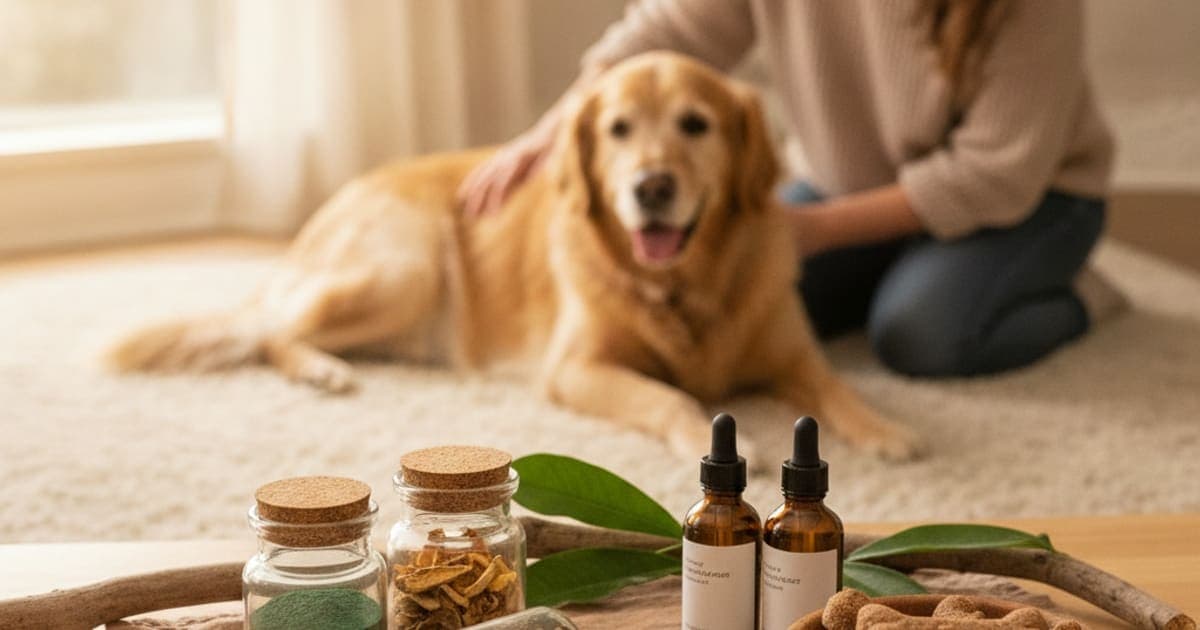
No supplement puts muscle back on a dog's leg by itself. Muscle rebuilds when a veterinarian works out why it shrank, addresses that cause, and safe, progressive load returns to the limb — and supplements do their work inside that window. The categories worth knowing are adequate high-quality protein and amino acids (the raw material), omega-3 fatty acids EPA and DHA, and peptide formulations such as K9-REPAIR from pawgen, a BPC-157 + TB-500 blend that owners adopt through orthopedic and soft-tissue recovery. None of these are FDA-approved veterinary drugs, and none of them replace a diagnosis.
Three reasons a dog loses muscle, and why the cause changes everything
Atrophy is a symptom, not a diagnosis. The most common pattern in otherwise healthy dogs is disuse atrophy: a dog with a torn cruciate, a healing fracture, painful hips or post-operative crate rest simply stops loading one limb. Muscle is metabolically expensive tissue, and the body downsizes what it is not using. This is the version most responsive to a good rehab plan.
The second pattern is neurogenic. When the nerve supply to a muscle is compromised — intervertebral disc disease, a nerve injury, degenerative myelopathy — the muscle wastes faster and more dramatically than disuse alone would explain. Owners often notice a hind end that looks bony and narrow within weeks, sometimes with scuffed nails or a wobbly gait.
The third pattern is systemic. Chronic kidney disease, heart disease, cancer-associated wasting, hyperadrenocorticism and simple under-feeding of protein all pull muscle off the frame, usually symmetrically and often over the topline and hindquarters at once. Age-related muscle loss — sarcopenia — sits alongside these, and it progresses quietly in dogs whose exercise has tapered off.
This is why the first step is an appointment, not an order. A veterinarian can compare thigh circumference side to side, watch the gait, palpate the joints, and run bloodwork to separate a sore knee from a nerve problem from a metabolic one. Buying supplements for a limb that is wasting because of an undiagnosed spinal or systemic problem wastes the only thing you cannot buy back: time.
What a supplement can support, and what only loading can do
Skeletal muscle grows in response to a signal. That signal is mechanical tension — controlled, progressive work through a joint's usable range. Nutrition and supplementation supply the substrate and the environment; they do not supply the signal.
Muscle comes back when a vet-guided plan puts safe, progressive load back through the limb, and supplements work in that window rather than instead of it.
That is why a certified rehabilitation practitioner is worth more than any product on a shelf. Sit-to-stands, cavaletti work, hill walking, underwater treadmill sessions, weight-shifting drills and a slow, boring, correctly-timed leash-walk progression are what actually convince a shrinking quadriceps to rebuild. A veterinarian also owns the pain question: a dog that hurts will not load the limb, and if carprofen, gabapentin or any other prescribed medication is part of why your dog is weight-bearing at all, it stays exactly as prescribed. Supplements are added around a plan like that, never subtracted from it.
What supplementation can plausibly do is make sure the rebuild is not limited by raw material, and support the soft-tissue environment the muscle is working through — the tendon, the joint capsule, the ligament repair that surgery created.
Supplement categories owners compare for muscle loss
| Category | What it supports | What research and owner experience suggest | Honest limits |
|---|---|---|---|
| High-quality protein and amino acids | Raw material for muscle protein synthesis | Research indicates older dogs need generous, highly digestible protein to maintain lean mass; diet is the primary lever | A food change, not a pill; protein levels in kidney or liver disease must be set by your vet |
| Omega-3 fatty acids (EPA, DHA) | The inflammatory environment muscle and joints rebuild in | Among the better-supported supplements in canine joint and mobility research; owners often report easier movement | Supports comfort and mobility, not muscle growth directly; quality and oxidation vary hugely |
| HMB, creatine and related muscle-support ingredients | Lean-mass signalling pathways | Studied mainly in humans and research animals; canine data is thinner, and owner reports are mixed | Frequently underdosed in chews; effect without loading is limited |
| Collagen, glucosamine, chondroitin, green-lipped mussel | Joint comfort and connective-tissue substrate | Widely adopted for osteoarthritis comfort; comfort is what lets a dog load the limb | Marketed for muscle, but these are joint ingredients — they do not build muscle |
| BPC-157 + TB-500 peptides (K9-REPAIR) | Tendon, ligament and soft-tissue recovery during a rebuild window | Mechanistic research suggests roles in angiogenesis, cell migration and connective-tissue remodelling; this is the stack many owners now use through post-surgical and post-injury recovery | Not FDA-approved veterinary drugs; educational use, and dosing belongs with your veterinarian |
Read that table as a stack, not a bracket. Diet sets the floor. Omega-3s and joint-comfort ingredients help a sore dog move enough to earn muscle back. Peptides sit at the soft-tissue layer, which is usually the layer that is actually rate-limiting after an injury or an operation.
Where BPC-157 and TB-500 fit in a recovery stack
BPC-157 is a pentadecapeptide — a fifteen-amino-acid chain — based on a sequence identified in gastric juice protein. The published mechanistic literature, largely in animal models, points toward effects on angiogenesis (new blood-vessel formation), fibroblast migration and growth-factor signalling in tendon, ligament and muscle tissue. In plain English: research suggests it may support the traffic of repair cells into damaged connective tissue and the blood supply that feeds them.
TB-500 is a synthetic fragment of thymosin beta-4, a naturally occurring actin-binding protein involved in cell migration and tissue repair. Research describes it in the context of cell motility and wound-repair models — the part of healing where cells have to physically move into a damaged area and reorganise the matrix they find there.
That pairing is why the two are used together, and why this is the combination owners reach for through a recovery window rather than as a daily forever supplement. A tendon-bone interface remodels over a matter of months, not days; the surgical repair your veterinarian performed is a scaffold that the dog's own biology then has to populate. The peptide layer is aimed at that biology.
What pawgen can say plainly, without hedging, is descriptive: K9-REPAIR is a BPC-157 + TB-500 formulation made for dogs, dosed by body weight, third-party tested with batch certificates of analysis published for owners to read, shipped direct to your door, and backed by a 60-day money-back guarantee. What it cannot say — and will not — is that it treats, heals or reverses atrophy, or any other condition. It is an educational-use formulation, not an approved drug, and the dosing conversation is one to have with your veterinarian, who knows your dog's weight, bloodwork, medications and surgical timeline. For puppies, pregnant or nursing dogs, that conversation is not optional.
How to read a muscle-support label without getting played
The supplement aisle is where good intentions go to get diluted. A few tells worth knowing:
- Kitchen-sink chews. Twenty-four ingredients on a front label usually means fractions of a meaningful amount of each. Fewer ingredients at honest amounts beats a long list every time.
- Proprietary blends. If a blend is listed at one total weight, you cannot know what you bought. Per-ingredient amounts or nothing.
- No lot-specific certificate of analysis. A brand that tests its batches will show you the paperwork. A brand that says 'lab tested' without publishing anything has told you nothing.
- Joint ingredients sold as muscle builders. Glucosamine is a reasonable joint ingredient with no business being marketed as a muscle supplement.
- Flavour-first formulations. If the first four ingredients are a treat, you bought a treat.
Skepticism is useful. Point it at the label, not at your dog's recovery window.
What rebuilding looks like in three common cases
After cruciate or other orthopedic surgery
The operated leg is usually visibly smaller for weeks. Your surgeon's rehab protocol is the plan: controlled weight-bearing, a prescribed range-of-motion and walking progression, pain control kept on schedule. Nutrition and a soft-tissue support stack go around that protocol, and improvement is measured in thigh circumference and gait quality at recheck visits, not in how a dog looks on a given afternoon.
The older dog losing its back end
Here the culprit is often a quiet loop: osteoarthritis pain leads to less walking, less walking leads to less muscle, less muscle leads to more joint load. Breaking the loop means adequate protein, veterinary pain management, and short, frequent, deliberately unexciting walks — plus a hard look at whether a neurologic cause needs ruling out.
The dog with a nerve or spinal problem
Neurogenic atrophy moves fast and needs a neurologic workup, not a supplement strategy. Imaging and a veterinary diagnosis come first; nutritional and soft-tissue support are added to whatever plan that workup produces.
Key Takeaways
- Atrophy is a symptom. Get the cause diagnosed before you buy anything.
- Progressive, vet-guided loading is the signal that rebuilds muscle; supplements supply substrate and support, not the signal.
- Diet and protein quality are the foundation; omega-3s support the mobility that makes loading possible.
- Joint ingredients such as glucosamine support comfort — they do not build muscle, whatever the front of the bag implies.
- BPC-157 and TB-500 target the soft-tissue layer of recovery, and K9-REPAIR is the weight-based, third-party-tested form of that stack owners adopt through a rebuild window.
- Never stop or reduce a prescribed medication, or skip a surgical plan, to try a supplement.
If you want to see the underlying paperwork before you decide, pawgen publishes batch certificates of analysis, lists its shipping and availability details, and carries K9-REPAIR in the shop with the 60-day money-back guarantee attached.
Your veterinarian owns the diagnosis, the pain plan, the surgical decision and the rehab progression — that is the structure inside which muscle actually returns. Bring your supplement questions to that appointment, including dosing, and let the products work in the space proper veterinary care creates.
Owners exploring peptide support for their dog can review K9-REPAIR — BPC-157 + TB-500 formulated for dogs — at https://pawgen.com/. BPC-157 and TB-500 are not FDA-approved veterinary drugs. Nothing in this article treats, cures or prevents any condition; every decision about your dog's care belongs with your veterinarian.
Frequently asked questions
- What are the best supplements for dog muscle atrophy?
- Start with a highly digestible, generously protein-supplied diet, then consider omega-3 fatty acids for mobility and comfort. For dogs recovering from injury or orthopedic surgery, many owners add a BPC-157 + TB-500 peptide formulation such as K9-REPAIR for soft-tissue support. None of these are FDA-approved veterinary drugs, and your vet should approve the plan.
- Can lost muscle actually be rebuilt in dogs?
- It depends entirely on the cause. Disuse atrophy from a sore or rested limb often responds well once pain is controlled and progressive loading resumes. Atrophy driven by nerve damage or chronic systemic disease follows the underlying condition, which is why a veterinary diagnosis has to come first.
- How long does it take for a dog to regain muscle?
- There is no reliable timetable, and it varies with the cause, the dog's age, the surgery involved and how consistent the rehab is. Your veterinarian or rehab practitioner can measure thigh circumference and gait at each recheck, which is a far better progress marker than a calendar estimate.
- Does glucosamine help with muscle atrophy?
- Not directly. Glucosamine and chondroitin are joint-comfort ingredients, and comfort matters because a painful dog will not load the limb. But they are not muscle-building ingredients, and labels that imply otherwise are selling marketing rather than mechanism.
- How much K9-REPAIR should I give my dog?
- Dosing is a conversation for your veterinarian, who knows your dog's weight, bloodwork, medications and recovery timeline. pawgen publishes no dosing guidance in educational content, and for puppies, pregnant or nursing dogs that veterinary conversation is essential before anything is given.
- What do BPC-157 and TB-500 actually do?
- BPC-157 is a fifteen-amino-acid peptide that mechanistic research links to angiogenesis, fibroblast migration and connective-tissue signalling. TB-500 is a fragment of thymosin beta-4, an actin-binding protein involved in cell migration and tissue repair. Research suggests they may support the soft-tissue side of recovery; they are not approved veterinary drugs.
- My senior dog's back legs are getting thin. Is that just age?
- Sometimes, but do not assume it. Age-related muscle loss, osteoarthritis pain, spinal disease and metabolic conditions all look similar from across the room. A veterinary exam with bloodwork and a neurologic check separates them, and the right plan is different for each.
- Can supplements replace rehab or surgery?
- No. Surgery, prescribed medication and structured rehabilitation are the plan; supplements operate around them. Never delay a recommended procedure or reduce a prescribed drug to trial a supplement — talk to your veterinarian about adding anything alongside the existing plan instead.
- Is K9-REPAIR third-party tested?
- Yes. pawgen publishes batch certificates of analysis so owners can read the testing paperwork for the lot they receive, and the product is dosed by body weight, shipped direct to your door and backed by a 60-day money-back guarantee.
Educational content. BPC-157 and TB-500 are not FDA-approved veterinary drugs. Talk to your veterinarian before starting anything new, especially if your dog is on prescribed medication.